
Product Description
Product Description
1.Features:
-
Cylindrical external shell, small volume;
Compact structure;
Output end plane connection;
Easy installation;
The product can select appropriate flange and adapter bushings adapter any motor.
Product Parameters
2.Ratio
| Stage 1 | Ratio: | 4.4:1 | 6.5:1 | 7.5 | ||||||
| Max. continuous torque | 6.5 N.m | |||||||||
| Max. intermittent torque at gear output | 19.5 N.m | |||||||||
| precision options | Routine Precision | ≤2 °(Default Value) | ||||||||
| high precision | ≤5arcmin (Customizable) | |||||||||
| Stage 2 | Ratio: | 15:1 | 17:1 | 24:1 | 32:1 | 48:1 | 58:1 | |||
| Max. continuous torque | 8.6 N.m | |||||||||
| Max. intermittent torque at gear output | 25.8 N.m | |||||||||
| precision options | Routine Precision | ≤2 °(Default Value) | ||||||||
| high precision | ≤10arcmin (Customizable) | |||||||||
| Stage 3 | Ratio: | 65.5:1 | 75:1 | 98:1 | 125:1 | 150:1 | 207:1 | 250:1 | ||
| Max. continuous torque | 10.8 N.m | |||||||||
| Max. intermittent torque at gear output | 32.4 N.m | |||||||||
| precision options | Routine Precision | ≤2 °(Default Value) | ||||||||
| high precision | ≤15arcmin (Customizable) | |||||||||
| Stage 4 | Ratio: | 277:1 | 302:1 | 400:1 | 706:1 | 950:1 | 1500:1 | 1860:1 | 3380:1 | |
| Max. continuous torque | 13 N.m | |||||||||
| Max. intermittent torque at gear output | 39 N.m | |||||||||
| precision options | Routine Precision | ≤2 °(Default Value) | ||||||||
| high precision | ≤20arcmin (Customizable) | |||||||||
3.Parameters of the gearbox
| Gear wheel material: | Metal | Lubricating: | grease | |
| Noise: | ≤50 db | Max. Input speed (r/min): | ≤30000 rpm | |
| It can be customed whe the input sped is over 40000 rpm | ||||
| Max. axial load: | ≤6Kgf | Max. radial load (10mm from flange): |
≤10Kgf | |
| Radial play of shaft: | ≤0.04mm | Back lash for 1 stage: | ≤1.5° | |
| Axial play of shaft: | ≤0.4mm | Opertating temperature range: | (-30~+100)ºC |
Installation Instructions
4.Dimensions of the gearbox
-
The dimensions of the output and the input shaft can be customizable, and there will be a keyway on 4*4 in the standard output shat
GHP42
GHP45
-
-
Stage 1 “L”=43.8
-
Stage 2 “L”=54.6
-
Stage 3 “L”=65.4
-
Stage 4 “L”=76.2
-
Gearbox Length is nonstandard at high speed
-
/* March 10, 2571 17:59:20 */!function(){function s(e,r){var a,o={};try{e&&e.split(“,”).forEach(function(e,t){e&&(a=e.match(/(.*?):(.*)$/))&&1
| Application: | Motor, Electric Cars, Machinery, Marine, Agricultural Machinery, Car |
|---|---|
| Hardness: | Hardened Tooth Surface |
| Installation: | Horizontal Type |
| Layout: | Coaxial |
| Gear Shape: | Cylindrical Gear |
| Step: | 1~4 |
| Customization: |
Available
| Customized Request |
|---|
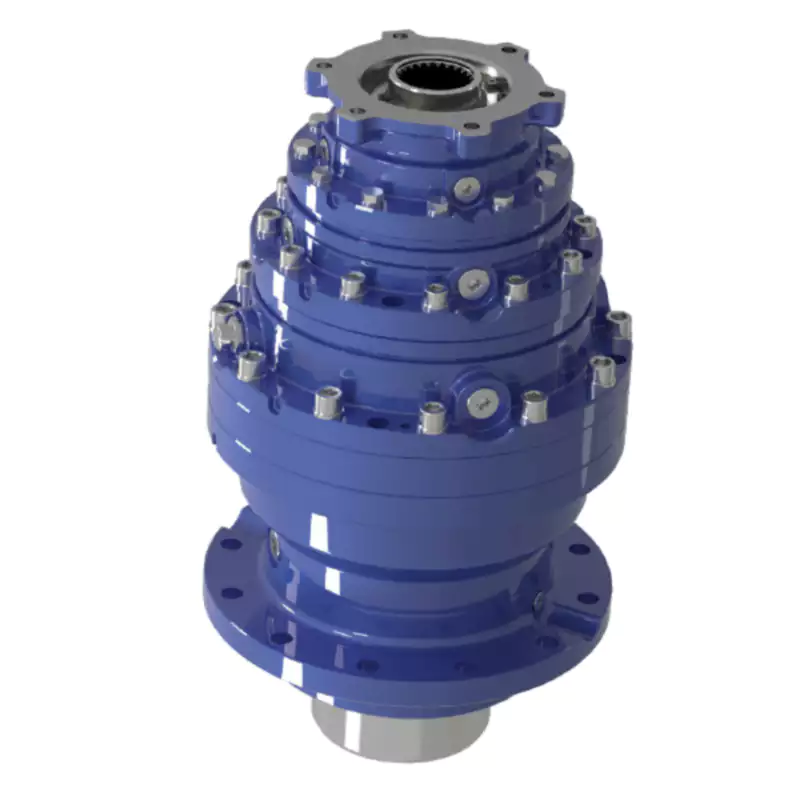
Impact of Gear Tooth Design and Profile on the Efficiency of Planetary Gearboxes
The design and profile of gear teeth have a significant impact on the efficiency of planetary gearboxes:
- Tooth Profile: The tooth profile, such as involute, cycloid, or modified profiles, affects the contact pattern and load distribution between gear teeth. An optimized profile minimizes stress concentration and ensures smooth meshing, contributing to higher efficiency.
- Tooth Shape: The shape of gear teeth influences the amount of sliding and rolling motion during meshing. Gear teeth designed for more rolling and less sliding motion reduce friction and wear, enhancing overall efficiency.
- Pressure Angle: The pressure angle at which gear teeth engage affects the force distribution and efficiency. Larger pressure angles can lead to higher efficiency due to improved load sharing, but they may require more space.
- Tooth Thickness and Width: Optimized tooth thickness and width contribute to distributing the load more evenly across the gear face. Proper sizing reduces stress and increases efficiency.
- Backlash: Backlash, the gap between meshing gear teeth, impacts efficiency by causing vibrations and energy losses. Properly controlled backlash minimizes these effects and improves efficiency.
- Tooth Surface Finish: Smoother tooth surfaces reduce friction and wear. Proper surface finish, achieved through grinding or honing, enhances efficiency by reducing energy losses due to friction.
- Material Selection: The choice of gear material influences wear, heat generation, and overall efficiency. Materials with good wear resistance and low friction coefficients contribute to higher efficiency.
- Profile Modification: Profile modifications, such as tip and root relief, optimize tooth contact and reduce interference. These modifications minimize friction and increase efficiency.
In summary, the design and profile of gear teeth play a crucial role in determining the efficiency of planetary gearboxes. Optimal tooth profiles, shapes, pressure angles, thicknesses, widths, surface finishes, and material selections all contribute to reducing friction, wear, and energy losses, resulting in improved overall efficiency.
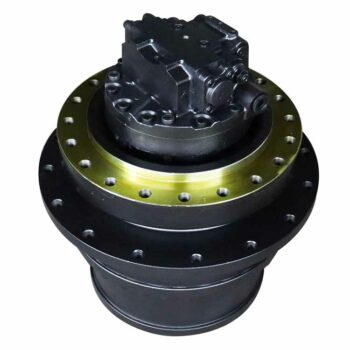
Impact of Temperature Variations and Environmental Conditions on Planetary Gearbox Performance
The performance of planetary gearboxes can be significantly influenced by temperature variations and environmental conditions. Here’s how these factors impact their operation:
Temperature Variations: Extreme temperature fluctuations can affect the lubrication properties of the gearbox. Cold temperatures can cause the lubricant to thicken, leading to increased friction and reduced efficiency. On the other hand, high temperatures can cause the lubricant to thin out, potentially leading to insufficient lubrication and accelerated wear.
Environmental Contaminants: Planetary gearboxes used in outdoor or industrial environments can be exposed to contaminants such as dust, dirt, moisture, and chemicals. These contaminants can infiltrate the gearbox and degrade the quality of the lubricant. Additionally, abrasive particles can cause wear on gear surfaces, leading to decreased performance and potential damage.
Corrosion: Exposure to moisture, especially in humid or corrosive environments, can lead to corrosion of gearbox components. Corrosion weakens the structural integrity of gears and other components, which can ultimately result in premature failure.
Thermal Expansion: Temperature changes can cause materials to expand and contract. In gearboxes, this can lead to misalignment of gears and improper meshing, causing noise, vibration, and reduced efficiency. Proper consideration of thermal expansion is crucial in gearbox design.
Sealing and Ventilation: To mitigate the impact of temperature and environmental factors, planetary gearboxes need effective sealing to prevent contaminants from entering and to retain the lubricant. Proper ventilation is also essential to prevent pressure build-up inside the gearbox due to temperature changes.
Cooling Systems: In applications where temperature control is critical, cooling systems such as fans or heat exchangers can be incorporated to maintain optimal operating temperatures. This helps prevent overheating and ensures consistent gearbox performance.
Overall, temperature variations and environmental conditions can have a profound impact on the performance and lifespan of planetary gearboxes. Manufacturers and operators need to consider these factors during design, installation, and maintenance to ensure reliable and efficient operation.
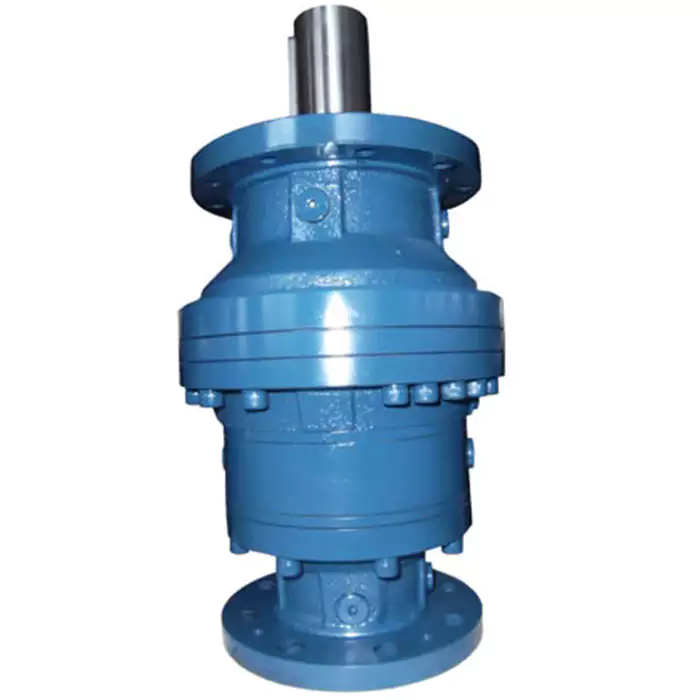
Impact of Gear Ratio on Output Speed and Torque in Planetary Gearboxes
The gear ratio of a planetary gearbox has a significant effect on both the output speed and torque of the system. The gear ratio is defined as the ratio of the number of teeth on the driven gear (output) to the number of teeth on the driving gear (input).
1. Output Speed: The gear ratio determines the relationship between the input and output speeds of the gearbox. A higher gear ratio (more teeth on the output gear) results in a lower output speed compared to the input speed. Conversely, a lower gear ratio (fewer teeth on the output gear) leads to a higher output speed relative to the input speed.
2. Output Torque: The gear ratio also affects the output torque of the gearbox. An increase in gear ratio amplifies the torque delivered at the output, making it higher than the input torque. Conversely, a decrease in gear ratio reduces the output torque relative to the input torque.
The relationship between gear ratio, output speed, and output torque is inversely proportional. This means that as the gear ratio increases and output speed decreases, the output torque proportionally increases. Conversely, as the gear ratio decreases and output speed increases, the output torque proportionally decreases.
It’s important to note that the gear ratio selection in a planetary gearbox involves trade-offs between output speed and torque. Engineers choose a gear ratio that aligns with the specific application’s requirements, considering factors such as desired speed, torque, and efficiency.


editor by CX 2024-02-15