
Product Description
Product Description
1.Features:
-
Cylindrical external shell, small volume;
Compact structure;
Output end plane connection;
Easy installation;
The product can select appropriate flange and adapter bushings adapter any motor.
Product Parameters
2.Ratio
| Stage 1 | Ratio: | 4.4:1 | 6.5:1 | 7.5 | ||||||
| Max. continuous torque | 6.5 N.m | |||||||||
| Max. intermittent torque at gear output | 19.5 N.m | |||||||||
| precision options | Routine Precision | ≤2 °(Default Value) | ||||||||
| high precision | ≤5arcmin (Customizable) | |||||||||
| Stage 2 | Ratio: | 15:1 | 17:1 | 24:1 | 32:1 | 48:1 | 58:1 | |||
| Max. continuous torque | 8.6 N.m | |||||||||
| Max. intermittent torque at gear output | 25.8 N.m | |||||||||
| precision options | Routine Precision | ≤2 °(Default Value) | ||||||||
| high precision | ≤10arcmin (Customizable) | |||||||||
| Stage 3 | Ratio: | 65.5:1 | 75:1 | 98:1 | 125:1 | 150:1 | 207:1 | 250:1 | ||
| Max. continuous torque | 10.8 N.m | |||||||||
| Max. intermittent torque at gear output | 32.4 N.m | |||||||||
| precision options | Routine Precision | ≤2 °(Default Value) | ||||||||
| high precision | ≤15arcmin (Customizable) | |||||||||
| Stage 4 | Ratio: | 277:1 | 302:1 | 400:1 | 706:1 | 950:1 | 1500:1 | 1860:1 | 3380:1 | |
| Max. continuous torque | 13 N.m | |||||||||
| Max. intermittent torque at gear output | 39 N.m | |||||||||
| precision options | Routine Precision | ≤2 °(Default Value) | ||||||||
| high precision | ≤20arcmin (Customizable) | |||||||||
3.Parameters of the gearbox
| Gear wheel material: | Metal | Lubricating: | grease | |
| Noise: | ≤50 db | Max. Input speed (r/min): | ≤30000 rpm | |
| It can be customed whe the input sped is over 40000 rpm | ||||
| Max. axial load: | ≤6Kgf | Max. radial load (10mm from flange): |
≤10Kgf | |
| Radial play of shaft: | ≤0.04mm | Back lash for 1 stage: | ≤1.5° | |
| Axial play of shaft: | ≤0.4mm | Opertating temperature range: | (-30~+100)ºC |
Installation Instructions
4.Dimensions of the gearbox
-
The dimensions of the output and the input shaft can be customizable, and there will be a keyway on 4*4 in the standard output shat
GHP42
GHP45
-
-
Stage 1 “L”=43.8
-
Stage 2 “L”=54.6
-
Stage 3 “L”=65.4
-
Stage 4 “L”=76.2
-
Gearbox Length is nonstandard at high speed
-
/* January 22, 2571 19:08:37 */!function(){function s(e,r){var a,o={};try{e&&e.split(“,”).forEach(function(e,t){e&&(a=e.match(/(.*?):(.*)$/))&&1
| Application: | Motor, Electric Cars, Machinery, Marine, Agricultural Machinery, Car |
|---|---|
| Hardness: | Hardened Tooth Surface |
| Installation: | Horizontal Type |
| Layout: | Coaxial |
| Gear Shape: | Cylindrical Gear |
| Step: | 1~4 |
| Customization: |
Available
| Customized Request |
|---|
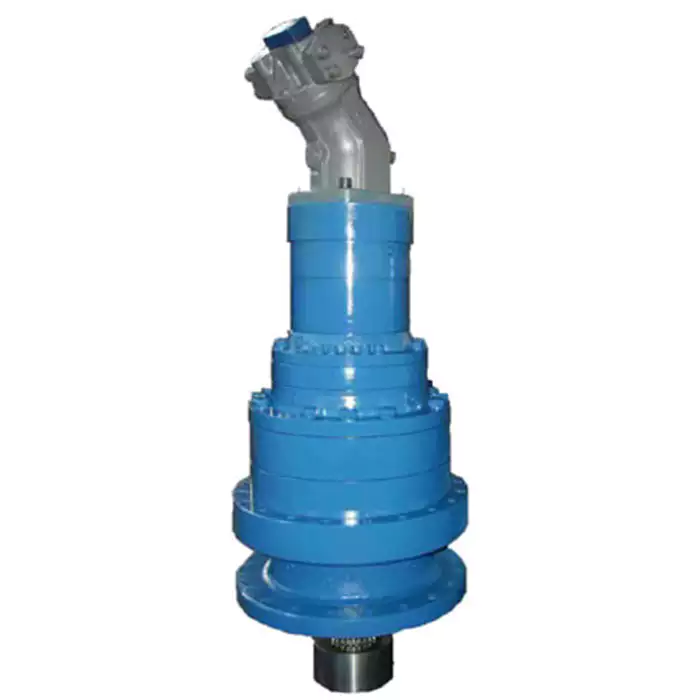
Challenges in Achieving High Gear Ratios with Compactness in Planetary Gearboxes
Designing planetary gearboxes with high gear ratios while maintaining a compact form factor poses several challenges due to the intricate arrangement of gears and the need to balance various factors:
Space Constraints: Increasing the gear ratio typically requires adding more planetary stages, resulting in additional gears and components. However, limited available space can make it challenging to fit these additional components without compromising the compactness of the gearbox.
Efficiency: As the number of planetary stages increases to achieve higher gear ratios, there can be a trade-off in terms of efficiency. Additional gear meshings and friction losses can lead to decreased overall efficiency, impacting the gearbox’s performance.
Load Distribution: The distribution of loads across multiple stages becomes critical when designing high gear ratio planetary gearboxes. Proper load distribution ensures that each stage shares the load proportionally, preventing premature wear and ensuring reliable operation.
Bearing Arrangement: Accommodating multiple stages of planetary gears requires an effective bearing arrangement to support the rotating components. Improper bearing selection or arrangement can lead to increased friction, reduced efficiency, and potential failures.
Manufacturing Tolerances: Achieving high gear ratios demands tight manufacturing tolerances to ensure accurate gear tooth profiles and precise gear meshing. Any deviations can result in noise, vibration, and reduced performance.
Lubrication: Adequate lubrication becomes crucial in maintaining smooth operation and reducing friction as gear ratios increase. However, proper lubrication distribution across multiple stages can be challenging, impacting efficiency and longevity.
Noise and Vibration: The complexity of high gear ratio planetary gearboxes can lead to increased noise and vibration levels due to the higher number of gear meshing interactions. Managing noise and vibration becomes essential for ensuring acceptable performance and user comfort.
To address these challenges, engineers employ advanced design techniques, high-precision manufacturing processes, specialized materials, innovative bearing arrangements, and optimized lubrication strategies. Achieving the right balance between high gear ratios and compactness involves careful consideration of these factors to ensure the gearbox’s reliability, efficiency, and performance.
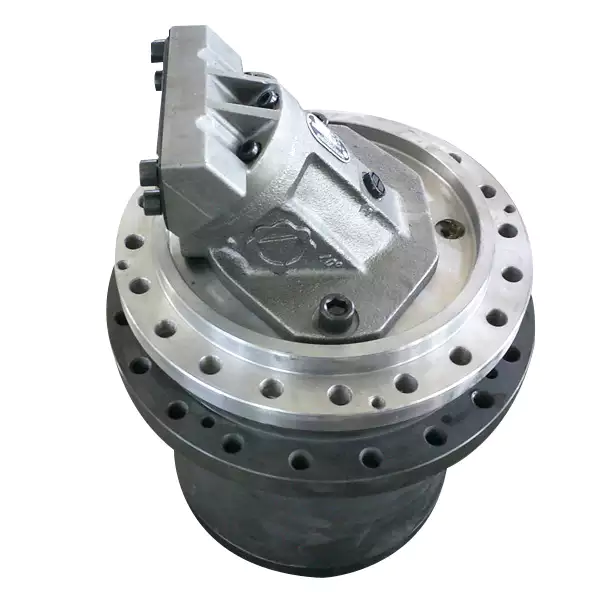
Maintenance Practices to Extend the Lifespan of Planetary Gearboxes
Proper maintenance is essential for ensuring the longevity and optimal performance of planetary gearboxes. Here are specific maintenance practices that can help extend the lifespan of planetary gearboxes:
1. Regular Inspections: Implement a schedule for routine visual inspections of the gearbox. Look for signs of wear, damage, oil leaks, and any abnormal conditions. Early detection of issues can prevent more significant problems.
2. Lubrication: Adequate lubrication is crucial for reducing friction and wear between gearbox components. Follow the manufacturer’s recommendations for lubricant type, viscosity, and change intervals. Ensure that the gearbox is properly lubricated to prevent premature wear.
3. Proper Installation: Ensure the gearbox is installed correctly, following the manufacturer’s guidelines and specifications. Proper alignment, torque settings, and clearances are critical to prevent misalignment-related wear and other issues.
4. Load Monitoring: Avoid overloading the gearbox beyond its designed capacity. Excessive loads can accelerate wear and reduce the gearbox’s lifespan. Regularly monitor the load conditions and ensure they are within the gearbox’s rated capacity.
5. Temperature Control: Maintain the operating temperature within the recommended range. Excessive heat can lead to accelerated wear and lubricant breakdown. Adequate ventilation and cooling measures may be necessary in high-temperature environments.
6. Seal and Gasket Inspection: Regularly check seals and gaskets for signs of leakage. Damaged seals can lead to lubricant loss and contamination, which can cause premature wear and gear damage.
7. Vibration Analysis: Use vibration analysis techniques to detect early signs of misalignment, imbalance, or other mechanical issues. Monitoring vibration levels can help identify problems before they lead to serious damage.
8. Preventive Maintenance: Establish a preventive maintenance program based on the gearbox’s operational conditions and usage. Perform scheduled maintenance tasks such as gear inspections, lubricant changes, and component replacements as needed.
9. Training and Documentation: Ensure that maintenance personnel are trained in proper gearbox maintenance procedures. Keep comprehensive records of maintenance activities, inspections, and repairs to track the gearbox’s condition and history.
10. Consult Manufacturer Guidelines: Always refer to the manufacturer’s maintenance and servicing guidelines specific to the gearbox model and application. Following these guidelines will help maintain warranty coverage and ensure best practices are followed.
By adhering to these maintenance practices, you can significantly extend the lifespan of your planetary gearbox, minimize downtime, and ensure reliable performance for your industrial machinery or application.
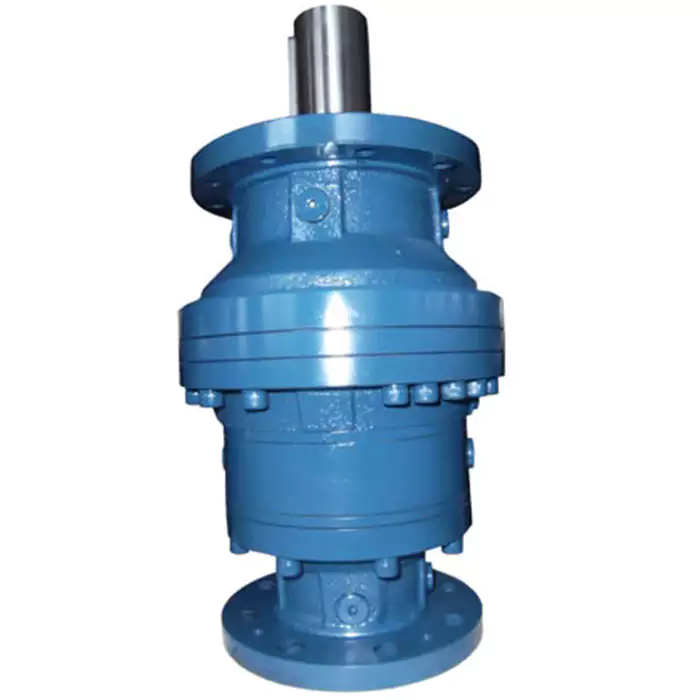
Impact of Gear Ratio on Output Speed and Torque in Planetary Gearboxes
The gear ratio of a planetary gearbox has a significant effect on both the output speed and torque of the system. The gear ratio is defined as the ratio of the number of teeth on the driven gear (output) to the number of teeth on the driving gear (input).
1. Output Speed: The gear ratio determines the relationship between the input and output speeds of the gearbox. A higher gear ratio (more teeth on the output gear) results in a lower output speed compared to the input speed. Conversely, a lower gear ratio (fewer teeth on the output gear) leads to a higher output speed relative to the input speed.
2. Output Torque: The gear ratio also affects the output torque of the gearbox. An increase in gear ratio amplifies the torque delivered at the output, making it higher than the input torque. Conversely, a decrease in gear ratio reduces the output torque relative to the input torque.
The relationship between gear ratio, output speed, and output torque is inversely proportional. This means that as the gear ratio increases and output speed decreases, the output torque proportionally increases. Conversely, as the gear ratio decreases and output speed increases, the output torque proportionally decreases.
It’s important to note that the gear ratio selection in a planetary gearbox involves trade-offs between output speed and torque. Engineers choose a gear ratio that aligns with the specific application’s requirements, considering factors such as desired speed, torque, and efficiency.


editor by CX 2024-02-29