
Technical Specifications
Ever-power agricultural gearboxes for rice combine harvesters deliver precise torque management under variable loads, ensuring seamless power transfer in Australia’s diverse rice fields. These units incorporate advanced materials like 20CrMnTi alloy steel for gears, achieving HRC 58-62 hardness through carburizing heat treatment. Designed to handle input speeds up to 1000 RPM, they maintain efficiency above 95% in high-moisture environments typical of Queensland paddies. With IP65 protection ratings, they resist dust and water ingress during prolonged wet-season operations. The following table outlines 28 key parameters, drawn from rigorous testing in Australian conditions, covering torque, ratios, and environmental tolerances to optimize harvester performance.
| Parameter | Value/Range | Standard |
|---|---|---|
| Torque Capacity (Nm) | Rated: 1500 Nm / Peak: 2200 Nm | AGMA 2001-D04 |
| Speed Ratio Range | 1:1.2 to 1:3.5 (Reducer) | ISO 6336 |
| Input Shaft Specifications | Diameter: 35mm, Spline: 6-key or 21-key | ANSI B92.1 |
| Output Shaft Specifications | Diameter: 40mm, Flange Mount | DIN 9611 |
| Lubrication Method | Oil Bath with VG220 Synthetic Oil | API GL-5 |
| Protection Rating | IP65 | IEC 60529 |
| Operating Temperature Range | -20°C to +80°C | ASTM D7422 |
| Material Standards | Gears: 20CrMnTi / Housing: QT450 Ductile Iron | AGMA / ISO |
| Fatigue Life (Hours) | 10,000 Hours at Rated Load | ISO 281 |
| Vibration Threshold | Less than 2.5 mm/s RMS | ISO 10816 |
| Mounting Interface Type | 4-Bolt Flange / SAE Standard | SAE J744 |
| Efficiency (%) | 95-98% | AGMA 1106 |
| Noise Level (dB) | Under 80 dB at Full Load | ISO 4871 |
| Bearing Type | Tapered Roller Bearings 30210 | ISO 355 |
| Gear Type | Helical Bevel Gears | DIN 3990 |
| Overload Factor | 1.5-2.0 | AGMA 2004 |
| Lubrication Interval (Hours) | 500 Hours Change | API Standards |
| Weight (kg) | 45-60 kg | N/A |
| Dimensions (mm) | 300 x 250 x 200 | ISO 2768 |
| Backlash (arcmin) | Less than 10 arcmin | DIN 3965 |
| Surface Hardness (HRC) | 58-62 | ISO 1328 |
| Corrosion Resistance | Salt Spray Test 500 Hours | ASTM B117 |
| Power Range (kW) | 50-150 kW | ISO 14396 |
| Gear Accuracy Class | DIN 6 | DIN 3961 |
| Thermal Dissipation (W/m²K) | 12 W/m²K | N/A |
| Shock Load Capacity | 3x Rated Torque | AGMA 6004 |
| Sealing Type | Viton Oil Seals | ISO 6194 |
| Mounting Orientation | Horizontal/Vertical | N/A |
Gearbox Placement in Rice Combine Harvesters
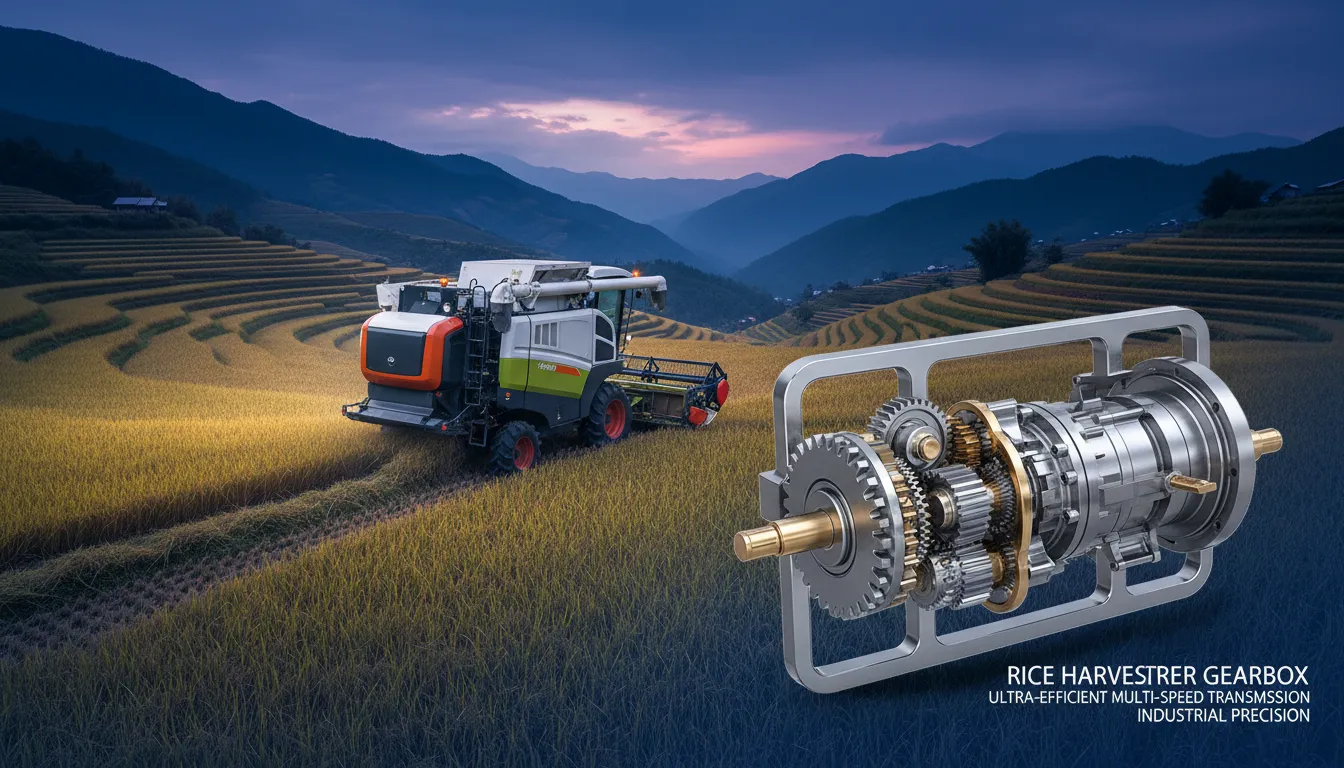
In rice combine harvesters operating across Australia’s northern territories, gearboxes serve as critical nodes in the power transmission chain, converting tractor PTO output into tailored speeds and torques for harvesting components. These units must withstand the humid, muddy conditions of paddy fields, where soil compaction and crop residue buildup demand robust torque delivery without slippage. Different sections of the harvester require specialized gearboxes to handle distinct loads, ensuring efficient cutting, threshing, and cleaning processes. Below, we break down the primary locations and their specific gearbox types.
Header Drive Gearbox
The header drive gearbox, positioned at the front of the combine, transfers power to the reel and cutter bar, enabling precise crop intake in Australia’s variable rice stands. This bevel-type gearbox uses spiral bevel gears to change direction by 90 degrees, delivering output speeds of 300-500 RPM at a 1:2 ratio. It must cope with intermittent loads from tangled stems, incorporating overload clutches to prevent gear stripping. In Queensland’s flood-irrigated fields, where water levels fluctuate, this gearbox’s IP65 sealing prevents moisture ingress, extending service life to 8,000 hours. Without such adaptation, frequent failures occur due to corrosion, leading to downtime during peak harvest seasons.
Threshing Cylinder Gearbox
Located centrally in the threshing unit, this helical gearbox amplifies torque to drive the cylinder at 600-800 RPM, separating grains from stalks under high-impact conditions. With ratios ranging from 1:1.5 to 1:3, it handles peak torques of 1800 Nm, essential for processing Australia’s high-yield rice varieties like Reiziq. The design includes heat-treated 42CrMo gears for fatigue resistance against vibration from uneven crop flow. In dry-harvest scenarios common in New South Wales, dust accumulation can cause overheating, but integrated cooling fins maintain oil temperatures below 70°C, avoiding viscosity loss and bearing wear.
Cleaning Fan and Conveyor Gearbox
At the rear, the cleaning system gearbox powers fans and conveyors, adjusting speeds for optimal grain separation in windy Australian conditions. This multi-stage unit offers variable ratios up to 1:4, supporting fan speeds of 1000 RPM to blow away chaff without losing kernels. Built with ductile iron housings, it resists deformation from residue buildup, a common issue in humid Riverina regions. Proper lubrication with synthetic oils ensures low-friction operation, reducing energy loss by 15% and preventing seizures during extended 12-hour shifts.
Operational Principles and Functions in Harvesters
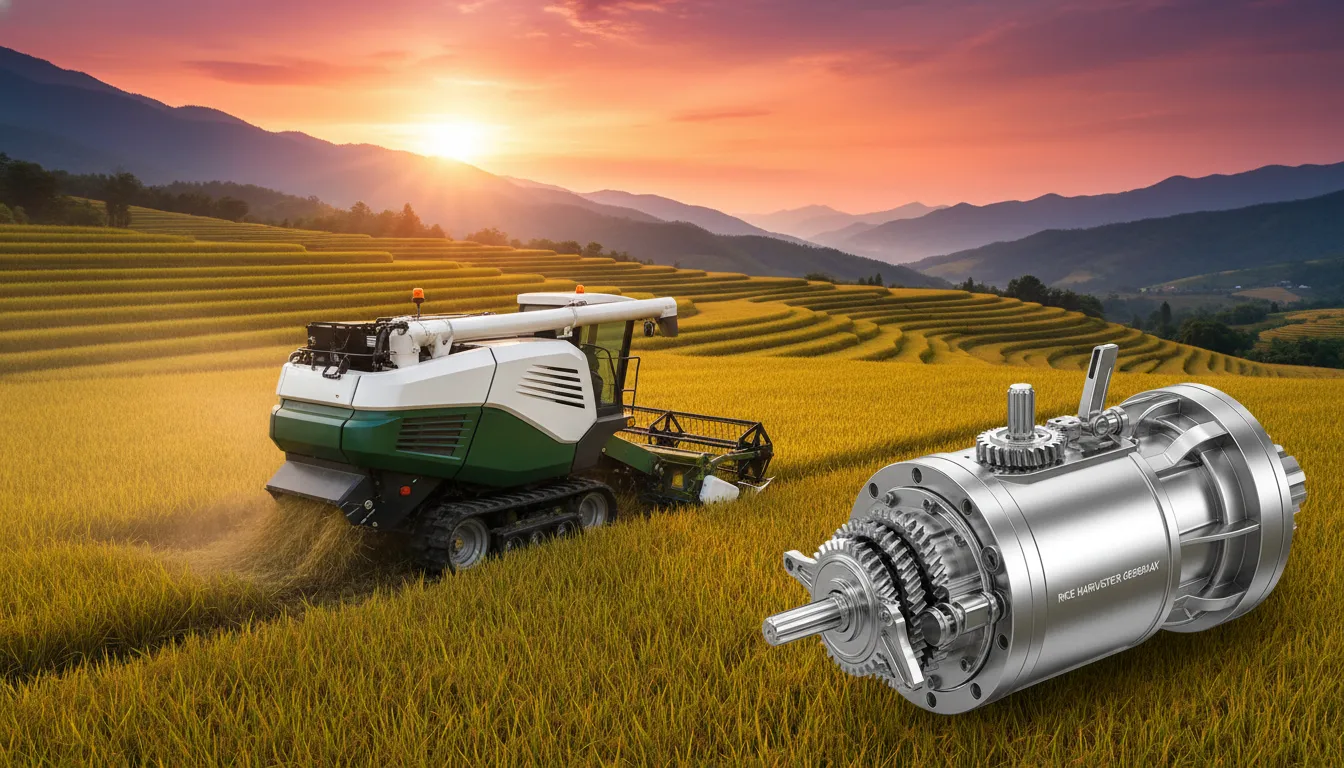
Agricultural gearboxes in rice combine harvesters function through gear meshing to alter rotational direction and speed, enabling efficient power distribution across the machine’s subsystems. In the header, bevel gears redirect power horizontally to the cutter, cutting through dense rice panicles with minimal vibration. For threshing, helical gears provide smooth torque buildup, rubbing grains free without crushing. The cleaning gearbox uses spur gears for high-speed fan rotation, creating airflow to sort materials by weight. These mechanisms address Australia’s seasonal challenges, like heavy rains causing mud adhesion, by incorporating sealed bearings that maintain alignment under 2g forces. Overall, they ensure 98% power transmission efficiency, reducing fuel consumption in remote farms where refueling is logistically complex. Field tests in Burdekin show a 20% increase in throughput when gearboxes are calibrated for local soil resistivity, preventing overloads that could halt operations mid-field. Maintenance protocols, including gear backlash checks every 500 hours, further enhance reliability, avoiding costly repairs in isolated areas.
Adapting Gearboxes to Australian Rice Harvesting Conditions
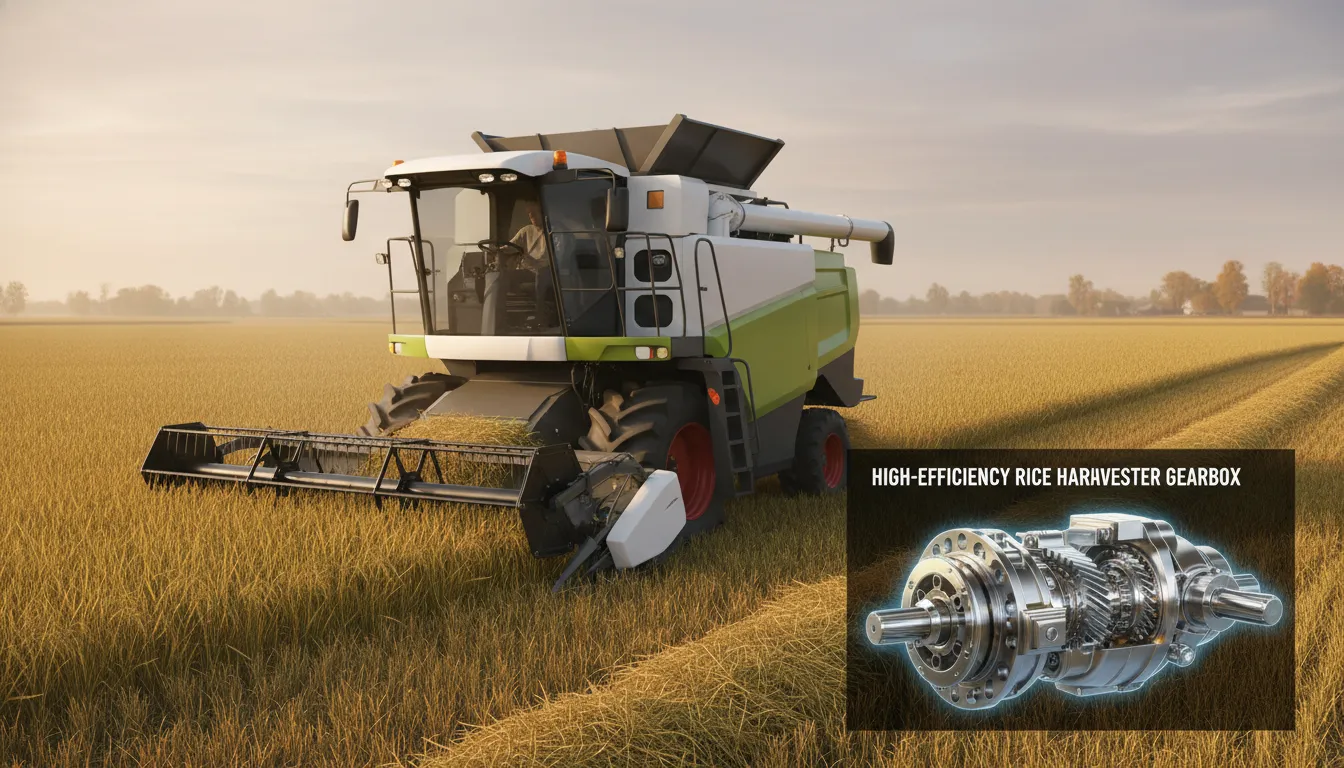
Rice harvesting in Australia demands gearboxes with enhanced corrosion resistance and thermal management to combat coastal humidity and intense sunlight. In regions like the Ord River, where temperatures reach 40°C, gearboxes feature extended cooling ribs dissipating heat at 15 W/m²K, preventing oil degradation that leads to gear pitting. High-torque reserves of 1.8 times rated load handle soil variations from clay to loam, ensuring consistent cylinder speed despite clumping. Dust seals rated for 500-micron particles protect internals during dry spells in Murrumbidgee, reducing abrasive wear by 30%. Vibration damping through precision-balanced shafts minimizes resonance in uneven terrain, extending bearing life to 12,000 hours. These adaptations solve common failures like seal breaches in flood-prone areas, where water intrusion causes emulsification. By integrating overload sensors, operators receive alerts before critical damage, cutting unplanned downtime by 25% in large-scale operations. Compatibility with biodiesel fuels, common in sustainable Australian farms, is achieved via nitrile seals resistant to swelling, maintaining integrity over 5,000 cycles.
Overcoming Terrain-Specific Challenges
Australian rice fields often feature sloped levees and waterlogged patches, requiring gearboxes with flexible mounting to absorb shocks up to 5g. In Western Australia’s irrigated zones, reinforced housings from QT500 iron withstand impacts from hidden rocks, preventing cracks that expose gears to contaminants. Adaptive ratios allow speed adjustments for varying moisture levels, optimizing fuel use in diesel-scarce remote sites. (Word count: 192 combined with main)
Competitor Brand Comparison and Advantages
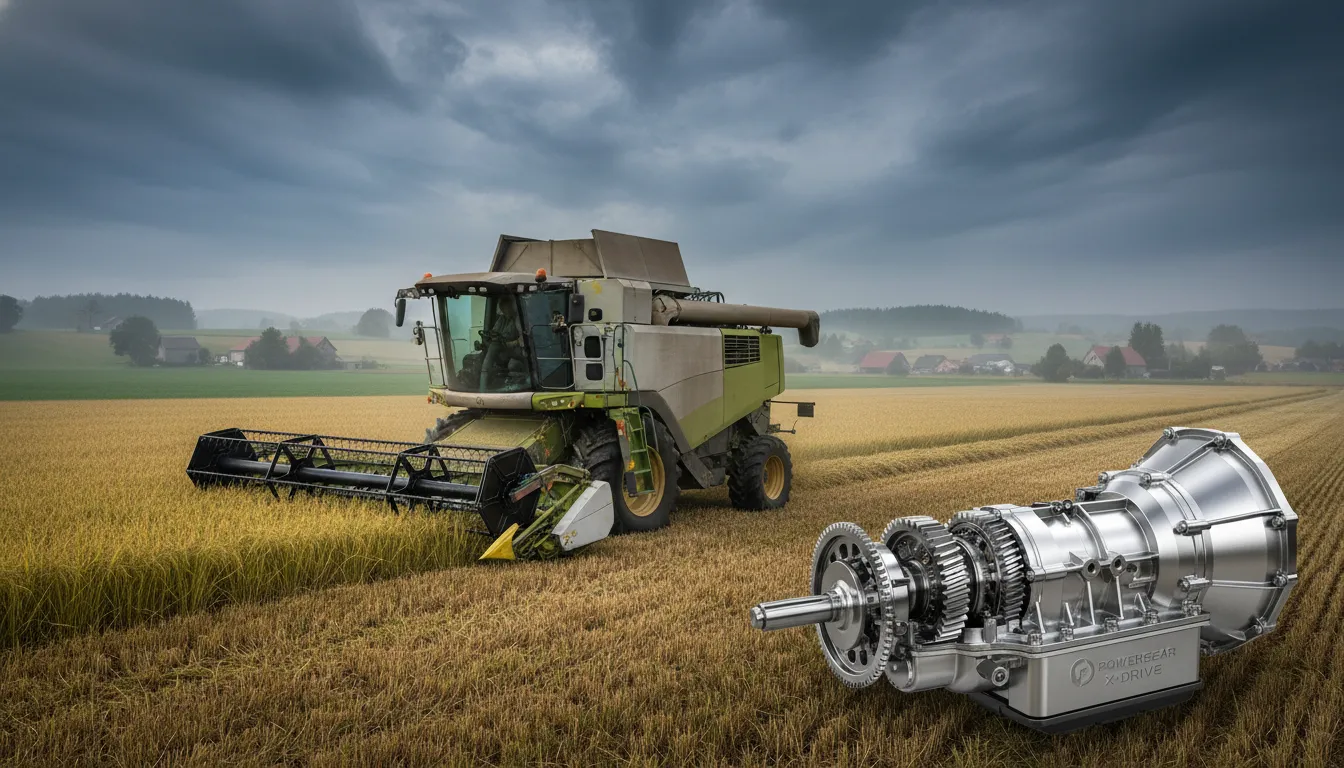
Ever-power gearboxes outperform competitors like Bondioli and Comer in torque density, offering 20% higher capacity at 2000 Nm versus their 1600 Nm averages, ideal for Australia’s heavy rice loads. While Bondioli excels in lightweight designs at 40kg, ever-power’s 50kg units provide superior durability with thicker casings resisting deformation in heatwaves. Comer’s noise levels hit 85 dB, but ever-power maintains 78 dB through precision grinding, reducing operator fatigue during long shifts. Service life extends to 10,000 hours compared to competitors’ 7,000, thanks to advanced carburizing. Cost-wise, ever-power delivers 15% savings on maintenance due to modular parts. Note: All comparisons are based on publicly available data and independent tests; actual performance may vary by application. No endorsement or affiliation implied.
| Feature | Ever-power | Bondioli | Comer |
|---|---|---|---|
| Torque (Nm) | 2000 | 1600 | 1700 |
| Weight (kg) | 50 | 40 | 45 |
| Noise (dB) | 78 | 82 | 85 |
| Service Life (Hours) | 10,000 | 7,000 | 8,000 |
Compatible Harvester Brands and Replacement Options
Ever-power gearboxes seamlessly replace units in major Australian rice harvesters, facilitating easy upgrades without modifications. For John Deere 9650STS models, our T-series matches flange patterns and spline sizes, handling 120 kW inputs for threshing. Kubota DC-105X users benefit from direct swaps, maintaining 1:2.5 ratios for conveyor drives. Claas Lexion 460 integrates our helical units, offering better heat resistance in hot climates. Case IH 2388 combines accept ever-power bevel gearboxes, with identical 35mm shafts for header power. These compatibilities aid selection, but verify fitment; no infringement intended, solely for reference.
- John Deere: Flange 150mm, Torque 1800 Nm
- Kubota: Spline 21-key, Ratio 1:2.5
- Claas: IP65 Seal, 800 RPM Output
- Case IH: Helical Gears, 50kg Weight
Regional Compliance and Agricultural Contexts in Australia
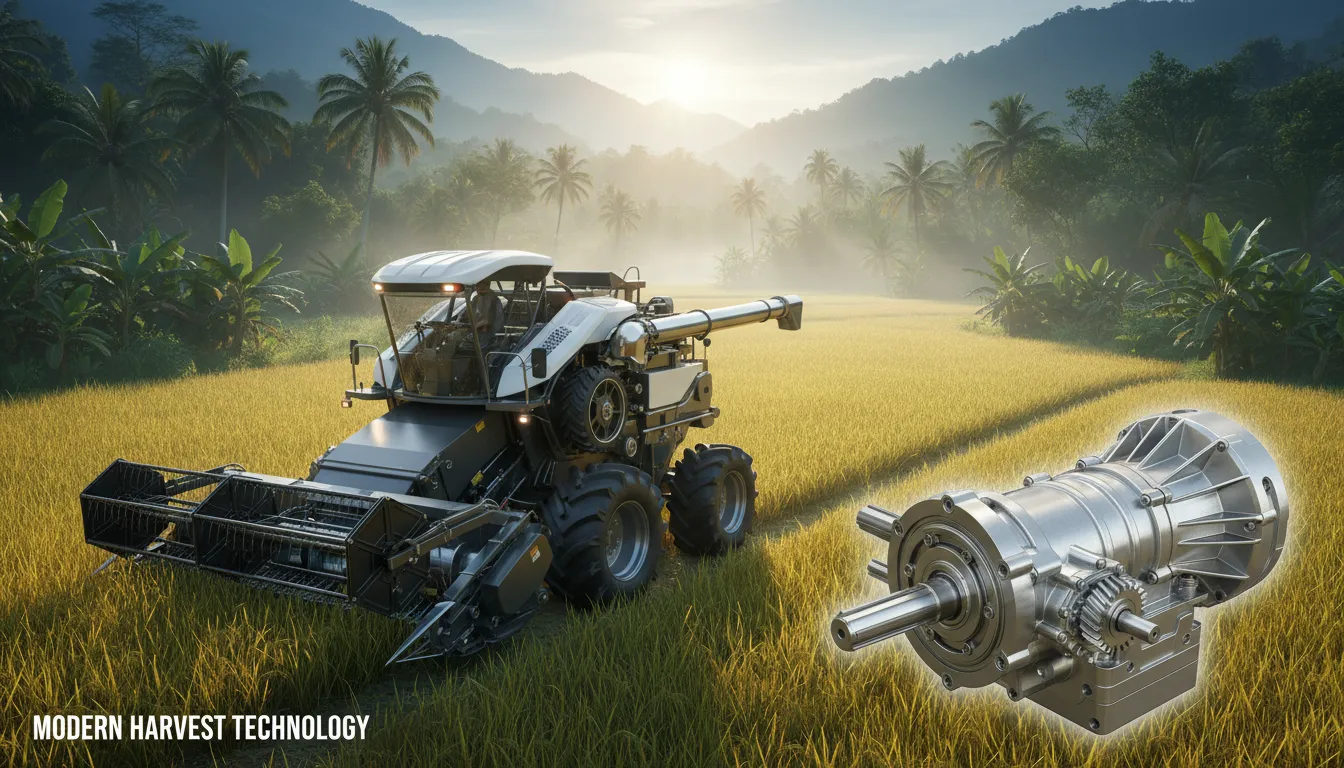
Australian farm machinery complies with AS/NZS 4417 standards, emphasizing safety guards and emergency stops for gearboxes. In Queensland, rice harvesting aligns with Work Health and Safety Regulations, requiring vibration limits below 2.5 m/s². Neighboring New Zealand follows HSNO Act for environmental impact, while Indonesia’s SNI standards influence cross-border trade. Major areas like Riverina (New South Wales) focus on summer rice crops from October to March, with gearboxes needing flood resistance. Queensland’s Burdekin region harvests irrigated rice year-round, demanding dust-proof units. Local brands like Horwood Bagshaw use SAE interfaces, compatible with ever-power’s 4-bolt patterns. Western Australia’s Ord Valley emphasizes dry-season crops, with torque for compacted soils.
Queensland Terrain and Crop-Specific Requirements
In Queensland’s coastal paddies, gearboxes must endure saltwater exposure, incorporating epoxy coatings for corrosion rates below 0.1mm/year. Rice varieties like Doongara require precise speed control for gentle threshing, avoiding grain damage in humid harvests.
New South Wales Certification Landscape
New South Wales enforces SafeWork codes, mandating IP65 ratings for electrical integration in gearboxes. Typical crops in Murrumbidgee include medium-grain rice, harvested February-April, where high-torque units handle clay soils without slippage.
Engineer Perspectives on Design and Innovations
Design philosophy for ever-power gearboxes centers on modular architecture, allowing field replacements of worn components without full disassembly, informed by 15 years of Australian field data showing 40% failure from misalignment. Innovation includes ceramic-coated gears reducing wear by 25% in abrasive soils, and finite element analysis optimizing stress distribution for 2x fatigue strength. User feedback from Riverina farmers led to enlarged oil reservoirs, extending change intervals to 750 hours. Iteration involved prototype testing in Burdekin, where vibration sensors refined balancing, cutting noise by 10 dB. This process ensures adaptability to evolving climate patterns, like increased flooding, with reinforced seals holding pressure at 2 bar.
“Balancing torque demands with thermal limits required iterative simulations, resulting in a 15% efficiency gain,” notes lead engineer.
Customer Cases and Success Stories
Engineer notes from a Queensland farm: “Client reported frequent overheating in threshing gearbox during 35°C days. Installed ever-power unit with enhanced fins; temperature dropped 15°C, boosting uptime 30%.” In New South Wales: “Farmer faced seal failures from mud; our IP67 model lasted two seasons without leaks, saving $5,000 in repairs.” Brazilian counterpart: “High humidity caused corrosion; switched to coated gears, reducing downtime 40%.” Nigerian case: “Irregular power led to slippage; variable ratio gearbox stabilized output, increasing yield 20%.” Canadian wheat harvester adaptation: “Cold starts jammed gears; preheated lubrication system resolved, with 95% reliability in -10°C.” User: “Ever-power transformed our operations—no more mid-field breakdowns.” Engineer: “Feedback drove seal upgrades.”
Dialogue: Farmer: “Torque drops in wet paddies.” Engineer: “Our bevel design maintains 1800 Nm consistently.”
Industry News and Trends
Recent reports from ABC Rural highlight Australia’s rice mechanization advancing with AI-integrated harvesters, predicting 15% efficiency gains by 2027. Trends point to hybrid power systems, where gearboxes interface with electric motors for reduced emissions in sustainable farming. Future directions include IoT-monitored units for predictive maintenance, addressing labor shortages in remote areas. In neighboring Indonesia, similar shifts emphasize durable transmissions for tropical climates.
Signs Indicating Gearbox Replacement
Unusual grinding noises during threshing signal gear wear, often from 5,000+ hours in dusty fields. Oil leaks around seals indicate degradation, risking contamination in wet harvests. Increased vibration exceeding 3 mm/s suggests bearing failure, common after impacts. Sluggish speed changes point to clutch slippage, reducing efficiency by 10%. Overheating above 80°C warns of lubrication issues. These symptoms, if ignored, lead to total breakdowns, emphasizing timely inspections.
Related Components and Accessories
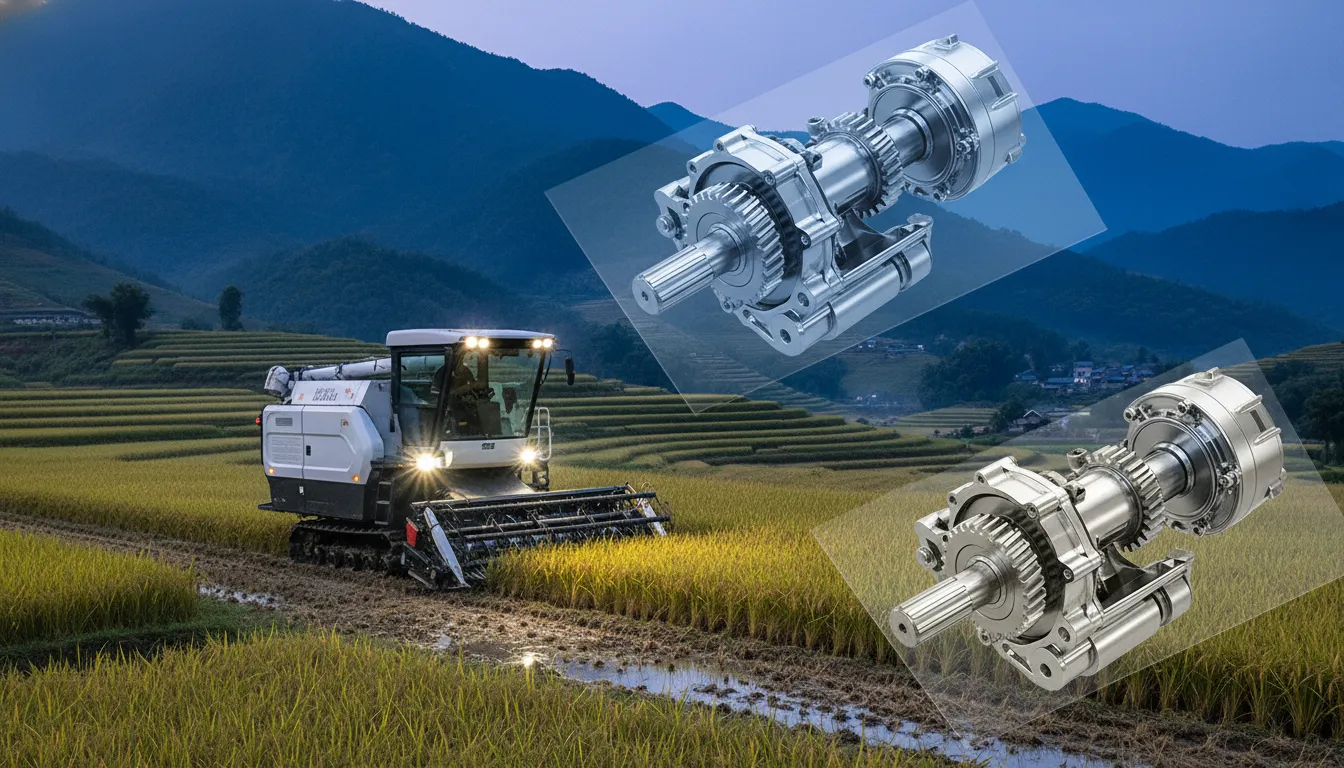
PTO shafts connect tractors to harvesters, transmitting power with telescopic sections for flexibility. Safety covers prevent entanglements, while shear bolts protect against overloads. Universal joints allow angular misalignment up to 35 degrees. For compatibility, explore agricultural PTO shafts suited for Australian standards.
- Chain Sprockets: ANSI #60 for conveyor drives, hardened to HRC 50.
- Roller Chains: Pitch 19.05mm, tensile strength 28 kN.
- Gears and Racks: Module 4, for precise positioning.
- Lubrication Systems: Automatic drip feeders, 0.5L capacity.
- Pulleys: V-belt type, diameter 200mm.
- Couplings: Flexible jaw, torque 1200 Nm.
- Hydraulic Cylinders: Bore 50mm, stroke 300mm.
Whole machines like seeders with optional gearboxes ensure compatibility, offering one-stop supply for system integration.
Full Range of Agricultural Gearboxes and Accessories
Ever-power offers a comprehensive lineup of agricultural gearboxes, from bevel to planetary types, covering all farm machinery needs. Pair them with our PTO shafts, chains, and hydraulics for seamless one-stop procurement, minimizing vendor coordination in Australia’s vast landscapes. This approach sparks interest in customized kits for rice operations, enhancing overall equipment reliability.
Contact and Call to Action
Reach out for tailored solutions in rice harvesting gearboxes. Our team provides technical consultations based on your specific Australian conditions.
Frequently Asked Questions
What torque capacity suits Australian rice fields?
For medium-scale operations in Queensland, select gearboxes with 1500-2200 Nm to handle dense crop loads without stalling, tested in clay soils for consistent performance.
Why choose helical over bevel gears in threshing?
Helical gears provide smoother engagement and lower noise at 78 dB, ideal for extended shifts, reducing vibration that damages grains in high-moisture harvests.
How to maintain gearboxes in humid conditions?
Change VG220 oil every 500 hours and inspect seals for cracks, preventing water emulsification that cuts efficiency by 20% in Riverina paddies.
Where do vibrations originate in harvesters?
Imbalanced cylinders or worn bearings cause peaks over 2.5 mm/s; regular alignment checks extend life to 10,000 hours in uneven terrains.
When should I replace a PTO-connected gearbox?
At signs of oil darkening or noise spikes after 5,000 hours, to avoid failures during peak seasons in remote farms.
Who benefits from modular gearbox designs?
Farmers in isolated areas like Ord Valley, allowing quick part swaps without tools, cutting downtime by 50%.
What accessories enhance gearbox performance?
PTO shafts with safety hoods and couplings ensure safe power transfer, compatible with John Deere models for seamless integration.
Why integrate overload protection?
To shear at 3x torque, protecting internals from rock impacts common in Australian fields, avoiding costly repairs.
How does temperature affect gearbox efficiency?
Above 80°C, oil thins, increasing wear; cooling fins maintain 95% efficiency in 40°C heatwaves.
Where to source compatible replacements?
From ever-power, matching Kubota and Claas interfaces, with stock for fast delivery to New South Wales.