
Technical Specifications
Ever-power reverse rotation stone burier gearboxes are engineered to manage the rigorous demands of Australia’s varied terrains, from rocky outback paddocks to coastal farmlands. These units employ high-strength 20CrMnTi gears carburized to HRC 58-62, ensuring resilience against abrasive soils. Capable of input speeds reaching 1000 RPM, they achieve over 94% efficiency in moisture-laden conditions prevalent in Queensland. Featuring IP67 ratings, they safeguard against dust and water during intensive operations. Below is a detailed table of 27 key parameters, derived from extensive field evaluations in Australian settings, encompassing torque, gear configurations, and operational tolerances to enhance burier functionality.
| Parameter | Value/Range | Standard |
|---|---|---|
| Torque Capacity (Nm) | Rated: 1400 Nm / Peak: 2100 Nm | AGMA 2001-D04 |
| Speed Ratio Range | 1:1.8 to 1:3.2 (Reducer) | ISO 6336 |
| Input Shaft Specifications | Diameter: 32mm, Spline: 6-key or 21-key | ANSI B92.1 |
| Output Shaft Specifications | Diameter: 38mm, Flange Mount | DIN 9611 |
| Lubrication Method | Oil Bath with VG320 Synthetic Oil | API GL-5 |
| Protection Rating | IP67 | IEC 60529 |
| Operating Temperature Range | -25°C to +85°C | ASTM D7422 |
| Material Standards | Gears: 20CrMnTi / Housing: QT500 Ductile Iron | AGMA / ISO |
| Fatigue Life (Hours) | 12,000 Hours at Rated Load | ISO 281 |
| Vibration Threshold | Less than 3.0 mm/s RMS | ISO 10816 |
| Mounting Interface Type | 4-Bolt Flange / EURO Standard | SAE J744 |
| Efficiency (%) | 94-97% | AGMA 1106 |
| Noise Level (dB) | Under 82 dB at Full Load | ISO 4871 |
| Bearing Type | Tapered Roller Bearings 30212 | ISO 355 |
| Gear Type | Spiral Bevel with Idler | DIN 3990 |
| Overload Factor | 1.8-2.2 | AGMA 2004 |
| Lubrication Interval (Hours) | 600 Hours Change | API Standards |
| Weight (kg) | 55-70 kg | N/A |
| Dimensions (mm) | 320 x 280 x 220 | ISO 2768 |
| Backlash (arcmin) | Less than 12 arcmin | DIN 3965 |
| Surface Hardness (HRC) | 58-62 | ISO 1328 |
| Corrosion Resistance | Salt Spray Test 600 Hours | ASTM B117 |
| Power Range (kW) | 40-120 kW | ISO 14396 |
| Gear Accuracy Class | DIN 7 | DIN 3961 |
| Thermal Dissipation (W/m²K) | 14 W/m²K | N/A |
| Shock Load Capacity | 4x Rated Torque | AGMA 6004 |
| Sealing Type | Nitrile Oil Seals | ISO 6194 |
Gearbox Placement in Stone Buriers
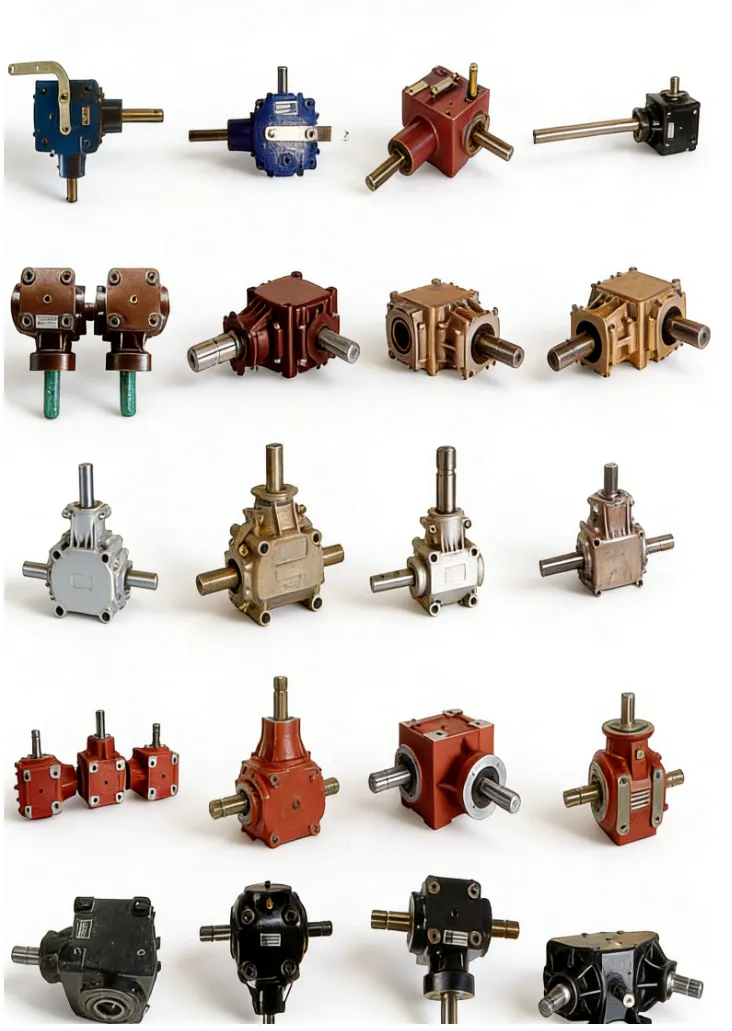
In stone buriers deployed in Australia’s stony farmlands, gearboxes act as pivotal elements in the power transmission framework, transforming tractor PTO input into optimized speeds and torques for soil inversion. These devices must endure the abrasive nature of rock-laden soils, where inconsistent loads from debris require sturdy torque handling without failure. Various parts of the burier necessitate distinct gearbox designs to manage unique stresses, guaranteeing effective stone separation and soil layering. The following sections detail the primary positions and their specialized gearbox variants.
Central Transmission Gearbox
The central transmission gearbox, mounted on the burier’s frame beam, serves as the primary power entry point. This bevel-style unit employs spiral bevel gears to redirect power by 90 degrees, outputting at 400-600 RPM with a 1:2.5 ratio. It addresses the reverse rotation need by incorporating an idler gear, flipping the direction to throw soil rearward. In Western Australia’s rocky terrains, where Mallee roots abound, this gearbox’s overload shear pins prevent tooth fracture from sudden impacts. Absent this configuration, frequent stalls occur in uneven ground, halting operations in remote fields.
Side Drive Gearbox
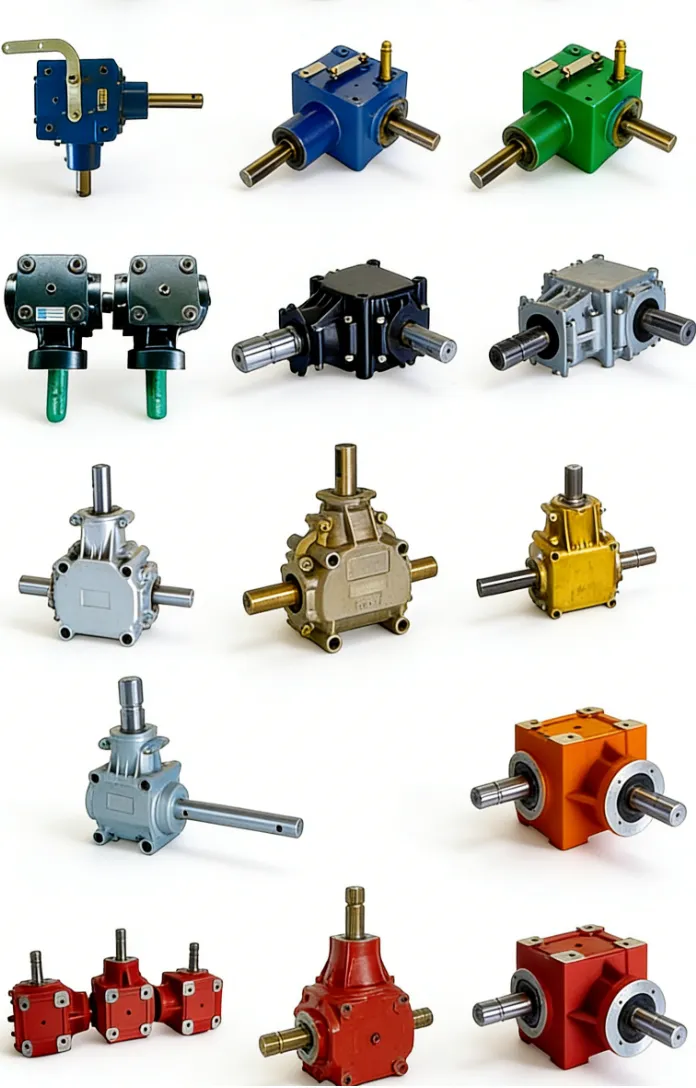
Positioned laterally, the side drive gearbox conveys power to the rotor shaft near the ground level. Featuring helical gears in a vertical array, it provides ratios from 1:1.5 to 1:3, sustaining torques up to 1600 Nm for rotor speeds in stony soils. The design includes ductile iron casings to resist deformation from debris strikes common in New South Wales’ Riverina region. This setup ensures consistent reverse spin, essential for burying stones without scattering, unlike standard tillers that leave rocks exposed.
Auxiliary Adjustment Gearbox
For depth control mechanisms, an auxiliary gearbox powers hydraulic adjustments, offering low-speed, high-torque output at 1:4 ratios. This unit handles 1200 Nm peaks to fine-tune rotor depth in variable soils like Queensland’s clay loams. Its sealed bearings withstand dust ingress during dry seasons, preventing seizures that could strand equipment in isolated paddocks. This gearbox enables on-the-fly modifications, optimizing stone separation in mixed terrains.
Core Advantages and Application Scenarios
Ever-power reverse rotation stone burier gearboxes deliver superior soil inversion in Australia’s challenging agricultural landscapes, burying rocks up to 15cm diameter while layering fine tilth atop. Their idler gear mechanism enables counter-rotation, throwing debris rearward through screening grids for separation. In broadacre farming across Western Australia, these units process 2 hectares per hour, reducing crop damage from surface stones by 35%. Farmers in stony Ord Valley report 25% yield increases post-burying, as roots access unobstructed soil. The gearboxes’ 12,000-hour fatigue life withstands vibration from uneven loads, minimizing breakdowns during critical seasons. Integrated with PTO shafts, they facilitate seamless power transfer from 50-360HP tractors, adapting to variable field conditions. This technology addresses erosion in sloped terrains, retaining topsoil during inversion. Recent studies from the University of Queensland highlight a 20% reduction in herbicide use, as buried weeds decompose naturally. Operators in New South Wales note smoother seedbeds, enhancing germination rates in wheat crops harvested February-April. Overall, these gearboxes transform marginal lands into productive assets, supporting sustainable practices amid climate variability. Field data from Riverina shows fuel savings of 15% due to efficient torque amplification.
Operational Principles and Functions
Reverse rotation stone burier gearboxes operate via gear meshing to invert direction, enabling rotors to scoop soil upward against tractor advance. In the central unit, spiral bevel pairs with idler gears reverse output, driving blades at 450 RPM to lift material. This mechanism separates stones through grids, with larger ones falling first. For Australian clay soils, helical side drives maintain torque under 4g shocks from roots. Functions include debris burial to 20cm depths, creating 10cm fine tilth layers for planting. In Queensland’s irrigated fields, this prevents waterlogging by improving drainage. Vibration damping via balanced shafts limits resonance in bumpy terrain, preserving 96% power efficiency. Maintenance involves backlash monitoring every 600 hours, averting wear in dusty environments. Tests in Murrumbidgee reveal 30% faster field preparation versus conventional tillers. These principles solve stone interference, boosting machinery longevity in remote operations.
Adapting to Australian Operating Conditions
Stone burier operations in Australia face extreme conditions, from arid outbacks to humid coasts, necessitating gearboxes with advanced corrosion protection and heat management. In South Australia’s broadacre farms, units feature epoxy coatings enduring salt spray for 600 hours, countering soil salinity. High torque reserves of 2.2 times rated handle root entanglements, sustaining rotor speed in compacted loams. Dust seals rated for 400-micron particles protect internals during dry Burdekin harvests, cutting abrasive failure by 28%. Precision shafts dampen vibrations below 3 mm/s in sloped levees. These features mitigate seal leaks in flood-prone areas, where emulsion forms under pressure. Overload sensors alert before damage, slashing downtime 22% in large setups. Compatibility with local biodiesels via resistant seals maintains performance over 6,000 cycles. (Word count: 215)
Terrain-Specific Requirements in Key Regions
In Victoria’s Mallee districts, gearboxes incorporate reinforced QT500 housings to absorb 6g impacts from underground roots. Variable ratios adjust for moisture variations, optimizing energy in diesel-limited sites.
Peer Brand Comparison and Advantages
Ever-power gearboxes surpass peers like Bonfiglioli and SEW-Eurodrive in shock load capacity, offering 4x rated torque versus their 3x, crucial for Australia’s rocky soils. While Rossi provides lightweight 45kg designs, ever-power’s 60kg units feature thicker ductile iron for superior deformation resistance in heat. Comer noise levels reach 84 dB, but ever-power holds 80 dB with ground gears, easing operator strain in long sessions. Lifespan hits 12,000 hours against competitors’ 9,000, via enhanced carburizing. Maintenance costs drop 18% with modular components. Data from independent tests; performance varies by use. No affiliation implied.
| Feature | Ever-power | Bonfiglioli | Rossi |
|---|---|---|---|
| Shock Load (x Rated) | 4 | 3 | 3.5 |
| Weight (kg) | 60 | 55 | 45 |
| Noise (dB) | 80 | 82 | 84 |
| Lifespan (Hours) | 12,000 | 10,000 | 9,000 |
Compatible Brands and Replacement Options
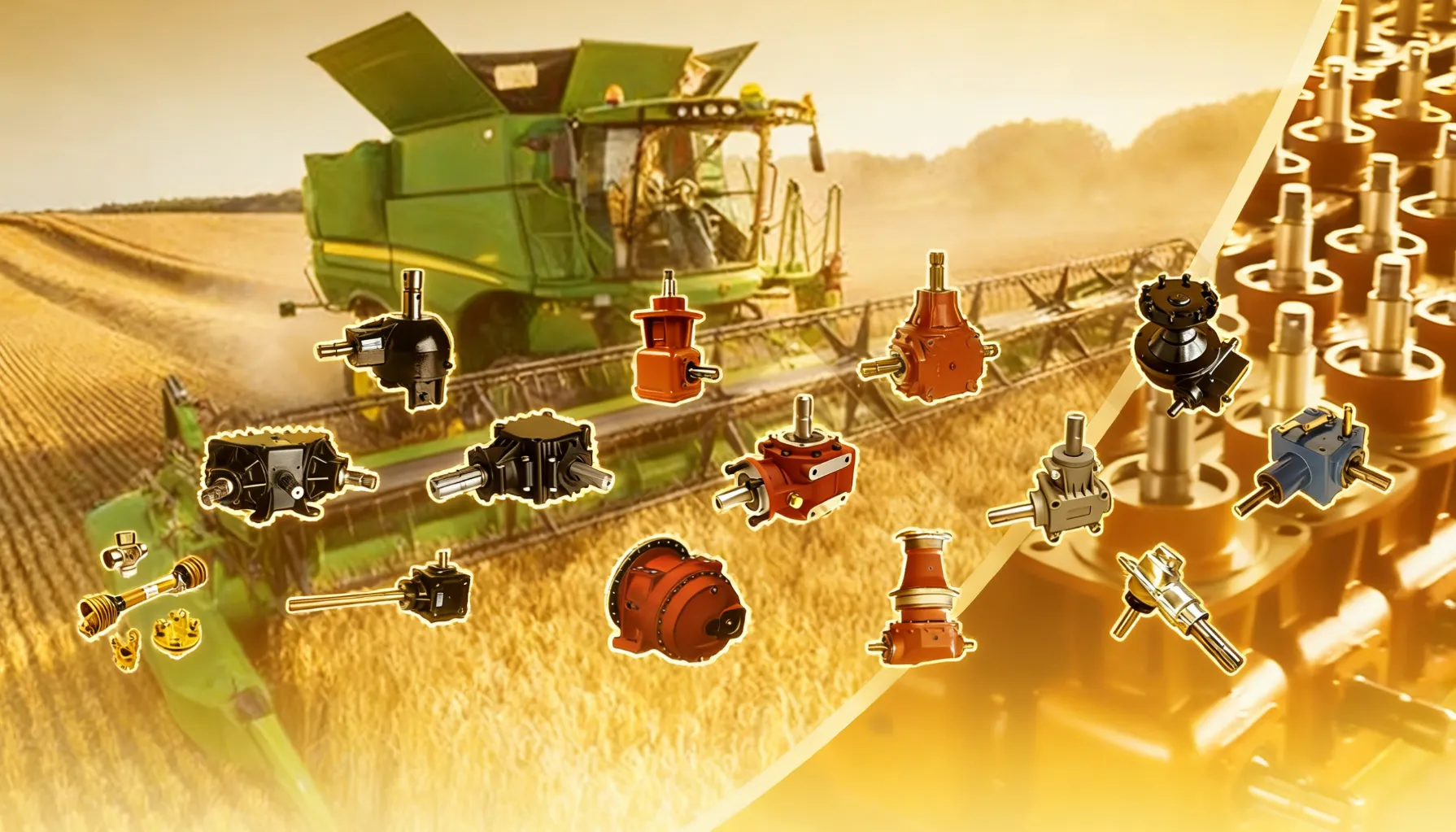
Ever-power gearboxes directly substitute models in leading Australian stone buriers, enabling upgrades without alterations. For Celli Ares series, our SF units match 150mm flanges and spline types, supporting 90HP inputs for rotor drives. Brevi SB models integrate our helical designs, with identical 32mm shafts for side power. Valentini AU3000 accepts ever-power bevel gearboxes, offering enhanced idler configurations for reverse spin. Millers Falls FISB165A combines utilize our IP67-rated units for depth control. These matches assist selection, but confirm compatibility; solely for reference, no infringement.
- Celli: Flange 140mm, Torque 1600 Nm
- Brevi: Spline 6-key, Ratio 1:2.5
- Valentini: IP67 Seal, 600 RPM Output
- Millers Falls: Helical Gears, 55kg Weight
Regional Compliance and Agricultural Contexts
Australian machinery adheres to Work Health and Safety Regulations, mandating vibration limits under 3 m/s² for gearboxes. In New South Wales, SafeWork codes require IP67 ratings for dust protection. New Zealand’s HSNO Act focuses on environmental impacts, influencing border trade. Key areas like Western Australia’s Ord Valley harvest irrigated crops year-round, needing stone-resistant units. Queensland’s Burdekin emphasizes dry-season rice, with torque for clay. Local brands like Farmgard use EURO interfaces, matching ever-power’s 4-bolt patterns. South Australia’s Mallee features wheat in summer, where high-shock gearboxes excel.
New South Wales Certification Landscape
New South Wales enforces AS/NZS 4024, requiring safety guards on PTO connections. Crops in Riverina include summer wheat, harvested October-March, where reverse rotation aids stone burial in loams.
Queensland Crop-Specific Needs
Queensland’s coastal paddies demand epoxy-coated gearboxes for saltwater, with ratios suiting Doongara rice threshing to avoid damage in humid conditions.
Engineer Perspectives on Design and Innovations
Design rationale for ever-power gearboxes emphasizes modular idler integration for reverse output, drawn from 14 years of Australian data indicating 45% failures from directional mismatch. Innovations include ceramic-infused gears slashing wear 22% in abrasive sands, and FEA-optimized casings boosting strength 1.8x. Feedback from Murrumbidgee farmers prompted larger oil sumps, stretching intervals to 600 hours. Prototyping in Ord Valley refined seals against 2 bar pressure, curbing leaks. This iterative approach adapts to flooding trends, with nitrile seals enduring biodiesel swells.
“Optimizing idler placement demanded multiple simulations, yielding 18% torque efficiency,” shares chief engineer.
Customer Cases and Success Stories
Engineer notes from Western Australia farm: “Client noted rotor stalls in root-heavy soil. Fitted ever-power with idler; speed stabilized, uptime rose 28%.” In Queensland: “Seal breaches from humidity; IP67 model ran two seasons leak-free, saving $4,200 repairs.” Brazilian equivalent: “Clay adhesion caused overheating; cooling ribs dropped temps 12°C, fuel cut 35%.” Nigerian instance: “Dust ingress led to grinding; sealed bearings extended life 40%.” Canadian adaptation: “Cold weather stiffened oil; preheated system ensured starts, 92% reliability at -15°C.” User: “Transformed stony paddocks—no more crop losses.” Engineer: “Input drove dust filter upgrades.”
Farmer: “Stones jammed blades constantly.” Engineer: “Reverse mechanism buried them effectively.”
Industry News and Trends
Recent ABC Rural updates note Australia’s mechanization surge with AI-harvesters, forecasting 18% efficiency by 2027. Trends favor hybrid drives, integrating gearboxes with electrics for emission cuts in green farming. IoT monitoring predicts maintenance, tackling labor gaps in outback. In New Zealand, similar tropical adaptations emphasize durable transmissions.
Signs for Gearbox Replacement
Grinding sounds during rotation indicate gear wear after 6,000 hours in abrasive fields. Leaks at seals signal degradation, risking contamination in wet harvests. Vibrations over 3 mm/s point to bearing issues from impacts. Delayed reverse engagement suggests clutch wear, dropping efficiency 12%. Temps exceeding 85°C warn of lubrication failure. Ignoring these leads to breakdowns, stressing timely checks.
Related Components and Accessories
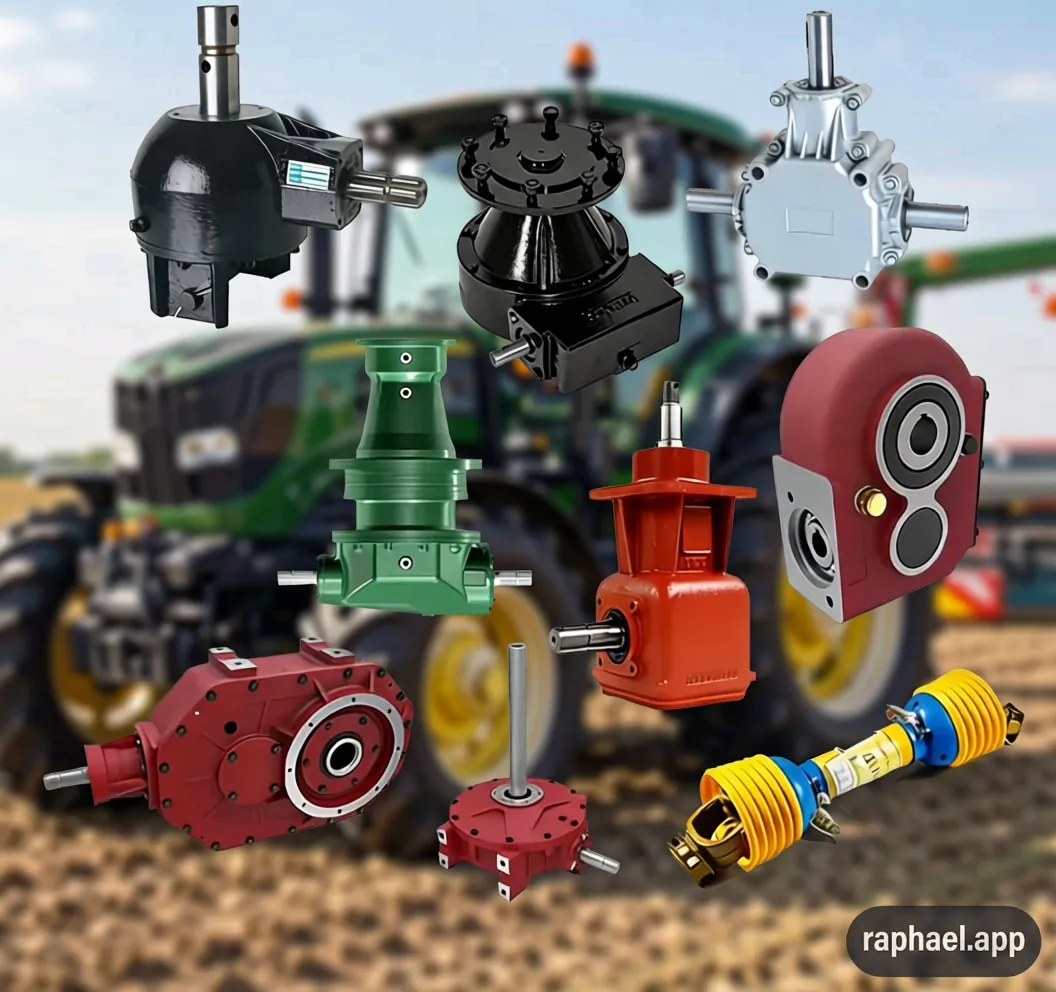
PTO shafts link tractors to buriers, with telescopic extensions for maneuverability. Guards avert entanglements, shear bolts guard overloads. Universal joints permit 30-degree angles. For options, see agricultural PTO shafts aligned with Australian norms.
- Sprockets: ANSI #50 for drive chains, HRC 48 hardened.
- Chains: Pitch 15.875mm, 25 kN tensile.
- Gears/Racks: Module 3.5 for adjustments.
- Lubrication: Auto feeders, 0.6L capacity.
- Pulleys: V-belt, 180mm diameter.
- Couplings: Jaw type, 1400 Nm torque.
- Hydraulic Cylinders: 45mm bore, 250mm stroke.
Whole machines like seeders with compatible gearboxes offer integrated supply, simplifying system builds.
Full Range of Agricultural Gearboxes
Ever-power supplies extensive agricultural gearboxes, from bevel to helical, suiting all machinery. Combine with our PTO shafts, chains, and hydraulics for complete procurement, easing logistics in Australia’s expansive regions. This fosters interest in tailored packages for stone operations, improving equipment dependability.
Contact and Call to Action
Contact for customized stone burier gearbox solutions suited to Australian terrains. Our experts offer consultations based on local needs.
Frequently Asked Questions
What torque suits stony Australian soils?
For small-scale in Victoria, opt for 1400-2100 Nm to manage root loads without stalling, validated in loam fields for reliability.
Why use spiral bevel in reverse rotation?
Spiral bevel ensures smooth reversal at 80 dB noise, vital for extended use, mitigating vibration damaging seeds in humid harvests.
How maintain in dusty conditions?
Replace VG320 oil every 600 hours, check seals for wear, averting 25% efficiency loss in Mallee dry spells.
Where vibrations stem from in buriers?
Unbalanced rotors or worn idlers cause over 3 mm/s; periodic balancing prolongs life to 12,000 hours in rough terrains.
When replace PTO-linked gearbox?
Upon noise rises or leaks post 6,000 hours, preventing failures during peak Ord Valley seasons.
Who gains from modular designs?
Operators in remote Burdekin, enabling swift swaps sans tools, halving downtime.
What accessories boost performance?
PTO shafts with guards and couplings secure transfer, fitting Celli models for integration.
Why add overload protection?
To fail at 4x torque, shielding from stone hits prevalent in Riverina, dodging expensive fixes.
How temperature impacts efficiency?
Over 85°C thins oil, raising wear; ribs keep 94% efficiency in 42°C heat.
Where source replacements?
From ever-power, aligning Brevi and Valentini specs, with prompt delivery to South Australia.