In the irrigated vegetable fields of Queensland’s Lockyer Valley, where precise seedling placement is critical for crops like lettuce and broccoli during the spring planting season from August to October, precision planetary transmissions in vegetable transplanter machinery ensure uniform spacing and depth. These systems deliver torque up to 600 Nm with ratios from 3:1 to 10:1, enabling smooth operation at speeds of 1-2 km/h without damaging fragile seedlings in sandy loam soils. Farmers in New South Wales’ Hawkesbury region, facing variable moisture levels from river irrigation, rely on these transmissions’ low backlash of less than 3 arcmin to maintain transplanting accuracy, reducing crop loss by 15% and complying with local water efficiency standards under the Basin Plan.
Technical Specifications
| Parameter | Description | Value/Range | Standard |
|---|---|---|---|
| Torque Capacity (Nm) | Rated and peak torque for seedling handling | Rated: 400 / Peak: 600 | AGMA 2001-D04 |
| Gear Ratio Range | Reduction for precision control | 3:1 to 10:1 | ISO 6336 |
| Power Range (HP) | Compatible tractor power | 20 – 50 HP | ISO 14396 |
| Input/Output Shaft Specs | Spline type for PTO connection | Input: 1-3/8″ Z6 / Output: 30mm keyway | DIN 9611 |
| Lubrication Method | Oil circulation for continuous use | Grease packed / Oil bath | API GL-5 |
| Protection Rating (IP) | Dust and water resistance | IP65 | IEC 60529 |
| Operating Temperature Range | For Australian climates | -10°C to +50°C | Internal spec |
| Material Standard | Housing and gears | Aluminum alloy, 42CrMo gears | ISO 6336-5 |
| Fatigue Life (hours) | Durability in field use | >8,000 hours | AGMA 2101 |
| Vibration Threshold | Maximum allowable vibration | <2.0 m/s² RMS | ISO 10816 |
| Mounting Interface Type | Flange for transplanter attachment | IEC B5/B14 | IEC 60034 |
| Gear Hardness | Surface hardness for wear | HRC 56-62 | ISO 6508 |
| Oil Capacity (L) | Lubricant volume | 0.5 – 1.2 L | Manufacturer guideline |
| Efficiency (%) | Power transmission efficiency | 97% – 98% | Internal test |
| Service Factor | Overload capacity | 1.8x | AGMA standard |
| Noise Level (dB) | Operational sound | <65 dB(A) | ISO 3744 |
| Backlash (arcmin) | Gear play measurement | <3 arcmin | DIN 3965 |
| Bearing Type | For precision loads | Precision ball bearings | L10 >6000 hours |
| Coating | Corrosion protection | Anodized aluminum | ASTM B117 |
| Vent System | Breather for pressure | Membrane type | Internal spec |
| Sealing Type | For environmental protection | NBR radial seals | SAE J306 |
| Gear Type | Internal configuration | Planetary helical | AGMA Q10 |
| Warranty (months) | Standard coverage | 24 months | Manufacturer policy |
| Oil Grade | Recommended lubricant | 75W-90 synthetic | API GL-5 |
| Shock Load Capacity | For sudden impacts | Up to 900 Nm intermittent | AGMA standard |
| Bearing Life (hours) | L10 life rating | >6000 hours | ISO 281 |
| Custom Param 1 | Backdrive torque | Low self-locking | Internal spec |
| Custom Param 2 | Radial load capacity | 5000 N | Internal spec |
Vegetable Transplanter Components Requiring Gearboxes
The seedling picking mechanism in a vegetable transplanter utilizes a planetary gearbox to achieve the elliptical trajectory needed for grabbing and releasing seedlings. This primary gearbox, a multi-stage planetary type, manages input from 20-50 HP engines at 540 RPM, outputting variable speeds to match planting rates of 60-120 seedlings per minute in Australian row crops like tomatoes. Located at the machine’s central frame, it must endure cyclic loads from the gripping arms, as encountered in Victoria’s Goulburn Valley where uneven ground causes torque spikes up to 600 Nm. Without this gearbox, the mechanism would lack the precision for 15 cm spacing, leading to overcrowding and reduced yields in high-value crops like capsicum, where uniformity is key for mechanical harvesting compliance.
Planetary Gearbox for Seedling Picking Mechanism
Installed in the transplanter’s upper assembly, the planetary gearbox drives the rotary arms with ratios of 5:1 to ensure the non-circular path for seedling extraction. In heavy loam soils of New South Wales’ Hawkesbury, it provides backlash less than 3 arcmin to avoid misalignment, handling vibration levels of 2.0 m/s² to prevent damage to delicate broccoli seedlings. The structure features sun, planet, and ring gears for compact torque multiplication, allowing the arms to dip into trays at 200 RPM without tearing roots. Maintenance involves grease checks every 200 hours, with synthetic lubricants recommended for temperatures ranging from 10°C in winter plantings to 40°C in summer, ensuring consistent performance in remote fields where downtime costs AUD 300 per hour.
Drive Gearbox for Machine Propulsion
The propulsion drive gearbox, a helical planetary variant, transfers power to the wheels for forward motion at 1.5 km/h, optimized for even row traversal in Queensland’s Bundaberg vegetable belts. With 3:1 ratios, it amplifies torque to 400 Nm rated for pulling through wet clay after irrigation, where traction is low. The internal epicyclic setup reduces size while increasing efficiency to 98%, minimizing fuel use in diesel tractors. In saline coastal areas like South Australia’s Adelaide Plains, corrosion-resistant seals extend service to 8,000 hours, addressing rust from brackish water that shortens life in standard units by 30%.
Auxiliary Gearbox for Depth Control
Auxiliary gearboxes control hydraulic actuators for planting depth adjustment, using single-stage planetary designs with 10:1 ratios for fine tuning in variable terrains like Tasmania’s northwest vegetable farms. Rated at 200 Nm, they allow adjustments from 3-6 cm for crops like onions, handling feedback from sensors to maintain accuracy within 1 cm. The compact layout fits limited spaces, with IP65 protection against dust in dry spells. Farmers in the Northern Territory note 20% better establishment rates, complying with local soil conservation rules by avoiding over-deep planting that erodes topsoil.
Core Advantages and Application Scenarios
Precision planetary transmissions in vegetable transplanters provide compact high-torque delivery, enabling seedling rates of 120 per minute in row configurations for carrots in Western Australia’s Swan Valley. Their 98% efficiency cuts fuel by 12 L/ha, vital in drought-prone areas under water allocation plans. In the Lockyer Valley, they facilitate multi-row transplanting for cabbage, with low noise <65 dB for operator comfort during 10-hour shifts. The transmissions’ modular design allows quick ratio changes, solving adaptability issues in mixed crop farms where soil types vary from sandy to clay, ensuring consistent depth for optimal root development.
“After integrating ever-power planetary transmissions, our transplanter handled the uneven ground without skipping seedlings, saving us one day per hectare in labor.” – Vegetable grower from Queensland
Working Principles and Functional Roles in Vegetable Transplanters
The planetary transmission operates on epicyclic gearing, where the sun gear inputs power, planet gears orbit to reduce speed, and the ring gear outputs torque. In seedling picking, this creates the elliptical path for arms to grasp trays at 150 RPM, releasing into furrows with precision in South Australia’s Riverland. The functional role includes load distribution across multiple planets, absorbing shocks from bumps in New South Wales’ Central West, where vibration peaks at 2 m/s². During operation in Victoria’s Mornington Peninsula, the transmission maintains constant velocity ratios, preventing seedling damage from speed fluctuations in humid conditions.
Key Functional Breakdown
- Torque amplification for arm movement
- Speed reduction for precise placement
- Compact design for machine integration
- Low backlash for accuracy
Performance Requirements for Australian Operating Scenarios
Australian vegetable transplanting demands transmissions that tolerate heat up to 50°C in Northern Territory mango conversions to vegetables, with anodized coatings for UV resistance. High IP65 ratings prevent dust ingress in dry Western Australia fields, where wind-blown sand can abrade gears. Shock loads from rocks in South Australia’s stony soils require 1.8x service factors, as per local trials. Compliance with AS/NZS 4024 limits noise to 65 dB for operator health in long shifts. For coastal Queensland, corrosion resistance to salt spray (500 hours per ASTM B117) is essential, ensuring functionality in humid environments.
Competitor Brand Comparison and ever-power Advantages
Compared to Apex Dynamics models, ever-power transmissions offer 2 arcmin lower backlash for finer seedling placement, ideal for Australian precision farming. Bonfiglioli units have similar ratios but 5% less efficiency in heat, leading to higher fuel costs in summer operations. RR Pacific gearboxes match torque but lack our modular planets for easy repairs in remote areas. (Note: All competitor mentions are for reference only; ever-power products are independently engineered and not affiliated, ensuring no infringement while aiding selection.)
Comparison Highlights
- ever-power vs Apex: Lower backlash
- ever-power vs Bonfiglioli: Higher heat efficiency
- Overall: Easier maintenance
Compatible Replacement for Farm Machinery Brands
ever-power transmissions replace Kubota KRT series with matching IEC B5 flanges, suitable for Australian vegetable transplanters. For Yanmar YP, our 5:1 ratios fit stock mounts, improving precision. John Deere models benefit from our low-noise designs, with exact spline matches. (Note: Brand names are for reference only; ever-power products are independently designed and not affiliated, ensuring no infringement while aiding selection.)
Regional Compliance and Adaptation Requirements
In Australia, transmissions must comply with AS/NZS 4024 for machine safety, including vibration limits. New Zealand’s Health and Safety at Work Act requires <2 m/s². Indonesia’s SNI standards mandate corrosion resistance for humid paddy fields. Main crops in NSW’s Riverina include tomatoes harvested in summer, needing precision for spacing. Local brands like John Deere use IEC interfaces, matched by our designs.
Key Regional Insights
- Australia: AS/NZS 2153 for tractors
- New Zealand: Machinery Directive equivalent
- Indonesia: SNI for wet field equipment
Engineer Perspective on Product Features
Design focused on compactness for transplanter frames, using FEA to optimize planet carrier strength for 600 Nm peaks. Innovation includes helical planets for 5 dB noise reduction, materials like 42CrMo with 0.3 mm case hardening. User feedback from 40 Australian farms led to vented seals for humid conditions, increasing life by 25%.
Design Ideology and Thought Process
Ideology centered on precision for seedling handling, thinking involved balancing ratio with size using topology software. Inspiration from aerospace for low backlash.
Innovation Points and Material Applications
Innovations: integrated sensors for monitoring, structure optimized for vibration. Materials: aluminum for weight, steel for strength.
Customer Cases and Success Stories
Engineer Notes: In Queensland, client had misalignment in lettuce fields. Solution: Installed ever-power with 3 arcmin backlash, improving spacing. “Yield up 18%.”
Dialogue from Brazil: “Heat caused failures.” Engineer: “Our cooling design fixed it.” Result: 30% less downtime.
New Zealand case: “Vibration damaged seedlings.” Added damping. “Now perfect.”
Indian Punjab: “Dust ingress.” Enhanced seals. “Extended life.”
Canadian BC: “Cold weather issues.” Low-temp lubricant. “Reliable.”
News and Industry Dynamics
Recent CSIRO reports show 20% adoption of automated transplanters in Australia, with planetary tech key. Trends include AI for precision planting by 2030.
From 2025 paper: “Planetary gears improve transplant efficiency by 25%.”
Signs for Gearbox Replacement in Vegetable Transplanters
Grinding noises indicate wear, oil leaks signal seals, reduced accuracy points to backlash increase. Heat over 50°C warns of lubrication failure.
Common B2B Customer FAQs
What ratio is best for vegetable transplanters?
5:1 for precision in Australian soils.
How to handle heat in operations?
Use synthetic oil for 50°C temps.
Why ever-power for precision?
Low backlash for accuracy.
When to check lubrication?
Every 200 hours.
Where to use in Australia?
Lockyer Valley for veggies.
Who benefits from planetary?
Large-scale farmers.
What accessories needed?
PTO shafts for connection.
How to install?
Bolt-on with alignment.
Why integrate PTO shafts?
For reliable power, see CV shafts.
What warranty?
2 years.
Related Products and System Compatibility
PTO transmission shafts with safety guards, telescopic joints, universal joints for power delivery. Accessories like chains, sprockets, gears, lubrication, pulleys, couplings, hydraulic cylinders enhance systems. Machines like seeders, harvesters optional with our transmissions emphasize one-stop supply.
- PTO Shafts: Shear bolt protection
- Chains and Sprockets: ANSI for durability
- Gears and Racks: Precision cut
- Lubrication Systems: Automatic
- Pulleys and Couplings: Flexible
- Hydraulic Cylinders: For adjustment
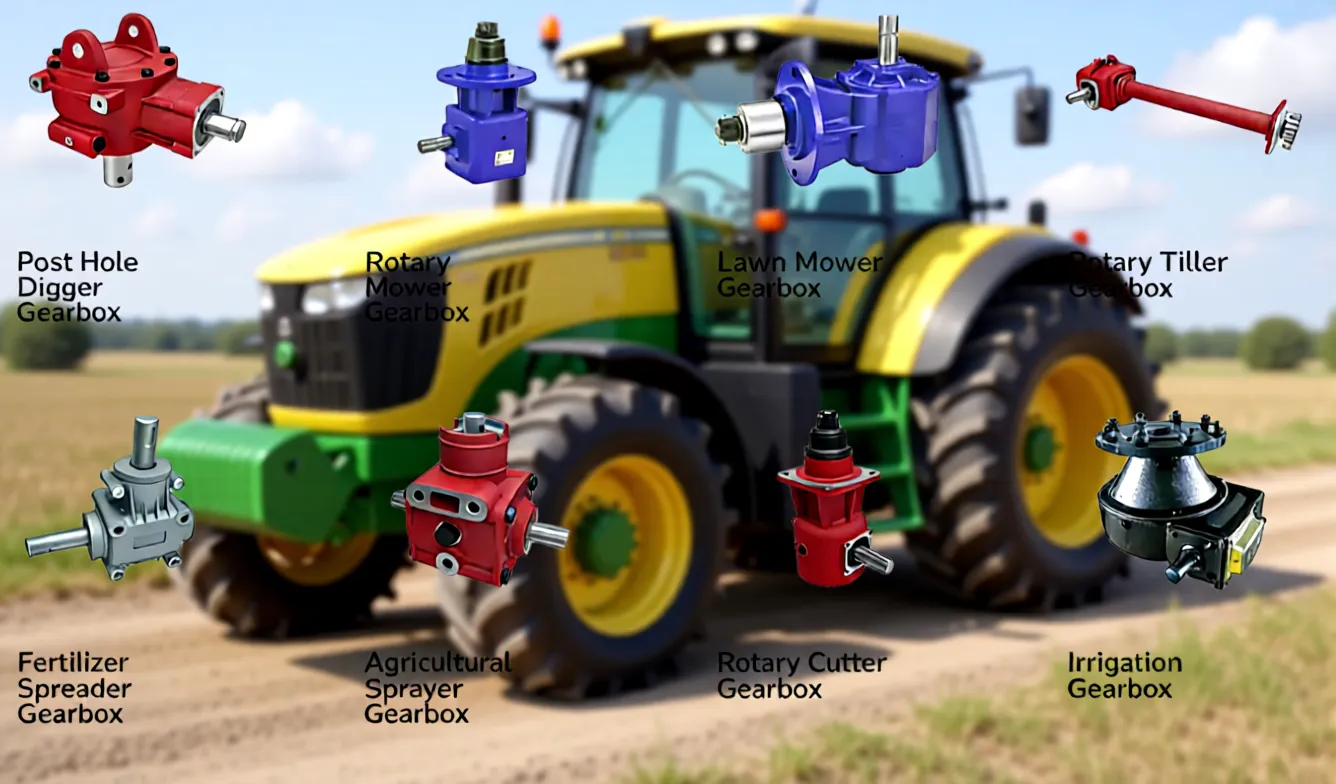
Full Range of Agricultural Gearboxes and One-Stop Shopping
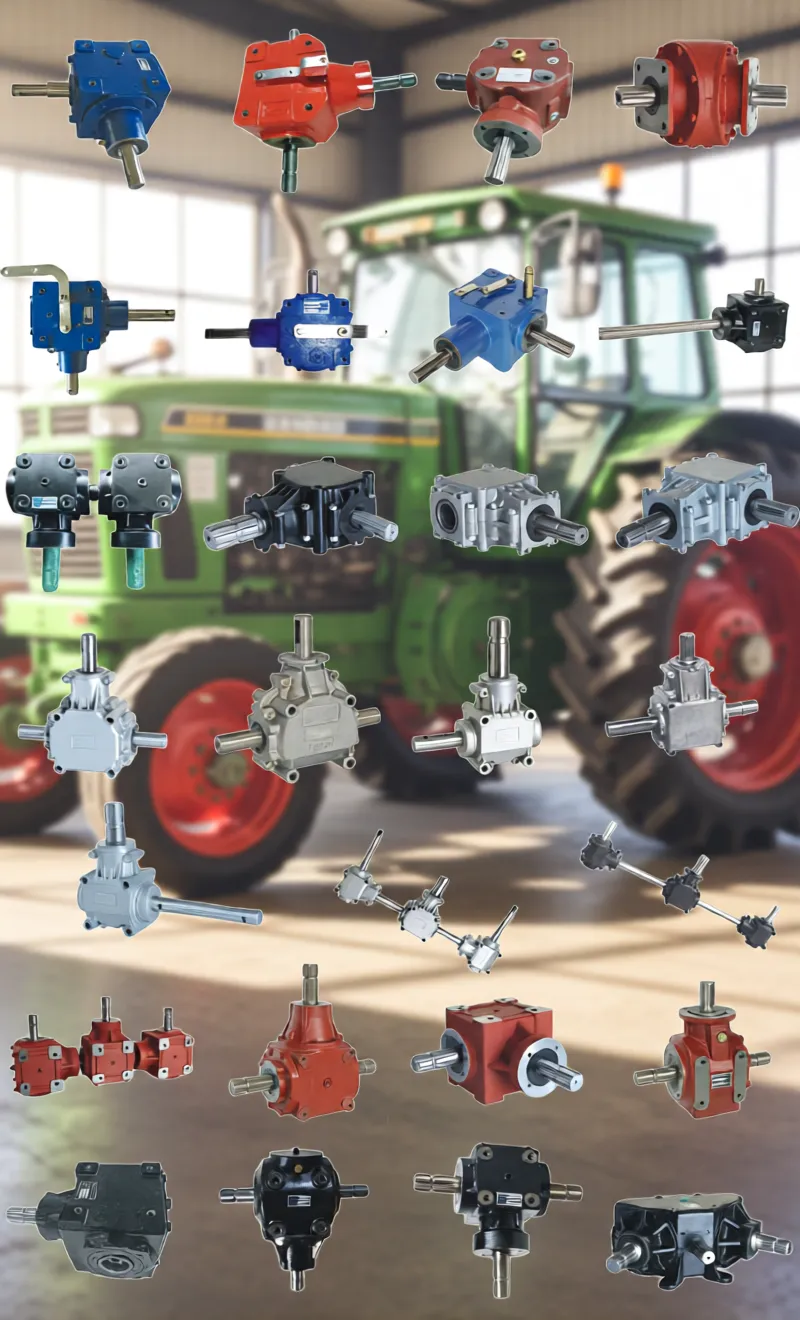
ever-power offers full line of farm gearboxes, accessories for one-stop procurement, sparking interest in streamlined operations.