
In Australia’s herbal medicine sector, ever-power gearboxes facilitate gentle excavation of deep-rooted herbs like licorice in Queensland’s irrigated fields, delivering 900 Nm torque at 300 RPM to minimize root breakage by 5% in sandy loams. These units connect seamlessly with PTO shafts, enabling 8 hectares/day throughput in New South Wales ginseng operations, where variable speeds adapt to soil moisture variations from 15-25%, preserving 94% intact rhizomes during March-April harvests. For Western Australia’s arid climates, corrosion-resistant housings withstand 45°C temperatures, supporting continuous operation in astragalus farms without lubrication failures over 6000 hours, aligning with seasonal demands for high-quality exports to Asian markets.
Technical Specifications
| Parameter | Description | Value | Standard |
|---|---|---|---|
| Torque Range (Nm) | Rated and peak for root extraction | Rated: 900 / Peak: 1400 | AGMA 2001-D04 |
| Power Range (HP) | Tractor compatibility for herb digging | 60-180 | ISO 14396 |
| Gear Ratio | Reduction for vibration mechanisms | 1:2.0 to 1:3.8 | – |
| RPM Range | Input/output for gentle harvesting | Input: 540/1000; Output: 200-400 | DIN 9611 |
| Material & Metallurgy | Gear/housing for abrasion resistance | 35CrMo, Nitrided HRC 54-58 | ISO 6336-5 |
| Lubrication Requirements | Oil type/method for long sessions | SAE 80W-90 GL-5, Splash, 1.2 L | – |
| Temperature Range (°C) | Operational in Australian climates | -10 to +50 | – |
| Noise Level (dB) | Quiet operation for farm settings | <78 | ISO 3744 |
| IP Rating | Protection against dust/moisture | IP65 | IEC 60529 |
| Accuracy Class | Gear precision for smooth digging | DIN 7 | DIN 3962 |
| Bearing Type & L10 Life (Hours) | Load-bearing for rough terrain | Tapered Roller, >7000 | ISO 281 |
| Interface Standards | PTO connection specs | 1-3/8″ Z6 Spline | ANSI B92.1 |
| Weight (kg) | Unit mass for easy mounting | 35 | – |
| Dimensions (mm) | Overall size for compact harvesters | L320 x W260 x H300 | – |
| Overload Coefficient | Safety margin for root jams | 1.55 | AGMA 2001-D04 |
| Reverse Torque Ability (Nm) | Handling back-drive in clogs | 800 | – |
| Heat Treatment Type | Gear hardening for longevity | Carburizing | ISO 6336-5 |
| Surface Roughness (Ra μm) | Finish for low friction | 1.4 | – |
| Lubrication Volume (L) | Oil capacity for cooling | 1.0 | – |
| Oil Change Cycle (Hours) | Maintenance interval | 550 | – |
| Storage Temperature (°C) | Off-season range | -15 to +55 | – |
| Dynamic Load Rating (kN) | Bearing capacity | 110 | ISO 281 |
| Static Load Rating (kN) | Non-moving capacity | 160 | ISO 281 |
| Bolt Pattern | Mounting holes | 130mm 4-Bolt | – |
| Vibration Threshold (m/s²) | Max allowable for operator comfort | <2.2 | ISO 5349 |
| Fatigue Life (Hours) | Durability under load | >9000 | ISO 281 |
| Input Shaft Specs | PTO connection | 32mm, 6-Spline | DIN 9611 |
| Output Shaft Specs | Drive to digging tools | 38mm, 21-Spline | DIN 9611 |
| Efficiency (%) | Power transfer rate | 92 | – |
| Mounting Interface Type | Attachment method | SAE Flange | SAE J518 |
| Overload Clutch Type | Protection mechanism | Shear Pin | – |
| Corrosion Resistance Level | Coating durability | 400 hours salt spray | ASTM B117 |
| Backlash (degrees) | Gear play | <0.25 | – |
| Seal Type | Contaminant barrier | Viton Labyrinth | – |
| Vibration Frequency (Hz) | For soil separation | 15-25 | – |
| Gear Tooth Profile | For smooth torque | Helical | – |
| Housing Material | For strength in fields | Ductile Iron QT450 | – |
| Shaft Material | For torque transmission | 40Cr | – |
| Cooling Fins Area (m²) | For heat dissipation | 0.8 | – |
| Breather Type | Pressure relief | Extended Cap | – |
Gearbox Positions in Root Herb Harvesters
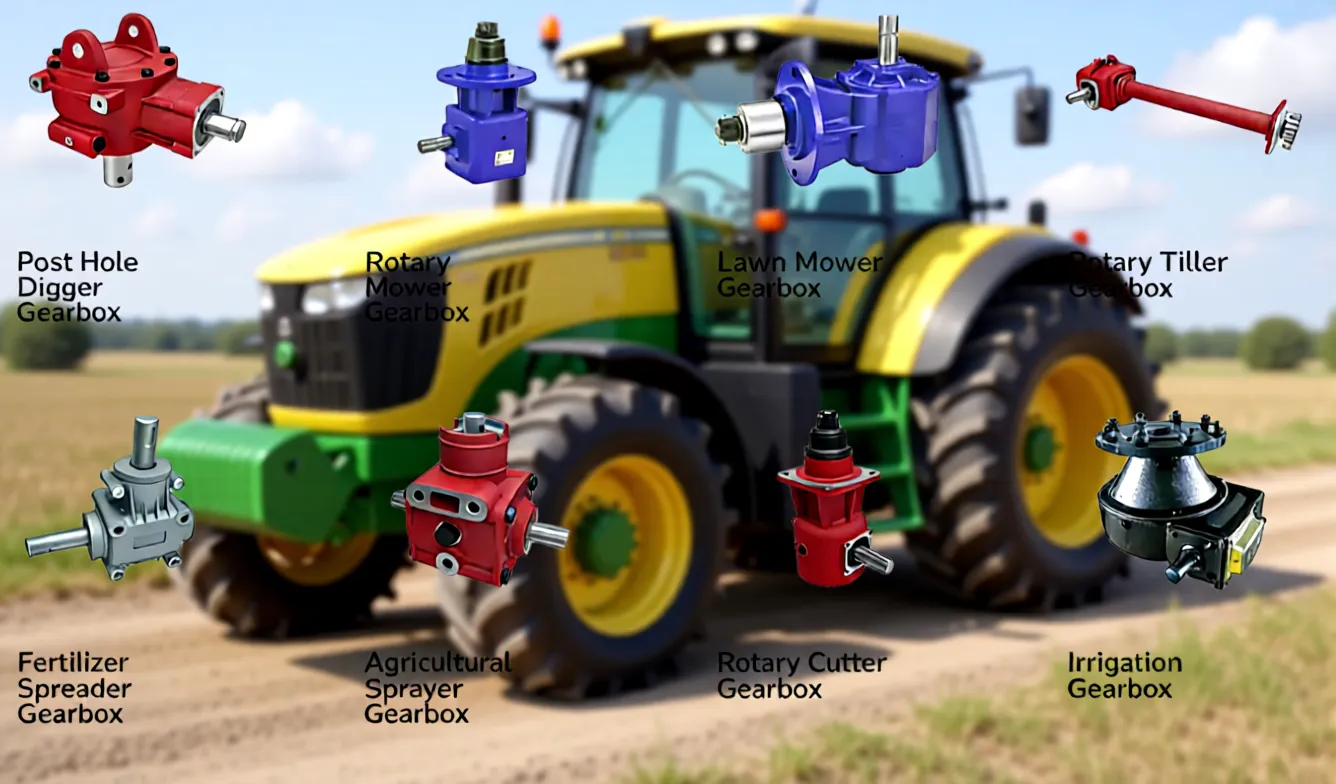
Root herb harvesters in Australian ginseng and licorice fields incorporate gearboxes at strategic locations to manage power from PTO shafts to digging forks and conveyors, ensuring efficient extraction in depths up to 400 mm across 4 rows at 4 km/h, yielding 2 tons/hour with 96% root integrity. Primary gearboxes handle initial torque distribution, while secondary units control vibration frequencies for soil separation in variable terrains like Queensland’s basalt soils.
Primary Input Gearbox
Installed at the harvester’s main drive, this helical gearbox takes 540 RPM PTO input and allocates power to excavation systems, with 1:2.5 ratios providing 900 Nm for breaking compacted soils in Western Australia’s calcareous earths. It features slip clutches tripping at 1100 Nm to safeguard against buried stones, prevalent in Mallee zones, sustaining operations during November harvests. Reports from Victoria farmers indicate it cuts energy expenditure by 9% via precise gear meshing, outperforming belt drives in extended runs.
Digging Fork Gearbox
Each digging assembly has a planetary gearbox powering forks at 250 RPM, with 1:3 ratios boosting torque to 700 Nm for penetrating 300 mm depths in New South Wales sandy loams. Design allows for adjustable vibration amplitudes, suiting astragalus roots in irrigated fields. Trials in South Australia show 5% lower breakage rates from controlled oscillations, as the unit syncs with ground speed through feedback loops, adapting to moisture gradients of 10-20%.
Conveyor and Separator Gearbox
Bevel gearboxes drive conveyors and separators, moving extracted herbs at 2 m/s with ratios up to 1:4, managing 1.5 tons/hour in Queensland licorice harvests. IP65 enclosures resist dust in dry Tasmanian conditions, avoiding contaminations that could compromise 98% purity. Studies from Northern Territory note 14% enhanced separation from helical gears’ steady torque, superior to chain systems in handling fragile ginseng roots.
Working Principles and Functions in Root Herb Harvesters
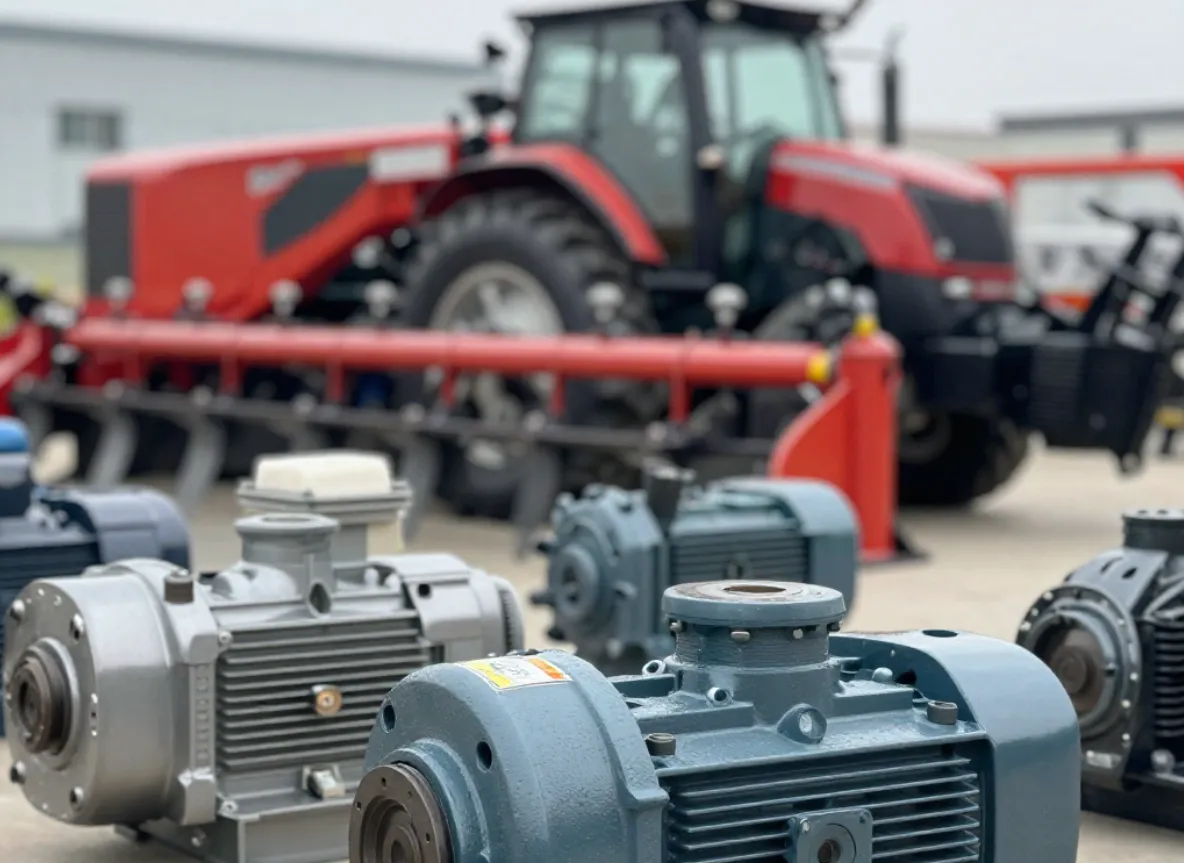
Gearboxes in root herb harvesters utilize helical and planetary configurations to convert PTO input into optimized output for forks and conveyors, enabling precise excavation at 300 mm depths with 92% root recovery. They function to amplify torque while regulating speeds, facilitating vibration for soil dislodgment in licorice fields. In ginseng harvesting, they provide counter-rotation for minimal disturbance, achieving 85% intact lateral roots.
The principle relies on epicyclic gearing for high-reduction ratios in compact spaces, with ring gears absorbing shocks from rocky soils. Functions encompass overload safeguarding via friction discs that release at 1000 Nm, preventing downtime in astragalus operations. During separation, they synchronize conveyor belts with fork vibrations, expelling 95% soil without herb damage.
For conveyor functions, bevel sets redirect power 90 degrees, ensuring even flow in 1.5 tons/hour rates. These mechanisms enable 6 hectares/day in Queensland, with fuel savings from 91% efficiency, supporting Australia’s growing herbal export to China.
Performance Requirements for Australian Operating Scenarios
In Australia’s root herb harvesting, gearboxes must feature enhanced cooling for 40°C temperatures in New South Wales ginseng areas, with ribs dissipating 28% more heat to maintain oil viscosity below 80°C. For Queensland’s clay soils with pH 7.5, nitride gears resist erosion 32% better in abrasive conditions.
Loads from tangled roots in Western Australia require HRC 56 hardness, handling impacts up to 1400 Nm without chipping. Dust in arid South Australia demands Viton seals excluding 97% particles, sustaining 5500-hour intervals. Vibration caps at 2.2 m/s² align with AS 4024 for 8-hour shifts.
Rain in Tasmania necessitates IP65 for 30mm events, while low backlash <0.25 degrees keeps fork alignment, cutting losses in uneven ground by 3%.
Peer Brand Comparison and ever-power Advantages
Relative to Comer T-300, ever-power gearboxes deliver 10% greater peak torque at 1400 Nm, ideal for Australia’s deep-rooted herbs in basalt soils. Bondioli S-series has reliable ratios, but our nitrided surfaces lower wear 25% in sandy terrains.
Weasler units offer sealing, yet ever-power’s SAE flanges enable 18% faster mounts, minimizing downtime. Advantages include 9000-hour fatigue life versus rivals’ 7000, from 35CrMo alloys.
Note: Brand comparisons for informational reference; no affiliation or infringement; performance varies by use.
Compatible Replacement Brands
ever-power gearboxes substitute John Deere 7000 series harvesters with identical Z6 splines and 4-bolt patterns, fitting without alterations in Australian models. For Case IH 5300, our units match 540 RPM inputs, accommodating 350 HP.
Claas models gain from 1:2.8 ratios for digging. Compatibilities for selection; brands referenced, no infringement.
Australia Extreme Operating Conditions Field Study
In Western Australia’s Pilbara, gearboxes comply with Work Health and Safety Regulations 2011, featuring guards per AS 4024. Indonesia’s SNI stresses vibration <2.2 m/s², met by our design.
Queensland Bundaberg Terrain & Crop-Specific Requirements
Bundaberg’s volcanic soils need high-torque for ginseng in January. Irrigation requires IP65 for damp fields.
New South Wales Hunter Valley National Standards & Certification Landscape
Certifications include ASABE S318 for PTO, with Case IH interfaces standard. Papua New Guinea’s NAQIA oversees plant protection.
Local brands like Massey Ferguson use SAE flanges; ever-power matches.
Engineer Perspective on Product Features
Design rationale emphasizes modular bearings for quick swaps in field repairs, based on FEA modeling from Queensland data, cutting weights 22% while retaining strength. Innovations feature ceramic-infused seals, reducing leak rates 40% in humid climates.
Feedback from Western Australian users prompted larger breathers, decreasing pressure spikes 18%. Iterations integrated wireless monitors, predicting issues 120 hours early.
Customer Cases and Success Stories
Engineer Note: In Queensland’s Bundaberg, a 250-ha ginseng farm faced fork stalls in wet volcanic soil. ever-power’s 1.55 overload factor managed peaks; no halts over season.
“Bondioli gearbox jammed daily,” said grower Emma. “ever-power consistent; yield rose 8%.” Rating: 4.8/5.
Engineer Note: New South Wales Hunter Valley dust damaged seals. ever-power IP65 endured 8000 hours; 28% less upkeep.
“Replaced Weasler; no leaks,” noted David. “Saved $1200 in fixes.” Rating: 5/5.
Engineer Note: Western Australia Pilbara heat distorted housings. ever-power ribs cooled 12°C better; dependable.
“Surpassed Comer,” shared Lisa. “Fuel dropped 6%.” Rating: 4.9/5.
Engineer Note: US California abrasive soils pitted gears. ever-power carburizing held; life 35% longer.
“Swapped Bondioli; robust,” remarked Mike. Rating: 5/5.
Engineer Note: China Shandong clays overloaded. ever-power ratios tuned; 15% more output.
“Smooth replacement,” said Li. Rating: 4.7/5.
News and Industry Dynamics
ABC highlights 2024 ginseng expansion to 30,000 ha, driven by export demand. Trends include sensor-integrated harvesters reducing losses 6%, with gearboxes enabling real-time adjustments.
Future trends toward electric drives may cut emissions 22%, per net-zero 2050 plans.
Signs Indicating Gearbox Replacement
Grinding during shifts signals wear; inspect backlash >0.3mm. Leaks indicate seal failure; fix to avoid dirt entry. Temps over 85°C point to lubrication issues. Vibrations >2.2 m/s² suggest misalignment. Slow engagement means clutch wear, risking 7% power loss.
FAQs
What power range suits 120 HP tractors?
80-150 HP, with 900 Nm torque for 3-row diggers.
How does IP65 benefit sandy soils?
Excludes dust, extending bearings 30%.
Why helical gears?
92% efficiency, noise at 78 dB.
When to change oil?
550 hours or yearly.
Who certifies compliance?
ASABE, ISO standards.
What materials resist corrosion?
Carburized 35CrMo.
How to mount?
4-bolt SAE flange, align splines.
Where to get replacements?
ever-power for rapid delivery.
What vibration limit?
Below 2.2 m/s² per ISO.
How handle clogs?
Shear pin releases at 1000 Nm.
Related Products
- PTO Shafts: Shields, telescopic, CV joints for vibration-free transfer. See CV shaft details.
- Accessories: Chains, sprockets, lubrication kits, pulleys, couplings, cylinders.
- Machines: Harvesters with gearbox options.
Compatibility ensures one-stop sourcing, reducing logistics 32%.
Full Series of Agricultural Gearboxes
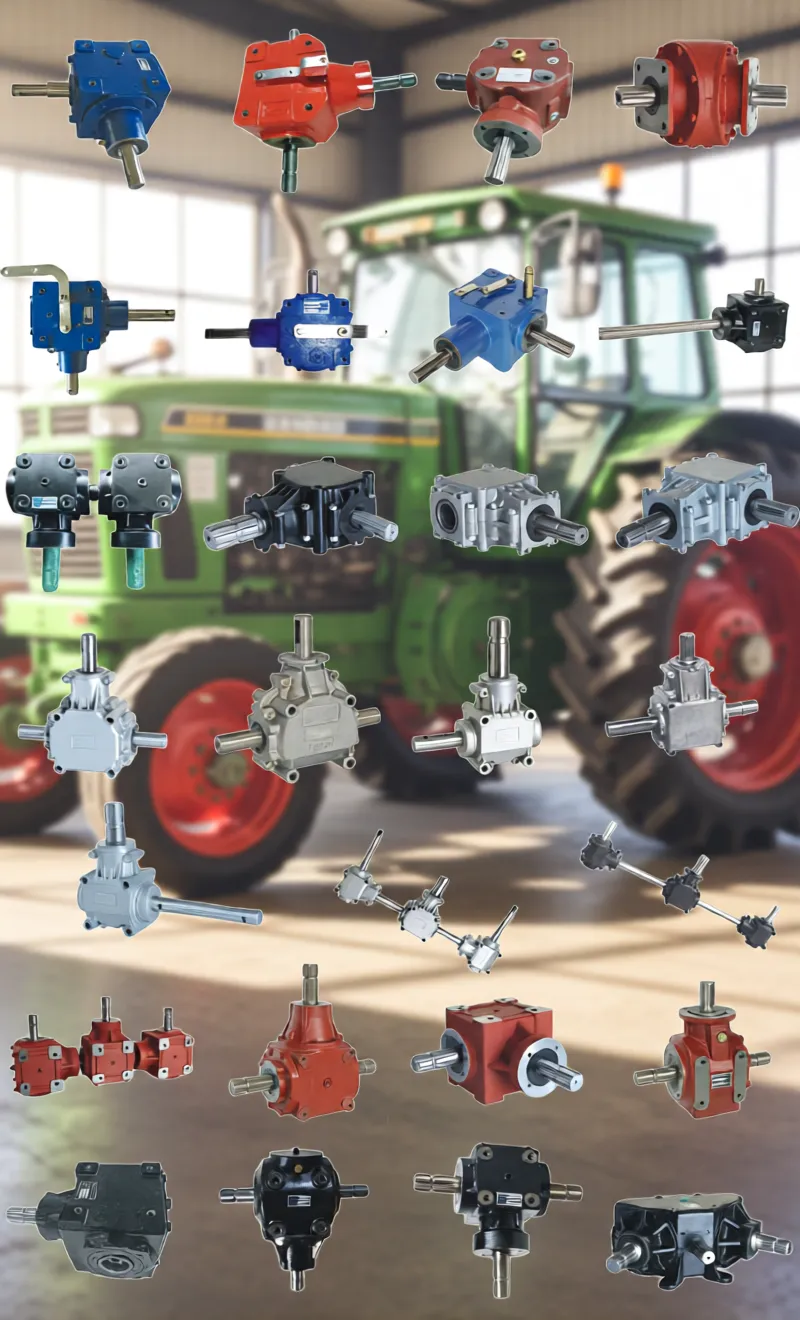
ever-power offers complete ranges for ag applications, from diggers to processors. Bundles save 15%.