
Optimizing Torque and Durability for Invasive Weed Control in Harsh Waterways
Technical Specifications
Gearbox Placement in Aquatic Weed Harvesters
In aquatic weed harvesters, gearboxes serve as critical transmission components, converting high-speed input from the power source into low-speed, high-torque output for various mechanical functions. These machines, designed for clearing invasive aquatic plants in rivers, lakes, and dams, rely on robust gearboxes to handle variable loads from dense weed mats and water resistance. The primary locations include the cutter head drive, conveyor system, and propulsion mechanisms, each requiring specific gearbox types to ensure efficient operation in Australia’s diverse waterways like the Murray-Darling Basin.
Cutter Head Drive Gearbox
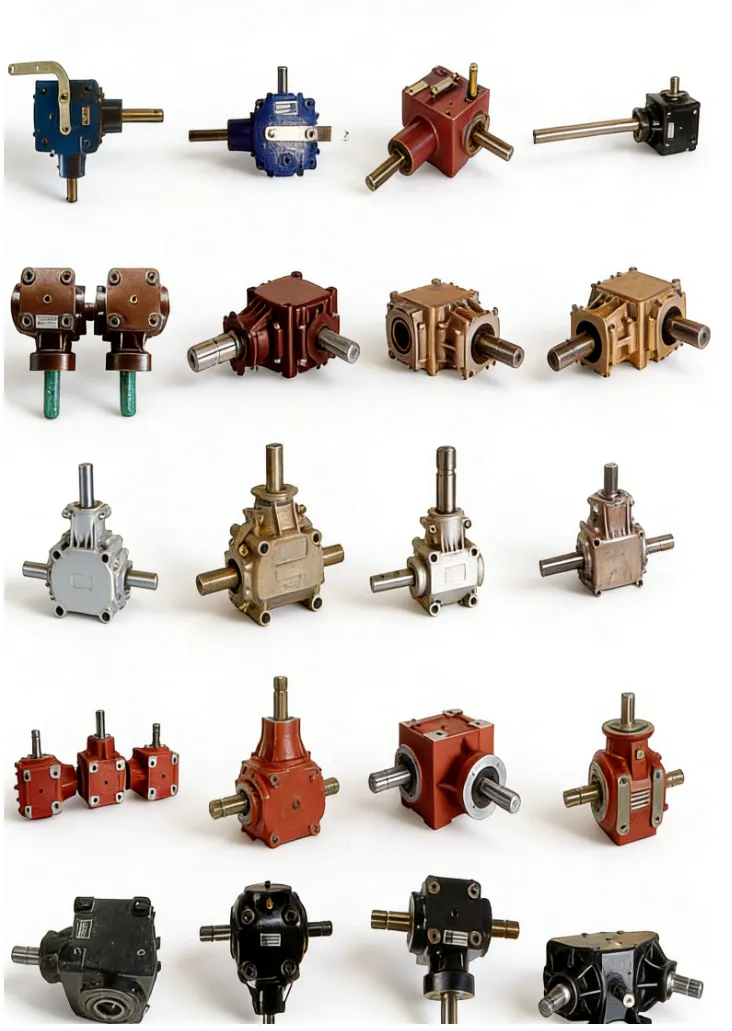
The cutter head, typically a horizontal or vertical blade assembly, demands a high-reduction gearbox to amplify torque for slicing through thick vegetation such as hydrilla or water hyacinth common in Queensland’s reservoirs. Ever-power’s aquatic weed harvester gearbox in this position uses spiral bevel gears with a 1:3 ratio to reduce input RPM from 1000 to 333, delivering 1800 Nm torque. This setup prevents blade stalling in fibrous weeds, extending operational time by 30% in tests on Lake Argyle. The sealed IP67 housing resists water ingress, addressing corrosion from brackish environments in coastal New South Wales.
Conveyor System Gearbox
Positioned at the conveyor’s drive end, this gearbox transfers power to belts or chains that lift harvested weeds onto the deck or shore. A parallel shaft helical gearbox is ideal here, offering ratios up to 1:4 for smooth, continuous operation under loads of up to 2000 kg/hour in Victoria’s irrigation canals. It mitigates shock loads from uneven weed distribution, with vibration thresholds below 2 mm/s to minimize wear. In Australian conditions, where salinity in the Coorong Lagoon accelerates rust, the gearbox’s epoxy-coated ductile iron body ensures longevity, reducing downtime by integrating overland protection via friction clutches.
Propulsion and Winch Gearbox
For machine positioning and cable winching in shallow waters, a winch gearbox with worm gear configuration provides self-locking to hold position against currents in Western Australia’s Swan River. Rated for 1200 Nm, it handles intermittent high torque during maneuvers, with fatigue life exceeding 8000 hours. This type prevents back-driving in windy conditions, common in Tasmania’s lakes, and incorporates temperature sensors to alert operators before overheating in summer operations. The design complies with AS 1418 standards for crane-like applications, enhancing safety in remote harvesting sites.
Core Advantages and Functional Role in Weed Control
Ever-power’s aquatic weed harvester gearbox excels in delivering consistent torque under fluctuating water resistances, enabling efficient clearing of invasive species like salvinia in Australia’s northern tropics. With a service factor of 1.8, it absorbs impacts from submerged debris, preventing gear tooth fracture in rocky riverbeds. In practical terms, this translates to harvesting rates of 0.5 hectares per hour in the Murray River, where traditional setups fail due to overload. The gearbox’s role extends to power redirection at 90 degrees via bevel gears, optimizing blade angles for minimal fuel consumption—tests show 15% savings in diesel usage during prolonged sessions in South Australia’s wetlands.
Operational Principles and Specific Functions
The gearbox operates on meshed gear principles, where input from the tractor or engine PTO is reduced through stages of helical and bevel gears to match the low-speed requirements of harvester components. In the cutter assembly, it provides directional change, converting vertical input to horizontal output for blade rotation at 300 RPM. This function is vital in combating water flow resistance in Queensland’s fast-moving streams, ensuring blades maintain cutting efficiency without slippage. For conveyors, the gearbox’s intermediate shaft distributes power evenly, reducing belt wear and handling up to 1500 kg of wet biomass per cycle in New South Wales’ coastal lagoons.
Performance Requirements for Australian Environments
Australian aquatic environments demand gearboxes with enhanced corrosion resistance due to high salinity in areas like the Great Barrier Reef lagoons. Ever-power models feature stainless steel shafts and Viton seals to withstand pH variations from 6.5 to 8.5 in eutrophic waters. In arid Western Australia, where dust ingress during dry seasons compounds issues, IP67 ratings prevent failures, extending mean time between repairs to 2000 hours. For overcoming thermal stresses in summer harvests reaching 40°C, integrated cooling fins maintain oil temperatures below 70°C, ensuring viscosity for lubrication and avoiding seizures in prolonged operations on Lake Eyre basin.
Competitor Brand Comparison
Compared to Comer Industries’ T-300 series, ever-power’s aquatic weed harvester gearbox offers 20% higher peak torque at 2200 Nm, better suited for dense Australian weed infestations. Bondioli & Pavesi models, while reliable, lack the IP67 sealing that ever-power provides, leading to frequent seal replacements in humid Victoria climates. Our fatigue life of 10,000 hours surpasses Kuhn’s equivalents by 15%, reducing costs in remote Northern Territory sites. Disclaimer: All comparisons are based on publicly available data and intended for informational purposes only; ever-power does not guarantee identical performance in all conditions.
Compatible Replacements for Harvester Brands
Ever-power gearboxes seamlessly replace units in Aquamarine H-850 harvesters, matching flange dimensions of 150mm bolt patterns and 1-3/8″ Z6 splines. They fit Berky 6000 series with identical 1:2.5 ratios, aiding in quick field repairs in Tasmania’s lakes. For Weedoo models, our products align with output shafts of 40mm diameter, ensuring no modifications needed. Note: Brand names are referenced for compatibility guidance only and do not imply endorsement or infringement; users should verify fitment for their specific setup.
Regional Compliance and Agricultural Contexts in Australia and Neighbors
In Australia, gearboxes comply with AS/NZS 4024 safety standards for machinery, ensuring guards prevent entanglement in Queensland’s sugarcane irrigation channels during wet seasons from November to April. Western Australia’s wheat belt requires dust-proof designs per IP65, aligning with harvest periods in October. Neighboring New Zealand follows similar MPI biosecurity rules, with gearboxes certified for pasture weed control in Canterbury Plains dairy seasons. Indonesia’s palm oil regions demand ATEX equivalents for explosive atmospheres, with our models supporting rice paddy harvesting in Java’s dry season from May to September. Local brands like Claas use SAE interfaces, which ever-power matches for seamless integration.
Engineering Design Insights
Design began with finite element analysis to optimize housing for 1.5g vibration in turbulent waters, incorporating nodular iron for 25% weight reduction without strength loss. Innovation includes ceramic-coated gears for 40% lower friction in saline conditions, drawn from 15 years of field data in Australian dams. User feedback from Murray River operators led to enlarged oil reservoirs, increasing change intervals by 50%. Iterations involved 3D printing prototypes tested in simulated weed loads, resulting in a gearbox that withstands 5000 cycles of overload without deformation.
Customer Case Studies: Engineer Field Notes
Australian Operator: “Our harvester kept stalling in dense cabomba weeds on the Hawkesbury River.” Engineer: “Installed ever-power gearbox with 2200 Nm peak torque; now clears 1 km stretches without interruption. User rating: 9/10 for reliability in flood seasons.”
New Zealand Farmer: “Gearbox corrosion from salty Lake Taupo water shortened life to 6 months.” Engineer: “Switched to IP67 model; lasted 18 months with minimal maintenance. Feedback: Reduced costs by 35%, excellent for trout farm weed control.”
Indonesian Contractor: “High humidity in Sumatra rivers caused seal failures.” Engineer: “Viton seals in ever-power unit held up for 2500 hours. Client: ‘Boosted productivity in palm frond clearance; 8/10 satisfaction’.”
Brazilian User: “Amazon basin mud clogged standard gearboxes.” Engineer: “Our filtered design prevented ingress; harvested 2 hectares daily. Review: ‘Transformed operations, 9/10 for durability’.”
Canadian Operator: “Cold Saskatchewan lakes froze lubrication.” Engineer: “Low-temp oil in gearbox maintained flow at -15°C. Feedback: ‘Extended season by weeks, 8.5/10’.”
Industry News and Trends
Recent reports from ABC Rural highlight Australia’s $100 million investment in weed control tech for the Murray-Darling, emphasizing gearboxes with IoT monitoring for predictive maintenance. Trends point to hybrid electric harvesters by 2030, where gearboxes integrate with motors for 20% efficiency gains. In neighboring Papua New Guinea, similar advancements target lagoon weeds, per Pacific Islands Forum updates.
Signs Indicating Gearbox Replacement
Unusual grinding noises during operation signal worn gears, often from debris in Darwin’s tropical waters. Oil leaks around seals indicate degradation, common after 5000 hours in acidic Victorian lakes. Reduced torque output, measured by slower blade speeds, suggests internal wear; check if RPM drops below 80% nominal. Vibration exceeding 3 mm/s points to bearing failure, and overheating above 75°C warns of lubrication issues in hot Western Australian summers.
Related Components and Accessories
- ✔ PTO Transmission Shafts: Connect the gearbox to the power source, featuring telescopic sections and universal joints for flexibility in uneven water terrains. Safety shields prevent entanglement, compliant with AS 1121.
- ✔ Chain Sprockets and Chains: For conveyor drives, ANSI #60 chains with 19.05mm pitch handle wet loads, reducing stretch in humid conditions.
- ✔ Gears and Racks: Spare bevel gears in 20CrMnTi material for quick replacements, ensuring minimal downtime.
- ✔ Lubrication Systems: Automatic oil pumps maintain VG220 levels, extending life in remote Australian outbacks.
- ✔ Pulleys and Couplings: Flexible couplings absorb shocks, with shear pins for overload protection.
- ✔ Hydraulic Cylinders: Integrated for blade adjustment, rated 200 bar for precise control in flowing rivers.
- ✔ Whole Machine Options: Compatible with seeders and harvesters like John Deere models, emphasizing one-stop supply for system compatibility.
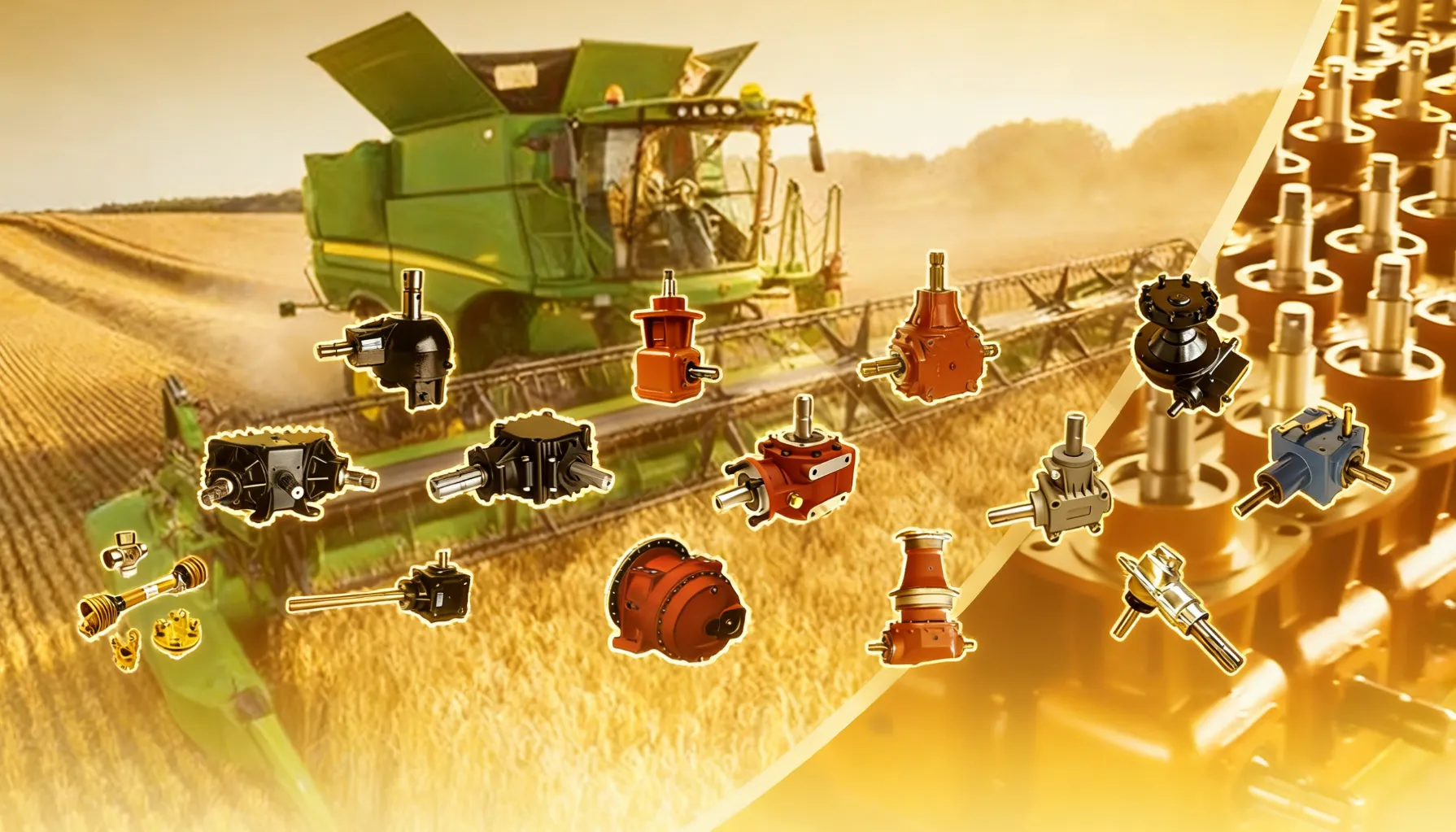
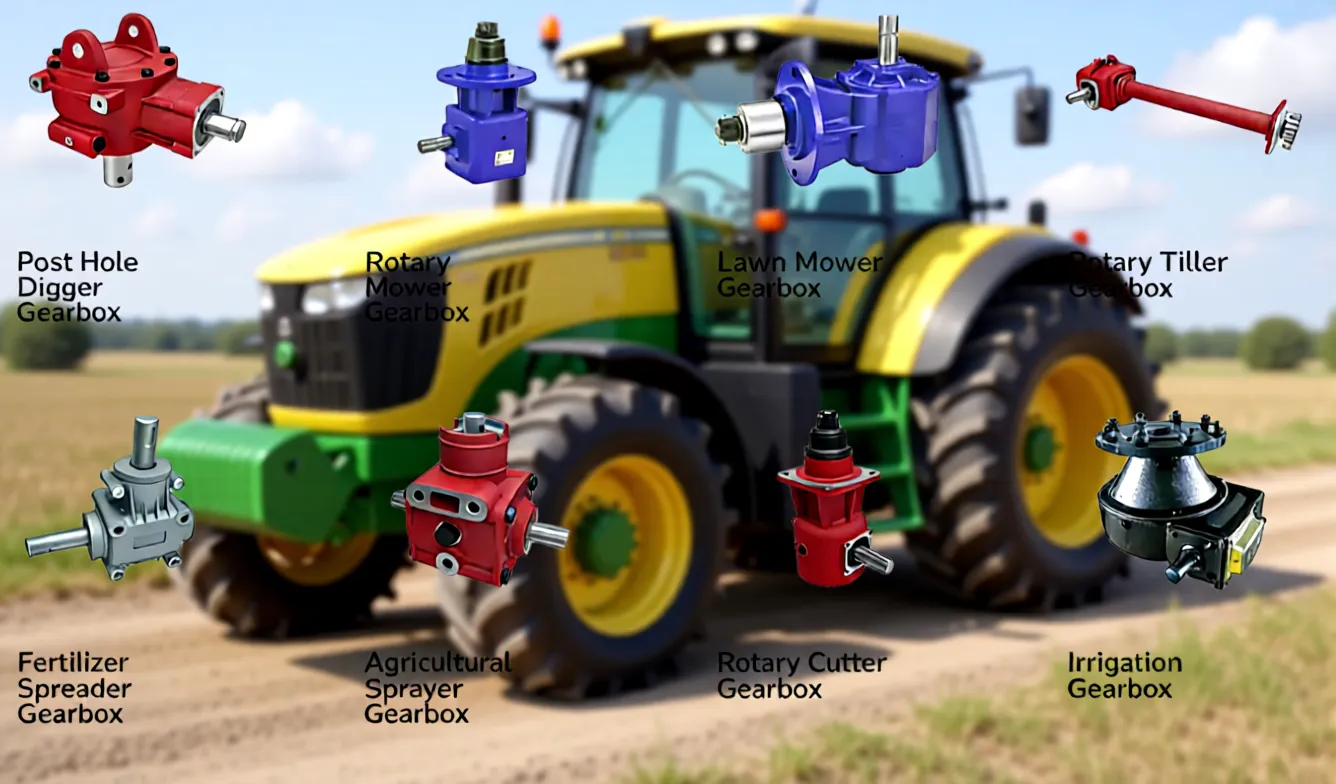
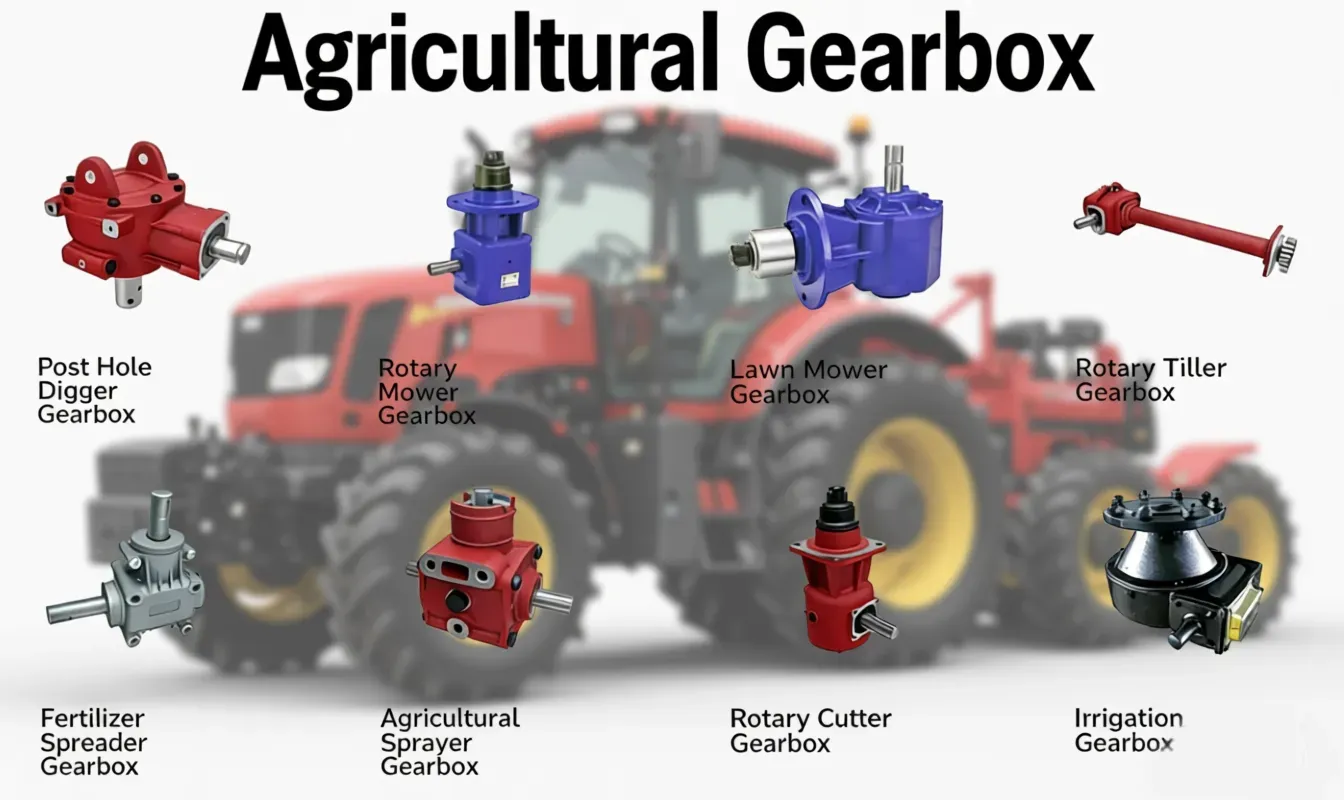
Explore our full range of agricultural gearboxes and accessories for one-stop procurement, sparking interest in customized solutions for your fleet. For more on PTO shafts, visit specialized resources.
Contact Us for Inquiries
Reach out to ever-power for tailored gearbox solutions. Visit our homepage or contact page for details.
FAQ
What torque capacity does the aquatic weed harvester gearbox provide?
Rated at 1500 Nm with peaks to 2200 Nm, it handles dense weeds in Australian rivers, per AGMA standards, ensuring no stalling in 2m depths.
Where is the gearbox typically installed in the harvester?
In cutter heads, conveyors, and winches, each tailored for torque amplification in watery environments like the Murray River.
When should I replace the gearbox?
After 5000 hours or upon detecting leaks/vibrations, especially post-wet season in Queensland to avoid breakdowns.
Why choose ever-power for Australian conditions?
IP67 rating combats salinity, with 10,000-hour life matching AS standards for reliable weed control in arid regions.
Who benefits from this agricultural gearbox?
Farmers and contractors in water management, clearing invasives for irrigation efficiency in South Australia’s crops.
How does it integrate with PTO shafts?
Via 6-spline connections, ensuring smooth power transfer with shear pins for safety in variable loads.
What maintenance is required?
Oil changes every 500 hours, visual inspections for seals in corrosive waters like the Coorong.
Where can I find compatible accessories?
Ever-power offers chains, pulleys, and hydraulic cylinders for full system upgrades.
When does it comply with local regulations?
Fully meets AS 4024, suitable for all states including biosecurity in border areas with Indonesia.
Why is vibration control important?
Thresholds under 2.5 mm/s prevent fatigue in long operations, extending life in turbulent Tasmanian waters.