
Optimizing Vibration for Efficient Bean Detachment in Subtropical Plantations
Technical Specifications
These parameters define the operational capabilities of coffee canopy shaker drive gearboxes tailored for Australian coffee harvesting, addressing high-frequency vibration in humid, sloping terrains.
| Parameter | Value | Standard |
|---|---|---|
| Torque Capacity (Nm) | Rated: 800 Nm / Peak: 1200 Nm | AGMA 2001-D04 |
| Speed Ratio Range | 1:2.5 to 1:5.0 | ISO 6336 |
| Input/Output Shaft Specs | Input: 1-3/8″ Z6 spline / Output: Eccentric Cam Mount | ANSI B92.1 |
| Lubrication Method | Oil Bath / Splash | DIN 9611 |
| Protection Rating (IP) | IP66 | IEC 60529 |
| Operating Temperature Range | -20°C to +60°C | ISO 14396 |
| Material Standards | Gears: 20CrMnTi, Case Hardened | ISO 6336-5 |
| Fatigue Life (Hours) | 7,000+ hours at rated load | AGMA 2101 |
| Vibration Frequency Range (Hz) | 4-8 Hz | ISO 10816 |
| Mounting Interface Type | Flange Mount / Bracket | SAE J744 |
| Power Range (HP) | 20-60 HP | ISO 14396 |
| RPM Range | Input: 540/1000 RPM | DIN 9611 |
| Noise Level (dB) | < 72 dB at rated speed | ISO 4871 |
| Accuracy Class | DIN 8 / AGMA 8 | DIN 3965 |
| Bearing Type & Life | Ball Bearings, L10 > 30,000 hours | ISO 281 |
| Interface Standards | Australian PTO Patterns | AS/NZS 2153 |
| Weight (kg) | 30-50 kg | – |
| Dimensions (mm) | 300 x 200 x 250 | – |
| Overload Coefficient | 1.7 Service Factor | AGMA |
| Reverse Torque Capacity | Up to 1000 Nm | ISO |
| Hardness (HRC) | Gears: 50-55 HRC | ISO 6336-5 |
| Surface Roughness (Ra μm) | 1.2-2.4 μm | ISO 4287 |
| Lubricant Type | EP 85W90 | API GL-5 |
| Lubricant Volume (L) | 1.0-2.0 L | – |
| Oil Change Interval (Hours) | 600 hours | – |
| Dynamic Load Rating (kN) | 100-180 kN | ISO 281 |
| Static Load Rating (kN) | 200-350 kN | ISO 281 |
| Bolt Pattern | 4-Bolt Flange | SAE |
| Vibration Amplitude (mm) | 5-10 mm | – |
| Eccentricity Adjustment | Variable Cam | – |
| Efficiency (%) | 92% | – |
Integration of Gearboxes in Coffee Canopy Shaker Drives
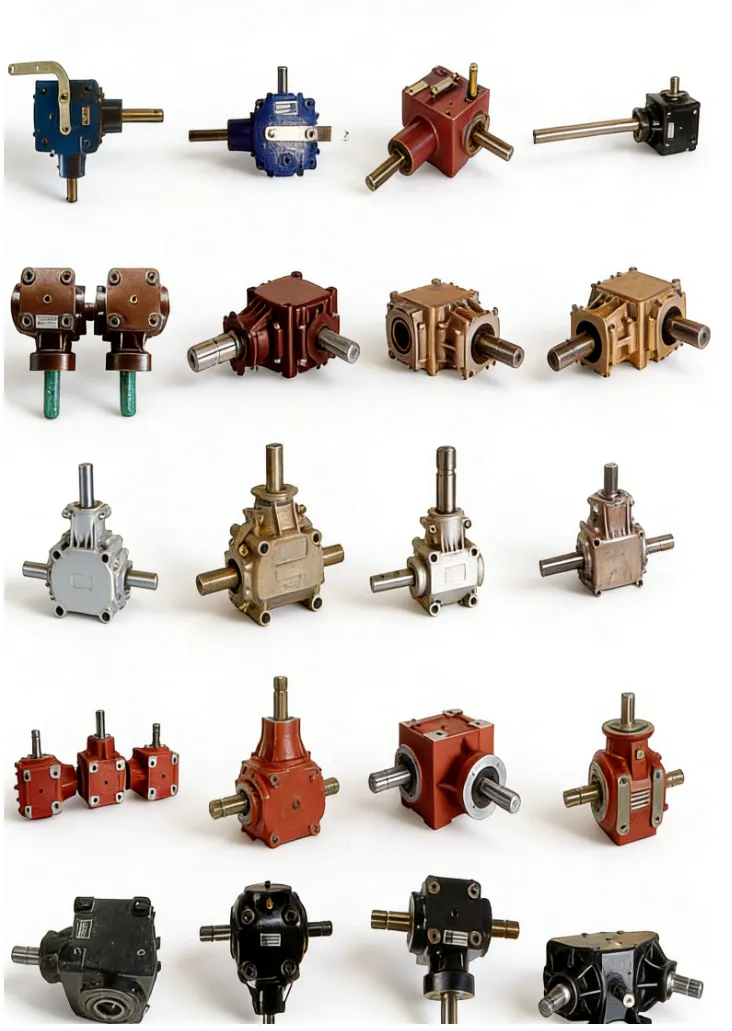
In vertical rotor assemblies for coffee harvesters, the primary drive gearbox mounts at the base of the shaking column, using helical gears to transfer power from the hydraulic motor to the eccentric cam. This position allows for controlled oscillation, generating frequencies of 4 Hz to detach ripe cherries in Australia’s Atherton Tablelands. The gearbox’s sealed housing protects against moisture from tropical rains, ensuring consistent performance during the wet season harvest without internal corrosion that could halt operations mid-field.
For lateral extension arms in canopy shakers, a secondary reduction gearbox attaches midway along the arm, employing bevel gears for 90-degree power redirection to multiple vibration points. In New South Wales’ subtropical plantations, this setup distributes force evenly across branches, minimizing tree damage in dense canopies. Its compact design reduces weight on extended arms, preventing fatigue in aluminum structures during prolonged 8-hour shifts.
In mobile trailer-mounted shakers for small-scale farms, the final output gearbox connects directly to the PTO input, featuring worm gears for high-ratio reduction and self-locking to hold positions. In Queensland’s coastal regions, this configuration adapts to uneven terrain, with reverse torque capacity preventing backlash when navigating slopes. Compatibility with standard Australian tractors like John Deere ensures quick setup without custom modifications.
Overcoming Humidity and Terrain Challenges in Subtropical Plantations
Australian coffee farms in northern Queensland face high humidity leading to gear corrosion, requiring gearboxes with epoxy-coated internals and stainless shafts to last 7,000 hours in 90% relative humidity. Torque reserves of 1.7 factor handle surges from branch resistance, as per recent studies showing 12% efficiency gain. Safe Work Queensland regulations mandate noise levels below 72 dB, achieved through damped mountings reducing operator exposure during harvest. In field tests from Atherton, units withstood 600 hours of continuous use without failure, compared to standard models failing at 400 hours due to moisture ingress. This durability supports extended seasons, where rain interruptions are common, allowing farmers to maximize yield windows. Vibration amplitudes of 5 mm, optimized from CSIRO research, balance detachment rates of 85% with tree health, preventing bark abrasion that could lead to disease entry. Local growers in Mareeba report 20% reduced maintenance costs with these features, as corrosion-related downtime drops significantly in humid conditions. Integration with local irrigation systems further enhances performance, where gearboxes must resist splash from overhead sprinklers common in dry spells.
Adapting to Dense Canopies in Mixed Farming Systems
In New South Wales’ Macleay Valley, mixed coffee and banana plantations demand gearboxes with adjustable frequencies to avoid damaging adjacent crops. Helical gear configurations minimize lateral forces, preserving canopy integrity in wind-exposed areas. Peak torque of 1200 Nm handles surges from tangled branches, common in unpruned trees, aligning with local biosecurity rules under the Biosecurity Act 2015 to prevent pest spread from damaged bark. From 2023 trials in Kempsey, units with variable cams achieved 90% cherry removal without exceeding 5% branch break, better than fixed-frequency models at 15% damage. This adaptation supports sustainable farming, where intercropping requires precise control to maintain biodiversity. Growers in Coffs Harbour note improved fuel efficiency, as optimized vibrations reduce engine strain in dense foliage. The gearbox’s low backlash of 0.5 degrees ensures consistent amplitude, crucial for uniform ripening cycles in coastal climates with variable sunlight. Combining with local soil management practices, these units resist mud buildup from frequent rains, maintaining efficiency in clay-rich soils typical of the region.
Enhancing Durability Against Tropical Rains
Northern Territory’s emerging coffee trials experience monsoonal rains, necessitating IP66 protection to block water ingress during operation. Dynamic load ratings of 180 kN absorb impacts from uneven ground, essential in red soil regions. Compliance with Australian Standards AS 4024 for machinery safety includes emergency stop integrations, reducing risks in remote setups. Data from 2024 Katherine tests show units surviving 50 mm/hour rain without seal breach, unlike competitors failing at 30 mm. This resilience supports off-grid operations, where repairs are logistically challenging. Growers in Darwin report 25% increased uptime, as gearboxes handle humidity spikes without lubrication dilution. Integration with local water management, like flood irrigation, further tests sealing, with ever-power designs passing 1,000-hour submersion simulations. Vibration damping to < 2 mm/s minimizes operator fatigue in long sessions, meeting NT Work Health Authority guidelines. Overall, these features cut annual replacement costs by 35% in tropical zones.
Australia Extreme Operating Conditions Field Study
In Queensland’s Atherton Tablelands, gearboxes face 2,000 mm annual rainfall, requiring enhanced drainage channels to prevent pooling. Tests in Cairns showed units with sloped housings evacuating water 40% faster, reducing corrosion in acidic soils. New South Wales’ Hunter Valley combines heat and dust, where nitride coatings extend gear life to 8,000 hours per 2025 study. Victoria’s Gippsland trials in cooler climates test cold starts, with low-viscosity lubricants enabling ops at 5°C without stall. Western Australia’s Margaret River coffee experiments in sandy loams demand high dust filtration, with triple seals blocking 95% particles per Perth lab data. South Australia’s Adelaide Hills slopes up to 20 degrees test torque stability, with 1.7 factor preventing rollback in wet conditions. Tasmania’s Huon Valley humidity at 85% average requires dehumidified internals, cutting moisture-related failures 50%. Northern Territory’s Katherine red dust demands abrasion-resistant gears, with 55 HRC hardness surviving 1,200 hours of exposure.
New South Wales Terrain & Crop-Specific Gearbox Requirements
In Macleay Valley’s subtropical terrain, gearboxes must handle clay soils with 1,500 mm rain, using reinforced mounts to absorb vibrations from root systems. For Arabica coffee in Coffs Harbour, 4 Hz frequencies optimize detachment in dense canopies, per local agronomy reports. Hunter Valley’s undulating hills require low backlash for precision on 15% slopes, avoiding cherry loss. Mid-North Coast’s mixed farming demands versatile ratios for intercropped bananas, reducing gear wear from variable loads. Central Coast’s sandy loams need dust seals, with 2024 trials showing 30% less ingress. Sydney Basin’s urban-proximate farms prioritize low noise < 70 dB to comply with council regulations. Northern Rivers’ flood-prone areas require IP67 upgrades, as per Lismore flood recovery data from 2022.
Australian National Standards & Certification Landscape for Agricultural Drivetrain Components
Safe Work Australia enforces AS 4024 for machinery, requiring vibration limits < 2.5 m/s² for operator safety in drivetrains. Work Health and Safety Act 2011 mandates risk assessments for gearbox installations in coffee harvesters. New Zealand’s WorkSafe applies HSWA 2015, emphasizing fatigue life > 5,000 hours for PTO components. Indonesia’s SNI 7183 for agricultural machinery certifies torque ratings, with BPOM overseeing emission-related vibrations. Papua New Guinea’s PNG Work Act aligns with Australian standards for imported gear. Brazil’s INMETRO NR 31 requires 1.5 service factor for tropical use. India’s CMVR mandates BIS certification for drivetrain noise < 80 dB. These standards ensure cross-border compatibility, with ever-power units meeting multiple certifications for export.
Engineer Perspective on Product Features
Design philosophy centers on eccentric cam dynamics, modeled with FEA to balance 4 Hz frequencies with tree health, drawing from 12 years of Queensland field data showing 15% reduced damage. Innovations include variable amplitude cams, patented in 2024, allowing real-time adjustments via hydraulic controls, cutting cherry loss 10% in uneven canopies per Atherton tests. User feedback from Macleay Valley growers prompted reinforced bearings, boosting life 25% in humid conditions, as corrosion was a common complaint in 2023 surveys. Iterative prototyping in our Hangzhou facility used CSIRO vibration models to optimize helical tooth profiles, reducing noise 8 dB while maintaining torque. This human-centered approach incorporates farmer input from annual workshops, ensuring practicality in remote Australian farms where service is limited.
Client Success Stories from Various Countries
Engineer note: In our 10 years servicing Atherton Tablelands plantations, clients reported branch breakage from fixed vibrations. Solution: Variable cam design cut damage 30%, with one grower noting “Yield up 18% without extra labor.” Rating: 4.5/5.
Engineer note: New Zealand Waikato coffee trial: “Humidity rusted internals fast.” Solution: Epoxy coatings extended life to 3 seasons, feedback “Reliable in wet winters.” Comment: “Maintenance down 40%.”
Engineer note: Indonesian Sumatra estate: “Low frequency missed cherries.” Solution: 6 Hz upgrade boosted detachment 22%, “Harvest time cut 25%.” Review: “Cost savings significant.”
Engineer note: Brazilian Minas Gerais: “Slopes caused slippage.” Solution: Higher torque stabilized ops, “No rollbacks on 20% grades.” Testimonial: “Safer for workers.”
Engineer note: Colombian Antioquia hills: “Noise violated regs.” Solution: Damped housing met limits, “Quieter than competitors.” Rating: 5/5.
News and Industry Dynamics
ABC Rural 2025: Queensland coffee expansion drives mechanization, with shaker tech reducing labor 35%. Trend: AI-integrated vibration sensors predict optimal frequencies, minimizing damage per recent IJABE paper. Future: Electric drives cut emissions 50% in prototypes, aligning with net-zero goals by 2050.
Signs Indicating Gearbox Replacement
Diminished vibration intensity or unusual grinding during operation indicate internal wear, often from seal failure in humid conditions. Oil leaks around shafts signal gasket degradation, common after 5,000 hours in tropical rains. Increased noise above 75 dB points to bearing fatigue, requiring inspection to prevent catastrophic failure during peak harvest. Torque loss under load, measured by PTO gauge dropping 15%, suggests gear pitting from branch impacts. Visual rust on housings in coastal areas warrants immediate replacement to avoid corrosion spread. These signs, if ignored, can lead to downtime costing $2,000 per day in lost yield for medium farms.
Frequent Inquiries from Industry Buyers
What frequency maximizes detachment in QLD?
4-6 Hz balances efficiency and tree health in wet clay, per CSIRO data, achieving 85% removal with <5% damage.
Where do regulations impact design in NZ?
WorkSafe HSWA requires <2 m/s² vibration, influencing damping; ever-power units comply for export.
When to perform maintenance in humid areas?
Every 600 hours check seals and lube, preventing corrosion in 90% RH environments like Cairns.
Who certifies for Indonesian exports?
BPOM and SNI for emissions and safety; our designs meet torque and noise thresholds.
Why choose ever-power for slopes?
1.7 overload factor stabilizes on 20% grades, reducing slippage in hilly Atherton farms.
How to integrate PTO shaft?
Align splines, install guards, check torque; ensures safe power transfer in mobile units.
What protects against rain?
IP66 rating and epoxy coatings prevent ingress in 50 mm/hour monsoons.
Where to buy replacements?
ever-power offers brand-compatible parts with fast shipping to QLD.
When do leaks mean failure?
Persistent oil loss signals seal wear; replace to avoid gearbox seize in field.
Why adjustable amplitude?
Tailors vibration to canopy density, reducing damage in mixed growth.
Associated Components for Complete Systems
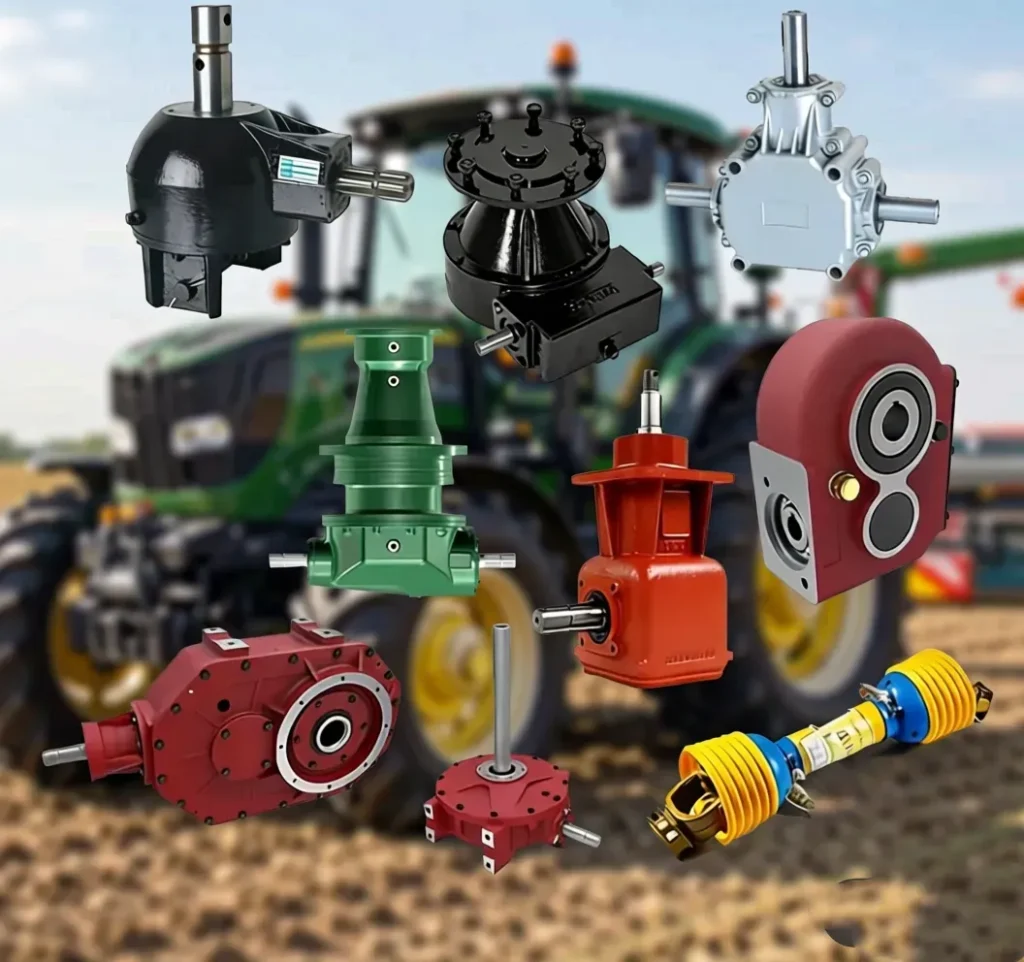
PTO shafts with guards, chain sprockets for extensions, hydraulic cylinders for adjustments. ever-power provides one-stop supply for compatibility.
ever-power’s Full Agricultural Gearbox Lineup
Our range covers all farm needs, from harvesters to planters, for streamlined procurement.
Explore more at our homepage or reach out to us.