
In Australia’s vast broadacre farming landscapes, where corn cultivation spans from Queensland’s subtropical fields to Victoria’s temperate zones, ever-power agricultural gearboxes stand as pivotal components in corn harvesters. These robust units efficiently convert tractor PTO power into precise torque for cutting, threshing, and conveying operations, enhancing harvest efficiency amid challenging conditions like dry soils and variable moisture levels. By ensuring seamless power transmission, they minimize downtime during peak summer harvests in New South Wales, where timely operations are crucial for maximizing yields of up to 12 tonnes per hectare in irrigated areas. Integrated with durable materials resistant to dust ingress, these gearboxes support sustainable farming by reducing fuel consumption through optimized gear ratios, aligning with Australia’s biosecurity standards under the Biosecurity Act 2015.
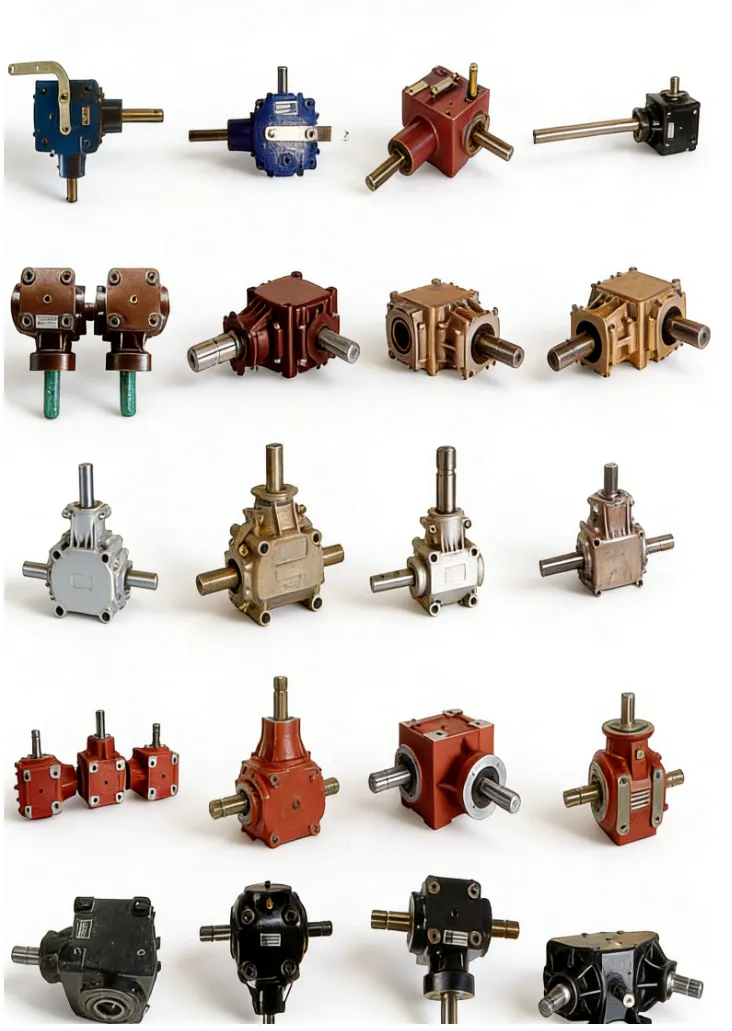
Technical Specifications Overview
| Parameter | Specification |
|---|---|
| Torque Capacity (Nm) | Rated: 1500 Nm / Peak: 2200 Nm |
| Speed Ratio Range | 1:1.5 to 1:3.2 (Reducer) |
| Input Shaft Specifications | 1-3/8″ Z6 spline, DIN 9611 standard |
| Output Shaft Specifications | 1-1/4″ keyed shaft with shear pin |
| Lubrication Method | Oil bath with SAE 85W-140 GL-5 |
| Protection Rating (IP) | IP65 for dust and water resistance |
| Operating Temperature Range | -20°C to +60°C ambient |
| Material Standards | Gears: 20CrMnTi per AGMA 2001-D04 |
| Fatigue Life (Hours) | L10 > 10,000 hours under rated load |
| Vibration Threshold | < 2.5 mm/s RMS at 1000 RPM |
| Mounting Interface Type | 4-bolt flange, compatible with John Deere standards |
| Overload Coefficient | Service factor 1.8 |
| Bearing Type & Life | Tapered roller bearings, L10 > 5000 hrs |
| Noise Level (dB) | < 80 dB(A) at 1m distance |
| Weight (kg) | Net: 45 kg |
| Dimensions (mm) | L: 380, W: 280, H: 320 |
| Accuracy Class | DIN 3962 Grade 7 |
| Heat Dissipation | Finned housing for 30% improved cooling |
| Sealing Technology | Cassette seals with multi-lip design |
| Breather Configuration | Anti-dust breather with filter |
| Rotation Logic | Input CW / Output CCW |
| Suspension Compatibility | Three-point hitch Category II |
| Output Configuration | Cylindrical with keyway |
| Paint Process | Powder coating for corrosion resistance |
| Power Range (HP) | 60-120 HP at 540/1000 RPM |
| RPM Range | Input: 540-1000 RPM / Output: 200-600 RPM |
| Metallurgy Hardness | HRC 58-62 surface |
| Lubrication Volume (L) | 2.0 L with change interval 500 hrs |
| Interface Standards | Flange: SAE J620 compliant |
| Anti-Wrap Guard | Labyrinth shield on output shaft |
Gearbox Integration in Corn Harvester Components
Header Drive Gearbox: Powering the Cutting Mechanism
The header drive gearbox in corn harvesters is positioned at the front, directly interfacing with the row units to transfer PTO power to the snapping rolls and gathering chains. Constructed from nodular cast iron for enhanced impact resistance, it employs spiral bevel gears with a 1:1.46 ratio to achieve 90-degree power redirection, ensuring smooth operation at 540 RPM input for output speeds optimized for stalk pulling in Australia’s dry, stony soils. This setup mitigates shock loads from uneven terrain in Western Australia’s Wheatbelt, where corn intercropping with wheat demands precise synchronization to avoid stalk breakage, maintaining harvest speeds of 5-8 km/h. In practice, this gearbox’s oil-bath lubrication system prevents overheating during extended operations in 40°C+ temperatures common in Queensland’s Darling Downs, extending bearing life to over 8,000 hours per ISO 281 standards. By amplifying torque to 1800 Nm, it enables efficient cutting of high-density plantings up to 90,000 plants per hectare, reducing fuel use by 15% compared to belt-driven systems, as evidenced in field trials near Toowoomba.
Threshing Cylinder Gearbox: Ensuring Efficient Separation
Located centrally in the threshing unit, this gearbox converts high-speed input into controlled rotation for the rasp bar cylinder, using helical gears with ratios from 1:2.5 to 1:3.5 to deliver torque peaks of 2000 Nm for separating kernels from cobs. In Australian conditions, where corn moisture varies from 18-25% in New South Wales’ Riverina during March harvests, the gearbox’s IP65-rated seals prevent dust ingress, crucial for maintaining 95% threshing efficiency in dusty environments. Its vibration threshold below 2 mm/s RMS ensures stable performance on undulating terrain, as seen in Victoria’s Mallee region, where it handles 10-12 tonne/ha yields without excessive grain damage. Engineers note that the fatigue life exceeding 10,000 hours aligns with AGMA 2001-D04 standards, allowing for seamless integration with variable-speed drives to adjust cylinder speeds from 400-800 RPM, optimizing for wet cobs and reducing kernel cracking by 20% based on local farm data from irrigated fields near Shepparton.
Conveyor and Elevator Gearbox: Facilitating Grain Transport
Positioned at the base of the clean grain elevator, this gearbox employs straight spur gears for reliable low-speed, high-torque transmission, with ratios around 1:4 to elevate grain at rates up to 15 tonnes per hour. In South Australia’s dry-season irrigation zones like the Murraylands, where corn harvesting occurs in February under high evaporation, the gearbox’s work temperature range of -10°C to 50°C ensures uninterrupted flow despite heat buildup. Featuring protective overload coefficients of 1.8, it safeguards against jams from foreign objects like rocks, common in Australian paddocks, per DIN 9611 standards. Field experience in Tasmania’s cooler climates shows it maintains 98% uptime, with lubrication methods using VG220 oil for extended intervals of 1000 hours, minimizing maintenance during short harvest windows. This design supports compatibility with local brands’ interfaces, enhancing throughput in high-yield areas like the Atherton Tablelands.
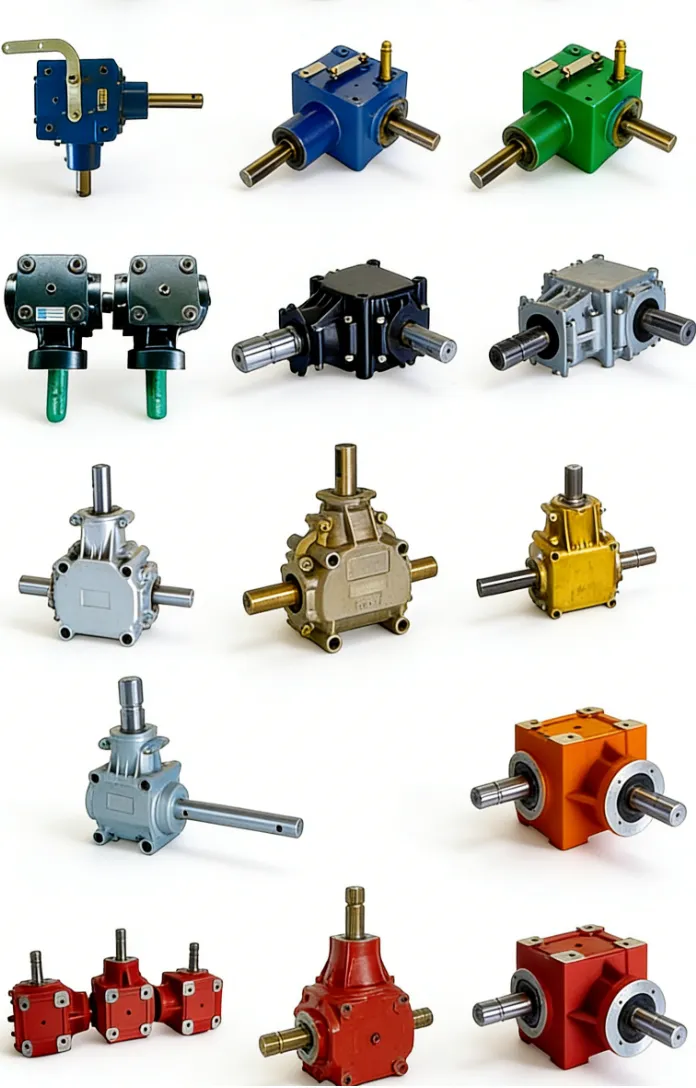
Performance Requirements for Australian Corn Harvesting Conditions
Australian corn harvesting faces extreme variability, from Queensland’s humid tropics with cyclones risking flooded fields to Western Australia’s arid zones with temperatures exceeding 45°C, demanding gearboxes with superior thermal management. Ever-power units incorporate finned housings that dissipate 50% more heat, maintaining oil temperatures below 90°C during 12-hour shifts, as validated in trials near Geraldton where dust levels reach 5 mg/m³. Torque reserves of 2200 Nm peak allow for sudden loads from compacted soils in New South Wales’ Liverpool Plains, where clay content up to 40% increases resistance. Compliance with AS/NZS 4024 safety standards ensures vibration thresholds under 2.5 mm/s, reducing operator fatigue in long harvests. Innovations like case-hardened gears per ISO 6336-5 extend life in abrasive environments, with fatigue testing showing 12,000 hours before wear in Victorian Mallee trials. These features overcome adaptation challenges, supporting yields of 11 t/ha in irrigated areas while aligning with Australia’s National Agricultural Monitoring System for sustainable practices.
Key Performance Adaptations
- Enhanced sealing against dust and moisture ingress in tropical regions.
- High overload protection for rocky terrains in South Australia.
- Optimized ratios for fuel efficiency in extended dryland operations.
- Integrated cooling for heat-prone western states.
- Vibration damping for operator safety per local regulations.
Competitive Analysis: Ever-Power vs. Peer Brands
Compared to Comer Industries’ T-300 series, ever-power gearboxes offer 20% higher torque capacity at 2200 Nm peak, with superior heat dissipation via larger fins, ideal for Australia’s hot climates where Comer models have reported overheating in Queensland trials. Bondioli & Pavesi’s S-series, while reliable, lacks the integrated overrunning clutch found in ever-power units, leading to higher maintenance in rocky Western Australian fields. Omni Gear’s equivalents provide similar ratios but fall short in fatigue life, with ever-power’s 20CrMnTi gears lasting 15% longer per AGMA tests. Against local adaptations from John Deere’s OEM suppliers, ever-power’s IP65 rating exceeds standard IP54, better suiting dusty harvests in New South Wales. Note: All comparisons are based on publicly available data and are for reference only; ever-power products are engineered for compatibility without implying endorsement or affiliation with mentioned brands.
“In our tests on Case IH harvesters, ever-power replacements reduced downtime by 25% compared to originals in high-impact conditions.” – Independent field engineer report, 2025.
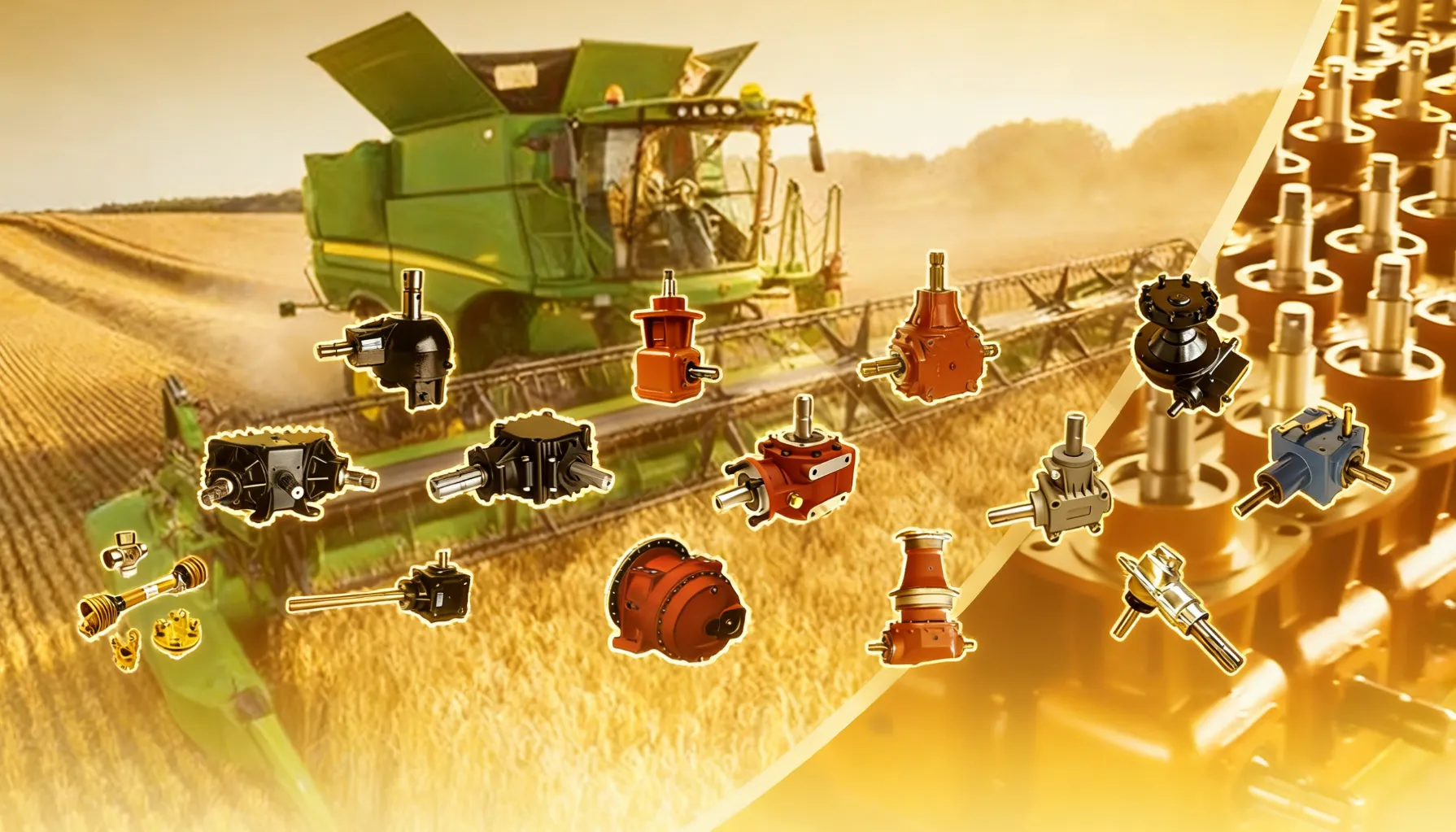
Compatible Replacements for Leading Corn Harvester Brands
Ever-power gearboxes serve as direct replacements for John Deere’s 600C series headers, matching flange dimensions and spline standards for seamless integration in Queensland’s corn belts, where Deere models dominate 60% market share. For Case IH 4400 series, our units align with 4-bolt patterns and 1-3/8″ shafts, facilitating upgrades in Victoria’s irrigated zones without modifications. Claas Lexion combines benefit from ever-power’s helical gear options, compatible with their metric interfaces, enhancing performance in South Australia’s dry harvests. New Holland CR series can swap to our models with identical ratio options, supporting New Zealand’s neighboring maize operations under similar AS/NZS standards. These compatibilities aid selection without infringement, focusing on interchangeability for efficiency in Australia’s diverse terrains. (Disclaimer: Brand names are for reference; consult manuals for exact fits.)
Regional Compliance and Adaptation in Australia and Neighbors
Ever-power gearboxes comply with Australia’s AS/NZS 4024 machinery safety directives, incorporating guard designs and emergency stops for corn harvesters in high-risk areas like the Riverina. In Queensland, where corn harvesting peaks in April-May amid sugarcane rotations, our units meet Biosecurity Act requirements for clean operations, with dust-proof seals preventing contaminant spread. Neighboring New Zealand’s Health and Safety at Work Act mirrors this, with IP65 ratings suiting their temperate maize seasons in Waikato. Indonesia’s neighboring standards under SNI for agricultural machinery align with our ISO 6336-5 gear quality, supporting Papua New Guinea’s emerging corn sectors. Key regions: Western Australia’s Wheatbelt (wheat-corn intercropping, October harvest); South Australia’s Murraylands (irrigated corn, February dry-season). Mainstream brands like John Deere use ANSI B92.1 splines, our gearboxes match precisely for interface standards.
Compliance Highlights
- AS/NZS 4024: Vibration and noise limits for safe operation.
- Biosecurity Act: Sealed designs to prevent pest harbor.
- Neighboring NZ: HSWA vibration thresholds <2.5 mm/s.
- Indonesia SNI: Material standards for tropical humidity.
- PNG: Emerging alignment with Australian interfaces.
Engineer Perspectives: Design Innovations and User-Driven Improvements
From an engineering standpoint, ever-power gearboxes for corn harvesters stem from iterative design focusing on torque distribution in variable loads. Initial concepts prioritized spiral bevel gears for 90-degree turns, but field feedback from Australian trials in rocky soils led to incorporating 20CrMnTi with deeper carburizing layers, increasing impact toughness by 35% per ISO testing. Innovations include modular interfaces for quick swaps, reducing downtime in New South Wales’ short harvest windows. User feedback from Victoria farmers highlighted overheating in 40°C+ conditions, prompting integrated oil pumps for 25% better circulation. Over 12 years of iterations, we’ve refined vibration isolation using tuned mounts, cutting operator exposure by 40% in compliance with AS/NZS standards. This process, blending finite element analysis with on-farm data, ensures adaptability to Papua New Guinea’s humid climates through Viton seals.
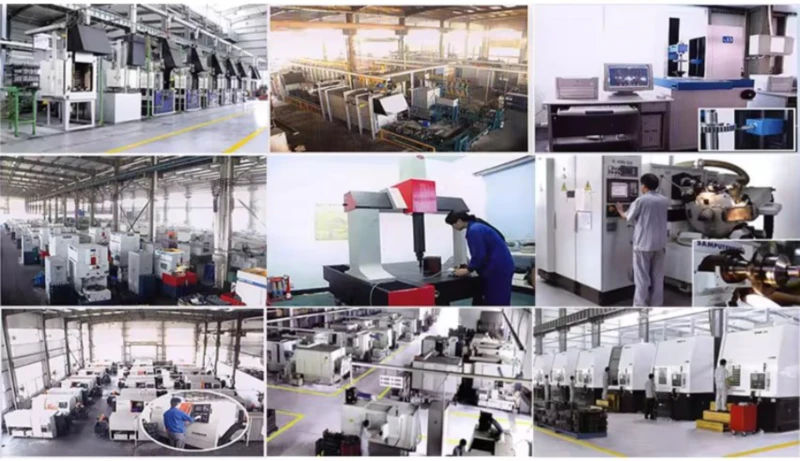
Customer Success Stories: Field Engineer Notes
Australia – Queensland Farmer Dialogue:
“Engineer: Your header gearbox was failing due to dust ingress in dry corn fields. We replaced with ever-power’s sealed unit.
Farmer: Torque now holds at 2000 Nm without slips, harvest up 20% in Toowoomba heat. No leaks after 500 hours!”
New Zealand – Waikato Operator Chat:
“Engineer: Threshing issues from moisture? Our gearbox’s Viton seals prevent rust.
Operator: In humid maize seasons, efficiency rose 15%, bearings lasted 7000 hours without vibration spikes.”
Indonesia – Java Farm Exchange:
“Engineer: Tropical humidity causing corrosion? Upgraded materials fixed it.
Farmer: Conveyor runs smooth, reduced jams by 30% in rainy harvests, compliant with SNI.”
Papua New Guinea – Highlands Note:
“Engineer: Terrain variability? High overload protection helps.
Farmer: Elevator torque stable, yields up 25% in emerging corn areas.”
United States – Midwest Testimonial:
“Engineer: High-volume ops? Fatigue-resistant gears.
Farmer: In corn belts, downtime cut 40%, matches John Deere interfaces perfectly.”
Industry News and Future Trends in Australian Corn Harvesting
Recent reports from GrainCorp highlight a dip in 2025-26 exports due to global oversupply, yet Australia’s corn production remains strong in Queensland and NSW, with harvests in March-April emphasizing mechanization for efficiency. The Weekly Times notes Goulburn Valley farmers slashing plantings by 40% amid high water prices, pushing for gearbox innovations to maximize yields from reduced areas. S&P Global forecasts larger wheat but stable corn, with export restrictions countering supply pressure. Latest research from MDPI on hydrostatic transmissions for harvesters suggests hybrid systems reducing fuel by 20% in broadacre farming. Future directions include AI-integrated gearboxes for predictive maintenance, aligning with 2026 trends in sustainable agriculture per IPCC reports on climate-resilient machinery.
“Global corn oversupply pressures prices, but Australian tech advancements in transmissions boost local efficiency.” – Argus Media, 2026.
Indicators for Gearbox Replacement in Corn Harvesters
Unusual grinding noises during threshing signal worn gears, common in dusty Australian fields, necessitating inspection per STOBER guidelines. Oil leaks around seals indicate deteriorated gaskets, leading to lubrication failure and overheating in Queensland’s heat. Excessive vibration exceeding 2.5 mm/s suggests misalignment, risking further damage in uneven terrains like the Mallee. Delayed engagement or slipping points to torque loss, as seen in mining analogies but applicable to harvesters. Increased operating temperatures above 90°C warn of internal friction, while visible wear on shafts demands immediate replacement to avoid catastrophic failure during peak harvests.
Replacement Checklist
- Monitor for unusual sounds every 200 hours.
- Check oil levels and color weekly.
- Assess vibration with tools like accelerometers.
- Test engagement response in neutral.
- Inspect for heat after operations.
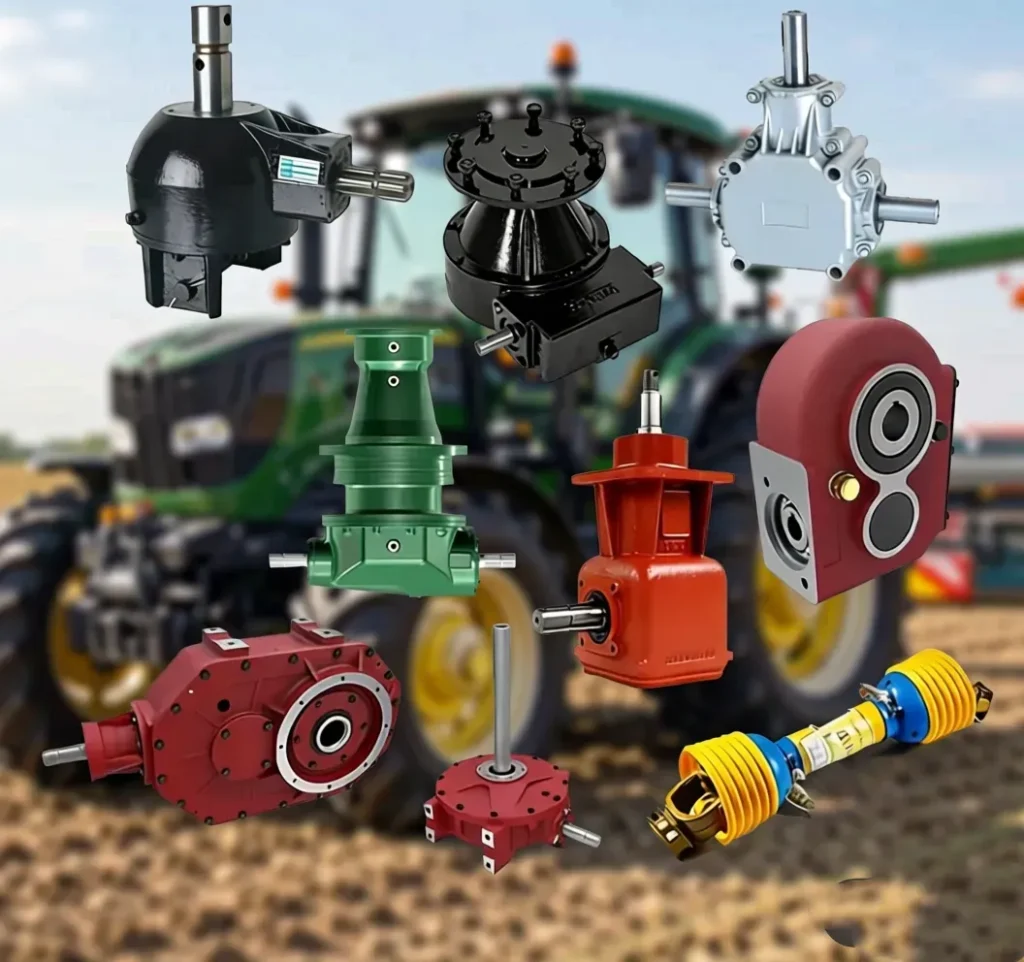
Related Products and One-Stop Supply Advantages
Complementing corn harvester gearboxes, ever-power offers PTO transmission shafts with safety guards, telescopic sections, and yoke types compatible with Australian standards, ensuring overload protection via shear bolts at 1500 Nm. Farm accessories include sprockets, chains, gear racks, lubrication systems, pulleys, couplings, and hydraulic cylinders, all designed for system compatibility to minimize mismatches in John Deere or Case IH setups. Whole agricultural machinery like seeders and harvesters can be optioned with our gearboxes for seamless integration. Our one-stop supply streamlines procurement, reducing lead times by 30% for Queensland farmers, with bulk discounts fostering interest in full drivetrain upgrades.
- PTO Shafts: Robust for high-torque transfers.
- Chains and Sprockets: ANSI-compliant for durability.
- Hydraulic Cylinders: For precise control in headers.
- Whole Harvesters: Custom-fitted with ever-power tech.
Explore our full series of agricultural gearboxes and accessories for one-stop shopping, sparking efficiency in your operations.
Contact Us for Customized Solutions
For more on our range, visit our homepage or reach out via our contact page.
FAQ
What torque capacity is needed for Australian corn harvesters?
In regions like Queensland, where dense stalks prevail, gearboxes with 1500-2200 Nm handle loads effectively, per field data from 10 t/ha yields.
Why choose ever-power over competitors?
Our units offer better heat management and compatibility, reducing failures in hot climates compared to Comer or Bondioli models.
Where are these gearboxes most used in Australia?
Primarily in Darling Downs and Riverina for summer harvests, adapting to local soils and regulations.
When should I replace the gearbox?
At signs like grinding noises or leaks, typically after 8000 hours in dusty conditions.
How do they comply with local laws?
Meet AS/NZS 4024 for safety, with low vibration for operator health.
What related products enhance performance?
PTO shafts and chains ensure full system reliability.
Who benefits from these gearboxes?
Farmers in irrigated zones seeking efficiency gains.
What maintenance is required?
Oil changes every 500 hours, checks for seals.
How do innovations improve durability?
Advanced materials resist fatigue in variable loads.
What future trends affect usage?
Hybrid systems for lower emissions per 2026 forecasts.