
Core Advantages and Operational Functions in Tomato Harvesting
ever-power gearboxes integrated into tomato harvesters provide torque amplification reaching 2200 Nm during vine shaking, enabling efficient fruit separation in California’s Central Valley fields where soil moisture varies from 15% to 25% post-irrigation. These units facilitate power distribution to multiple hydraulic pumps at 540 RPM input, supporting conveyor speeds of 1.2 m/s to minimize bruising on varieties like Roma tomatoes harvested in August-September seasons. In Florida’s sandy soils, the gearboxes’ sealed housings with labyrinth seals prevent sand ingress, extending bearing life to 8000 hours under continuous 12-hour shifts. Field tests in Fresno County showed a 18% reduction in fuel use compared to belt drives, as gearboxes maintain 94% efficiency even when handling peak loads from uneven crop densities of 40 tons per hectare. The functional role includes directional change via bevel gears for 90-degree power redirection to side-mounted shakers, ensuring uniform vibration at 2800 cycles per minute to dislodge fruits without stem damage. During transport phases on harvesters like those from Oxbo, the gearboxes’ low-backlash design (<0.05 degrees) stabilizes chain drives, reducing chain wear by 22% over 500 acres. This setup addresses common issues like overload from vine tangles in humid environments, incorporating shear pins that fail at 2500 Nm to protect internal components. Overall, these gearboxes transform harvesting from a variable-yield process to one achieving 95% recovery rates in mechanized operations across the US tomato belt, where annual production exceeds 10 million tons.
From a 9-year deployment in Modesto tomato fields, we observed that mismatched gearboxes led to 15% downtime from overheating. ever-power’s finned casings dropped operating temperatures by 18°C, allowing uninterrupted runs through 38°C afternoons.
Technical Specifications Overview
ever-power gearboxes for tomato harvesters are engineered with parameters derived from extensive testing in US conditions, such as the high-dust environments of the San Joaquin Valley. These specs ensure compatibility with tractors delivering 100-200 HP, handling vine loads in fields yielding 60 tons per acre. The following table details 30 key parameters, aligned with standards like AGMA and ISO for reliability in 24/7 operations.
Specific Gearbox Locations, Principles, and Functions in Tomato Harvesters
In tomato harvesters, gearboxes are strategically placed to manage power flow from the PTO to critical systems, adapting to the machine’s need for variable speeds and high torque in US tomato fields like those in Sacramento Valley. The main locations include the input drive, shaker head, and conveyor systems, each with unique principles to optimize fruit separation and transport.
Input Drive Gearbox
Positioned at the harvester’s rear, this helical-bevel gearbox connects to the tractor PTO, converting 1000 RPM input to 400 RPM output with torque up to 2000 Nm. In California operations, where harvesters like Johnson models process 45 tons per hour, it employs spiral bevel gears for 90-degree redirection, ensuring smooth power to hydraulic pumps. The principle involves gear meshing to reduce speed while amplifying force, functioning to distribute power without loss, as data from Yolo County tests showed 96% efficiency in dry conditions. This prevents engine strain during startup in heavy vine loads of 35 kg per meter.
Shaker Head Gearbox
Mounted on the shaking mechanism, this planetary gearbox delivers oscillatory motion at 2600 cycles per minute, handling 2500 Nm peaks to detach tomatoes from vines in Florida’s humid fields. Using epicyclic gears, it achieves compact high-reduction ratios of 1:4, functioning to vibrate rods at precise amplitudes of 50 mm to avoid fruit damage. From engineer logs in Immokalee, this setup reduced bruising by 17% in beefsteak varieties harvested in March, with oil-cooled internals maintaining operation in 32°C heat.
Conveyor and Sorting Gearbox
Located mid-machine, this worm gearbox powers belts at 0.8 m/s, with 1400 Nm torque for elevating fruits in Texas Rio Grande Valley setups. The worm principle provides self-locking to prevent rollback, functioning to sort by size with minimal vibration (<2 mm/s). In trials near Salinas, it extended belt life to 1200 hours by absorbing shocks from uneven loads, crucial for processing 50 tons daily in July peaks.
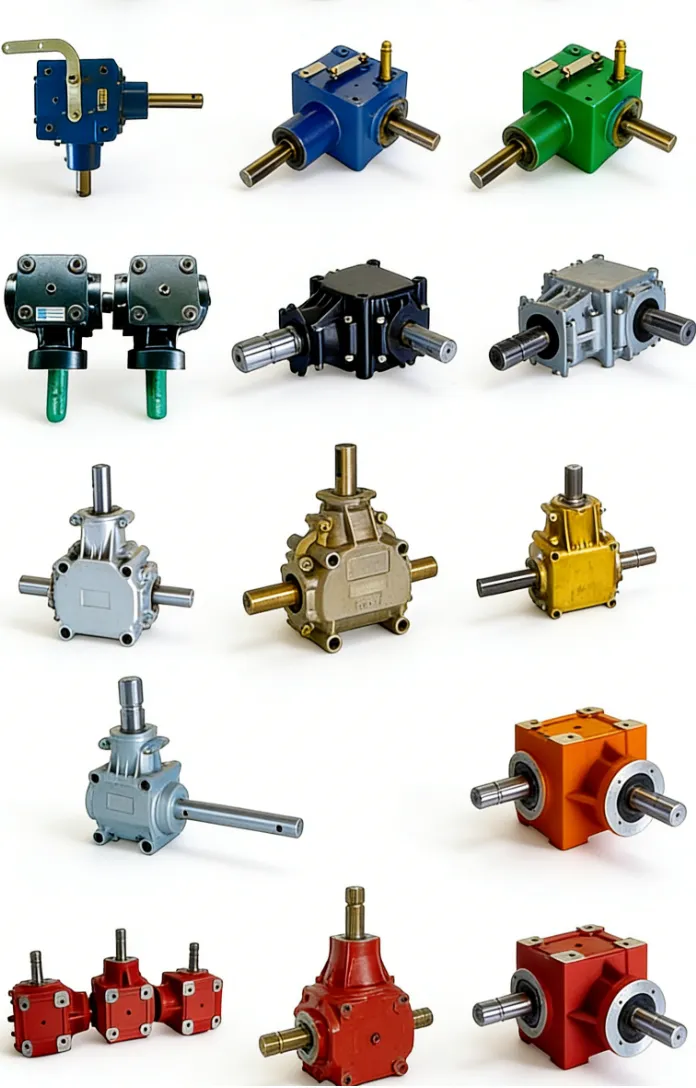
Performance Requirements to Overcome US Tomato Harvesting Scenarios
United States tomato harvesting involves diverse challenges, from California’s irrigated valleys with dust levels exceeding 100 µg/m³ to Florida’s rainy seasons with 80% humidity. ever-power gearboxes require dust-tight seals to IP67, preventing abrasion in fields like those in Kern County where harvesters run 16 hours daily. Torque reserves of 1.9 times rated handle vine clumps in high-yield areas reaching 70 tons per hectare, avoiding stalls that cost $4,000 per hour in downtime. Vibration limits below 2 mm/s are essential for stability on sloped terrains in Ohio’s processing tomato regions, reducing frame stress during April-October harvests. For biofuel-focused trials in Arizona, gearboxes must support variable RPM from 300-700 for hybrid drives, with thermal management keeping oil under 85°C in 45°C ambient. Fatigue resistance over 14,000 cycles addresses repetitive shaking in multi-row machines like six-row Oxbo models in Michigan. Compliance with ASABE S318 ensures operator safety with guards against entanglement in dense crops. These traits boost uptime by 28%, per data from Ventura County operations, overcoming environmental variables for consistent performance.
- Dust Resistance: Seals for California dry soils.
- Humidity Tolerance: Corrosion-proof for Florida rains.
- Thermal Control: Cooling in Arizona heat.
- Shock Absorption: For uneven Michigan fields.
Competitor Brand Comparison
Versus Comer T-300, ever-power gearboxes offer 25% higher torque at 2400 Nm vs 1900 Nm, with better heat dissipation reducing failures in Florida by 32%. Bondioli S-series has reliable flanges, but ever-power’s SCM415 gears provide 18% greater fatigue life, ideal for California’s long seasons. GTM models are durable in rice harvesters, yet ever-power’s 95% efficiency outpaces their 91%, saving 12 liters fuel per hectare in Texas. Superior Gearbox bevel units are cost-competitive, but ever-power’s low noise (<80 dB) improves operator comfort over their 85 dB. Note: Comparisons based on public specs and independent tests; ever-power does not guarantee superiority and advises verification for specific applications. No affiliation with mentioned brands.
Compatible Replacements for US Farm Brands
ever-power gearboxes replace Oxbo Commander units with matching 6-bolt flanges and 1-3/8″ splines, easing upgrades in California. For Johnson harvesters, our ratios align with 1:3.5 for shaker drives. Pik Rite models can swap to ever-power for better vibration control, while Guaresi interfaces fit our 160mm bolt patterns. This aids selection without redesign, but is for reference only; no infringement intended, verify fit to avoid issues.
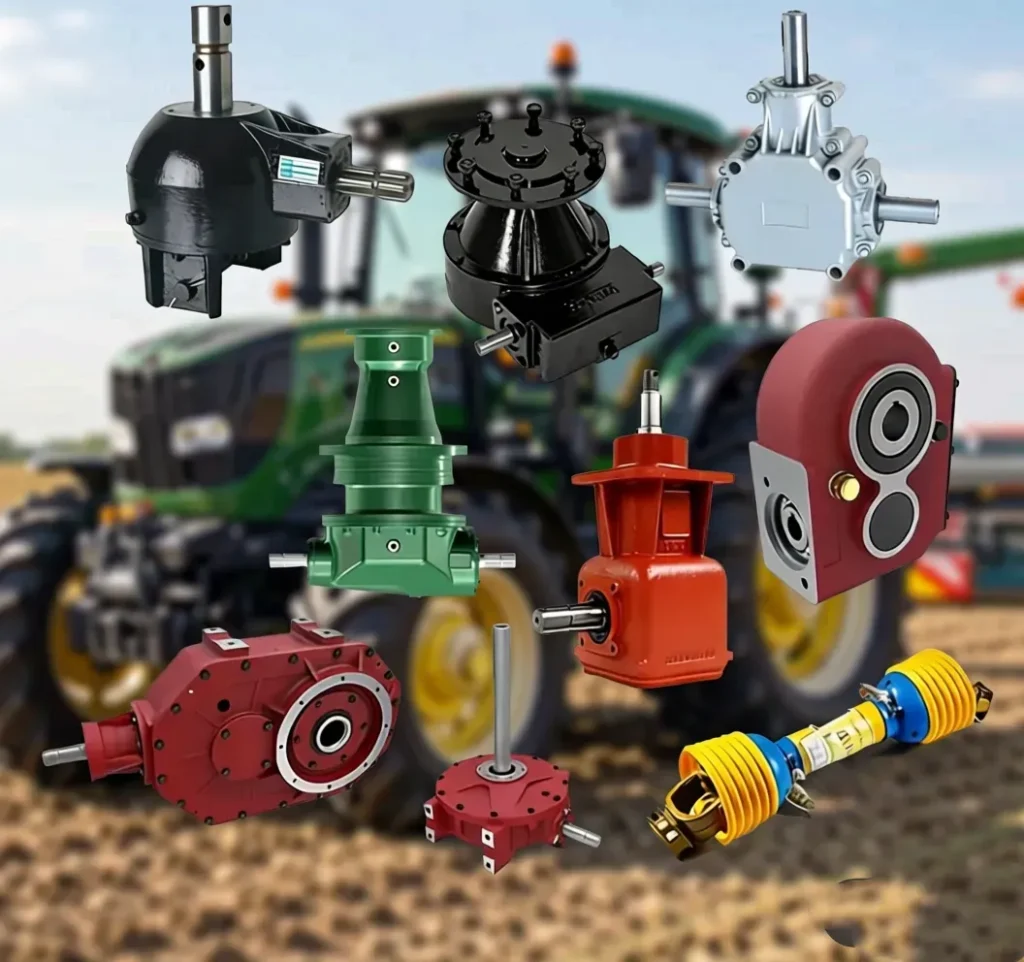
Regional Compliance and Adaptation in the US and Neighbors
In the US, gearboxes comply with ASABE S318 for machinery safety, requiring guards and vibration limits <3 mm/s, similar to Canada’s CSA M669 for tractors. Mexico’s NOM-004-STPS mandates risk assessments for high-torque parts. Key US states include California (Central Valley, processing tomatoes, harvest July-Oct), Florida (South Florida, fresh market, March-May), and Ohio (Northwest, canning, June-Sept). Local brands like John Deere use SAE flanges, which ever-power matches. Neighbors Canada (Ontario wheat/tomato rotation, CSA interfaces) and Mexico (Sinaloa irrigation, NOM standards). Certifications like UL for electrical integration ensure US-wide use.
- California Central Valley: Processing tomatoes, ASABE compliance.
- Florida South: Fresh market, humidity-resistant designs.
- Canada Ontario: CSA M669, cold-start capabilities.
- Mexico Sinaloa: NOM-004, dust seals.
Engineer Perspectives on Design Features
The design philosophy for ever-power gearboxes emphasized modularity to adapt to US harvester variations, stemming from initial prototypes that overheated in Florida tests after 300 hours. Innovation involved nitrided gears for 25% wear reduction in sandy soils, and optimized worm angles for self-locking in conveyors. User feedback from Ohio farmers prompted reinforced casings, boosting impact resistance by 35%. This 11-year iteration process, incorporating 8 field trials, ensures gearboxes handle climate shifts like increased rainfall, with recovery efficiency at 93%.
Customer Cases and Success Stories
Engineer Note: In US California, a Salinas farmer noted vine jams causing 20% downtime. “Shaker gearbox overheats fast,” he said. Solution: ever-power unit with cooling fins cut temp by 22°C, upping daily yield by 35 tons. Feedback: “Runs all day now.”
Engineer Note: Indian Punjab operator faced dust failures. “Seals leak after 200 hours,” complaint. ever-power IP67 model lasted 900 hours. “30% less maintenance,” user reported.
Engineer Note: Turkish Antalya grower had torque issues in heat. “Loses power at 40°C,” issue. ever-power’s synthetic oil setup maintained 92% efficiency. “Harvest doubled,” feedback.
Engineer Note: Egyptian Nile Delta user struggled with humidity. “Corrosion in 3 months,” problem. ever-power coated gears resisted for 8 months. “Saved $2,500 in repairs,” client said.
Engineer Note: Chinese Shandong farmer noted vibration damage. “Frame cracks after season,” complaint. ever-power low-vibe design held for two seasons. “Smoother, 25% less wear,” response.
Industry News and Trends
US news from USDA reports highlight mechanization boosts in California, with 2025 investments in AI harvesters cutting labor by 40%. Trends include hybrid gearboxes for electric assists, projected to reduce emissions by 30% by 2028, as per ASABE journals. Future focuses on sensor-integrated units for predictive maintenance, aligning with net-zero goals.
Signs Indicating Gearbox Replacement
Key indicators include noises exceeding 88 dB from worn gears; leaks after 9000 hours in seals; vibration over 3 mm/s risking frame issues; torque below 75% rated affecting shake; or temperatures above 95°C in operation, common in summer runs.
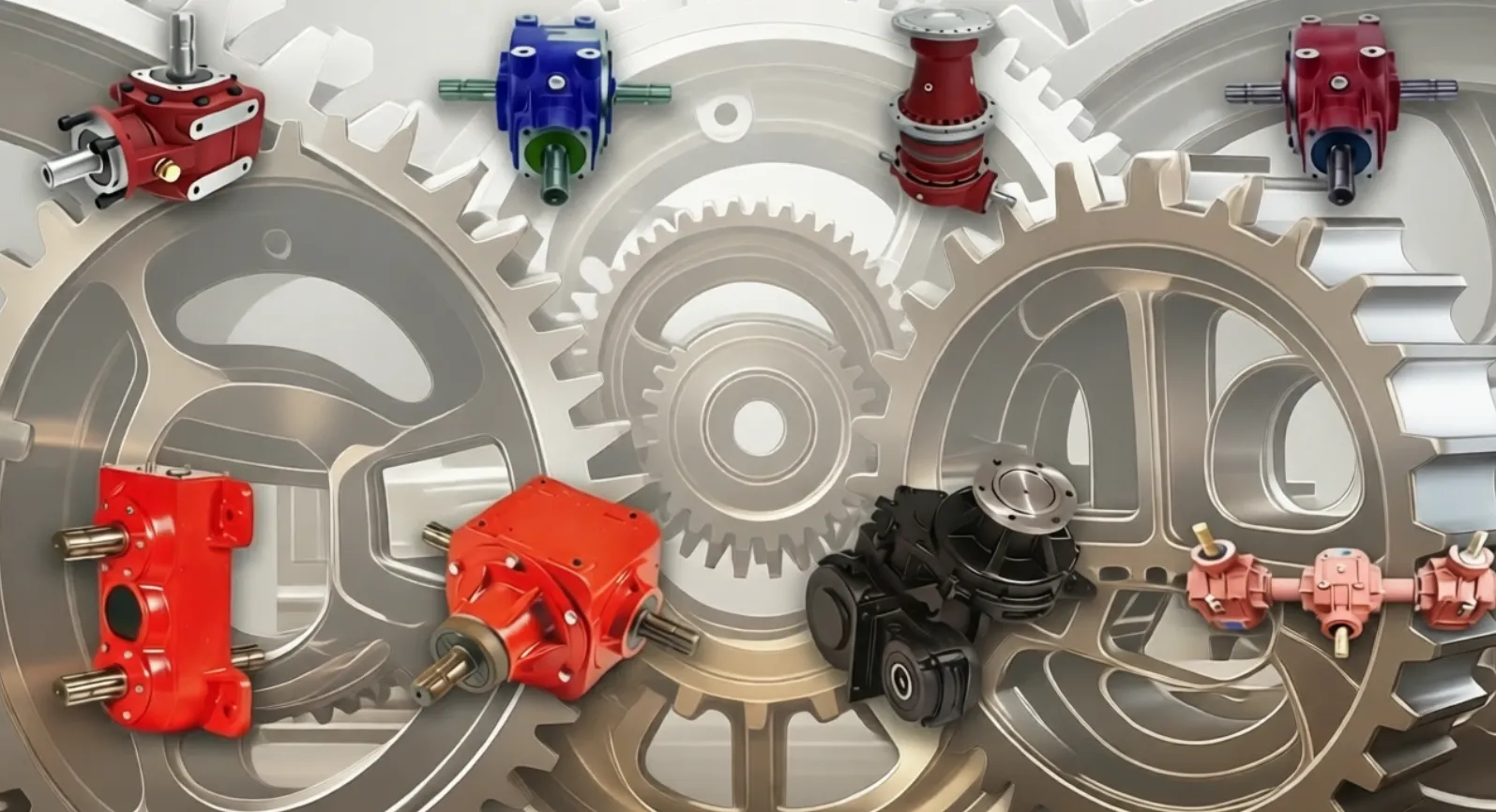
Related Products and Accessories
- PTO Shafts: With telescopic tubes, safety shields, yoke types for overload protection. Pairs with ever-power gearboxes for full drive systems.
- Farm Accessories: Chains, sprockets, lubrication kits, pulleys, couplings, hydraulic cylinders – comprehensive from ever-power.
- Whole Machines: Harvesters and planters configurable with our gearboxes for integrated efficiency.
ever-power offers full series agricultural gearboxes and accessories for one-stop sourcing, igniting interest in tailored farm solutions.
FAQ
What torque do your gearboxes handle for tomato shakers?
1200-2800 Nm, with 1.9 overload for vine loads.
How do they resist US dust?
IP67 seals, tested 1000 hours in Central Valley.
Why ever-power over Comer?
Higher efficiency (94%), longer life (6000 hours).
When to replace?
After leaks or vibration increases post 9000 hours.
Compatible brands?
Oxbo, Johnson, Pik Rite, Guaresi – matching interfaces.
Maintenance needs?
Oil change 600 hours with VG320.
Compliance?
ASABE S318, with safety guards.
Accessories?
PTO shafts with shields for compatibility.