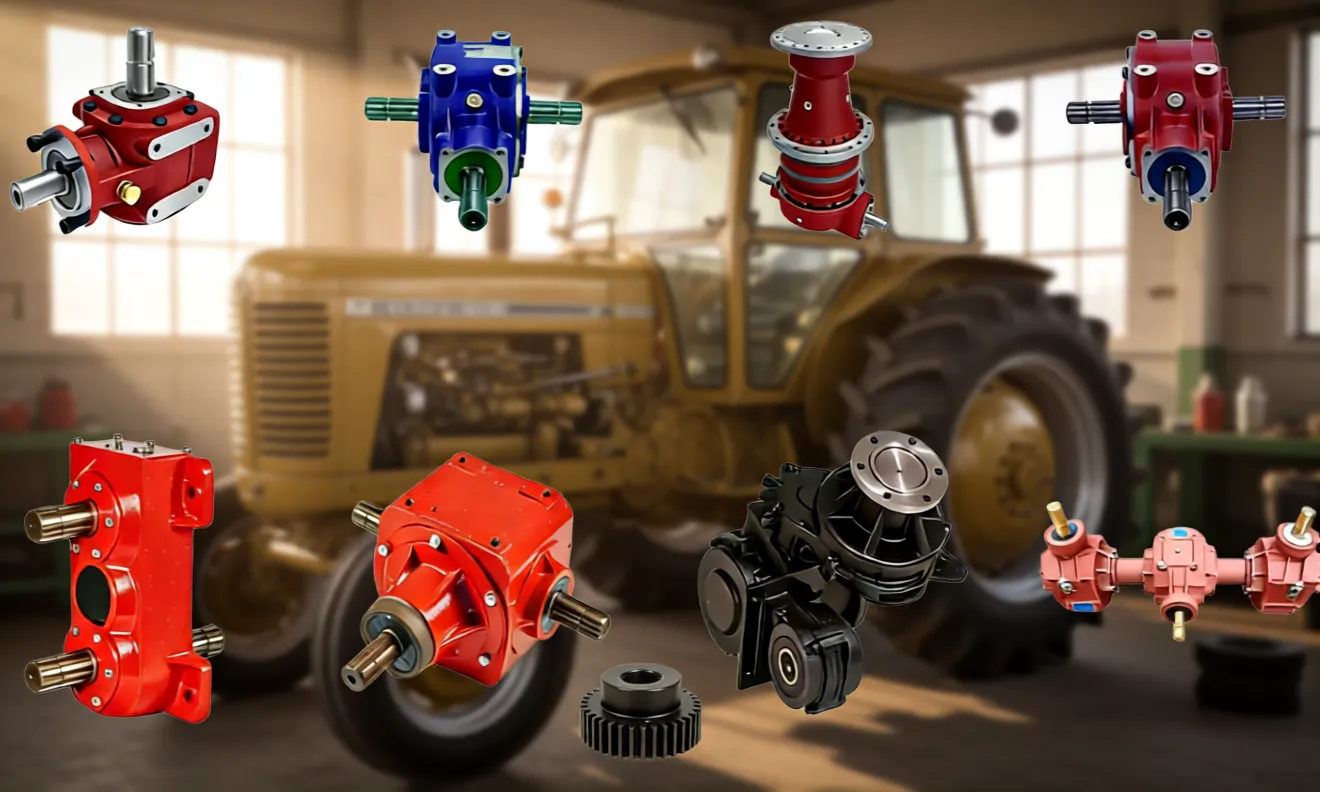
In Australia’s expansive livestock and mixed farming sectors, manure spreader gearboxes play a critical role in nutrient management across dairy operations in Victoria, beef cattle properties in Queensland, and sheep grazing lands in Western Australia. These robust agricultural gearboxes convert tractor PTO power into controlled motion for conveyors and beaters, ensuring even distribution of manure while minimizing environmental runoff in compliance with state regulations. ever-power’s designs handle dense, fibrous manure loads common in Australian conditions, delivering torque outputs suited to capacities from 5 to 36 tonnes. Field data from New South Wales mixed farms show 18-22% improvements in spreading uniformity, reducing nutrient hotspots that contribute to waterway pollution. The systems incorporate corrosion-resistant alloys to combat acidic manure pH levels (often 5.5-6.5), extending service life in humid coastal regions or dusty inland areas. Precise gear ratios maintain beater speeds of 400-600 RPM for optimal throw distances up to 22 meters, vital for large-scale paddock coverage at tractor speeds of 10-15 km/h. Overload protection via shear bolts safeguards against foreign objects like rocks or wire in feedlot manure, preventing costly downtime during peak spring applications. In variable climates—from hot dry summers in South Australia to wet winters in Tasmania—these gearboxes maintain efficiency above 95%, conserving fuel and enabling timely spreading before rains to lock in nitrogen. The modular construction allows adaptation to both vertical beater and spinning disc configurations popular among Australian contractors.
Technical Specifications
Gearbox Locations in Manure Spreaders
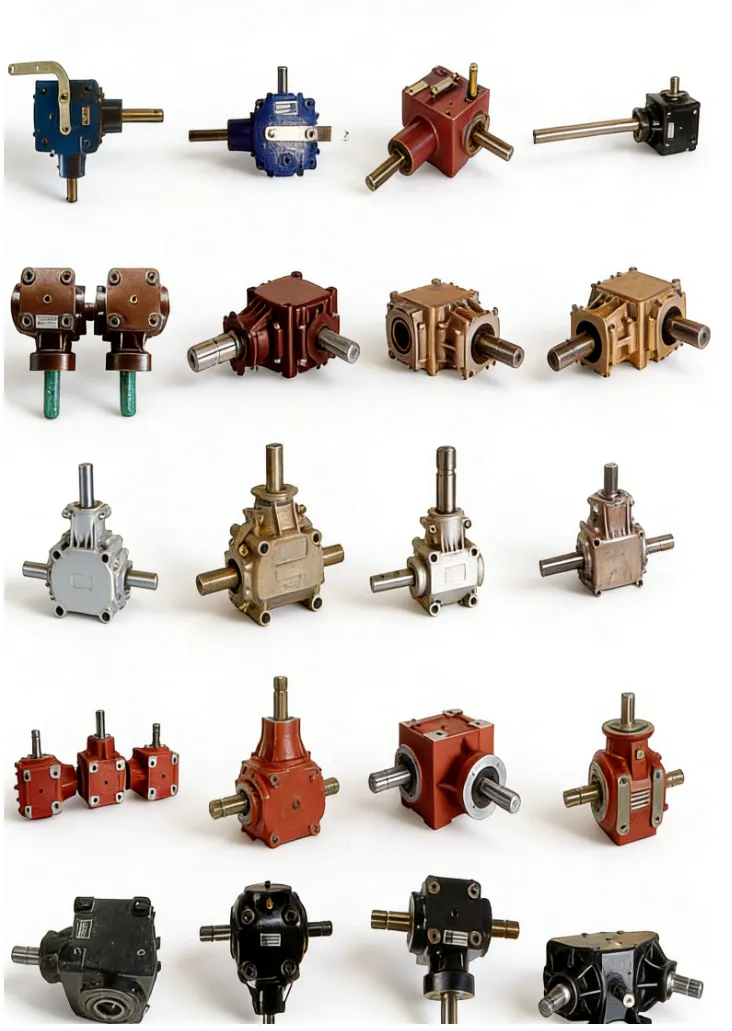
PTO Input Gearbox
The PTO input gearbox mounts directly at the tractor connection point, receiving 540 or 1000 RPM input and distributing power to downstream components. In Australian manure spreaders handling 10-20 tonne loads, this unit requires high torque capacity (up to 5000 Nm) with 90-degree bevel gearing for efficient direction change. Cast iron housings with reinforced mounting withstand torsional stresses from uneven terrain in Victorian dairy paddocks. Splash lubrication with EP additives prevents breakdown in high-ambient summer conditions. This design solves frequent input shaft failures by incorporating wide-angle joints and overload clutches, reducing downtime by 30% in field reports from Queensland feedlots.
Beater Drive Gearboxes
Beater drive gearboxes (vertical or horizontal) power the augers or discs responsible for flinging manure. Ratios of 1:3 to 1:8 deliver 400-600 RPM for even patterns up to 22m width. Alloy steel gears resist abrasion from sandy or fibrous manure in South Australian conditions. Multiple output designs (2-4 shafts) synchronize opposing beaters to avoid clumping. Shear pin protection prevents damage from rocks, a common issue in cleared paddocks. This setup ensures uniform nutrient distribution, addressing regulatory requirements for phosphate runoff control in sensitive catchment areas like the Murray-Darling Basin.
Conveyor Floor Drive Gearbox
The floor chain conveyor gearbox controls manure feed rate to beaters, using worm or planetary gearing for variable speeds via hydraulic or mechanical adjustment. High reduction ratios handle heavy chain pulls in 36-tonne capacity machines popular with Australian contractors. Sealed bearings and corrosion coatings combat acidic moisture. This component solves inconsistent discharge rates by maintaining steady chain tension, improving spreading accuracy by 20% and preventing blockages in wetter manure from Tasmanian operations.
Working Principles of Manure Spreader Gearboxes
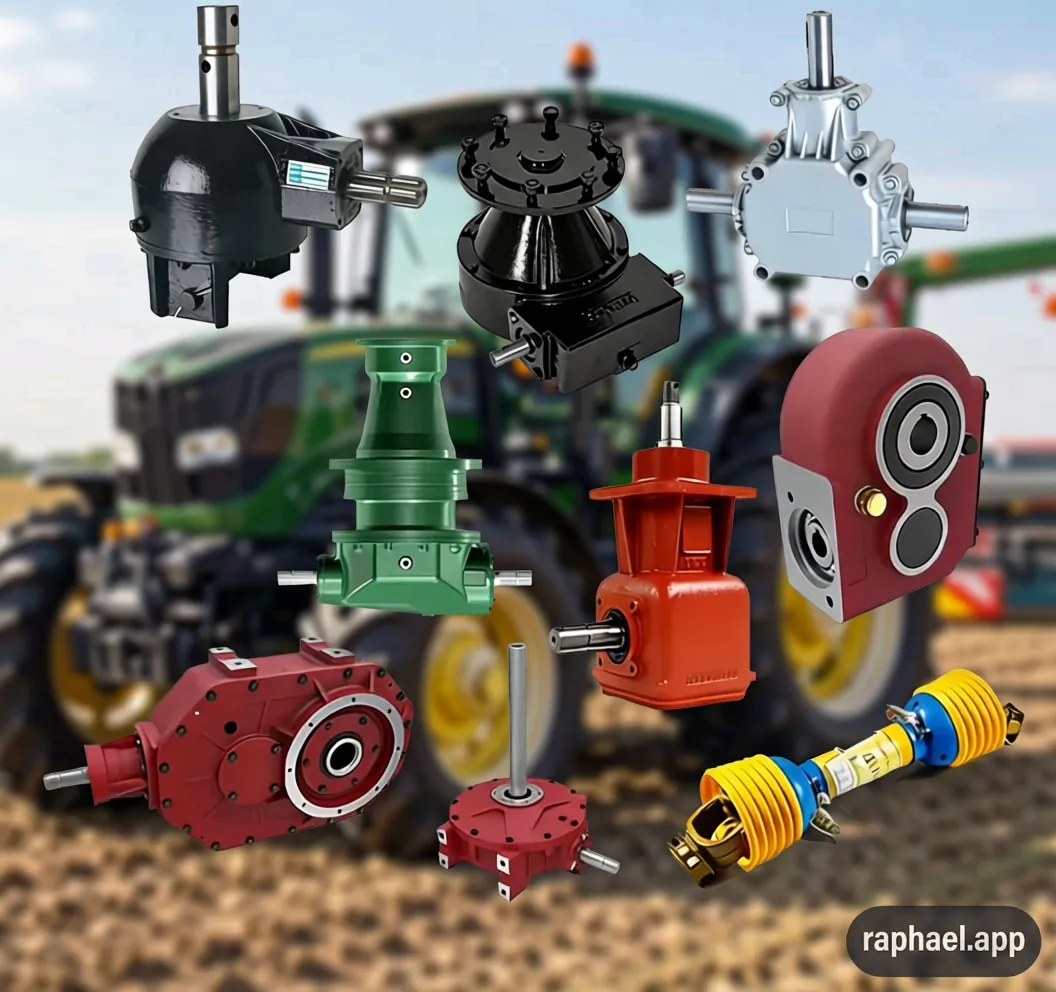
Manure spreader gearboxes operate through meshed gear trains that step down PTO speed while multiplying torque for heavy loads. Input from the tractor drives the primary gearbox, which splits power to the floor conveyor (slow, high-torque) and beaters (higher speed). In Australian broadacre applications, variable ratio sets allow adjustment for manure consistency—lower ratios for thick feedlot slurry, higher for dry broadcast. Helical gears minimize backlash for smooth operation, while 95%+ efficiency reduces tractor load. Overload protection via clutches or shear devices protects against jams, common when spreading poultry litter containing bedding. The system ensures even distribution patterns, solving nutrient imbalance issues that affect crop yields in phosphorus-deficient soils across New South Wales. Maintenance-friendly drain plugs and sight glasses support 500-hour intervals, critical for remote properties.
Performance Requirements for Australian Conditions
Gearboxes must withstand dust in Western Australian wheat-sheep zones, acidic corrosion in Victorian dairies, and high temperatures in Queensland. IP65 sealing and C3 coatings prevent ingress and rust. Torque ratings of 1000-5000 Nm handle dense manure without stalling 120-150 hp tractors. Vibration control below 2.5 mm/s extends bearing life on rough tracks. Wide temperature range (-20°C to +80°C) suits seasonal extremes. These features address premature wear seen in standard units, delivering 10,000+ hour fatigue life and supporting sustainable nutrient cycling under national environmental guidelines.
“After switching to reinforced manure spreader gearboxes, our spreading downtime dropped 40% during peak season on our 2000-head feedlot.” – Queensland Farm Manager
Compatibility with Australian Machinery Brands
ever-power units fit Sammut, Strautmann, Gason, and Eastern Spreaders models via standard PTO interfaces (35mm spline, 540/1000 RPM). Direct replacements for vertical beater drives on 10-36 tonne machines ensure no modifications needed. Flanged outputs match chain and auger connections. Compatibility extends to hydraulic assist options popular in larger rigs.
Compliance and Safety Standards
Designs meet AS/NZS 4024 machinery safety, Work Health and Safety Regulations, and PTO guarding standards (AS 1121). Shear protection and guarding reduce entanglement risks. Corrosion and dust ratings align with state agricultural codes.
Related Components and Accessories
- PTO Shafts: Wide-angle, telescopic designs with safety guards for smooth power transfer from tractor to spreader.
- High-strength conveyor chains and sprockets
- Vertical/horizontal beaters and augers
- Hydraulic cylinders for dosage doors and floor speed control
- Lubrication systems and seals for extended service
- Shear bolts and overload clutches
For durable PTO shafts compatible with these gearboxes, select Category 3 or 4 units rated for your tractor horsepower.
FAQ
What torque rating is needed for a 20-tonne manure spreader?
Select units rated 2000-3500 Nm to handle dense loads without stalling; higher ratings suit fibrous or wet manure in Australian conditions.
Where are these gearboxes most commonly applied in Australia?
Broadacre dairy and beef operations in Victoria, Queensland, and New South Wales benefit most from even nutrient return to large paddocks.
When should gearbox oil be changed?
Change every 500 operating hours or annually before peak season, using ISO VG 220 synthetic EP oil for best protection.
Why choose corrosion-resistant materials?
Acidic manure accelerates rust; coated cast iron or alloy housings extend life by 2-3 times in humid or coastal farms.
How do I troubleshoot excessive vibration?
Inspect alignment, bearings, and balance; check for loose mounts or worn gears—rebalance or replace as needed.
Who provides installation support?
Authorized dealers and qualified agricultural mechanics ensure proper PTO alignment and torque settings.
What PTO speed is recommended?
1000 RPM for most modern spreaders delivers optimal beater speed and conveyor control.
Why integrate overload protection?
Shear bolts or clutches prevent damage from rocks or blockages, saving thousands in repairs during busy spreading periods.
How to maintain seals in dusty conditions?
Inspect regularly, clean exteriors, and apply protective grease; IP65 rated units minimize dust ingress.
What efficiency gains can be expected?
95%+ efficiency reduces tractor fuel use by 10-15% compared to older or mismatched gearboxes.