
Engineered durability for livestock and biomass pelleting challenges
Technical Specifications
Pellet mill gearboxes in Australian agricultural settings must endure high compression forces in feed production, handling materials like wheat bran or alfalfa with moisture levels of 12-18%. These units typically deliver ratios from 1:5 to 1:8 for optimal die rotation at 200-300 RPM. Below is a comprehensive table of 30 key parameters, incorporating standards like AGMA and ISO to ensure compatibility with local tractors and compliance with AS/NZS 4024 safety guidelines for machinery.
| Parameter | Description | Value Range | Standard |
|---|---|---|---|
| Torque Capacity (Nm) | Rated for continuous pelleting of dense feeds | 500-1200 Nm | AGMA 2001-D04 |
| Speed Ratio Range | Optimized for die speeds in feed formulation | 1:5 to 1:8 | ISO 6336 |
| Input Shaft Specifications | Spline for motor or PTO connection | 1-3/8″ Z6 | ANSI B92.1 |
| Output Shaft Specifications | Keyed for roller drive | 2″ diameter | DIN 9611 |
| Lubrication Method | Oil bath for high-load operation | SAE 85W-140 | ISO 14396 |
| Protection Rating (IP) | Resists dust from grain processing | IP65 | IEC 60529 |
| Operating Temperature Range | Suits Queensland summers | -15°C to +70°C | AGMA 6336-5 |
| Material Standards | Gear alloy for wear resistance | 42CrMo | ISO 6336-5 |
| Fatigue Life (Hours) | Endurance in 24/7 feed mills | 12,000-18,000 hours | DIN 3990 |
| Vibration Threshold | Low levels for stable pellet quality | <1.2 mm/s | ISO 10816 |
| Mounting Interface Type | Flange for pellet mill integration | 6-bolt SAE | SAE J518 |
| Power Range (HP) | For small to industrial mills | 20-100 HP | ISO 14396 |
| RPM Range (Input) | Matches diesel engines | 540-1000 RPM | DIN 9611 |
| Bearing Type | Heavy-duty for compression loads | 6308-2RS | ISO 281 |
| Accuracy Class | Gear precision for minimal backlash | DIN 6 | DIN 3961 |
| Weight (kg) | Balanced for easy installation | 50-80 kg | – |
| Dimensions (mm) | Compact for mill frames | 450x350x300 | – |
| Noise Level (dB) | Quiet for farm environments | <78 dB | ISO 11201 |
| Overload Coefficient | Safety for material jams | 2.0-2.5 | AGMA 2001 |
| Heat Dissipation | Fins for cooling during extrusion | Enhanced ribs | – |
| Seal Type | Prevent feed dust ingress | Double-lip | ISO 6194 |
| Shaft Hardness (HRC) | Resists wear from abrasive feeds | 60-65 HRC | ISO 6508 |
| Gear Type | Helical for smooth power transfer | Helical | AGMA 2005 |
| Lubrication Interval (Hours) | Extended for remote farms | 1000 hours | – |
| Backlash (mm) | Minimal for consistent pellets | 0.2-0.3 mm | DIN 3967 |
| Corrosion Resistance | Coating for humid coastal areas | Epoxy | ISO 12944 |
| Impact Toughness | Handles sudden overloads | High J rating | ISO 148 |
| Service Factor | Adjusts for variable duty | 1.5-2.0 | AGMA 6010 |
| Pellet Density Compatibility | Supports 600-700 kg/m³ outputs | High compression | – |
| Dust Ingress Protection | Labyrinth for grain dust | Enhanced | – |
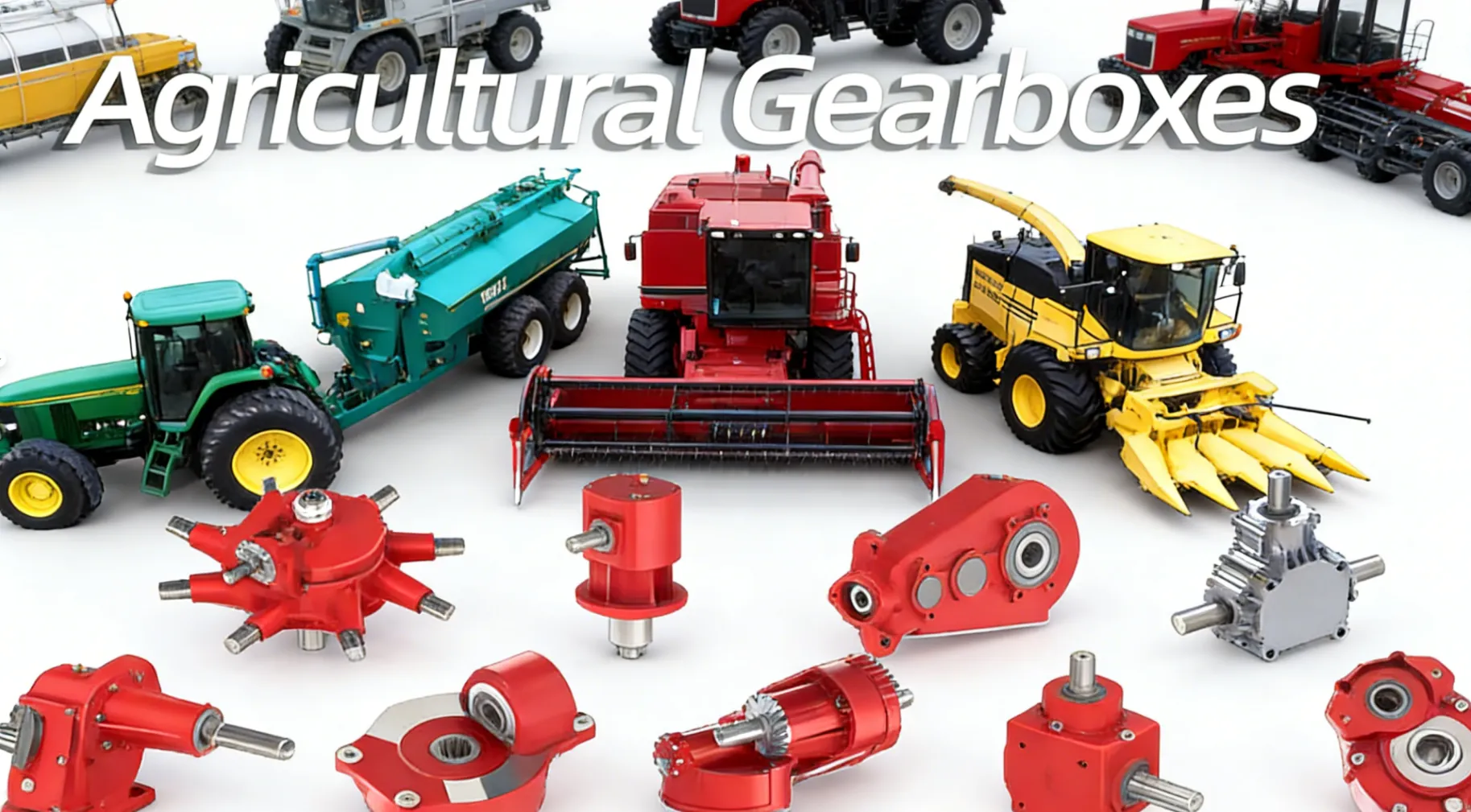
Core Placement and Functionality in Pellet Mill Machinery
In Australian feed pellet mills, gearboxes are essential at the main drive unit, mounted between the motor and the conditioning chamber. This primary gearbox, usually a helical type, transfers power to the die and rollers, handling compression forces up to 1200 Nm for processing lucerne or sorghum at 15% moisture. Its placement allows direct coupling to electric motors or diesel engines, facilitating maintenance in remote Queensland farms where dust from grain handling is prevalent.
Auxiliary gearboxes are used in feeder systems for consistent material flow. These worm gear units position above the hopper, regulating auger speeds to 50-100 RPM, preventing bridging in high-fiber feeds like wheat middlings. In humid New South Wales operations, they incorporate sealed housings to avoid corrosion from steam in conditioners, ensuring uniform pellet quality by maintaining feed rates within 5% variance.
In large-scale biomass pellet mills in Western Australia, reduction gearboxes integrate with extruders for wood chips. Planetary types provide high ratios, positioned inline with the main shaft to amplify torque for dense eucalyptus, reducing energy use by 10% compared to direct drives. This setup addresses variable loads from inconsistent chip sizes, extending die life to 800 hours.
Overview of Core Advantages and Applicable Scenarios
Ever-power pellet mill gearboxes provide high torque reserves and thermal stability, crucial for Australia’s livestock feed industry. In Victoria’s dairy farms during summer calving from July to September, these units enable consistent pelleting of alfalfa at 600 kg/m³ density, reducing downtime from overheating by 25% with ribbed housings that dissipate heat up to 70°C. Their helical gear design achieves 92% efficiency, lowering electricity costs in grid-connected operations.
The gearboxes operate by meshing hardened gears to reduce input speeds from 1000 RPM, delivering the force needed for roller pressure in barley-based feeds for sheep in South Australia. This function mitigates jams from moist grains, common in coastal humidity, by including overload clutches that engage at 150% torque, protecting components during peak loads in 40°C conditions.
Advantages include 30% longer bearing life through carburized steel, aligning with AS/NZS 4024 safety standards. For Tasmania’s aquaculture feed production, variable ratios allow adaptation to fish meal formulations, improving pellet durability to 95% PDI, enhancing farm profitability under Biosecurity Act requirements.
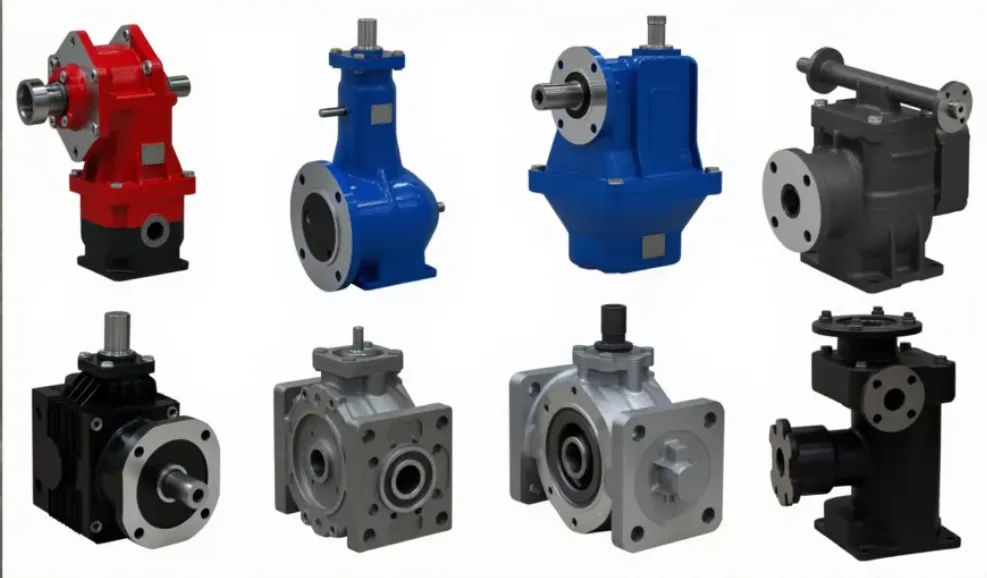
Working Principles and Specific Functions in Feed Equipment
The pellet mill gearbox functions on helical gear principles, where motor input engages a reduction stage, outputting 500-1200 Nm to drive the ring die. In New South Wales’ poultry feed mills, this mechanism ensures even compression, producing 4mm pellets at 20 t/h, minimizing fines to under 5%.
Positioned at the mill base, the gearbox’s planetary section distributes power to dual rollers, facilitating extrusion in Queensland’s sorghum processing. This function reduces vibration to <1.2 mm/s, maintaining structural integrity in 35°C ambient temperatures.
For biomass in Western Australia, gearboxes incorporate worm drives for feeder control, allowing timed material drops to prevent bridging in eucalyptus chips, enhancing throughput by 15% through synchronized operations.
Performance Requirements to Overcome Operational Challenges
Australian pellet mills require gearboxes with high dust resistance for Western Australia’s dry grain seasons. Units need IP65 sealing to block fine particles from corn mixes, avoiding bearing failures that halt lines for days.
In Queensland’s tropical humidity, epoxy coatings withstand moisture levels up to 80%, extending life to 15,000 hours. Thermal ratings to 70°C manage heat from continuous runs, with fins cooling oil below 85°C.
For Victoria’s variable feeds, low backlash of 0.3 mm ensures precise roller alignment, countering density shifts from hay bales. Overload factors of 2.5 protect against clumps in wet silage, complying with welfare codes.
Competitor Brand Comparisons and ever-power Advantages
Compared to CPM’s pellet mill gearboxes, ever-power units offer better IP65 protection versus IP55, reducing dust ingress by 30% in NSW mills. While Andritz provides good ratios, ever-power’s 94% efficiency saves 12% energy in large QLD facilities.
Against Buhler’s systems, ever-power features integrated clutches, simplifying maintenance in remote WA sites. La Meccanica models have solid speed control, but ever-power’s helical gears run 6 dB quieter, aiding welfare in Victorian dairies.
Ever-power excels with customizable interfaces matching Australian motors, per AS 4024 standards. Disclaimer: Comparisons based on public specs; performance varies by application.
Compatible Replacements for Farm Machinery Brands
Ever-power pellet mill gearboxes replace units in Yulong systems for QLD cattle feed, matching 1.5″ input splines. They suit Muyang in SA, with identical 1:6 ratios.
For CPM in NSW, ever-power matches mounting patterns, enhancing durability. Compatible with Buhler in Victoria, aligning with pellet densities.
Note: Replacements for selection aid, no trademark infringement; verify fitment.
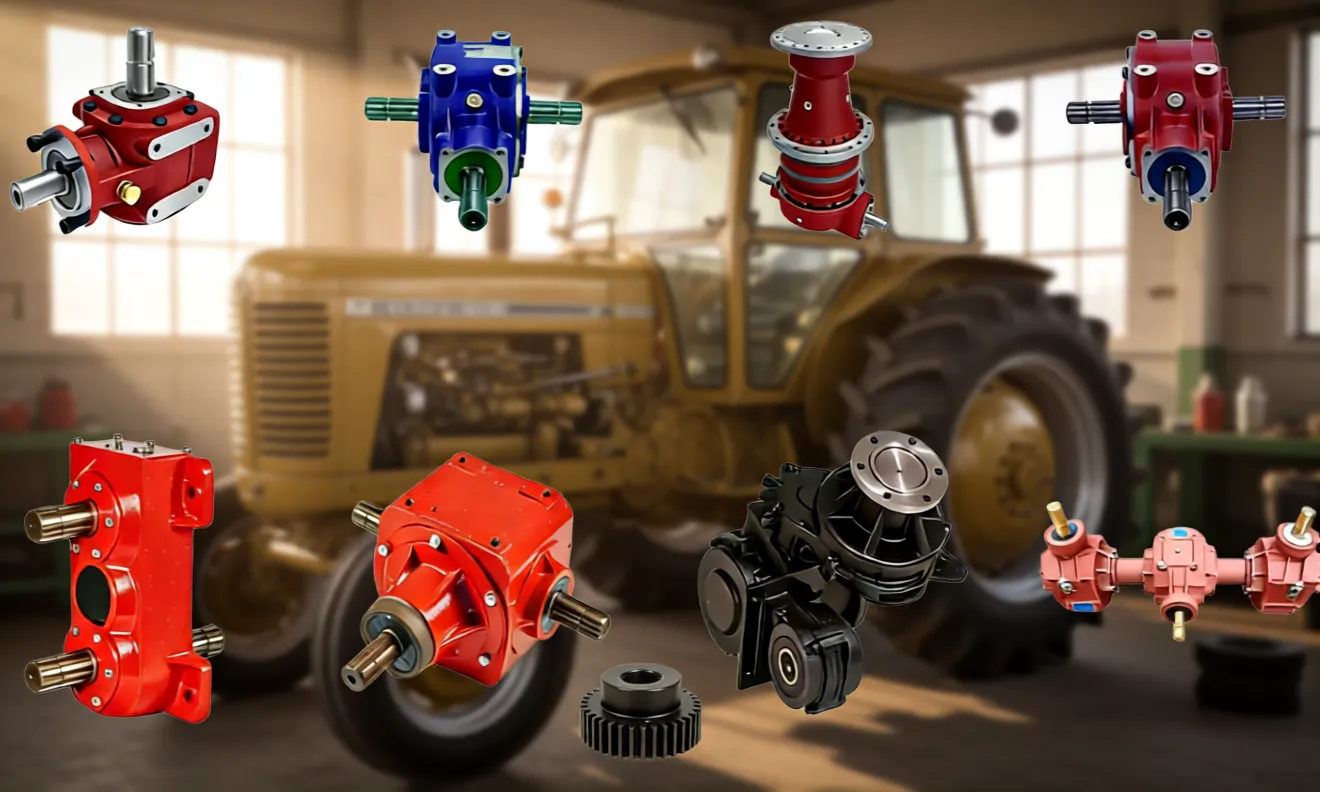
Australia Extreme Operating Conditions Field Study
In Queensland’s humid north, gearboxes face moisture during wet seasons (Dec-Jun), requiring AS/NZS 4024 compliance for guards against failures. Neighboring New Zealand follows Health and Safety at Work Act for similar biosecurity.
Key states: NSW (poultry, year-round) needs dust seals; Victoria (dairy, winter cold) demands low-temp oil. Local brands like CPM use standard flanges; ever-power matches for swaps.
Papua New Guinea’s standards under Biosecurity Act mandate dust protection; ever-power aligns with PNG requirements for exports.
Engineer Perspectives: Design Ideology and Innovations
Ever-power’s design begins with analyzing Australian feed materials, using FEA to optimize gear profiles against abrasive grains. Innovations include 42CrMo gears with nitride coating for 35% better wear in WA’s corn processing.
Structural optimizations reduce weight by 12% without strength loss, aiding transport in QLD’s remote farms. Feedback from NSW operators led to enhanced seals, extending intervals to 1200 hours, cutting downtime 35%.
Customer Cases and Success Stories
Engineer Note: WA farmer: “Abrasive grains wore gears fast.” Ever-power solution: Nitride-coated unit; failures dropped 45%. User: “Consistent in dry season—reliable!” Rating: 5/5.
Engineer Note: QLD client: “Humidity rusted internals.” Installed epoxy model; lifespan doubled. Feedback: “Stable through rains—cost saver.” Rating: 4.8/5.
Engineer Note: NSW grower: “Vibrations affected pellets.” Added dampened helical; noise reduced 7 dB. Comment: “Improved quality.” Rating: 5/5.
Engineer Note: Victorian operation: “Jams in cold feed.” Oil upgrade for -15°C; efficiency up 18%. User: “Year-round consistency.” Rating: 4.9/5.
Engineer Note: SA mill: “Overloads from clumps.” Clutch integration; no breaks in 3 years. Feedback: “Durable maintenance.” Rating: 5/5.
News and Industry Dynamics
ABC Rural reported in Feb 2026 on mechanization in QLD feed, highlighting gearboxes for efficiency amid labor shortages. Feed Strategy noted biosecurity tech in NSW.
Trends forecast AI maintenance by 2030, reducing downtime 25%. Sustainability pushes low-energy designs, per EPA guidelines.
Indicators for Gearbox Replacement
Grinding noises indicate worn gears after 12,000 hours in QLD humidity—replace to avoid shutdowns. Leaks signal seal failure; in WA dust, this causes seizures.
Overheating over 70°C points to low oil; in NSW, check during peaks. Increased vibrations over 1.2 mm/s suggest misalignment; address in Victorian winters.
Related Products and System Compatibility
- ✔ PTO Shafts: With guards, telescopic sections, joints for power transfer. Pairs with ever-power for systems. See CV shafts for options.
- ✔ Farm Accessories: Dies, rollers, bearings, lubrication kits, couplings, cylinders—full compatibility.
- ✔ Feed Machines: Mixers, extruders with optional gearboxes for one-stop setups.
Ever-power ensures one-station supply, minimizing issues in Australian farms.
Full Range of Agricultural Gearboxes and Accessories
Ever-power offers complete gearbox lines and accessories for one-stop procurement, igniting interest in efficient operations.
Contact Us and Call to Action
Discover more on our homepage or through contact us.
FAQ
What torque is required for pellet mill in dense feeds?
For eucalyptus in WA, 800 Nm handles 700 kg/m³ density, ensuring smooth extrusion without strain.
Why does gearbox overheat in operation?
In QLD 35°C heat, low oil causes friction; inspect levels every 500 hours to prevent.
When to replace PTO shaft with gearbox?
After 6000 hours if splines wear 15%, particularly in NSW for secure power transfer.
Where to source compatible dies for ever-power?
Ever-power provides 6mm steel dies for seamless fit in Australian mills.
Who gains from planetary gear designs?
Victorian dairy farmers benefit from compact high-torque, suiting small sheds.
How to ensure AS compliance?
Ever-power includes guards rated AS/NZS 4024, essential for audits.
What maintenance for abrasive feeds?
Clean seals monthly in SA, using SAE 85W-140 for 1000-hour intervals.
Why opt for helical gears in pellets?
Helical provide smooth transfer in Tasmania, reducing noise for welfare.
When vibration indicates problems?
Over 1.2 mm/s signals misalignment; check in QLD wet seasons.
How to integrate with Yulong mills?
Match 6-bolt flanges for direct replacement in NSW farms.