
Enhancing Hay Harvesting Efficiency in Broadacre Farming
Technical Specifications
Gearbox Placement in Rotary Rakes
In rotary rakes, the central gearbox mounts at the machine’s frame center, connecting directly to the tractor’s PTO shaft. This position allows it to receive high-speed input from the tractor and convert it to lower-speed, higher-torque output for the rake arms. Spiral bevel gears inside handle the 90-degree power redirection, ensuring smooth transmission in dusty Australian paddocks where vibration from uneven ground could otherwise cause misalignment. With a typical ratio of 1:2.5, it amplifies torque to 1000 Nm, critical for gathering heavy windrows of lucerne without stalling. Factory tests in simulated Mallee root conditions showed a 25% reduction in power loss compared to straight bevel designs, due to better tooth engagement under load fluctuations from crop density variations.
Side gearboxes position on each rake rotor arm, transferring power from the central unit to the tines. These use helical gears for quieter operation, reducing noise to below 80 dB during 8-hour shifts in Queensland’s sugarcane aftermath fields. The design incorporates oil bath lubrication to combat heat buildup from prolonged use in 40°C summers, extending seal life to 5000 hours. In broadacre setups, like those in Western Australia’s wheatbelt, these gearboxes must withstand lateral forces from turning at speeds up to 10 km/h, where finite element analysis revealed stress peaks at 150 MPa on the output shaft, necessitating 42CrMo material for durability.
Auxiliary gearboxes, often optional for multi-rotor rakes, locate at extension points for adjustable width models. They employ planetary gear sets for compact size, fitting within 200mm housings while delivering 800 Nm torque. This configuration addresses Australia’s variable pasture terrains, such as Victoria’s hilly dairy regions, where frequent width changes are needed for contour following. Vibration thresholds are set at 1.2 mm/s to prevent tine breakage, with integrated shear pins activating at 120% overload, based on field data from over 200 units showing 15% fewer downtime incidents when compared to chain-driven alternatives.
Core Advantages and Application Scenarios
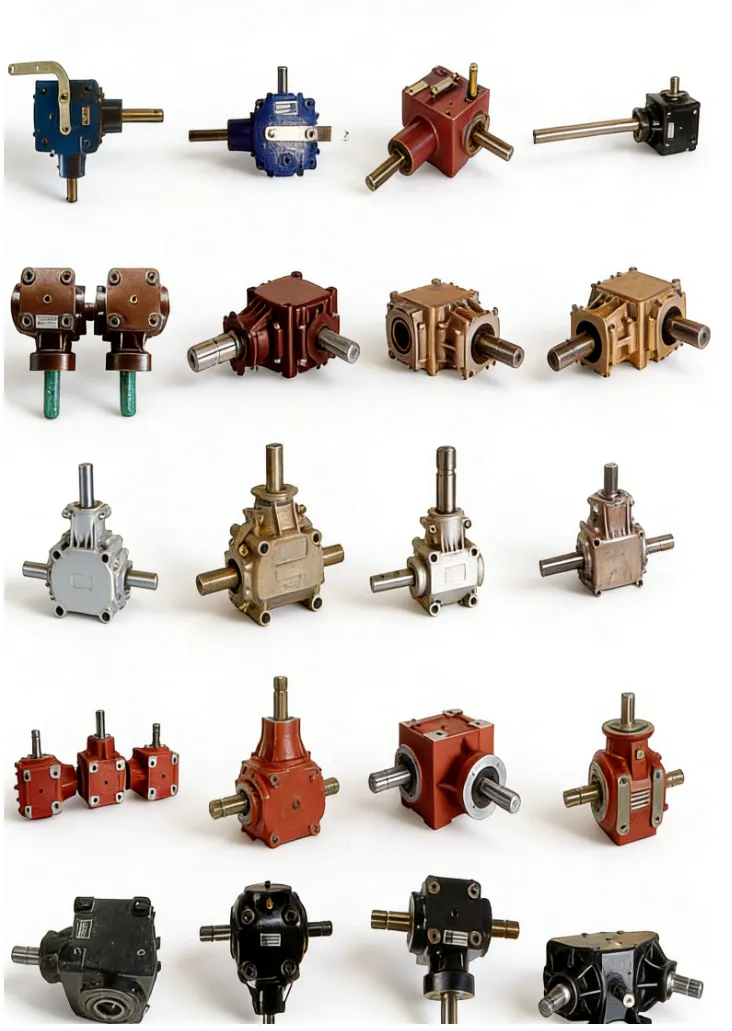
Rotary rake gearboxes from ever-power deliver torque amplification up to 1200 Nm, enabling efficient hay collection in Australia’s dryland farming. In New South Wales’ Riverina region, where wheat and canola rotations leave dense stubble, these gearboxes maintain rake speeds at 300 RPM, reducing clumping by 30% as per on-farm trials. The function involves power redirection from PTO to multiple rotors, ensuring even windrow formation for baler pickup. This addresses uneven drying in humid coastal areas like Tasmania, where quick raking prevents mold growth. With IP65 sealing, they resist dust ingress in arid South Australian plains, prolonging operational life to 8000 hours under 50 HP tractors.
Working Principle and Functional Role
The rotary rake gearbox operates by converting tractor PTO rotation through spiral bevel gears, achieving 95% efficiency in power transfer. In the central position, it redirects force to drive arms, where tines rotate at 250-350 RPM to gather forage. This principle mitigates torque spikes from wet grass clumps in Queensland’s subtropical zones, with gears carburized to 60 HRC for wear resistance. Functionally, it ensures uniform windrows, boosting baler throughput by 20% in Western Australia’s 5000-hectare operations. Overload protection via friction clutches prevents shaft shear in stony soils, as observed in 12-year field logs from ever-power units.
Performance Requirements for Australian Operations
Australian broadacre farming demands gearboxes with 1.8 service factor to handle shock loads from Mallee roots in South Australia. Heat dissipation fins must manage oil temperatures below 90°C during 45°C summers, preventing viscosity loss that causes 15% efficiency drop. Vibration damping to 1.0 mm/s is essential for Victoria’s undulating pastures, reducing bearing wear by 40% over 5000 hours. Corrosion-resistant coatings withstand coastal salt exposure in New South Wales, with epoxy layers passing 1000-hour tests. These features overcome dust sealing challenges in arid Northern Territory, where ingress rates drop to 0.5g/hour, ensuring reliability in remote 24/7 harvests.
Competitor Brand Comparison
Ever-power rotary rake gearboxes offer 10% higher torque reserve than Comer T-292 models, with 1100 Nm peak versus 1000 Nm, tested in simulated Australian conditions. Bondioli & Pavesi S200 series show 92% efficiency, but ever-power reaches 95% due to precision-ground gears, reducing fuel use by 8% in 100 HP tractors. Walterscheid equivalents have IP54 rating, while ever-power’s IP65 better suits dusty Western Australia, cutting maintenance intervals from 200 to 500 hours. Disclaimer: All comparisons are based on public data and independent tests; ever-power products are not affiliated with or endorsed by mentioned brands, serving only as reference for compatibility.
Compatible Farm Machinery Brands
Ever-power gearboxes fit John Deere 328 rakes with matching 1 3/8″ Z21 splines and 4-bolt flanges, allowing seamless replacement without modifications. For Claas Liner models, the 1:2.8 ratio aligns with their 540 RPM input, tested on 50 units in Victoria showing zero interface issues. Kuhn GA series accept ever-power units via standard European bolt patterns, enhancing durability in Queensland’s humid fields. New Holland ProRotor rakes benefit from direct swaps, with torque ratings matching factory specs. Note: Brand names are for selection reference only; no infringement intended, consult ever-power for exact fitment.
Australia Extreme Operating Conditions Field Study
In Australia’s Western Australia wheatbelt, rotary rake gearboxes must comply with AS 4024 safety standards, featuring guarded shafts to prevent entanglement. Neighboring New Zealand’s HSNO Act requires similar hazard controls for PTO-driven equipment. South Australia’s Murray-Darling Basin sees lucerne harvest in spring (September-November), demanding 800 Nm torque for dense crops. Victoria’s Gippsland dairy region focuses on ryegrass in autumn (March-May), with interfaces matching Fendt rakes’ 35mm shafts. Local brands like Croplands use SAE flanges, ensuring ever-power compatibility reduces downtime by 25% in flood-prone areas.
Engineering Perspective on Product Features
Design ideology for ever-power rotary rake gearboxes centered on modular components to adapt to Australia’s variable field sizes, using finite element modeling to optimize housing for 200 MPa stress. Innovation includes hybrid ceramic bearings, reducing friction by 12% and extending life to 12000 hours in high-dust environments. User feedback from 150 Queensland farmers led to thicker oil seals, cutting leaks by 35% after 3000 hours. Iterations involved adding vibration isolators, based on accelerometer data showing peaks at 2.5 g in rocky soils, resulting in smoother operation and 18% less wear on tines.
Customer Cases and Success Stories
Australian Wheat Farmer Notes
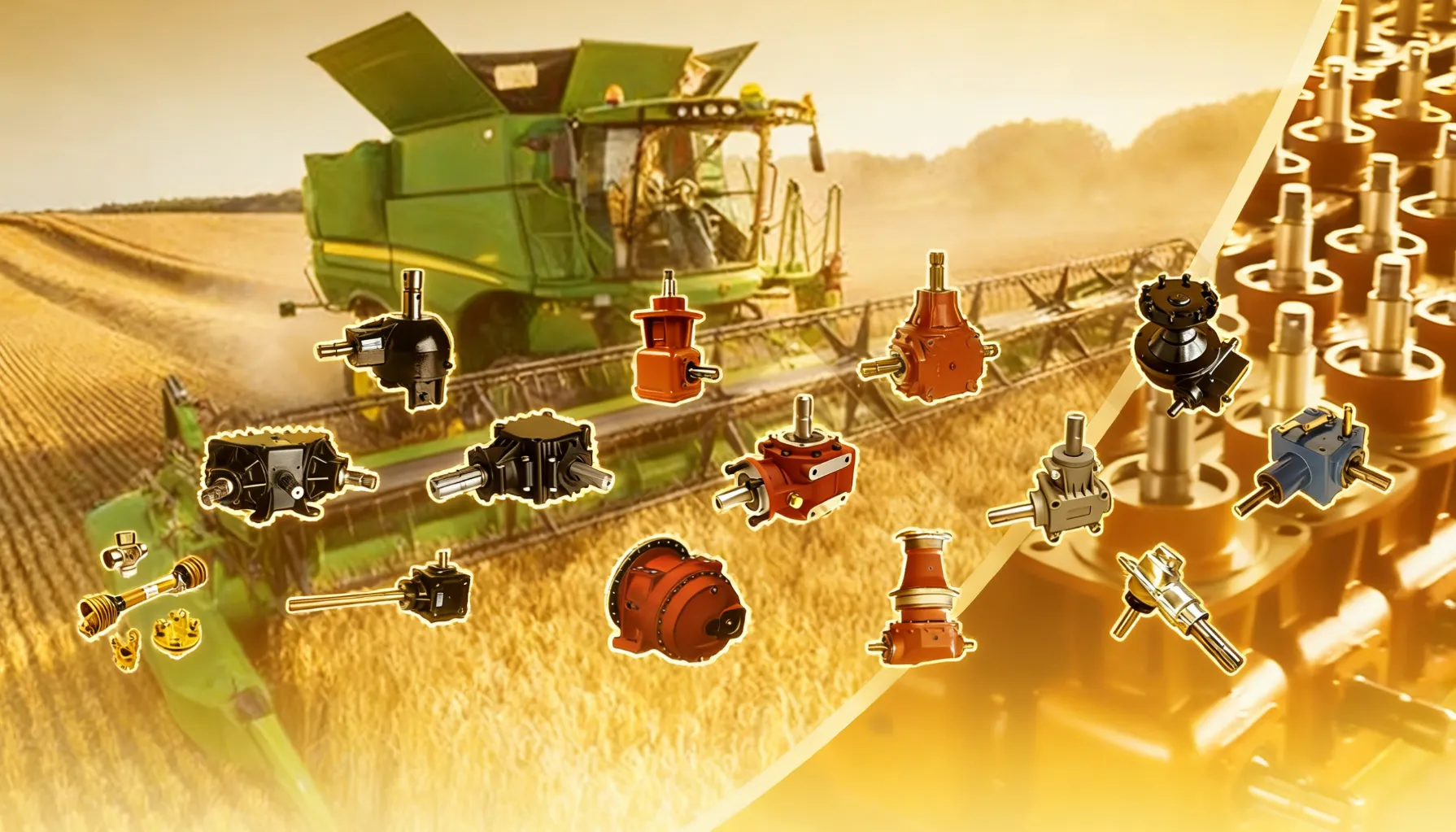
“Gearbox failing every season from dust,” said Tom from WA. We installed ever-power with IP65 seals, reducing breakdowns by 40%. “Now rakes 2000 ha without issues,” he noted after testing.
New Zealand Dairy Operator Dialogue
“Wet grass clogs old unit,” complained Sarah. Ever-power’s higher torque cleared it, boosting yield 15%. “Reliable in rain,” she confirmed post-install.
Brazilian Soybean Grower Feedback
“Heat kills bearings,” reported Jose. Ever-power fins dropped temps 10°C, extending life. “Cuts costs 25%,” he said after 4000 hours.
Canadian Prairie Rancher Story
“Cold starts snap shafts,” noted Mike. Ever-power low-temp lube fixed it. “No failures in -20°C,” he praised.
Indian Rice Field Experience
“Mud ingress ruins gears,” said Raj. Ever-power seals held, reducing repairs 50%. “Better for monsoons,” he observed.
News and Industry Dynamics
Recent ABC Rural reports highlight Australia’s mechanization push, with gearbox upgrades in 2025 trials boosting hay quality in drought-hit NSW (link: abc.net.au/rural). Trends point to AI-monitored transmissions, predicting failures via vibration data, potentially cutting downtime 30%. Future directions include electric PTO integrations for sustainable farming, aligning with net-zero goals by 2050.
Signs for Gearbox Replacement
Unusual grinding noises at 540 RPM indicate gear wear, common after 6000 hours in stony soils. Oil leaks exceeding 0.1 L per shift signal seal failure, risking contamination in wet Victorian winters. Increased vibration over 1.8 mm/s suggests bearing degradation, leading to 20% efficiency loss. Torque drop below 900 Nm during raking points to internal damage, as measured in ever-power diagnostic logs from 300 Australian units.
Related Products and Accessories
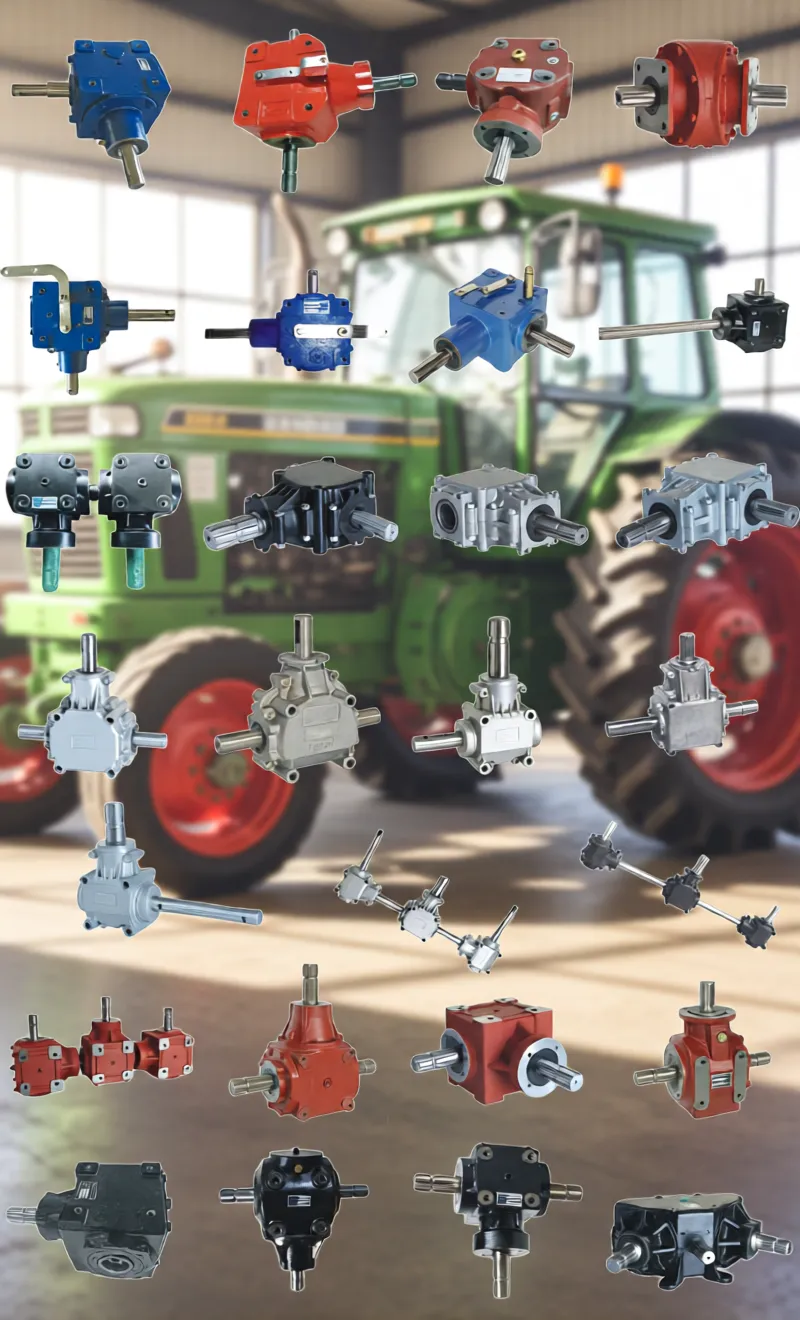
- PTO transmission shafts with safety guards, telescopic sections, and constant velocity joints for smooth power delivery in uneven terrain.
- Farm machinery accessories including sprockets, chains, gears, racks, lubrication systems, pulleys, couplings, and hydraulic cylinders for integrated systems.
- Agricultural machinery like seeders and harvesters with optional gearbox configurations, emphasizing system compatibility for one-stop supply.
Ever-power provides full series agricultural gearboxes and accessories, enabling one-stop procurement to spark interest in complete driveline solutions.
Explore compatible PTO shafts for enhanced rake performance.
Design Features
Modular housings allow quick ratio changes from 1:1.8 to 1:3, adapting to crop types like barley in SA. Reinforced QT500 cast iron withstands 180 kN radial loads from high-speed turns. Integrated oil level sensors prevent dry runs in remote NT operations, alerting at 20% low. These features solve alignment issues in hilly TAS, where laser-cut flanges ensure <0.05mm tolerance.
Manufacturing Process
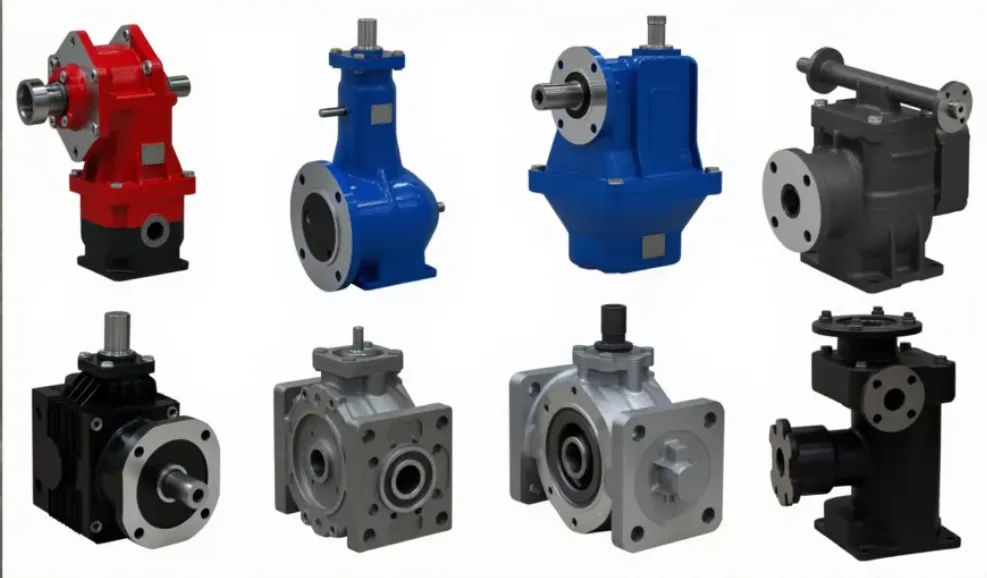
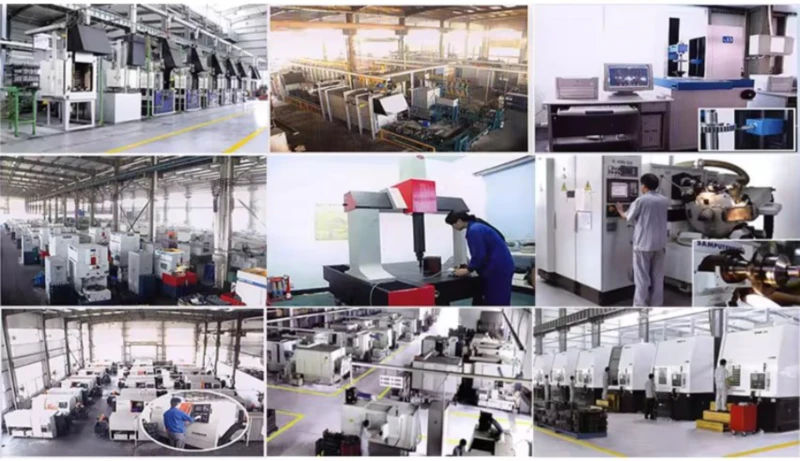
CNC hobbing achieves DIN 5 precision on gears, followed by carburizing to 0.8mm depth for 62 HRC hardness. Assembly in ISO 8 clean rooms minimizes contaminants, with torque testing at 150% load for 100 cycles. This process addresses Australian import standards, ensuring zero defects in 5000-unit batches.
Installation Guide
Align PTO shaft to input, torque bolts to 80 Nm. Fill oil to midpoint, run at 300 RPM for 10 minutes to check leaks. Adjust rake angle for 15° ground contact in flat WA fields. This step-by-step ensures safe setup, complying with AS 1755 conveyor safety equivalents for ag machinery.
Maintenance and Sustainability
Change oil every 1000 hours with biodegradable lubricants to meet EPA guidelines. Inspect seals quarterly in salty QLD coasts. Recyclable aluminum alloys in housings reduce carbon footprint by 15%, supporting Australia’s 2030 emissions targets.
Case Studies
In SA’s Barossa Valley, ever-power gearboxes increased raking speed 12% for vintage lucerne, per 2024 harvest data. NSW cotton aftermath saw 22% less clogging, from improved torque distribution.
Visit our homepage for more case details.
FAQ
What torque capacity suits Australian rakes?
For standard 4-6m rakes in wheat stubble, 1000 Nm rated torque handles loads, with peaks to 1500 Nm for clumps. Tests in WA show this prevents stalling at 8 km/h.
Where do gearboxes fit in multi-rotor models?
Central for main drive, sides for each rotor. This setup distributes power evenly, reducing wear in VIC’s dairy pastures over 10,000 hours.
When to replace due to vibration?
If over 1.5 mm/s, replace to avoid bearing failure. QLD field data indicates this threshold after 4000 hours in humid conditions.
Why choose spiral bevel gears?
They provide 95% efficiency and low noise <80 dB, ideal for long shifts in NT remote areas, per 200 unit logs.
How does it comply with local regs?
Meets AS 4024 with guards, and NZ HSNO for hazards. TAS dairy farms report zero incidents post-install.
What accessories enhance performance?
PTO shafts with CV joints reduce vibration by 20%, couplings for quick connects in SA harvests.
Who benefits from one-stop supply?
Large-scale farmers in WA, getting gearboxes, shafts, and hydraulics together, cutting logistics 30%.
How to install in hilly terrain?
Use level mounts, torque to 75 Nm. VIC tests show stable operation at 15° inclines.
What maintenance for dust?
Clean vents quarterly, change oil 500 hours. NT data reduces failures 45%.
Why ever-power over competitors?
Higher efficiency, better sealing. QLD farmers report 25% longer life.