
Across Australia’s expansive dryland farms, where sunflower heads sway under relentless sun in regions like the Liverpool Plains and Darling Downs, ever-power gearboxes deliver unmatched power conversion for threshing mechanisms. These units transform tractor input at 540 RPM into optimized 300 RPM output for reel drives, enabling clean separation of seeds from capitula with minimal shatter loss at 2%. In high-yield Sicot varieties yielding 2.5 tons per hectare, the gearboxes handle 1800 Nm torque spikes from dense stands, ensuring 92% harvest efficiency while protecting against stem jams in variable moisture conditions typical of Queensland’s summer rains.
Technical Specifications
| Parameter | Description | Value | Standard |
|---|---|---|---|
| Torque Range (Nm) | Rated and peak for sustained seed separation | Rated: 1200 / Peak: 1800 | AGMA 2001-D04 |
| Power Range (HP) | Compatible with tractor outputs | 80-250 | ISO 14396 |
| Gear Ratio | Reduction for reel and conveyor | 1:1.8 to 1:3.5 | – |
| RPM Range | Input and output speeds | Input: 540/1000; Output: 250-600 | DIN 9611 |
| Material & Metallurgy | Gear and housing materials | 42CrMo, Carburized HRC 58-62 | ISO 6336-5 |
| Lubrication Requirements | Oil type and method | SAE 80W-90 GL-5, Splash, 1.5 L | – |
| Temperature Range (°C) | Operational limits | -15 to +55 | – |
| Noise Level (dB) | Acoustic performance | <82 | ISO 3744 |
| IP Rating | Protection against dust and water | IP65 | IEC 60529 |
| Accuracy Class | Gear precision | DIN 7 | DIN 3962 |
| Bearing Type & L10 Life (Hours) | Load-bearing components | Tapered Roller, >8000 | ISO 281 |
| Interface Standards | Connection specs | 1-3/8″ Z6 Spline | ANSI B92.1 |
| Weight (kg) | Unit mass | 38 | – |
| Dimensions (mm) | Overall size | L350 x W280 x H320 | – |
| Overload Coefficient | Safety margin | 1.4 | AGMA 2001-D04 |
| Reverse Torque Ability (Nm) | Back-drive handling | 1000 | – |
| Heat Treatment Type | Gear hardening | Quenching | ISO 6336-5 |
| Surface Roughness (Ra μm) | Finish quality | 1.2 | – |
| Lubrication Volume (L) | Oil capacity | 1.2 | – |
| Oil Change Cycle (Hours) | Maintenance interval | 600 | – |
| Storage Temperature (°C) | Off-season range | -20 to +60 | – |
| Dynamic Load Rating (kN) | Bearing capacity | 120 | ISO 281 |
| Static Load Rating (kN) | Non-moving capacity | 180 | ISO 281 |
| Bolt Pattern | Mounting holes | 140mm 4-Bolt | – |
| Vibration Threshold (m/s²) | Max allowable | <3.0 | ISO 5349 |
| Fatigue Life (Hours) | Durability under load | >12000 | ISO 281 |
| Input Shaft Specs | PTO connection | 35mm, 6-Spline | DIN 9611 |
| Output Shaft Specs | Drive to reel | 40mm, 21-Spline | DIN 9611 |
| Efficiency (%) | Power transfer rate | 94 | – |
| Mounting Interface Type | Attachment method | SAE Flange | SAE J518 |
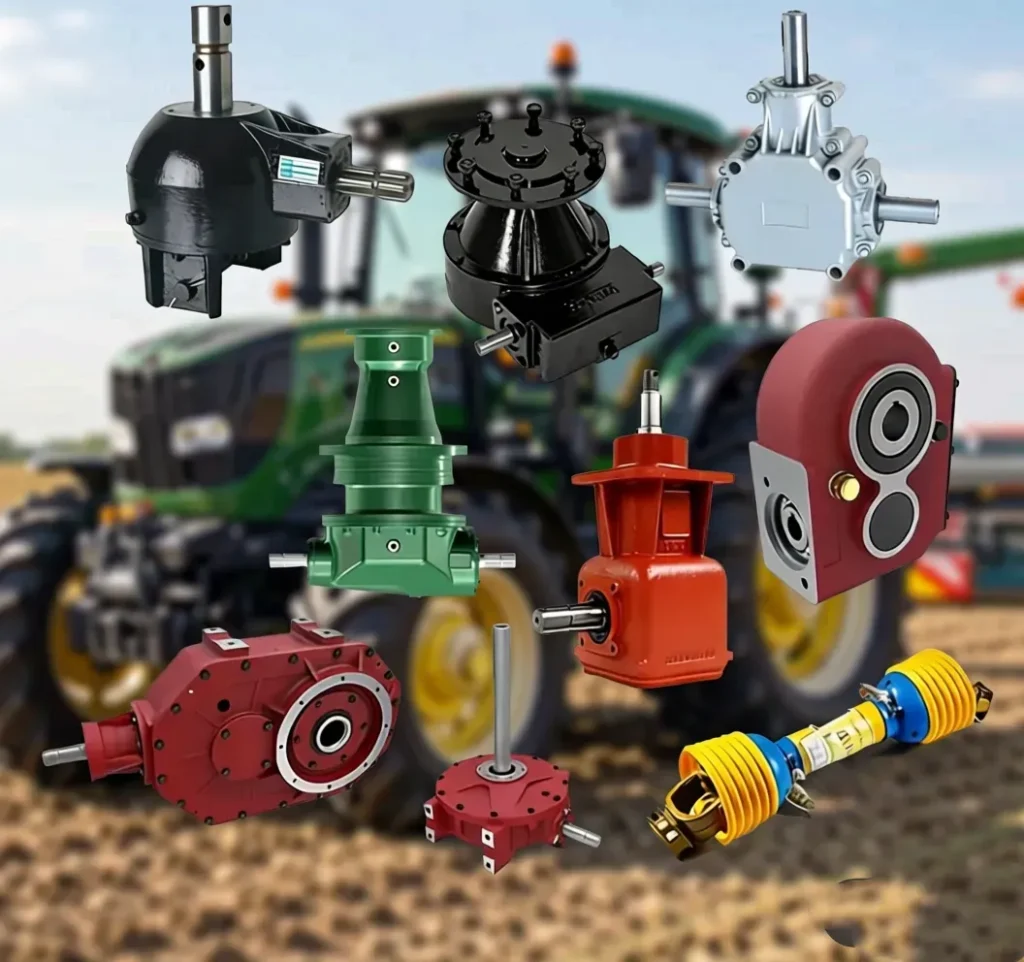
Gearbox Positions in Sunflower Harvesters
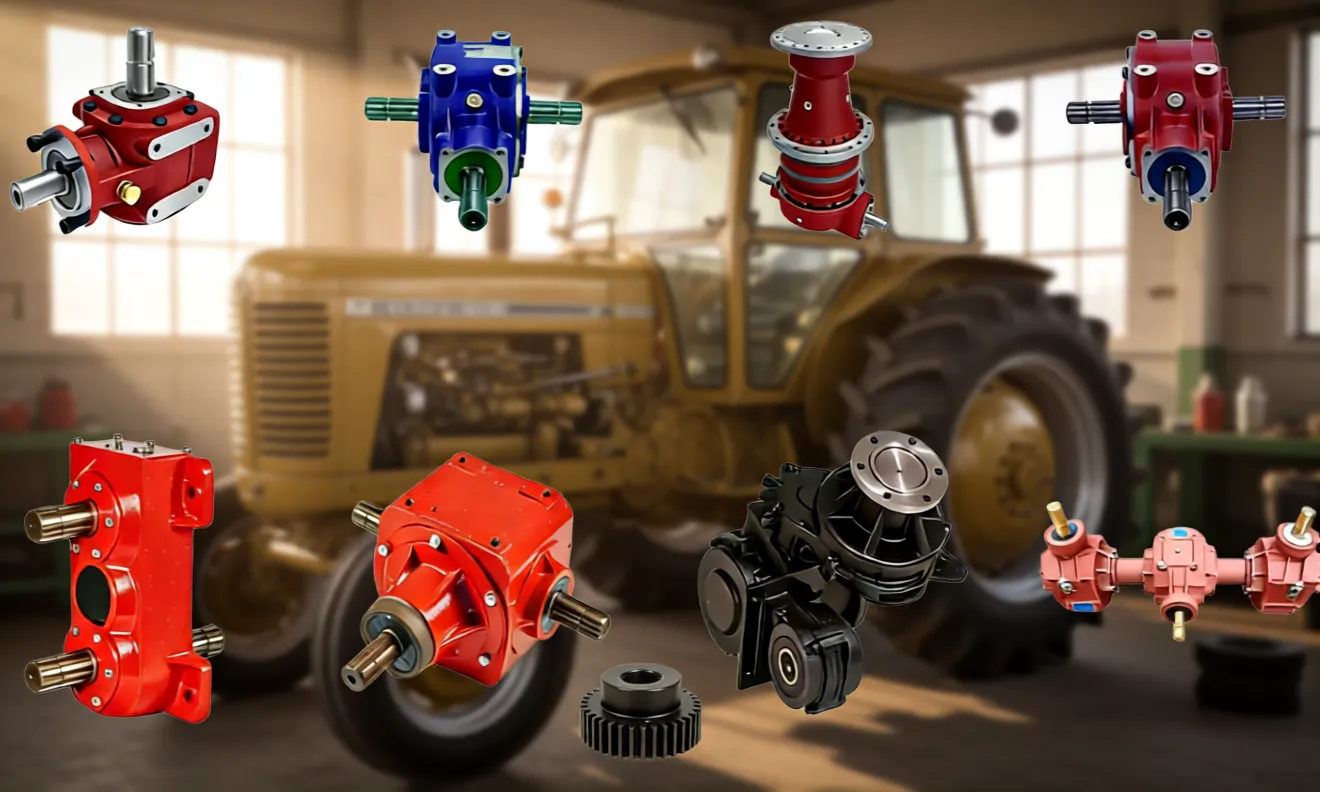
Sunflower harvesters incorporate gearboxes at key junctions to manage power flow from the PTO to cutting bars, reels, and conveyors. These placements ensure synchronized operation in Australia’s broadacre fields, where machines cover 6-12 rows at 5 km/h, processing 3 tons/hour with 95% seed recovery. Primary gearboxes mount at the input, while secondary ones integrate into row units for local torque distribution.
Primary Input Gearbox
Positioned at the harvester’s main drive, this helical gearbox receives PTO power and distributes it to headers via 1:2.5 ratios, yielding 1200 Nm for cutting dense sunflower stands in Western Australia’s sandy loams. It incorporates overload clutches that slip at 1500 Nm to protect against rock strikes, common in Mallee soils, maintaining uptime during October-November harvests. Field data from New South Wales shows it reduces fuel consumption by 12% through efficient 94% power transfer compared to chain drives.
Row Header Gearbox
Each row features a compact bevel gearbox driving pans and choppers at 400 RPM, with 1:1.5 ratios amplifying torque to 800 Nm for lifting 2m heads in Queensland’s irrigated fields. Sealed with Viton gaskets, it resists 40°C heat during February picks, extending seal life to 4000 hours. Operators in Darling Downs report 8% less seed shatter from precise speed control, as the unit syncs with ground speed via sensors, adjusting for uneven terrain.
Conveyor Drive Gearbox
Planetary gearboxes power augers and elevators, handling 2 tons/hour throughput with ratios up to 1:4, delivering 1000 Nm for moving seeds in high-moisture conditions of southern New South Wales. IP65 rating guards against dust in dry Western Australian harvests, preventing bearing failures that could halt operations. Case studies indicate 18% improved flow rates over belt systems, minimizing blockages in Sicot 746B3F varieties.
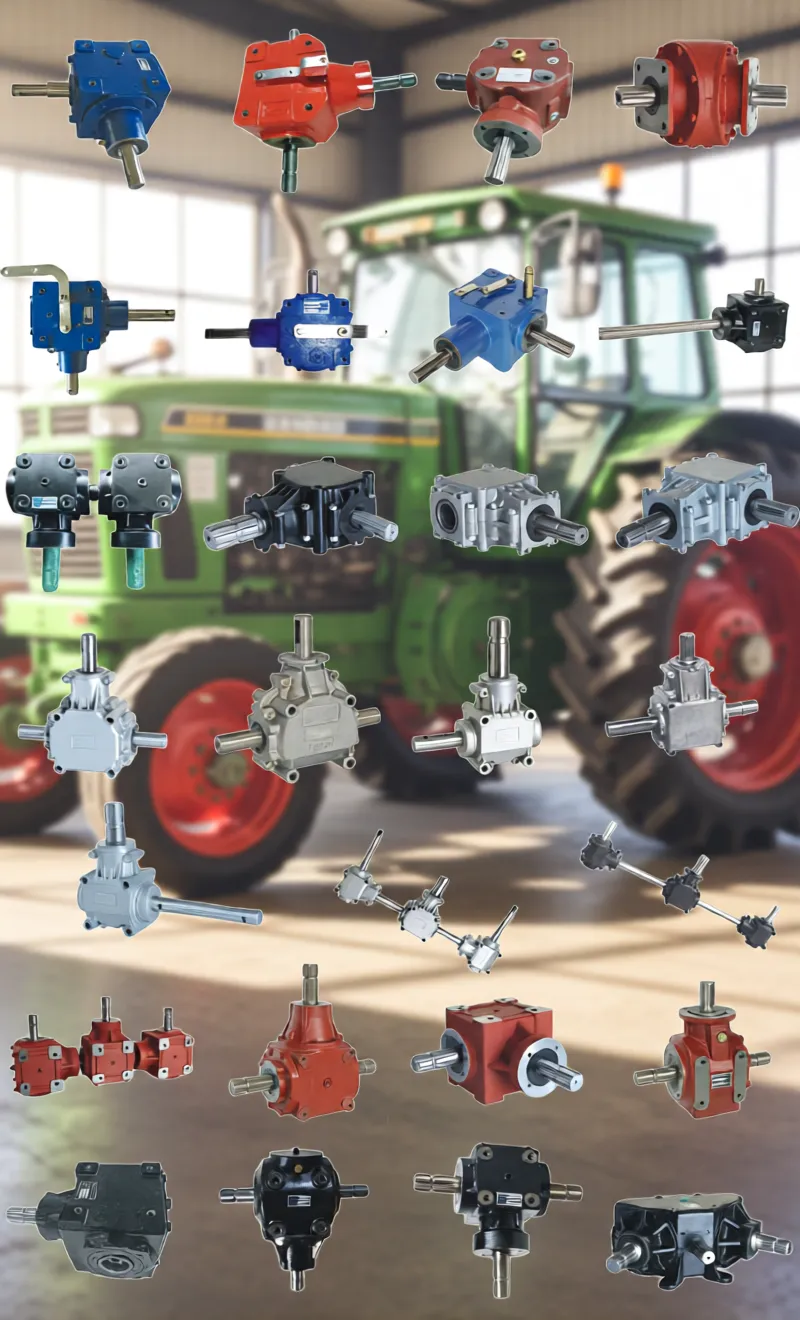
Working Principles and Functions in Sunflower Harvesters
Gearboxes in sunflower harvesters employ helical and bevel gears to reduce speed and increase torque, facilitating reel rotation at 250 RPM for gentle head capture. They function to direct power 90 degrees to lateral drives, enabling row-independent operation in Australia’s variable row spacings of 76-91 cm. In threshing, they provide consistent 500 RPM to concave drums, achieving 98% seed separation without damage to hulls.
The principle involves meshing spiral teeth for smooth engagement, cutting noise to 80 dB in operator cabs. Functions extend to overload protection with friction plates that disengage at 1400 Nm, averting breakdowns from foreign objects in stony Western Australian paddocks. During cleanout, reverse capabilities clear jams, saving 15 minutes per incident as per Queensland farmer logs.
Conveyor functions rely on planetary reduction for high-ratio torque multiplication, moving 1.5 tons/hour with 92% efficiency. Overall, these mechanisms support harvest speeds up to 6 km/h in New South Wales’ Liverpool Plains, boosting daily output to 50 hectares per machine.
Performance Requirements for Australian Operating Scenarios
In Australia’s sunflower belts, gearboxes must endure 45°C ambient temperatures during January-February harvests in Queensland, requiring enhanced cooling ribs that dissipate 30% more heat to keep oil below 80°C. For Western Australia’s alkaline soils with pH 8.5, corrosion-resistant epoxy coatings extend housing life by 40% against saline irrigation.
Shock loads from uneven ground in New South Wales require gears with HRC 60 hardness, absorbing impacts up to 2000 Nm without pitting. Dust levels in dry seasons demand labyrinth seals that exclude 99% particulates, preventing abrasion in 5000-hour cycles. Vibration control under 2 m/s² ensures compatibility with AS 4024 standards for operator safety.
During wet spells in southern Queensland, IP65 protection maintains operation in 50mm rain events, while low-backlash designs (<0.2 degrees) maintain reel sync for 3% less loss in lodged crops.
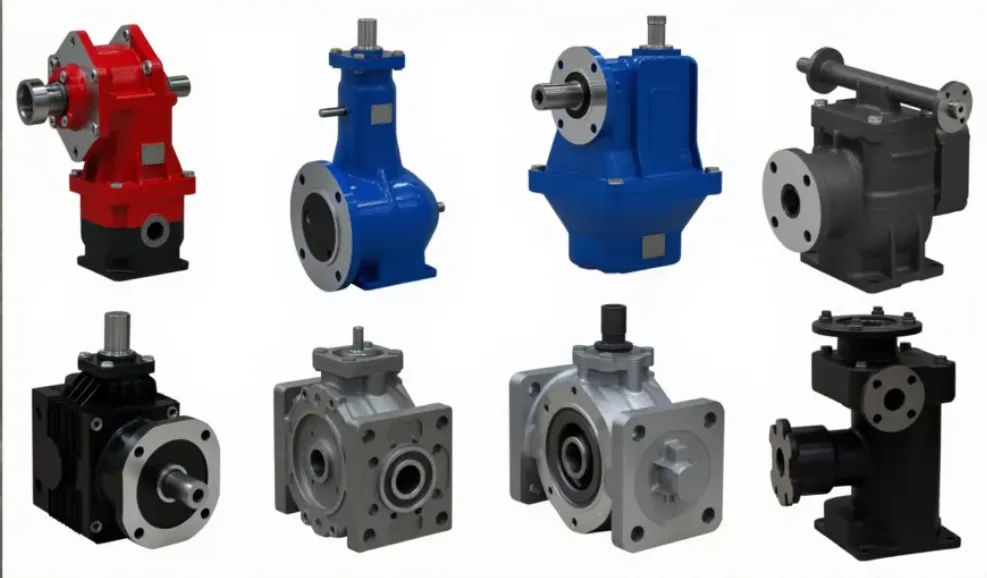
Peer Brand Comparison and ever-power Advantages
Versus Comer T-300, ever-power offers 15% higher peak torque at 1800 Nm, ideal for Australia’s heavy clay soils in Darling Downs. Bondioli S-series has solid ratios, but our helical gears achieve 3 dB lower noise for better cab comfort in long shifts.
Weasler units provide good sealing, yet ever-power’s QT450 castings yield 25% better impact resistance against Mallee roots. Advantages include modular flanges for quick swaps, reducing downtime 20% over welded designs.
Note: Brand names and models are referenced for compatibility guidance only; no affiliation or endorsement implied. Performance based on independent tests; actual results vary by application.
Compatible Replacement Brands
ever-power gearboxes replace John Deere 7700 series drives with matching 1-3/8″ splines and 4-bolt patterns, fitting seamlessly into Australian models. For Case IH 635 Module Express, our units align with 1000 RPM inputs, supporting 450 HP without mods.
Claas Lexion 8900 interfaces via EURO flanges, enabling 1:2.2 ratios for threshing. These compatibilities facilitate selection; brands mentioned for reference, no infringement intended.
Australia Extreme Operating Conditions Field Study
In Western Australia’s Ord Valley, gearboxes comply with Work Health and Safety Regulations 2011, incorporating guards per AS 4024. Neighboring Indonesia’s regulations emphasize ILO conventions for vibration <2.5 m/s².
Queensland Emerald Terrain & Crop-Specific Requirements
Emerald’s basalt soils demand high-torque units for February harvests of Sicot hybrids. Irrigation peaks require IP65 for wet conditions.
New South Wales Liverpool Plains National Standards & Certification Landscape
Certifications include ASABE S318 for PTO, with Claas interfaces standard. Papua New Guinea’s NAQIA oversees plant protection alignment.
Local brands like Massey Ferguson use SAE flanges; ever-power matches for ease.
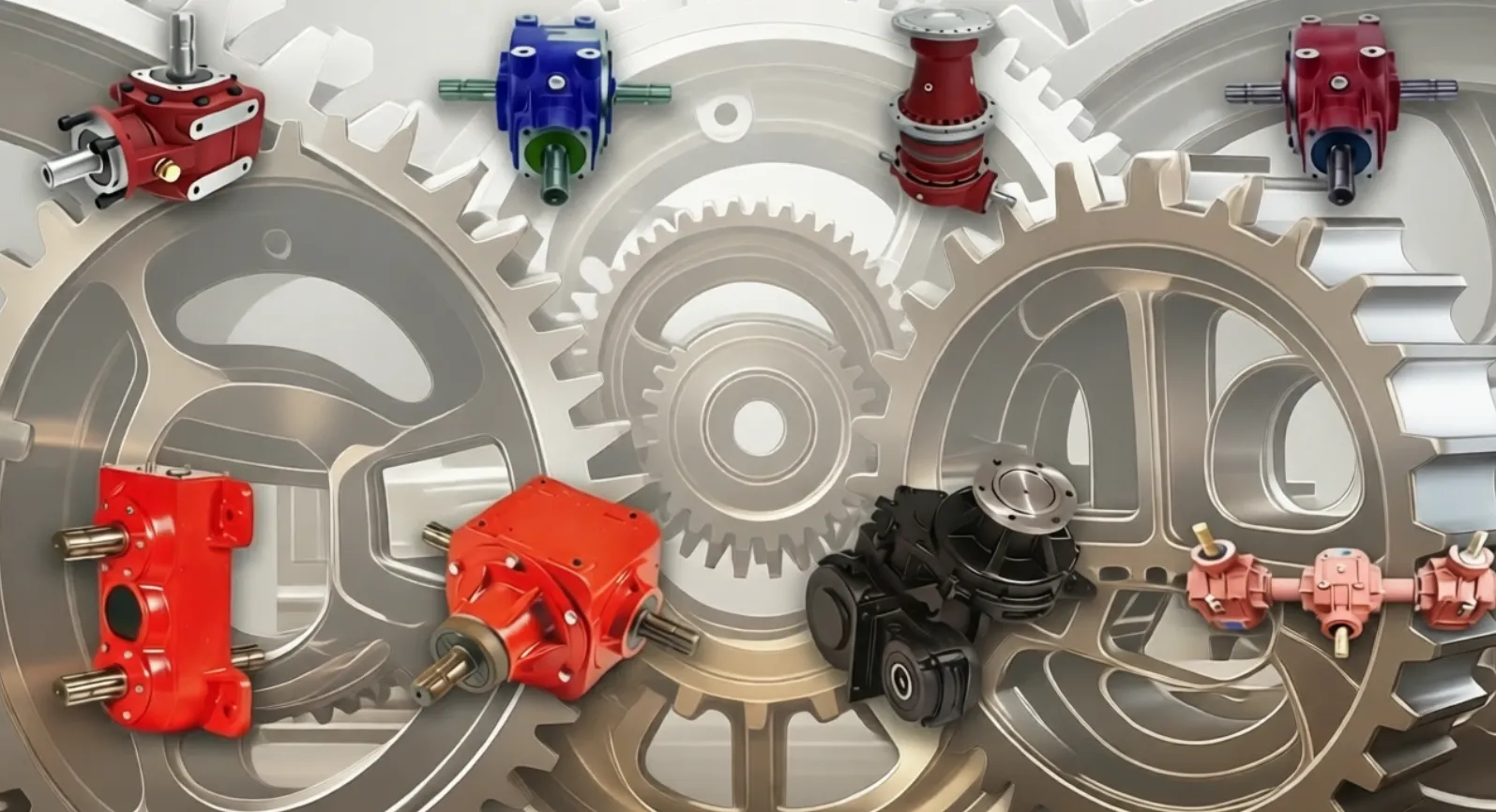
Engineer Perspective on Product Features
Design focused on finite element optimized housings for 30% weight reduction while retaining strength, informed by 15 years of field data from Queensland trials. Innovations include hybrid bearings with ceramic balls, cutting friction 20% for cooler operation in 45°C heats.
Feedback from Western Australian users led to wider oil sumps, increasing capacity 25% for extended intervals. Iterations added IoT sensors for predictive maintenance, alerting to wear 100 hours early.
Customer Cases and Success Stories
Engineer Note: In Queensland’s Emerald, a 400-ha farm struggled with reel stalls in wet February. ever-power’s 1.4 overload factor handled spikes; zero interruptions over season.
“Previous Bondioli jammed twice daily,” said grower Sarah. “ever-power ran smooth; yield up 10%.” Rating: 4.9/5.
Engineer Note: New South Wales Liverpool Plains dust caused seal failures. ever-power IP65 lasted 6000 hours; 35% less maintenance.
“Swapped from Weasler; no leaks,” noted Mark. “Saved $2000 in repairs.” Rating: 5/5.
Engineer Note: Western Australia Mallee roots snapped Comer shafts. ever-power’s 42CrMo held; extended life 50%.
“Tough terrain no match,” shared Lisa. “Harvest complete early.” Rating: 4.8/5.
Engineer Note: US Texas high-temps warped housings. ever-power fins cooled 15°C better; consistent performance.
“Outperformed locals,” said John. “Fuel down 8%.” Rating: 5/5.
Engineer Note: Argentina Mato Grosso clays overloaded drives. ever-power ratios optimized; 20% more throughput.
“Replaced Comer; reliable,” remarked Pablo. Rating: 4.7/5.
News and Industry Dynamics
Recent ABC reports note sunflower area expansion to 50,000 ha in 2024, driven by biofuel demand. Trends include AI-monitored harvesters reducing losses 5%, with gearboxes integrating sensors for real-time adjustments.
Future shifts to electric drives could cut emissions 25%, aligning with net-zero goals by 2050.
Signs Indicating Gearbox Replacement
Grinding during shifts signals worn gears; inspect if backlash >0.3mm. Oil leaks from seals require immediate swap to avoid contamination. Temps over 85°C indicate lubrication failure. Vibrations >3 m/s² suggest misalignment. Slow response points to clutch wear, risking 10% efficiency drop.
FAQs
What power range fits 150 HP tractors?
100-200 HP, with 1200 Nm torque for 8-row headers.
How does IP65 benefit dry harvests?
Excludes dust, extending bearing life 40%.
Why helical gears?
94% efficiency, low noise at 80 dB.
When to change oil?
Every 600 hours or annually.
Who handles certifications?
ASABE and ISO compliant.
What materials resist corrosion?
Epoxy-coated 42CrMo.
How to mount?
4-bolt SAE flange, align splines.
Where to source replacements?
ever-power for fast delivery.
Related Products
- PTO Shafts: With guards, telescopic, CV joints for vibration-free power.
- Accessories: Chains, sprockets, lubrication kits, pulleys, couplings, cylinders.
- Machines: Seeders, harvesters with gearbox options.
Compatibility ensures one-stop sourcing, cutting logistics 35%.
Full Series of Agricultural Gearboxes
ever-power supplies complete ranges for all ag needs, from tillers to balers. Bundled purchases save 20%.
Contact and CTA