
Product Description
Product Description
planetary gear transmission NGW Series Planetary speed gearbox
NGW series gearboxes consist of single-stage(NGW11-NGW121),two-stage(NGW42-NGW122) and stree-stage(NGW73-NGW123).
1.Model Number
NGW, NGW-L, NGW-S, NGW-QJ
2.Applications
NGW Planetary Gear Units is widely used in many areas such as metallurgy, mine, lifting, transportation, textile, cement, light industry, chemical, pharmaceutical, dye printing and so on.
Detailed Photos
3.Product Characteristics
(1) Small volume, light weight, well-knitted structure, big transmission power and high load capacity. Compared with the ordinary cylindrical gear reducers of the same level, its weight is lower 1/2 and volume is only 1/2-1/3 of the former.
(2) High transmission efficiency. 1-stage is up to 97%, 2-stage 94%, 3-stage 91%.
(3) The range of transmission power is very wide, from 1kw to 1300kw.
(4) NGW Planetary Gear Units is designed with hard-tooth-faced, and can be used widely and in long period.
(5) Big transmission ratio
4.Technical Data(NGW)
Original Version NGW Series
Shafts Position: In Line
1 Stage: NGW11~NGW121 Ratio: 2.8~12.5
2 Stage: NGW42~NGW122 Ratio: 14~160
3 Stage: NGW73~NGW123 Ratio: 180~2000
New Design NGW Series
Shafts Position: In Line, Parallel Shaft
NAD(NAF) – 1 Stage, Foot Mounted(Flange Mounted), In Line
NAZD(NAZF) – 1 Stage, Foot Mounted(Flange Mounted), Parallel Shaft
NBD(NBF) – 2 Stage, Foot Mounted(Flange Mounted), In Line
Product Parameters
NGW-S Series Planetary Gearboxes
Shafts Position: Right Angle
Gearset: Spiral Bevel Gear Pair Integrated With Planetary Gear Set
2 Stage: NGW-S42~NGW-S122 Ratio: 11.2~80
3 Stage: NGW-S73~NGW-S123 Ratio: 56~500
| Stage | Model | Size | Ratio | Rated Power |
| Single-stage | NGW11~NGW121 | 1~12 | 2.8~12.5 | 2. 8-1314KW |
| Two-stage | NGW42~NGW122 | 1~12 | 14-160 | 0.7-517KW |
| Three-stage | NGW73~NGW123 | 1~6 | 180-2000 | 0.16-47.1KW |
| Types | Sizes | Nominal Ratio | Input Shaft Dia.(m6) | Output Shaft Dia.(n6) |
| NAD | 200,224,…1800,2000 | 4~5.6
6.3~9 |
50~400mm
40~360mm |
60~630mm |
| NAF | 200,224,…500,560 | 4~5.6
6.3~9 |
50~130mm
40~100mm |
60~220mm |
| NAZD | 200,224,…1400,1600 | 10~18 | 30~240mm | 60~560mm |
| NAZF | 200,224,…500,560 | 10~18 | 30~85mm | 60~220mm |
| NBD | 250,280,…1800,2000 | 20~25
28~50 |
30~280mm | 80~630mm |
| NBF | 250,280,…500,560 | 20~25
28~50 |
30~80mm | 80~220mm |
| NBZD | 250,280,…1400,1600 | 56~125 | 28~170mm | 80~560mm |
| NBZF | 250,280,…500,560 | 56~125 | 28~55mm | 80~220mm |
| NCD | 315,355,…1800,2000 | 112~400 | 25~150mm | 120~630mm |
| NCF | 315,355,…500,560 | 112~400 | 25~50mm | 120~220mm |
| NCZD | 315,355,…1800,2000 | 450~1250 | 20~170mm | 120~630mm |
| NCZF | 315,355,…500,560 | 450~1250 | 25~45mm | 120~220mm |
Packaging & Shipping
Company Profile
After Sales Service
| Pre-sale services | 1. Select equipment model. |
| 2.Design and manufacture products according to clients’ special requirement. | |
| 3.Train technical personal for clients | |
| Services during selling | 1.Pre-check and accept products ahead of delivery. |
| 2. Help clients to draft solving plans. | |
| After-sale services | 1.Assist clients to prepare for the first construction scheme. |
| 2. Train the first-line operators. | |
| 3.Take initiative to eliminate the trouble rapidly. | |
| 4. Provide technical exchanging. |
FAQ
1.Q:What kinds of gearbox can you produce for us?
A:Main products of our company: UDL series speed variator,RV series worm gear reducer, ATA series shaft mounted gearbox, X,B series gear reducer,
P series planetary gearbox and R, S, K, and F series helical-tooth reducer, more
than 1 hundred models and thousands of specifications
2.Q:Can you make as per custom drawing?
A: Yes, we offer customized service for customers.
3.Q:What is your terms of payment ?
A: 30% Advance payment by T/T after signing the contract.70% before delivery
4.Q:What is your MOQ?
A: 1 Set
If you have any demand for our products please feel free to contact me. /* March 10, 2571 17:59:20 */!function(){function s(e,r){var a,o={};try{e&&e.split(“,”).forEach(function(e,t){e&&(a=e.match(/(.*?):(.*)$/))&&1
| Application: | Machinery |
|---|---|
| Function: | Speed Changing, Speed Reduction |
| Layout: | Coaxial |
| Hardness: | Hardened Tooth Surface |
| Installation: | Horizontal Type |
| Step: | Double-Step |
| Customization: |
Available
| Customized Request |
|---|
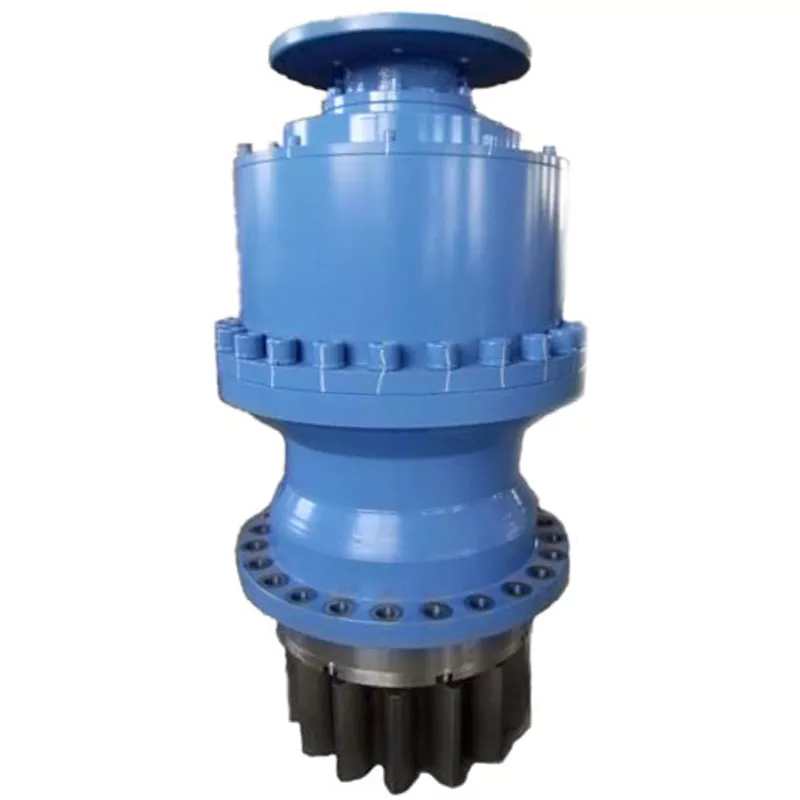
Concept of Coaxial and Parallel Shaft Arrangements in Planetary Gearboxes
In planetary gearboxes, the arrangement of shafts plays a crucial role in determining the gearbox’s overall structure and functionality. The two common shaft arrangements are coaxial and parallel configurations:
Coaxial Shaft Arrangement: In a coaxial arrangement, the input shaft and output shaft are positioned along the same axis, resulting in a compact and streamlined design. The planetary gears and other components are aligned concentrically around the central axis, allowing for efficient power transmission and reduced space requirements. Coaxial planetary gearboxes are commonly used in applications where space is limited, and a compact form factor is essential. They are often employed in robotics, automotive systems, and aerospace mechanisms.
Parallel Shaft Arrangement: In a parallel arrangement, the input and output shafts are positioned parallel to each other but on different axes. The planetary gears are aligned in a way that allows the power to be transmitted from the input shaft to the output shaft via a combination of meshing gears. This arrangement allows for a larger gear diameter and higher torque transmission capabilities. Parallel planetary gearboxes are often used in applications requiring high torque and heavy-duty performance, such as industrial machinery, construction equipment, and material handling systems.
The choice between coaxial and parallel shaft arrangements depends on the specific requirements of the application. Coaxial configurations are favored for compactness and efficient power transmission, while parallel configurations excel in handling higher torque and heavy loads. Both arrangements offer distinct advantages and are chosen based on factors like available space, torque demands, load characteristics, and overall system design.
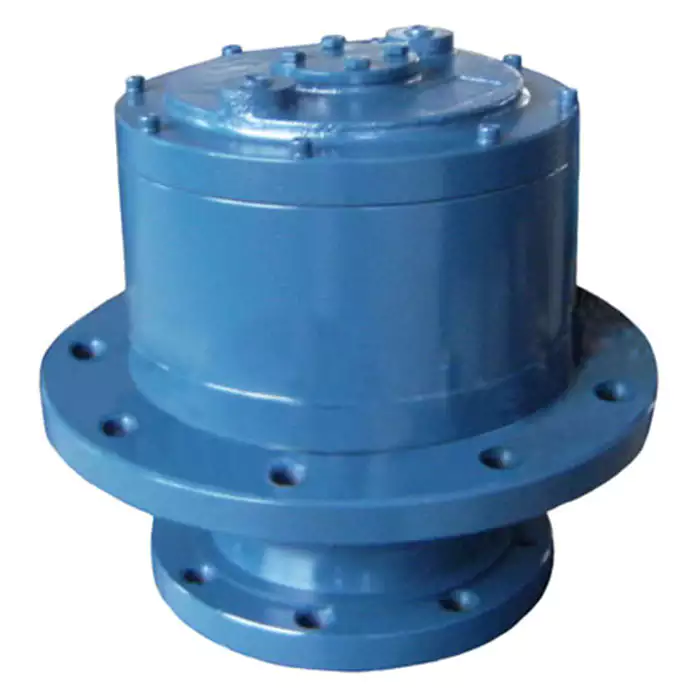
Signs of Wear or Damage in Planetary Gearboxes and Recommended Service
Planetary gearboxes, like any mechanical component, can exhibit signs of wear or damage over time. Recognizing these signs is crucial for timely maintenance to prevent further issues. Here are some common signs of wear or damage in planetary gearboxes:
1. Unusual Noise: Excessive noise, grinding, or whining sounds during operation can indicate worn or misaligned gear teeth. Unusual noise is often a clear indicator that something is wrong within the gearbox.
2. Increased Vibration: Excessive vibration or shaking during operation can result from misalignment, damaged bearings, or worn gears. Vibration can lead to further damage if not addressed promptly.
3. Gear Tooth Wear: Inspect gear teeth for signs of wear, pitting, or chipping. These issues can result from improper lubrication, overload, or other operational factors. Damaged gear teeth can affect the gearbox’s efficiency and performance.
4. Oil Leakage: Leakage of gearbox oil or lubricant can indicate a faulty seal or gasket. Oil leakage not only leads to reduced lubrication but can also cause environmental contamination and further damage to the gearbox components.
5. Temperature Increase: A significant rise in operating temperature can suggest increased friction due to wear or inadequate lubrication. Monitoring temperature changes can help identify potential issues early.
6. Reduced Efficiency: If you notice a decrease in performance, such as decreased torque output or inconsistent speed, it could indicate internal damage to the gearbox components.
7. Abnormal Gear Ratios: If the output speed or torque does not match the expected gear ratio, it could be due to gear wear, misalignment, or other issues affecting the gear engagement.
8. Frequent Maintenance Intervals: If you find that you need to service the gearbox more frequently than usual, it could be a sign that the gearbox is experiencing excessive wear or damage.
When to Service: If any of the above signs are observed, it’s important to address them promptly. Regular maintenance checks are also recommended to detect potential issues early and prevent more significant problems. Scheduled maintenance should include inspections, lubrication checks, and replacement of worn or damaged components.
It’s advisable to consult the gearbox manufacturer’s guidelines for recommended service intervals and practices. Regular maintenance can extend the lifespan of the planetary gearbox and ensure it continues to operate efficiently and reliably.
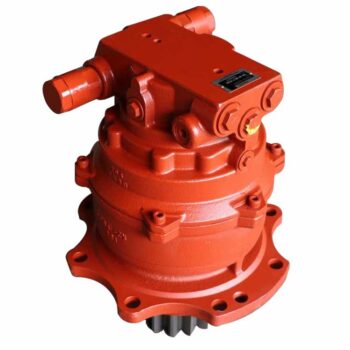
Role of Sun, Planet, and Ring Gears in Planetary Gearboxes
The arrangement of sun, planet, and ring gears is a fundamental aspect of planetary gearboxes and significantly contributes to their performance. Each gear type plays a specific role in the gearbox’s operation:
- Sun Gear: The sun gear is located at the center and is driven by the input power source. It transmits torque to the planet gears, causing them to orbit around it. The sun gear’s size and rotation speed affect the overall gear ratio of the system.
- Planet Gears: Planet gears are smaller gears that surround the sun gear. They are held in place by the planet carrier and mesh with both the sun gear and the internal teeth of the ring gear. As the sun gear rotates, the planet gears revolve around it, engaging with both the sun and ring gears simultaneously. This arrangement multiplies torque and changes the direction of rotation.
- Ring Gear (Annulus Gear): The ring gear is the outermost gear with internal teeth that mesh with the planet gears’ external teeth. It remains stationary or acts as the output shaft. The interaction between the planet gears and the ring gear causes the planet gears to rotate on their own axes as they orbit the sun gear.
The arrangement of these gears allows for various gear reduction ratios and torque multiplication effects, making planetary gearboxes versatile and efficient for a wide range of applications. The combination of multiple gear engagements and interactions distributes the load across multiple gear teeth, resulting in higher torque capacity, smoother operation, and lower stress on individual gear teeth.
Planetary gearboxes offer advantages such as compact size, high torque density, and the ability to achieve multiple gear reduction stages within a single unit. The arrangement of the sun, planet, and ring gears is essential for achieving these benefits while maintaining efficiency and reliability in various mechanical systems.


editor by CX 2024-02-14