
Agricultural Power · Tractor Axle & PTO Drive Technology
Tractors deliver power to implements through the PTO (Power Take-Off) shaft and to the ground through drive axle hub reductions. Both systems use planetary gearboxes to multiply engine torque into the forces needed for field work — pulling plows, driving rotary tillers, operating balers, and propelling the tractor across varying terrain. This guide covers planetary gearbox engineering for tractor drive axle and PTO output applications.
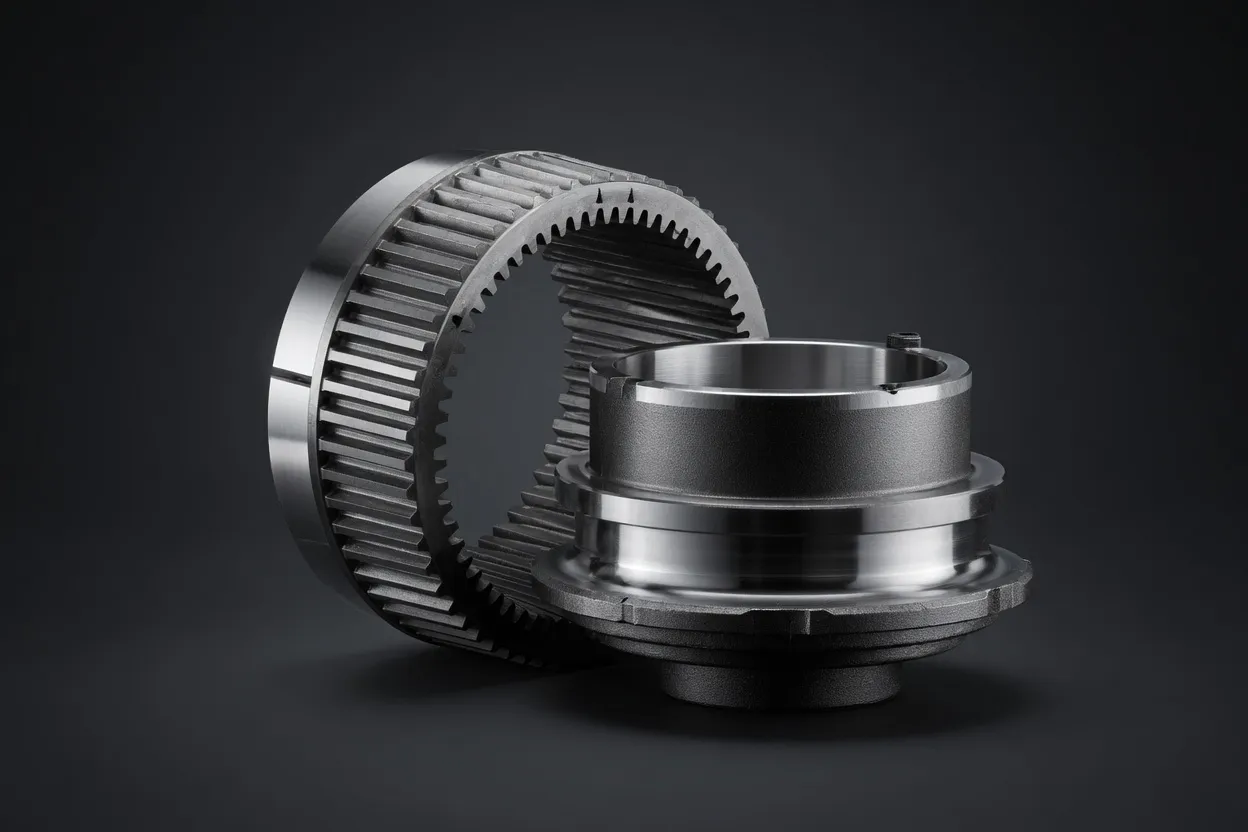
Tractor Drive Axle Planetary Hub Reductions
Each drive wheel of a tractor incorporates a planetary hub reduction — typically a single-stage or two-stage gear set housed within the wheel hub casting. The axle shaft delivers torque at transmission output speed, and the planetary stages step this down while multiplying torque at the wheel. Ratios of 4:1 to 10:1 are standard for agricultural tractors ranging from 50 to 400 HP. This hub reduction enables the use of smaller, lighter transmission components upstream while delivering the massive tractive force needed to pull heavy implements through resistant soils.
Tractor hub reductions must handle the full spectrum of agricultural loading: sustained high-torque drawbar pull during plowing, shock loads from hitting buried rocks, and high-speed road transport at 40–50 km/h. The planetary gear reducer must perform across this entire range without overheating during extended field work or generating excessive noise during road travel. Duo-cone floating seals protect against the mud, water, and crop debris that characterize every farming environment, maintaining lubricant integrity through the 1,000–2,000 annual operating hours typical of production tractors.
PTO Drive and Speed Reduction
Standard PTO Configurations
Agricultural PTO systems deliver engine power to rear-mounted, mid-mounted, or front-mounted implements at standardized speeds — 540 RPM or 1,000 RPM at rated engine speed. When the implement requires a different input speed, a planetary gearbox between the PTO output and the implement input provides the necessary ratio change. PTO-driven rotary tillers, for example, may need 300 RPM at the rotor shaft, requiring a 1.8:1 reduction from the 540 RPM PTO. Planetary reducers mounted at the implement input provide this conversion in a compact, coaxial package that does not interfere with the three-point hitch geometry.
Implement-Side Gearboxes
Many PTO-driven implements incorporate their own planetary gearboxes to distribute power from the single PTO input to multiple driven components. A round baler, for instance, uses the PTO input to drive the pickup, the bale chamber rollers, the net-wrap mechanism, and the tailgate — each through its own gear path. The agricultural machinery planetary gearbox at the implement’s main gearcase must handle the combined torque demand of all these functions while maintaining the speed ratios that keep each mechanism synchronized for proper bale formation.
Ground-Speed PTO
Some tractors offer a ground-speed PTO that varies PTO speed proportionally to ground speed rather than engine speed. This feature uses a planetary gear set within the transmission to blend engine speed and wheel speed signals, producing a PTO output that automatically matches forward travel speed. Manure spreaders, seeders, and fertilizer applicators use ground-speed PTO to deliver uniform material application rates regardless of tractor speed variations caused by terrain or operator input.
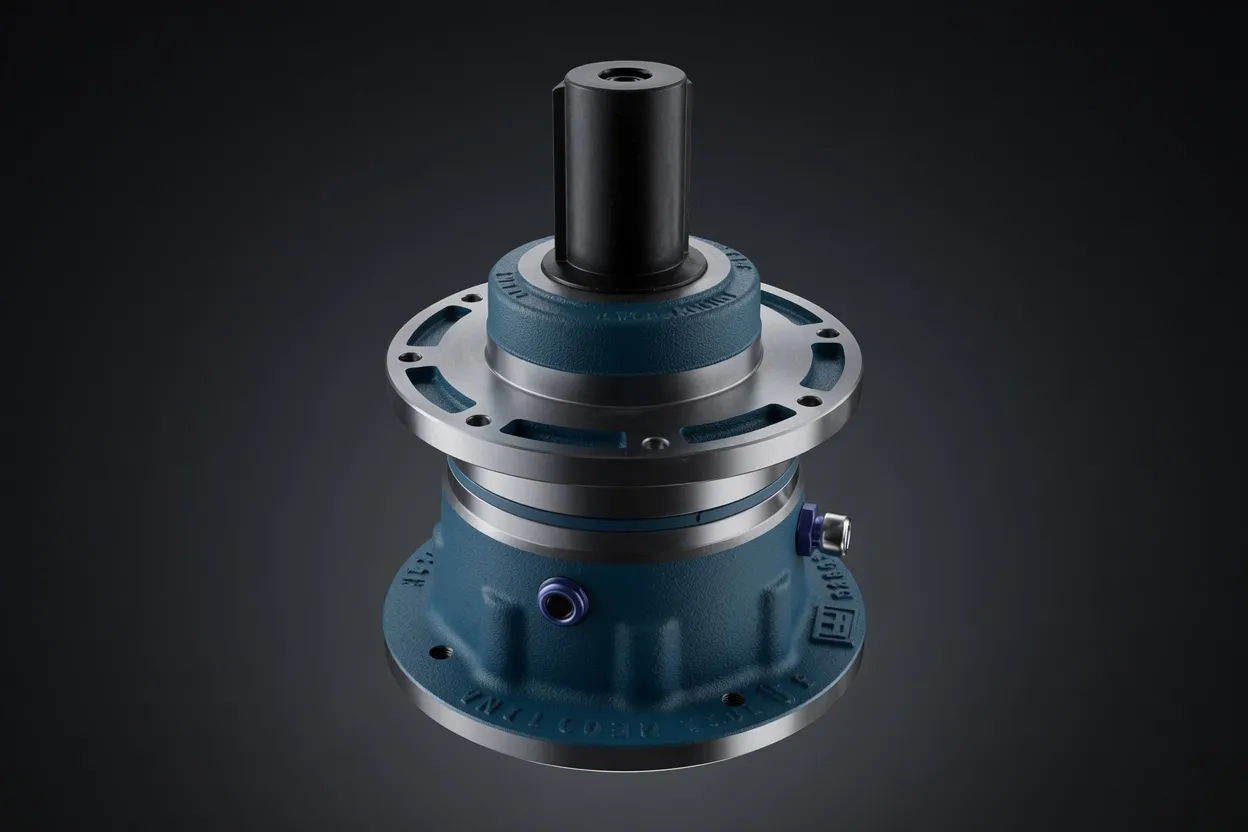
Design Requirements for Tractor Gearboxes
⚙️ Multi-Terrain Capability
Tractors operate on paved roads, gravel tracks, soft plowed fields, and steep hillsides. The hub reduction must function reliably across all these conditions, with lubricant viscosity suited to the temperature range from pre-dawn cold starts (–10 °C in temperate climates, –30 °C in northern regions) to midday summer operation at 40+ °C ambient.
High Overload Tolerance
Agricultural loading is inherently unpredictable — a plow hits a rock, a baler plugs with wet hay, or the tractor bogs in soft ground. Service factors of 2.0–2.5 are standard for tractor gearboxes, providing margin for these routine overload events without relying on torque-limiting devices that reduce productivity.
️ Contamination Protection
Farm environments produce mud, crop residue, fertilizer dust, and water exposure that overwhelm standard industrial seals. Duo-cone floating seals for hub drives and multi-lip shaft seals with dust wipers for PTO gearboxes provide the contamination protection needed for 1,500+ hour annual operation in these harsh conditions.
Maintenance Accessibility
Farm operators perform their own maintenance, often with basic tools and limited workshop facilities. Gearbox designs that use standard fill/drain plugs, readily available oil grades, and field-replaceable seals reduce maintenance complexity and encourage timely service that extends gearbox life.
Installation and Maintenance
Pre-Season Oil Check
Before each planting or harvest season, check hub reduction and PTO gearbox oil levels. Top up with the specified grade. Inspect magnetic drain plugs for debris from the previous season — excessive metallic particles indicate internal wear warranting further investigation.
Seal Inspection at Tire Service
When changing tires (typically every 2,000–3,000 hours), inspect the hub reduction floating seals for wear and leakage. Replace seals preventively if the seal face shows uneven wear patterns, even if no active leakage is visible — early replacement prevents contamination damage during the next season.
PTO Gearbox Alignment
When connecting implements, verify that the PTO shaft runs within its rated operating angle (typically below 15° for standard CV joints). Excessive angle accelerates universal joint wear and imposes bending loads on the gearbox input shaft that shorten bearing life.
Annual Oil Change
Change hub reduction and PTO gearbox oil annually or every 1,000 operating hours, whichever comes first. Use the oil grade specified by the tractor or implement manufacturer. Flush the magnetic drain plug and reinstall before refilling.

Lifecycle Cost and Rebuild Considerations
Tractor hub reductions and PTO gearboxes typically last 8,000 to 12,000 operating hours — approximately 6 to 10 years of normal farm use. When a hub reduction reaches the end of its service life (indicated by increased noise, excessive axial play, or oil contamination), the farmer faces a rebuild-or-replace decision. Factory-remanufactured exchange units offer the fastest return to service, while rebuild kits enable cost-effective in-shop overhaul for mechanically inclined operators with workshop facilities. Either approach is significantly less expensive than purchasing a new OEM assembly, which can cost 2–3× the rebuild price.
For tractor dealers and fleet operators managing dozens of machines, an exchange-pool strategy — maintaining a stock of rebuilt hub reductions and PTO gearboxes ready for immediate swap — minimizes machine downtime during time-critical planting and harvest windows. The removed unit enters the rebuild pipeline and returns to the pool within 2–3 weeks, maintaining the inventory level needed to support the fleet’s seasonal peak demand for replacement units. This approach consistently delivers the lowest total lifecycle cost per tractor hour across the fleet.
Why Choose Ever-Power for Tractor Planetary Gearboxes
Broad Model Coverage
Our tractor hub reduction and PTO gearbox range covers models from John Deere, Case IH, New Holland, Massey Ferguson, Kubota, CLAAS, and major Chinese brands — from compact utility tractors to 400+ HP row-crop and articulated models.
Field-Proven Durability
Every model is validated through 3,000-hour accelerated testing with programmed overload cycles simulating 10 years of mixed-duty agricultural operation, ensuring reliable performance through multiple planting and harvest seasons.
️
Rebuild Kits and Technical Support
Complete rebuild kits with gears, bearings, seals, shims, and illustrated assembly instructions enable farm workshops to overhaul units in-house. Our technical hotline provides assembly guidance when needed.
Dealer and Distributor Programs
Agricultural equipment dealers receive tiered pricing, return-credit exchange programs, and marketing support materials. Contact [email protected] to establish a dealer supply agreement.
Frequently Asked Questions
Keep Your Tractor Fleet Field-Ready
Share your tractor models and fleet size — we will deliver a hub reduction and PTO gearbox supply proposal with seasonal stocking plan.