
Space Technology · Satellite Mechanism Drive Systems
Communication, Earth-observation, and scientific satellites use planetary gearboxes in solar-array drive assemblies (SADAs), antenna pointing mechanisms, and payload deployment systems. These gearboxes must operate in the vacuum, radiation, and extreme thermal-cycling environment of space for 15+ years without maintenance. This guide covers planetary gearbox engineering for satellite positioning and deployment mechanism applications.
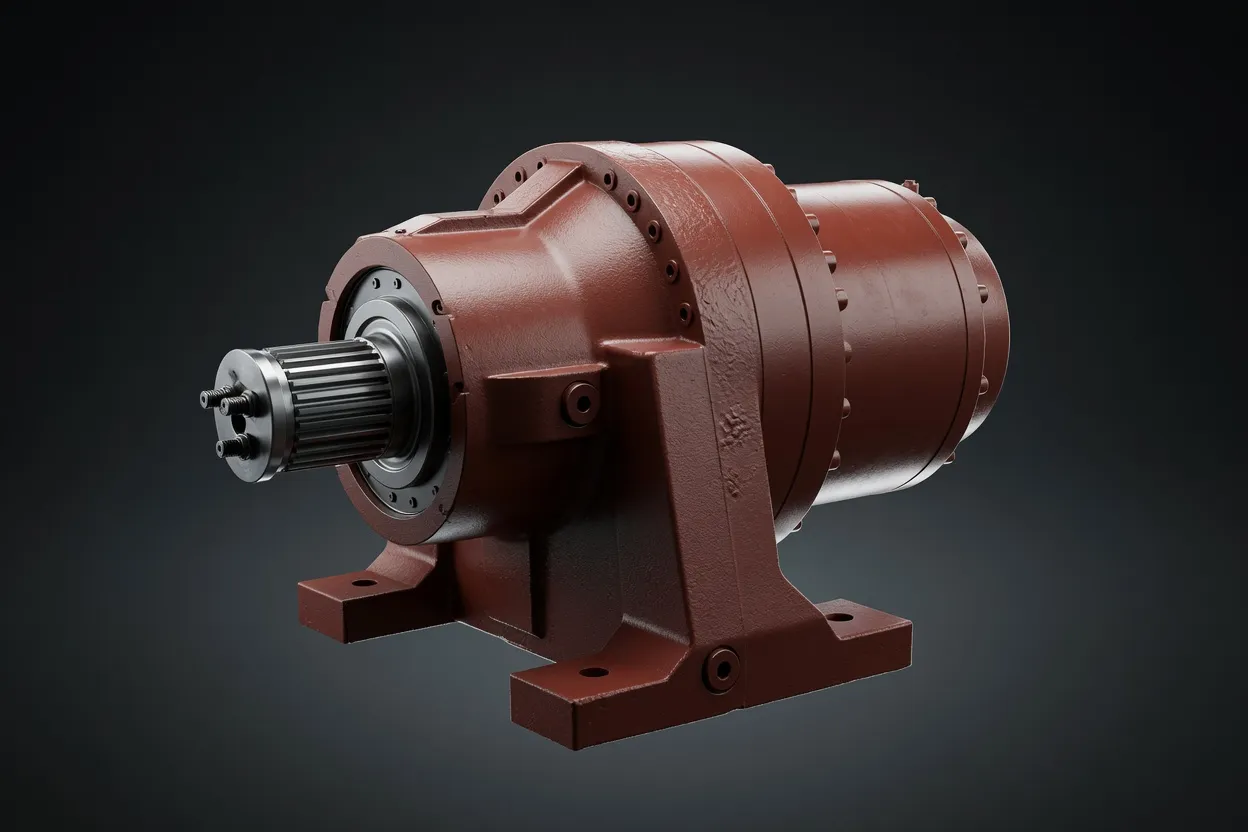
Planetary Gearboxes in Satellite Mechanisms
Satellite mechanisms use miniature planetary gear reducer units to convert motor output into the precise, slow angular motions needed to track the sun (solar arrays), point antennas at ground stations, and deploy booms, panels, and instruments after launch. Ratios of 50:1 to 1,000:1 produce output speeds measured in degrees per minute or even degrees per hour, with pointing accuracy within ±0.01° required for high-gain antenna systems and high-resolution imaging payloads. The gearbox must function in hard vacuum, under ionizing radiation doses exceeding 50 krad, and through thermal cycles spanning –150 °C to +150 °C over the mission life.
Space mechanisms represent the ultimate reliability challenge — a gearbox failure in orbit cannot be repaired. The precision planetary gearbox must deliver its specified performance without maintenance for the satellite’s entire 15- to 20-year operational life. This demands conservative design margins, radiation-tolerant materials, space-qualified lubricants (solid or liquid depending on temperature range), and exhaustive ground testing that simulates the space environment with high fidelity.
Space Environment Challenges
Vacuum and Lubrication
Conventional liquid lubricants evaporate in the vacuum of space, contaminating optical surfaces and solar cells. Space-qualified gearboxes use either solid lubricants (MoS₂ sputtered coatings, PTFE-based composites) that function in vacuum without evaporation, or specially formulated liquid lubricants (Fomblin, Braycote) with extremely low vapor pressure that retain fluid film capability over 15+ year mission durations. The choice depends on the operating temperature range, speed, and load — solid lubricants suit very slow, lightly loaded mechanisms, while liquid lubricants serve higher-speed, higher-load applications.
Thermal Cycling
Satellites in low Earth orbit experience up to 16 thermal cycles per day as they pass between sunlight and eclipse. Each cycle swings the mechanism temperature by 100 °C or more, stressing material interfaces and lubricant films. Gearbox materials must have matched thermal expansion coefficients to prevent binding or excessive clearance at temperature extremes. Titanium gears in aluminum housings, for example, require controlled clearances that accommodate differential expansion without compromising mesh engagement quality at either temperature extreme.
Radiation Tolerance
Ionizing radiation in the space environment degrades polymer components (seals, lubricant additives, bearing cages) over the mission life. Space-qualified gearboxes use radiation-tolerant materials: PEEK or Vespel bearing cages, PFPE-based lubricants resistant to radiation-induced polymerization, and all-metallic seal solutions that avoid elastomeric degradation. Total ionizing dose tolerance of 100 krad is typical for GEO missions; LEO missions may require less depending on orbit altitude and shielding.
Design Specifications for Space Gearboxes
⚙️ Ultra-High Ratio
Ratios of 100:1 to 1,000:1 achieved through three or four planetary stages produce the very low output speeds (0.01 to 1°/min) used for solar-array sun tracking and antenna pointing.
Pointing Accuracy
Output positioning accuracy within ±0.01° (36 arcseconds) for antenna pointing mechanisms. Backlash below 1 arcminute combined with high torsional stiffness ensures that the control system’s pointing commands translate to the intended antenna orientation.
️ Space-Qualified Lubrication
Solid MoS₂ coatings for ultra-low-speed mechanisms operating from –150 to +150 °C. Fomblin or Braycote PFPE fluids for higher-speed mechanisms operating from –70 to +125 °C. All lubricants space-qualified per ECSS-Q-70 standards.
️ Thermal Design
Matched CTE materials, controlled clearances for thermal expansion, and conductive thermal paths to the satellite structure ensure consistent mesh engagement quality across the full operating temperature range.
Integration and Ground Testing
Cleanroom Assembly
Assemble space gearboxes in an ISO Class 7 (10,000) or cleaner environment. Particle contamination on gear surfaces or bearing raceways in the space vacuum cannot be flushed away by lubricant circulation — any contamination introduced during assembly remains throughout the mission life.
Thermal-Vacuum Testing
Test the assembled mechanism in a thermal-vacuum chamber simulating the orbital thermal cycle profile for a minimum of 1,000 cycles. Measure pointing accuracy, torque, and current draw at temperature extremes to verify performance across the mission thermal envelope.
Life Testing
Run the mechanism through the equivalent of 1.5× mission life in simulated space conditions (vacuum, thermal cycling). Monitor torque trending and pointing accuracy throughout. Any degradation exceeding the mission specification triggers design investigation before flight-unit production.
Vibration and Shock Testing
Subject the mechanism to launch vibration (random and sine) and pyrotechnic shock profiles simulating the satellite’s launch environment. Post-test functional verification confirms that the gearbox survived launch loads without damage that would affect on-orbit performance.
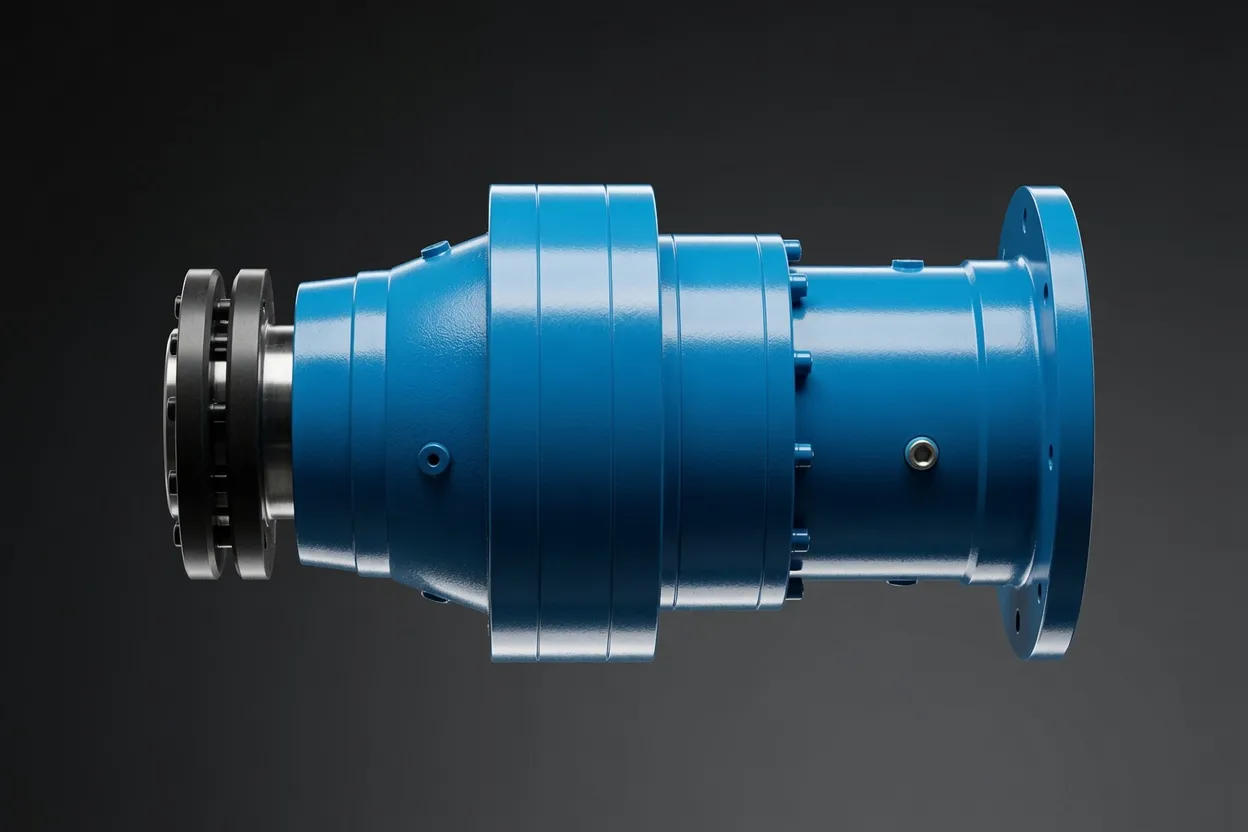
Maintenance and Reliability
Space mechanisms are not maintained in orbit — the ground-test program must verify that the gearbox will function for the entire mission life without intervention. This is accomplished through three complementary approaches: qualification testing (demonstrating performance margins beyond mission requirements), acceptance testing (verifying each flight unit meets specification), and heritage tracking (documenting the flight performance of identical designs on previous missions to build confidence in the design’s reliability for future applications).
For constellation programs launching hundreds of satellites, the gearbox production process must deliver consistent quality across large quantities while maintaining the individual-unit traceability and testing required for space hardware. Statistical process control, 100% acceptance testing, and flight-lot material traceability provide the quality assurance framework that supports constellation-scale satellite mechanism production at the volumes needed for modern mega-constellation deployments.
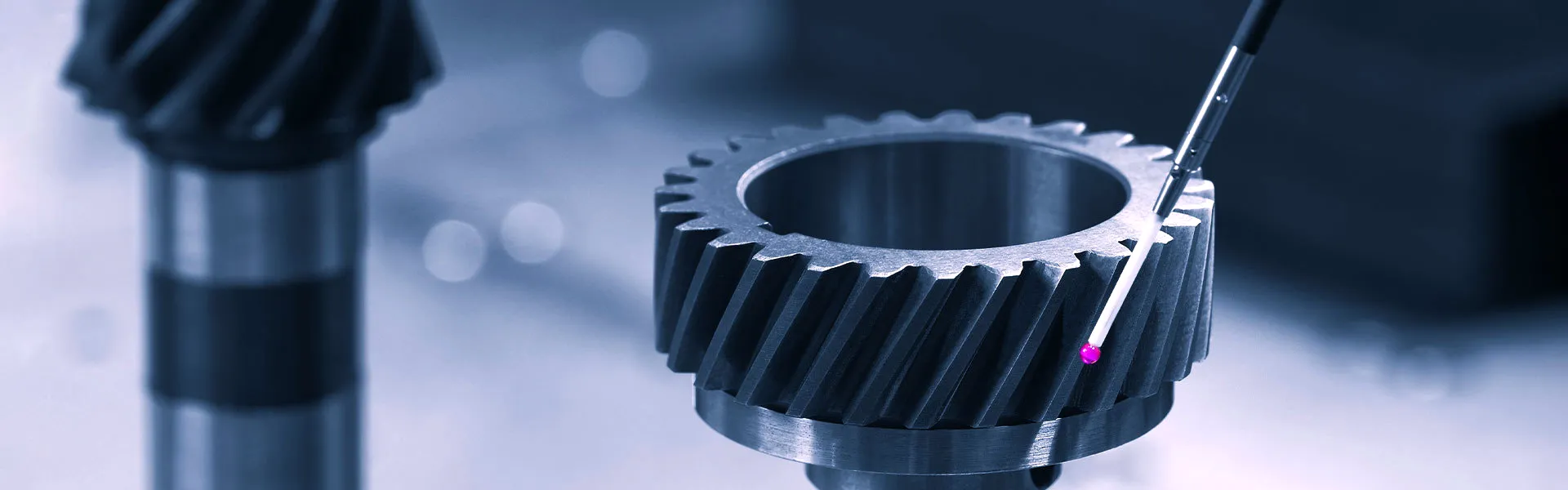
Why Choose Ever-Power
Space-Qualified Manufacturing
Our satellite mechanism gearbox production operates in ISO Class 7 cleanroom conditions with ECSS-compliant processes, providing the contamination control and traceability required for flight hardware.
Thermal-Vacuum Test Facility
In-house thermal-vacuum chambers simulate the orbital environment for mechanism life testing, reducing test lead time and maintaining test data under our quality control.
️
Mission-Specific Engineering
Our space mechanism engineers design gearboxes optimized for each satellite platform’s specific pointing accuracy, temperature range, and mission duration requirements.
Constellation Volume Capability
Production capacity supports constellation programs requiring hundreds of identical mechanism gearboxes per year with consistent quality and delivery schedules.
Frequently Asked Questions
Mission-Ready Gearboxes for Space Mechanisms
Share your satellite mechanism requirements — our space technology team will deliver a gearbox proposal with qualification and flight-unit planning.