
Earthmoving Equipment · Bulldozer Final Drive Technology
Bulldozers generate their legendary pushing power through final drive planetary gearboxes that multiply engine torque into the enormous tractive force at the sprocket. Each track is powered by its own final drive — a rugged multi-stage planetary reducer that must handle sustained high-torque loading, shock impacts from ripping operations, and continuous exposure to abrasive soil and rock debris. This guide covers the engineering, maintenance, and selection factors for planetary gearboxes in bulldozer track drive applications.
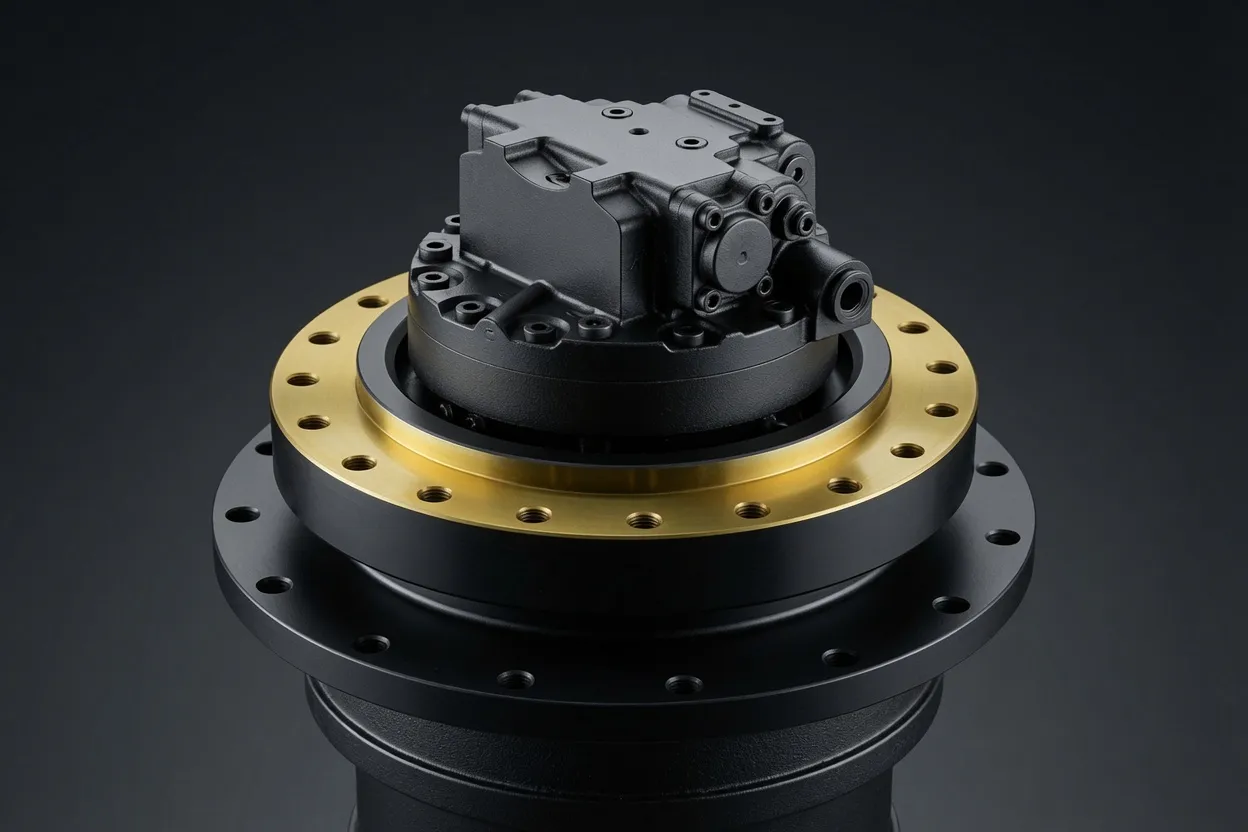
Final Drive Architecture in Bulldozers
A bulldozer’s final drive sits between the steering clutch or hydrostatic motor output and the track sprocket. The planetary gear reducer — typically a two-stage or three-stage design — steps the transmission output speed down from 500–1,500 RPM to 20–40 RPM at the sprocket while multiplying torque by the inverse of the ratio. On a large mining bulldozer, output torque at the sprocket can exceed 150,000 Nm — enough to push thousands of tonnes of earth per hour and rip through compacted soil and soft rock.
The final drive also serves as the structural connection between the main frame and the track group. The sprocket hub bearings within the final drive housing support the machine’s weight and absorb the vertical, lateral, and longitudinal ground reaction forces transmitted through the track shoes. This structural role means that final drive failures are among the most expensive and disruptive repair events on a bulldozer — not only must the gearbox be replaced, but the track group must be partially disassembled to access the unit.
Load Conditions Specific to Bulldozer Final Drives
Sustained High-Torque Operation
Unlike excavators that cycle between digging and swing motions, bulldozers often operate under sustained full-torque loading for minutes at a time during dozing and ripping passes. The high torque planetary gearbox must dissipate the heat generated by continuous gear mesh and bearing friction without external cooling assistance — bulldozer final drives rely entirely on conduction through the housing and convection from airflow over the track frame. Oil capacity and housing surface area are critical design parameters that determine the machine’s ability to work continuously without thermal derating.
Ripping Shock Loads
When the ripper encounters buried rock or hardpan, the sudden resistance spike generates torque transients that can reach 400% of the steady-state dozing torque at the final drive. These events last only milliseconds but occur dozens of times per hour during ripping operations. Case-carburized gears with tough, ductile cores absorb these shocks without brittle fracture, and pre-loaded tapered roller bearings resist the brinelling that constant impact loading would induce in standard deep-groove ball bearings.
Abrasive Environment
Bulldozer final drives operate at ground level in dust, mud, and abrasive soil. The seal system must prevent ingress of these contaminants throughout the final drive’s service life — typically 6,000 to 12,000 hours between overhauls. Duo-cone floating seals, the industry standard for tracked equipment, use hardened metal seal rings running against each other with a controlled oil film to exclude contaminants while retaining lubricant. Seal face wear is the primary life-limiting factor, and seal replacement timing is dictated by monitoring the oil level and condition at each service interval.
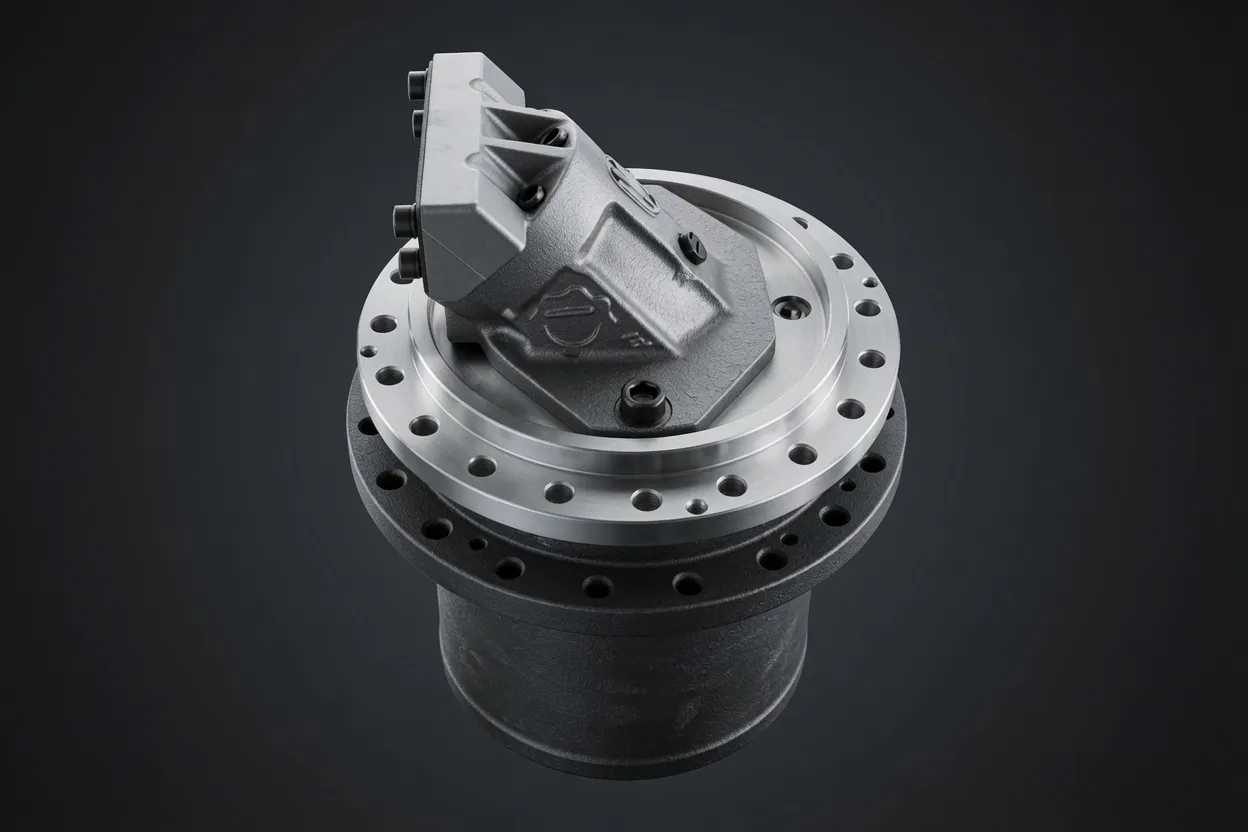
Design Specifications for Bulldozer Final Drives
⚙️ Three-Stage Planetary Reduction
Large bulldozers use three planetary stages to achieve overall ratios of 40:1 to 80:1. The first stage (input side) handles the highest speed and lowest torque; the third stage (output side) carries the full sprocket torque at very low speed. Each stage is sized independently based on its specific torque and speed duty, with the output stage using the widest gears and largest bearings.
Sprocket Hub Bearing System
The output bearing assembly — typically a pair of large tapered roller bearings in an O-arrangement — supports both the sprocket drive torque and the full ground reaction loads. Combined dynamic load ratings exceeding 1,000 kN are common for 40-tonne class bulldozers. Bearing life calculations must include the dynamic ground loads from operating over rough terrain, not just the steady-state drive torque.
️ Duo-Cone Seal Protection
Matched pairs of hardened steel seal rings, loaded by elastomeric toric rings, create a metal-to-metal sealing interface that resists abrasive particle damage far more effectively than rubber lip seals. The seal faces are lapped to a surface finish below Ra 0.1 μm, and the toric rings maintain consistent face loading as the seal wears. Proper installation alignment is critical — tilted seal rings wear unevenly and fail prematurely.
️ High-Capacity Oil Reservoir
Final drive housings are designed with oil capacities of 10 to 30 liters — substantially more than a comparably rated industrial reducer — to provide thermal mass for absorbing heat during sustained full-load operation. The larger oil volume also dilutes wear particles and extends the effective life of the oil’s EP additives between drain intervals.
Maintenance Practices for Maximum Final Drive Life
Oil Level Checks Every 250 Hours
Check the oil level through the fill plug with the machine on level ground and the fill plug at the 12 o’clock position. Low oil level indicates a seal leak that must be corrected immediately — operating with insufficient oil causes gear and bearing overheating that can destroy the final drive within hours.
Oil Change Every 2,000 Hours
Drain the oil with the final drive warm to suspend contaminants, remove and inspect the magnetic drain plug for metallic debris, refill with the specified gear oil grade, and verify the correct fill level. Document the drain plug debris quantity as a trending metric for condition monitoring.
Seal Inspection at Track Service
When the track group is removed for undercarriage maintenance (pad replacement, link inspection), take the opportunity to inspect the duo-cone seals for leakage, measure the seal wear band width, and verify that the toric rings retain their elasticity. Replace seals that show uneven wear patterns or elastomer hardening.
Annual Vibration and Temperature Survey
Measure final drive housing vibration and operating temperature during a standardized full-load test (sustained dozing at full throttle on level ground). Compare results to the baseline established at commissioning. Progressive increases indicate internal wear that warrants planning a rebuild or exchange during the next scheduled major maintenance event.
Rebuild vs. Exchange Decision Framework
When a final drive reaches its service limit — indicated by oil analysis trends, increased noise or temperature, or a scheduled overhaul interval — the equipment owner faces a rebuild-or-exchange decision. Rebuilding in-house requires a clean workshop, specialized tooling (bearing pullers, seal installation tools, torque wrenches), and technicians trained in final drive assembly procedures. The rebuild takes 8 to 16 hours of shop labor depending on the machine size and damage extent, plus procurement time for replacement parts.
Exchange programs offer a faster alternative: the worn final drive is removed from the machine, a factory-remanufactured unit is installed, and the removed unit is returned for credit. This approach minimizes machine downtime to the removal and installation time (typically 4 to 8 hours), with the rebuild performed in a controlled factory environment using optimized processes and new OEM-specification parts. For mining fleets where hourly production value is high, the exchange approach almost always delivers a lower total cost than in-house rebuild when downtime costs are factored into the calculation.
Why Choose Ever-Power for Bulldozer Final Drives
Mining-Grade Production Quality
Our final drive planetary gearboxes are manufactured to the same material and quality standards as OEM units — case-carburized 20CrMnTi gears, matched tapered roller bearings, and factory-lapped duo-cone seals — ensuring performance and durability equivalent to the original equipment.
Dynamometer Validation
Every final drive unit is tested under full rated torque on our hydraulic dynamometer before shipment. The test confirms output torque, efficiency, operating temperature, and seal integrity, providing documented evidence that the unit is ready for immediate installation.
️
Exchange and Rebuild Support
We maintain a stock of remanufactured exchange units for popular bulldozer models, shipping within 5 business days. For customers who rebuild in-house, we supply complete rebuild kits with all internal components, seals, bearings, and assembly specifications.
Global Heavy Equipment Logistics
Bulldozer final drives are heavy and oversized. Our logistics team coordinates custom crating, heavy-lift transport, and site delivery to mining operations, construction sites, and equipment dealerships worldwide.
Frequently Asked Questions
Maximize Your Dozer’s Pushing Power
Share your bulldozer model and operating conditions — we will recommend the right final drive solution with pricing and delivery timeline.