
Heavy Equipment · Excavator Drive Technology
Hydraulic excavators rely on two distinct planetary gearbox systems — the travel drive that propels the undercarriage and the swing drive that rotates the upper structure. Both operate under extreme torque loads, shock impacts from digging forces, and contamination from dust and debris. This guide covers the engineering behind planetary gearboxes for excavator travel and swing drives, from selection criteria through field maintenance best practices.
Travel Drive Architecture and Planetary Gearbox Function
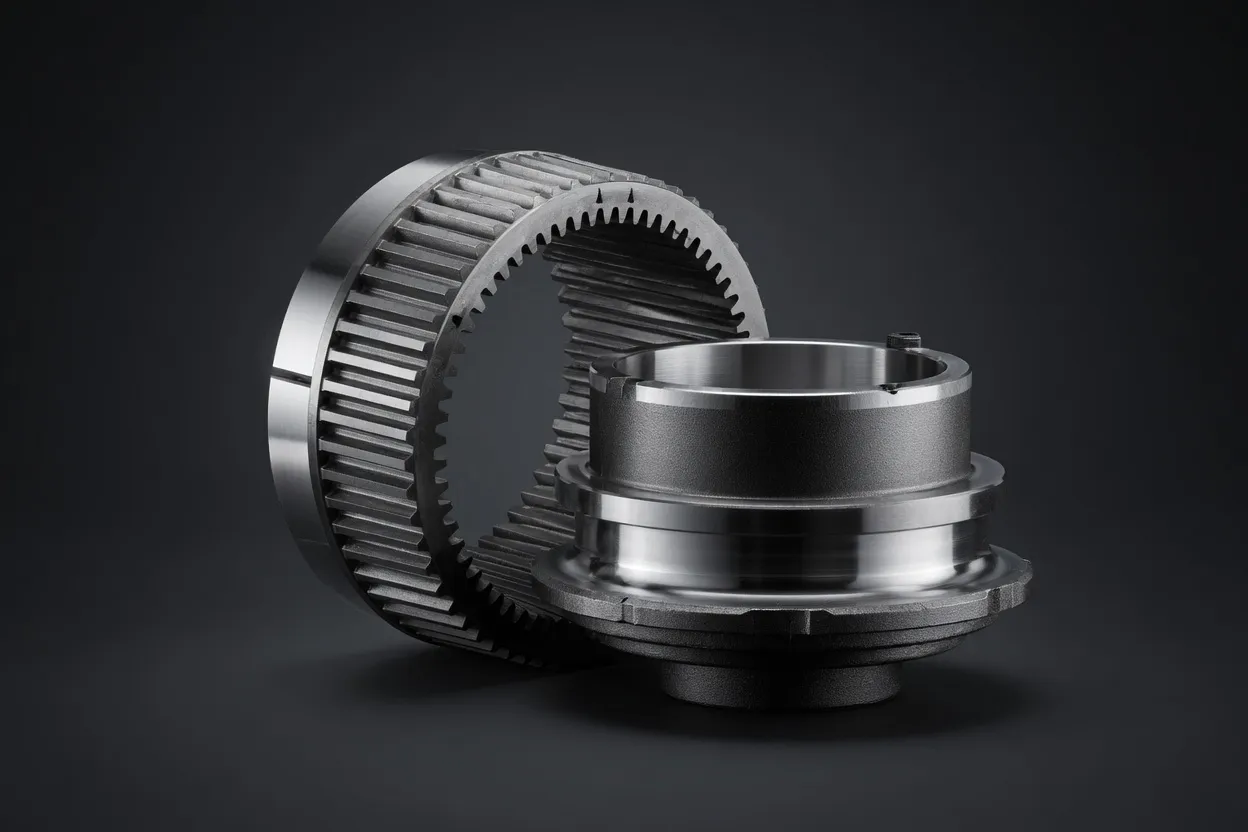
Each track of a hydraulic excavator is powered by a hydraulic motor coupled to a two-stage or three-stage planetary gear reducer housed inside the track frame’s final drive housing. The hydraulic motor spins at 2,000 to 3,000 RPM, and the planetary reducer steps this down to 30–60 RPM at the sprocket, multiplying torque from roughly 500 Nm at the motor to 30,000–80,000 Nm at the sprocket depending on machine size. This massive torque multiplication is what allows a 20-tonne excavator to climb grades, pivot in mud, and propel itself across rough terrain while carrying a full bucket of earth.
The travel drive gearbox must also serve as a structural link between the track frame and the sprocket hub, supporting the machine’s weight and transmitting the ground reaction forces from the track shoes through the sprocket bearings into the frame. This dual role — torque transmission plus structural load bearing — distinguishes excavator travel drives from most industrial gearbox applications and demands heavier bearings, thicker housing walls, and more robust sealing than a comparably rated stationary reducer would require.
Swing Drive System and Reduction Requirements
Upper Structure Rotation
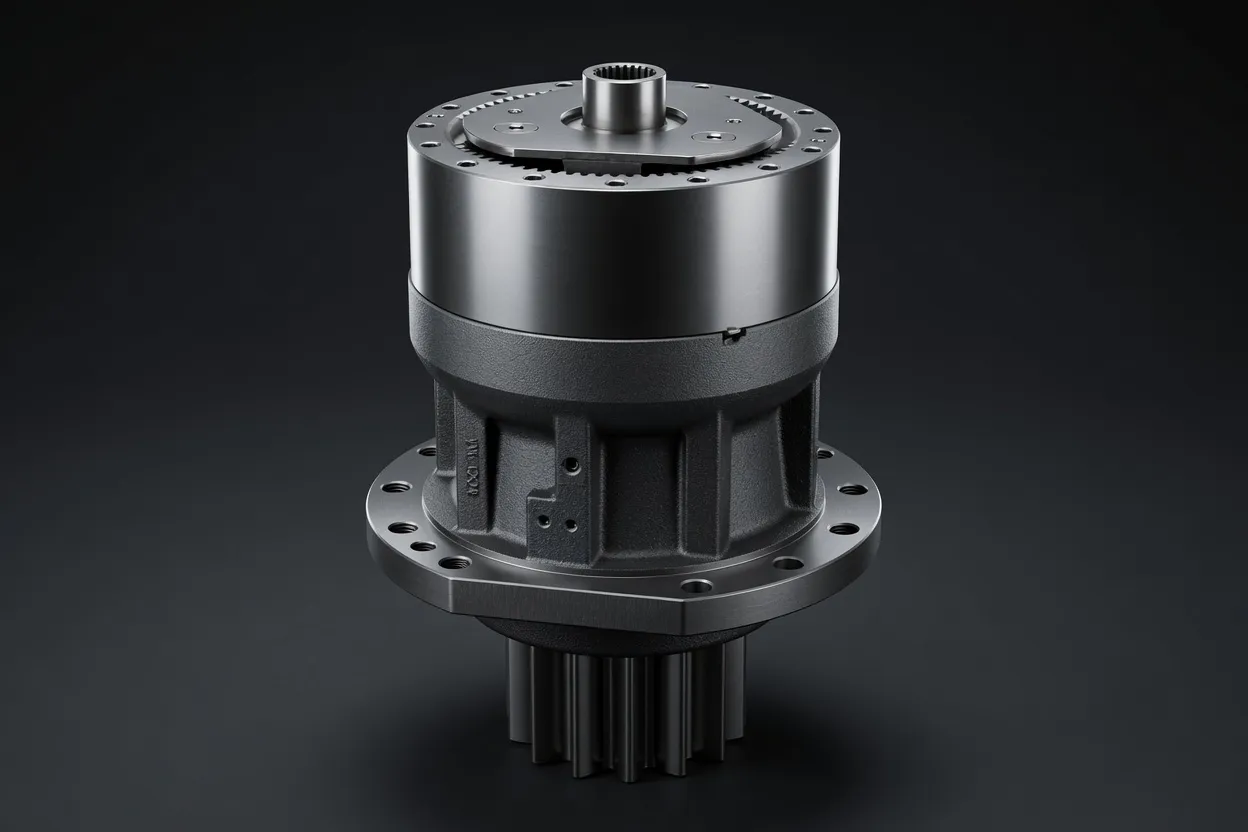
The swing drive rotates the excavator’s upper structure — cab, boom, engine, and counterweight — a combined mass of 10 to 50 tonnes depending on machine size. A hydraulic swing motor drives a planetary gearbox with a ratio of 15:1 to 30:1, and the gearbox output pinion meshes with an internal ring gear on the swing bearing. The swing bearing, a large-diameter slewing ring, carries the full upper-structure weight while allowing 360-degree continuous rotation. Total swing torque at the bearing can reach 150,000 Nm on large excavators.
Swing Braking and Positioning
Operators swing the upper structure, stop it precisely over the dump truck or trench, then reverse swing direction — dozens of times per hour during production digging cycles. Each swing deceleration loads the gear teeth in the reverse direction, and the swing brake must arrest the rotational inertia of the upper structure within the operator’s expected stopping distance. The excavator planetary drive must handle these frequent, high-energy braking events without tooth fatigue or bearing damage. A spring-applied, hydraulically released parking brake integral to the gearbox holds the upper structure stationary when the machine is parked or the engine is off.
Key Design Features for Excavator Gearboxes
⚙️ Case-Hardened Alloy Gears
Travel and swing gears are forged from 20CrMnTi or 20CrNiMo alloy steel, case-carburized to 58–62 HRC surface hardness with a tough 35–40 HRC core. This combination provides the abrasion resistance to handle contaminated lubricant and the impact toughness to survive shock loads from hitting buried rocks or concrete during digging operations.
Heavy-Duty Output Bearings
Travel drive output bearings carry the full machine weight transmitted through the sprocket. Tapered roller bearings with dynamic load ratings exceeding 500 kN are standard for 20-tonne class machines. Bearing preload is set at the factory to minimize play while avoiding thermal overload during sustained travel at the machine’s maximum ground speed.
️ Triple-Lip Shaft Seals
Excavator drives operate in mud, water, and abrasive dust. Triple-lip floating seals at the sprocket output prevent external contaminants from entering the gear chamber while retaining the gear oil under pressure fluctuations caused by temperature swings. Seal life directly determines the field service interval — a failed seal leads to contaminated oil and accelerated gear wear within days.
️ Integrated Parking Brake
Both travel and swing gearboxes incorporate spring-applied, hydraulically released multi-disc brakes. The brake engages automatically when hydraulic pressure drops — during engine shutdown or hydraulic line failure — preventing uncontrolled machine movement. Brake torque capacity is sized to hold the machine on the maximum rated grade with a 1.5× safety factor.
Hydraulic Motor Integration
Excavator planetary gearboxes bolt directly to the hydraulic motor flange, forming a compact motor-reducer assembly. The hydraulic motor’s output shaft splines into the gearbox input sun gear or input shaft, transmitting torque without a separate coupling. This direct-mount approach eliminates alignment issues and reduces the axial length of the drive package — critical for fitting within the tight confines of the track frame or swing machinery house. The motor-gearbox interface must include a drain port that routes internal leakage oil back to the hydraulic tank, preventing pressure buildup that could force oil past the shaft seals.
Variable-displacement hydraulic motors are standard on modern excavators, allowing the operator or automatic control system to adjust travel and swing speed independently. The planetary gearbox must perform equally well across the motor’s full speed range — from creep speed during precision grading to maximum speed during repositioning. A high torque planetary gearbox with consistent efficiency across 500 to 3,000 RPM input ensures that the machine responds predictably to the operator’s joystick inputs at all speeds, improving both productivity and operator confidence during precision work.
Field Maintenance and Troubleshooting
Oil Level and Condition Check
Check the travel and swing drive oil levels every 250 operating hours through the fill/check plug. The oil should be clear amber; dark or milky oil indicates contamination. Draw a sample for laboratory particle count and water content analysis every 1,000 hours. Replace the oil completely every 2,000 hours or when analysis indicates contamination above acceptable limits.
Seal Inspection
Inspect the floating seals at the sprocket hub and the shaft seals at the motor interface for leakage at every 500-hour service interval. A thin film of oil at the seal face is normal; active dripping indicates seal failure requiring immediate replacement. Operating with a leaking seal allows abrasive mud to enter the gear train, causing damage that far exceeds the cost of timely seal replacement.
Gear Tooth Inspection
During major service intervals (every 5,000 hours), remove the inspection cover and visually examine the planet gear teeth and ring gear bore for pitting, spalling, or abnormal wear patterns. Magnetic plug examination at each oil change provides early warning — metallic debris on the drain plug indicates active wear that should be investigated before it progresses to gear failure.
Bearing Preload Verification
If the operator reports increased noise, vibration, or heat from a travel or swing drive, check the output bearing preload. Loss of preload allows gear mesh misalignment that accelerates tooth wear and generates the reported symptoms. Shim adjustment or bearing replacement restores proper geometry and extends the gearbox’s remaining service life.
Why Choose Ever-Power for Excavator Planetary Drives
OEM and Aftermarket Supply
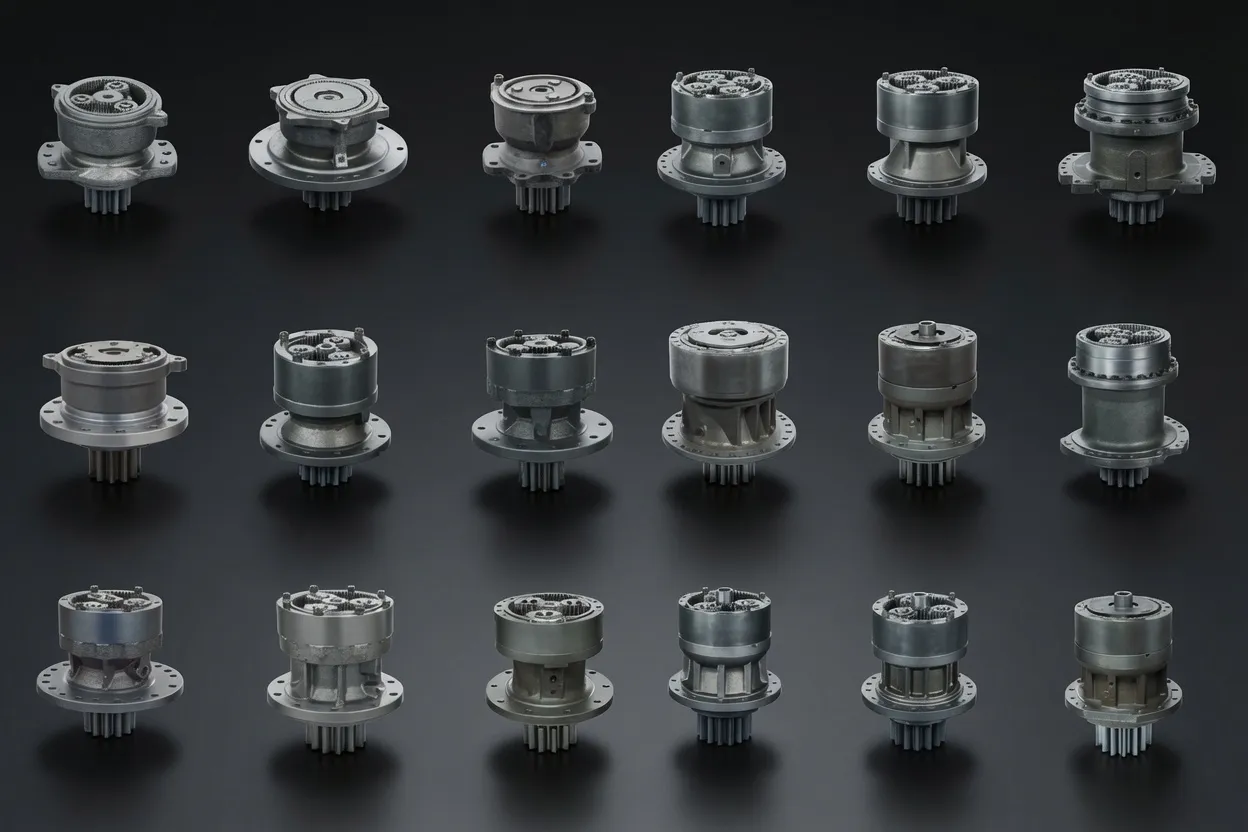
We manufacture travel and swing drive planetary gearboxes compatible with Komatsu, Hitachi, Caterpillar, Volvo, and Doosan excavator models from 8 to 50 tonnes operating weight. Each unit is dimensionally verified against OEM specifications for drop-in installation.
Full-Load Dynamometer Testing
Every excavator gearbox runs through a full-load test on our hydraulic dynamometer — verifying torque capacity, efficiency, noise level, and seal integrity before shipment. Test certificates accompany each unit for your quality records.
️
Rapid Replacement Delivery
Excavator downtime costs hundreds of dollars per hour. Our standard travel and swing drive models for popular excavator platforms ship within 3–5 business days from Hangzhou stock, minimizing machine idle time during unplanned repairs.
Fleet and Dealer Programs
Equipment dealers and fleet operators receive tiered pricing, dedicated account management, and priority production scheduling. Contact [email protected] for a fleet supply agreement tailored to your machine population.
Frequently Asked Questions
Get Your Excavator Back to Work Fast
Share your machine model and serial number — we will confirm the correct drive unit and deliver a quotation within 24 hours.