
Lifting Equipment · Hoist & Winch Drive Technology
Industrial hoists and winches provide controlled lifting, pulling, and positioning of heavy loads in manufacturing plants, construction sites, marine vessels, and offshore platforms. The planetary gearbox between the drive motor and the drum or sheave delivers the torque multiplication and speed reduction needed for safe, precise load handling. This guide covers the engineering requirements for planetary gearboxes in hoist and winch applications.
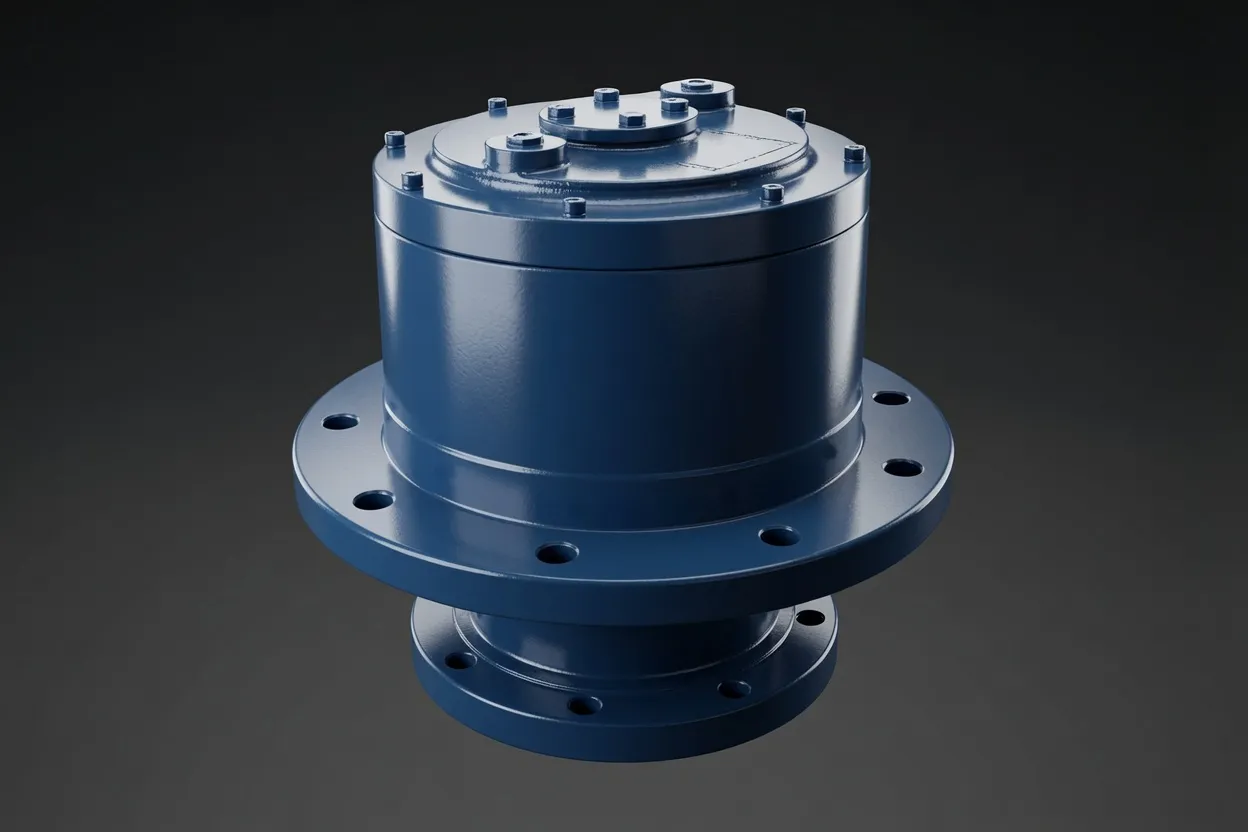
Hoist and Winch Drive Architecture
Hoists and winches use electric, hydraulic, or pneumatic motors coupled to multi-stage planetary gear reducer units with ratios of 20:1 to 200:1. The gearbox output connects to a rope drum or chain wheel that converts rotational motion into linear lifting or pulling force. Safety regulations require that the gearbox incorporate or interface with a fail-safe brake — spring-applied, electrically or hydraulically released — that holds the load when power is removed. Output torques range from 500 Nm on small workshop hoists to 200,000 Nm on heavy-duty offshore winches.
The gearbox must handle bidirectional loading: full torque during hoisting and controlled torque during lowering, where the suspended load drives the gearbox in reverse through the braking system. This bidirectional duty loads both tooth flanks, requiring symmetric gear profiles with equal surface hardness on both sides. Lowering operations may also drive the gearbox above its normal output speed if the load accelerates ahead of the braking system’s response, so the gearbox must be rated for 120–130% of its nominal maximum speed to handle these transient overspeed conditions safely.
Safety and Classification Requirements
Duty Classification
Hoist gearboxes are classified according to FEM, ISO 4301, or CMAA standards that define the required design life based on the expected number of load cycles, average load magnitude, and operating hours per day. An M5 (moderate duty) classification suits general workshop hoists; M7 or M8 (heavy to very heavy duty) applies to steel mill ladle cranes and port container cranes. The duty classification directly determines the required gear fatigue safety factors, bearing life, and material specifications. A high torque planetary gearbox with documented fatigue data for the applicable classification is essential.
Brake Integration
Hoist safety regulations mandate at least two independent braking mechanisms. The gearbox provides the mounting interface for the motor-side brake and must transmit the brake’s holding torque through the gear train to the load. The gearbox’s torsional stiffness must be sufficient to prevent excessive load drop during brake engagement — load drops exceeding 10 mm on precision-positioning hoists are typically unacceptable and indicate insufficient stiffness or excessive backlash in the drive train.
Design Specifications for Hoist Gearboxes
⚙️ Multi-Stage Ratio
Ratios of 20:1 to 200:1 achieved through two, three, or four planetary stages. Higher ratios suit slow-speed, heavy-load applications (crane hoists); lower ratios serve faster, lighter winch applications (vessel mooring, cable pulling).
Bidirectional Rating
The gearbox must be rated for full torque in both rotation directions. Catalog ratings that specify different torque values for forward and reverse indicate an asymmetric design unsuitable for hoist/winch duty where both directions carry full load.
️ Overload Capacity
Hoist gearboxes must handle 150% of rated torque during dynamic braking events and 200% during proof-load testing. Gear and bearing safety factors must cover these overload cases within the applicable duty-classification framework.
Service Life
Target 25,000 to 40,000 hours at the classified duty level, corresponding to 10–20 years depending on utilization rate. Bearing L10a life must exceed the gearbox gear-fatigue life to ensure bearings are never the limiting component.
Installation and Integration Best Practices
Brake Functionality Test
After installation, test each brake independently to verify it holds 110% of the rated load. Test the combined braking system by lowering the rated load and verifying smooth, controlled deceleration.
Load Test
Perform a proof-load test at 125% of rated capacity per applicable regulations. Monitor gearbox temperature, vibration, and any unusual noise during the test. All parameters must fall within acceptable limits.
Alignment Verification
Align the motor-gearbox and gearbox-drum connections using dial indicators. Verify that the drum bearing supports are rigid enough to prevent deflection that would misalign the gear train under load.
Commissioning Documentation
Record all baseline measurements — vibration spectra, temperature at rated load, brake torque values — in the commissioning report for future reference during condition monitoring.
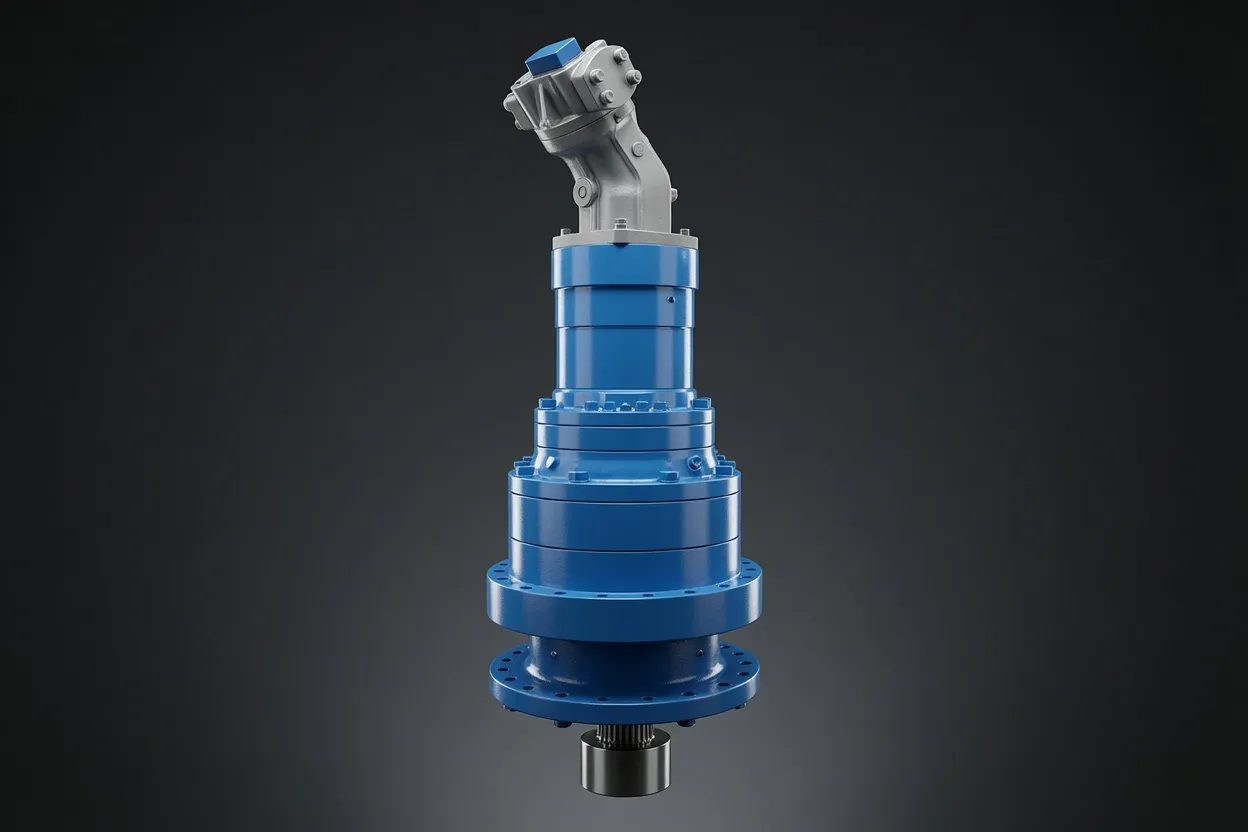
Maintenance and Reliability
Hoist and winch gearbox maintenance follows the crane industry’s regulatory framework, with semi-annual inspections, annual gear examinations, and oil changes every 2,000–4,000 operating hours. Quarterly oil sampling for wear-metal analysis provides early warning of internal deterioration. The safety-critical nature of hoist drives mandates that any gearbox showing abnormal oil analysis, vibration, or noise be taken out of service for detailed inspection before being returned to load-handling duty.
Brake condition is integral to hoist gearbox maintenance. Measure brake disc/pad wear at each scheduled inspection and replace components when wear reaches the manufacturer’s specified limit. Verify brake holding torque semi-annually using a calibrated torque measurement. Any reduction in holding torque below the required minimum — typically 150% of rated load torque — triggers immediate brake service to maintain compliance with lifting safety regulations.
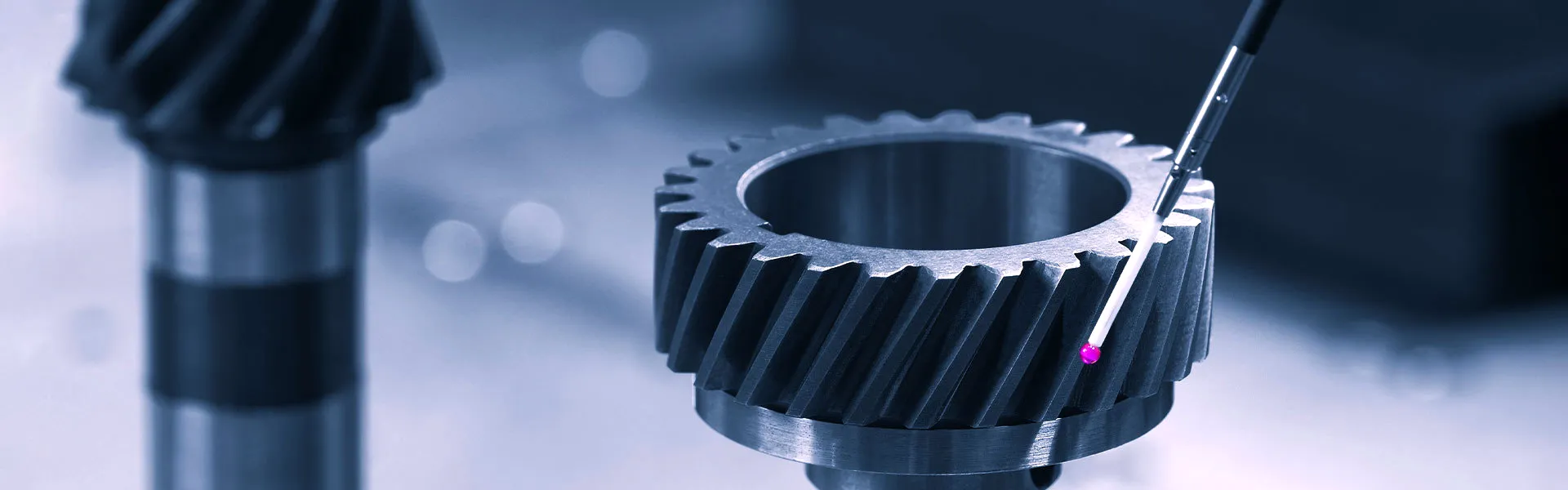
Why Choose Ever-Power
Safety-Classified Manufacturing
Our hoist gearboxes are available in FEM M3 through M8 duty classifications with full documentation for crane certification and insurance compliance.
Proof-Load Test Certification
Every hoist unit receives a 125% proof-load test with a documented certificate suitable for inclusion in the crane’s statutory examination file.
️
Custom Drum and Brake Integration
We design motor-gearbox-brake-drum assemblies as complete packages, tested and verified before delivery for rapid on-site installation.
Critical-Spare Support
Hoist gearbox spares are maintained in stock for immediate dispatch, minimizing crane downtime during unplanned replacements.
Frequently Asked Questions
Lift with Confidence — Certified Hoist Gearboxes
Share your hoist specifications and duty classification — our team will deliver a certified gearbox proposal.