
Plastics & Rubber · Extrusion Drive Technology
Rubber and plastic extrusion machines force raw material through a die to produce continuous profiles — pipes, sheets, films, seals, and cable insulation. The extruder screw drive demands sustained high torque at moderate speed, with smooth rotation critical for uniform material flow and product dimensional consistency. Planetary gearboxes provide the torque density and efficiency these energy-intensive drives require.
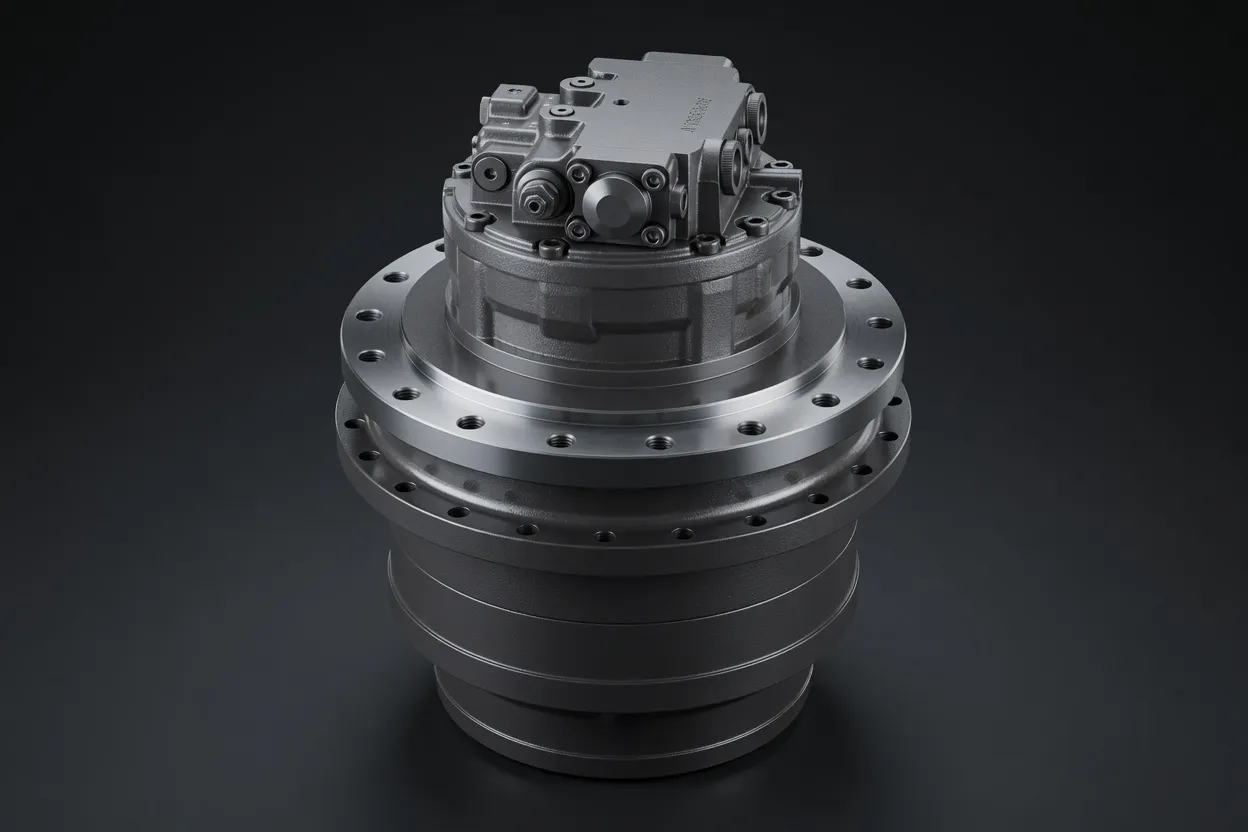
Extruder Drive Architecture and Gearbox Role
Single-screw and twin-screw extruders use planetary gear reducer units with ratios of 5:1 to 25:1 to convert the motor’s 1,000–1,800 RPM to the 50–300 RPM screw speed required by the extrusion process. Output torques range from 5,000 to 100,000 Nm depending on screw diameter and material viscosity. The gearbox must handle the high axial thrust generated by the screw — often 50 to 300 kN — through dedicated thrust bearing assemblies integrated into or adjacent to the gearbox output.
Twin-screw extruders add complexity: the gearbox must drive two parallel output shafts at precisely synchronized speeds, often with counter-rotation. Dedicated twin-screw extruder gearboxes use planetary reduction stages feeding into a distribution gear stage that splits power to the two output shafts while maintaining exact 1:1 speed synchronization. Any speed mismatch between the screws causes material flow irregularities that produce defects in the extruded product.
Operating Conditions and Challenges
Continuous High-Torque Duty
Extrusion is a continuous process — production runs last hours, days, or weeks without interruption. The high torque planetary gearbox must maintain its rated torque at thermal equilibrium indefinitely, with oil cooling systems sized for the worst-case ambient temperature plus the internal heat generation at full load. Insufficient thermal capacity forces operators to reduce screw speed, directly cutting production throughput and profitability.
Axial Thrust Management
Melt pressure at the die can reach 250 bar, pushing the screw backward with forces of 100–300 kN on large extruders. The gearbox’s thrust bearing assembly must carry this load continuously without overheating. Tapered roller bearings in a tandem arrangement with circulating oil lubrication and cooling provide the load capacity and thermal management needed for this severe duty condition.
Smooth Rotation for Product Quality
Screw-speed fluctuations create periodic thickness variations (surge) in the extruded product. The planetary gear reducer must deliver cogging-free rotation with minimal torque ripple — helical planetary gears with precision-ground teeth achieve the smoothness required for film and sheet extrusion where thickness tolerance is ±2% or less.
Gearbox Selection Parameters
⚙️ Torque per Screw Volume
Extruder gearboxes are rated by torque density — Nm per cm³ of center-distance volume. Higher torque density enables smaller gearboxes for a given output torque, saving space in the extruder frame.
Thrust Bearing Capacity
Specify the thrust rating based on the maximum die pressure multiplied by the screw cross-sectional area, with a 1.5× safety factor for startup pressure spikes.
️ Oil Cooling Capacity
The gearbox’s oil cooling system must dissipate the combined heat from gear mesh, bearing, and thrust-bearing friction at the full-load steady-state operating point. Request the manufacturer’s thermal rating curve for your site ambient temperature.
Efficiency at Operating Speed
Extruder gearbox efficiency directly impacts energy cost — a 1% efficiency improvement on a 500 kW drive saves approximately 35,000 kWh per year in continuous operation.
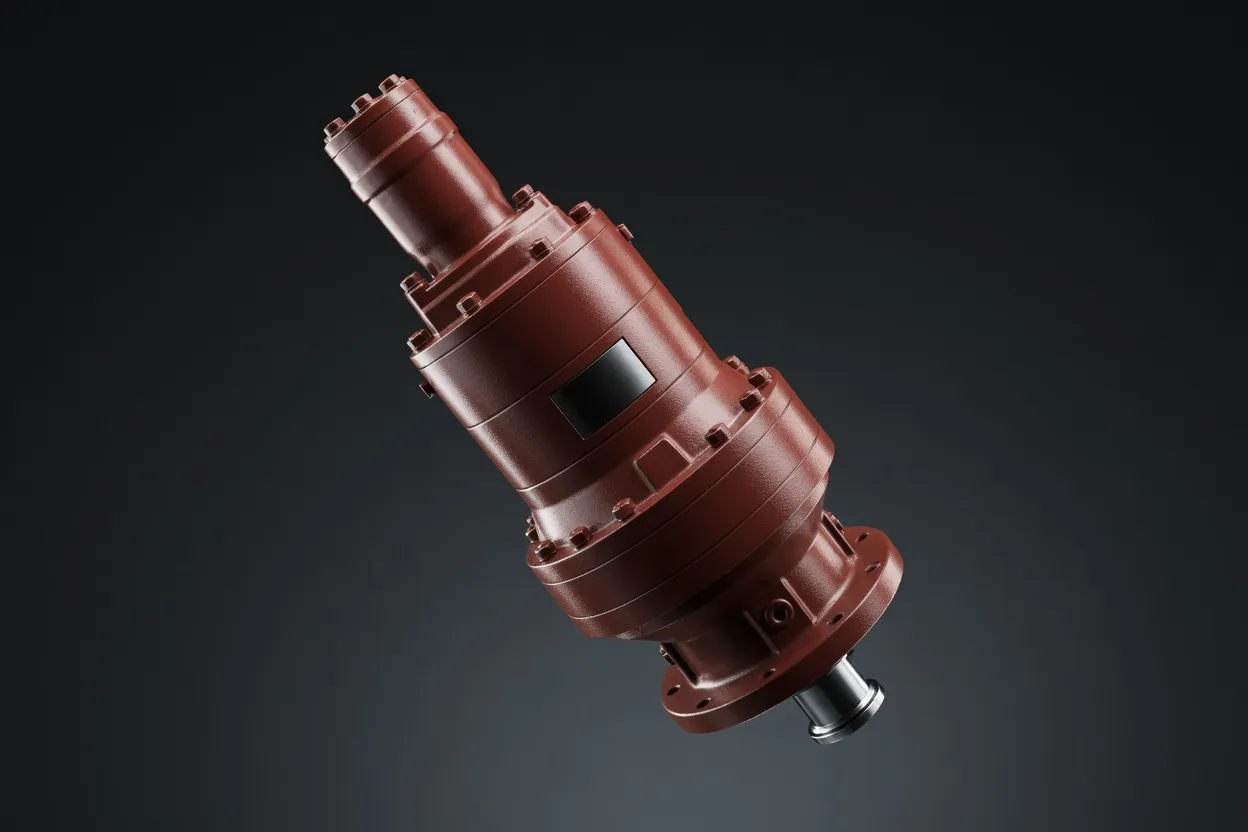
Installation and Operational Best Practices
Thrust Bearing Alignment
Align the screw thrust bearing with the gearbox output shaft within 0.05 mm to prevent edge loading that shortens bearing life. Use a precision alignment fixture during screw installation.
Oil System Commissioning
Fill the gearbox oil system, connect cooling lines, and circulate oil for 30 minutes before starting the screw. Verify flow rate and cooling capacity meet the specification for your ambient temperature.
Startup Torque Monitoring
Monitor motor current during the first startup — initial screw torque may exceed running torque by 150–200% as the screw breaks through cold material. Verify this peak falls within the gearbox’s rated overload capacity.
Production Baseline
Record screw speed stability, oil temperature, and product dimensional data during the first production run as the baseline for future performance monitoring.
Maintenance and Reliability
Extruder gearbox maintenance centers on oil management: monthly level checks, quarterly oil analysis for wear metals and viscosity, and oil changes every 5,000–8,000 operating hours. The thrust bearing is the most heavily loaded component — vibration monitoring at the thrust bearing housing detects developing issues before they escalate to catastrophic failure.
For twin-screw gearboxes, additionally verify output shaft synchronization annually by measuring the relative angular position of both screws at a reference point. Synchronization drift indicates wear in the distribution gear stage that could affect product quality before any other symptom becomes apparent.
Why Choose Ever-Power
Extrusion-Specific Product Range
Single-screw gearboxes from 2,000 to 100,000 Nm output torque, and twin-screw gearboxes with synchronized counter-rotating outputs, cover extruder diameters from 30 mm to 300 mm.
Thrust Bearing Rated Designs
Every extruder gearbox includes a purpose-designed thrust bearing assembly rated for the specific screw diameter and maximum die pressure, with documented thrust capacity certification.
️
Retrofit and Upgrade Programs
Extruder operators seeking to increase throughput can upgrade to higher-torque-density gearboxes that bolt into the existing machine frame. Contact our engineering team for a retrofit feasibility assessment.
Plastics Industry Supply
We supply extruder gearboxes to machine builders and end users worldwide, with application support for material-specific process optimization. Contact [email protected].
Frequently Asked Questions
Power Your Extrusion Line Efficiently
Share your extruder specifications, screw diameter, and material type — our team will recommend the optimal gearbox.