
Surface Mining · Bucket Wheel Excavator Drive Technology
Bucket wheel excavators (BWEs) are among the largest land-based machines ever built, moving 10,000 to 240,000 cubic meters of overburden or lignite per day in open-pit mining operations. The bucket wheel drive, slew drive, and travel drive each use multi-stage planetary gearboxes to convert electric motor output into the massive forces that propel these colossal machines and drive their cutting and conveying systems. This guide covers planetary gearbox engineering for bucket wheel excavator drive applications.
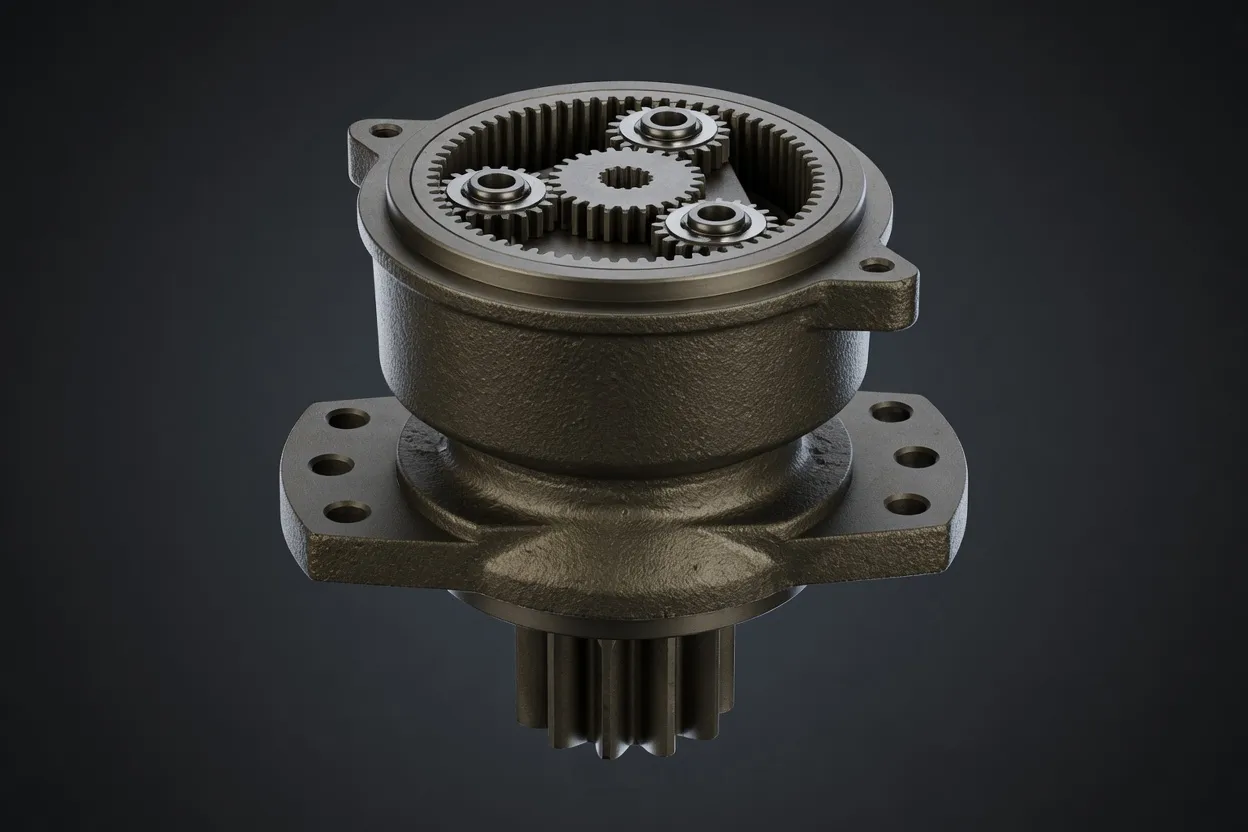
BWE Drive Systems and Gearbox Applications
A large BWE uses planetary gearboxes in three main drive systems. The bucket wheel drive rotates the cutting wheel at 2–5 RPM through a planetary gear reducer with ratios of 50:1 to 150:1, developing output torques of 500,000 to 2,000,000 Nm that cut and excavate the mining face. The slew drive rotates the machine’s superstructure at less than 1 RPM for lateral cutting sweeps. Travel drives propel the multi-thousand-tonne machine along the mining bench at walking speeds of 3–10 m/min. Each drive system presents unique engineering challenges due to the extreme torques, harsh environment, and continuous operating duty.
BWE gearboxes operate in remote open-pit mines where access for maintenance and replacement is logistically difficult and time-consuming. A gearbox failure on a BWE can halt overburden removal for an entire mining operation, with production losses measured in millions of dollars per day. This makes reliability and maintainability the overriding design criteria — even more so than efficiency or initial cost. Conservative service factors, premium materials, and extensive condition-monitoring instrumentation are standard for BWE gearbox specifications.
Bucket Wheel Drive Gearbox Requirements
Extreme Torque at Very Low Speed
The bucket wheel cuts into the mining face while rotating at just 2–5 RPM, requiring sustained output torques that can exceed 1,000,000 Nm on large excavators. Multi-stage planetary gearbox trains — three or four stages — achieve the required ratios while distributing the enormous torque across multiple planet gears in each stage. The output stage, carrying the full wheel torque, uses gears with face widths of 300–500 mm and module values of 16–25 mm, manufactured from premium case-carburizing steels with deep case depths for maximum contact-fatigue resistance.
Cutting Force Variations
As individual buckets engage the mining face, the cutting resistance fluctuates with the hardness and structure of the overburden material. These force variations create torque pulsations at the bucket-passing frequency, superimposed on the steady-state driving torque. The gearbox must absorb these pulsations — which can reach ±30% of the average torque — without fatigue damage to gear teeth or bearings over the machine’s 20–30-year service life.
Environmental Extremes
BWEs operate in open-pit mines exposed to temperatures ranging from –40 °C in Siberian lignite mines to +50 °C in Australian coal fields, along with pervasive dust, rain, and seasonal flooding. Gearbox sealing, lubricant selection, and housing corrosion protection must address the full range of conditions the specific mine site presents. Heated oil systems maintain lubricant viscosity during cold-weather startups, while oil coolers prevent overheating during sustained high-ambient-temperature operation.
Design Specifications for BWE Gearboxes
⚙️ Multi-Stage Ratio Architecture
Three or four planetary stages achieve overall ratios of 50:1 to 200:1. Stage-by-stage load analysis ensures each stage operates within its optimal torque-speed range, with the output stage designed for the extreme torque and very low speed that characterize the bucket wheel’s operating point.
Premium Gear Materials
18CrNiMo7-6 or SAE 9310 case-carburizing steels with case depths of 4–6 mm provide the surface durability for 100,000+ hour rated life at the extreme contact stresses (above 1,500 MPa Hertzian) present in BWE gearbox applications.
️ Forced-Circulation Oil Systems
Oil volumes of 500 to 2,000 liters with circulation rates of 200+ liters/min provide lubrication, cooling, and debris flushing for the massive gear meshes and bearings. Dual redundant pumps and coolers ensure continuous oil supply even during single-component maintenance.
Condition Monitoring Integration
Online vibration, temperature, and oil-quality sensors feed data to the BWE’s control system, enabling real-time gearbox health monitoring. Trending algorithms predict remaining useful life with sufficient lead time for planned maintenance during scheduled mining pauses.
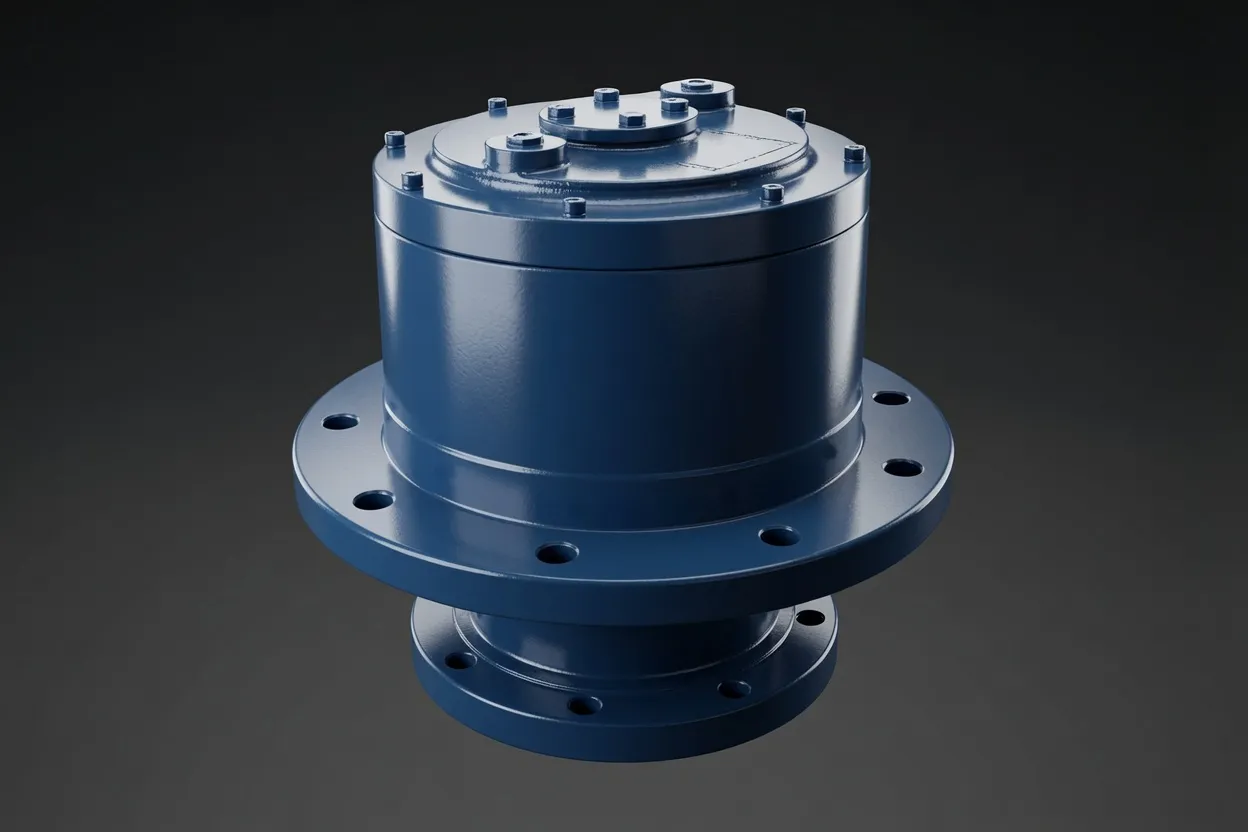
Installation and Operational Best Practices
Foundation and Frame Interface
BWE gearboxes mount on the machine’s main structural framework, transmitting enormous reaction torques into the steel structure. Verify frame deflection under full-load conditions and confirm that gearbox mounting bolt preloads are adequate to prevent fretting at the bolted interface.
Oil System Commissioning
Commission the complete oil system — pumps, coolers, filters, and monitoring sensors — before first gearbox rotation. Flush all piping with filtered oil to remove construction debris. Verify flow rates and cooling capacity at the expected operating ambient temperature.
Alignment Under Load
Large BWE gearboxes may require alignment verification under operating load, as frame deflection shifts component positions from their no-load alignment. Use strain gauges or bearing-temperature differential monitoring to verify acceptable internal alignment during initial commissioning under load.
First-Year Monitoring Program
Implement an enhanced monitoring program during the first year of operation, with monthly oil analysis, weekly vibration trends, and daily temperature checks. First-year data establishes the performance baseline and identifies any design or installation issues early in the machine’s life.
Maintenance and Reliability
BWE gearbox maintenance follows the mine’s production schedule, with major inspections and oil changes performed during planned mining pauses. Monthly oil sampling and continuous vibration monitoring provide early warning of developing issues. Annual internal inspections — examining gear teeth, measuring bearing clearances, and inspecting seals — verify gearbox condition and inform the next year’s maintenance plan.
The extreme cost of BWE downtime justifies maintaining a complete spare gearbox for each critical drive system. When condition monitoring indicates approaching end-of-life, the spare is installed during a planned pause, and the removed unit is rebuilt in the mine workshop for return to the spare pool. This exchange approach limits unplanned downtime to the rare catastrophic failure that condition monitoring fails to predict — an event with probability below 5% per year when a comprehensive monitoring program is in place.
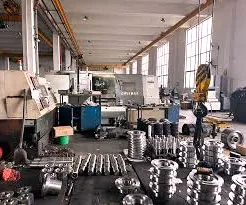
Why Choose Ever-Power
Large-Scale Gear Manufacturing
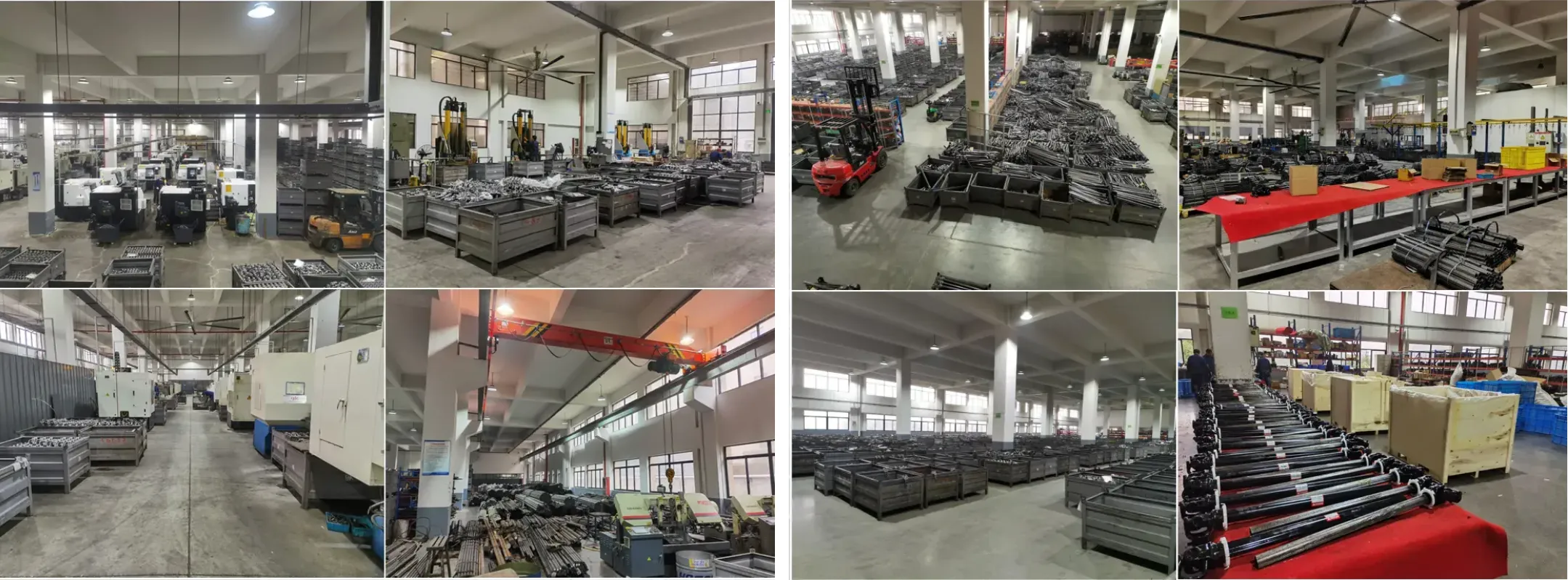
Our facility produces BWE-class planetary gears up to 2,500 mm diameter with module values to 25 mm, using CNC gear grinding for the tooth-quality grades required by these safety-and-production-critical applications.
Extended Life Testing
We validate BWE gearbox designs through accelerated endurance testing at 150% rated torque for 5,000 hours — equivalent to approximately 5 years of field operation — before releasing any new design for production supply.
️
Mine-Site Technical Support
Our field service engineers support BWE gearbox commissioning, condition monitoring setup, and troubleshooting at mine sites worldwide, providing the hands-on expertise that remote mining operations require.
Heavy Equipment Logistics
We manage the specialized transport of BWE gearboxes — units weighing up to 50 tonnes — from our Hangzhou factory to mine sites globally, including customs clearance, heavy-haul transport, and site delivery coordination.
Frequently Asked Questions
Drive Your BWE with Confidence
Share your excavator specifications and mine conditions — our mining equipment team will deliver a gearbox proposal engineered for 20-year reliability.