
Lab Automation · Precision Sample Handling Drives
High-throughput laboratory automation systems — liquid handlers, plate movers, centrifuge loaders, and robotic sample processors — rely on miniature planetary gearboxes to position pipettes, plates, and tubes with micrometer-level accuracy at speeds that support hundreds of assays per hour. This guide covers how planetary gearbox selection affects the throughput, accuracy, and reliability of laboratory automation platforms.
Laboratory Automation Drive Architecture
A typical laboratory automation workstation contains 5 to 20 servo-driven axes, each combining a compact motor with a precision planetary gearbox to drive ball screws, belt drives, or direct rotary mechanisms. X-Y-Z gantries position pipette tips or grippers over microplates, while rotary axes orient tubes, flip lids, or index carousel positions. Gearbox ratios of 3:1 to 30:1 match motor output to the specific speed and force requirements of each axis, with the smallest gearboxes (16 to 28 mm frame size) fitting within the tight packaging constraints of benchtop laboratory instruments.
Laboratory instruments must deliver repeatable positioning across millions of cycles per year — a 96-channel liquid handler performing 200 plates per day accumulates over 70,000 X-Y-Z positioning cycles daily. The low backlash planetary gearbox at each axis must maintain its backlash specification throughout this intense cycle count without requiring maintenance, because laboratory instruments are expected to deliver years of uninterrupted service with only annual preventive maintenance visits. Sealed, lifetime-lubricated miniature planetary gearboxes with pre-loaded bearings and precision-ground teeth meet this reliability expectation across the clean, temperature-controlled environments of clinical and research laboratories.
Performance Requirements for Lab Automation
Positioning Accuracy and Repeatability
Liquid-handling systems must position pipette tips within ±0.1 mm of the target well center to avoid cross-contamination between adjacent wells on a 384-well microplate (well spacing: 4.5 mm). The gearbox contributes to the overall positioning error budget through its backlash (dead zone at direction reversal) and transmission error (periodic position deviation during constant-speed motion). Specifying a gearbox with backlash below 3 arcminutes and transmission error below 2 arcminutes keeps the gearbox’s contribution to positioning error below ±0.02 mm — a small fraction of the total error budget, leaving margin for other mechanical tolerances in the motion system.
Speed and Throughput
Laboratory throughput depends on axis traverse speed and settling time between moves. A low-inertia planetary gear reducer enables rapid acceleration (above 5 m/s² on linear axes) and short settling times (below 50 ms) at the target position, maximizing the number of pipetting or sample-handling operations per hour. Motor-to-load inertia ratios below 3:1, achieved through lightweight planet carriers and compact gear geometries, provide the servo bandwidth needed for high-throughput laboratory workflows where every millisecond of cycle time affects daily sample capacity.
Cleanliness and Contamination Prevention
Laboratories processing biological samples, pharmaceutical compounds, or forensic evidence require gearboxes that do not shed particles or outgas lubricant into the workspace. Sealed planetary gearboxes with non-outgassing PFPE lubricants and smooth, cleanable external surfaces prevent sample contamination. For robotic systems operating inside biosafety cabinets, the gearbox must additionally tolerate periodic UV-C decontamination and chemical wipe-down with isopropanol or hydrogen peroxide without seal or housing degradation.
Gearbox Selection for Common Lab Automation Axes
Pipette Z-Axis
Ratios of 3:1 to 10:1 with backlash below 3 arcminutes. Low inertia for rapid tip approach and retraction. Smooth torque delivery to prevent liquid aspiration/dispense disturbances during the critical Z-motion phases of the pipetting cycle.
X-Y Gantry
Ratios of 5:1 to 15:1 for belt or ball-screw driven gantries. Positioning repeatability within ±0.05 mm for 384-well plate access. Low noise (below 50 dB(A)) for open-bench laboratory environments where researchers work nearby.
Carousel/Turntable
Ratios of 10:1 to 30:1 for indexing carousel positions with angular accuracy within ±0.1°. Self-locking capability at high ratios holds the carousel position between indexing moves without continuous motor power, reducing heat generation inside enclosed instruments.
Gripper/Manipulator
Ratios of 5:1 to 20:1 for robotic arm joints that pick, place, and orient tubes, vials, and plates. Compact packaging and low weight critical for end-of-arm tooling where every added gram reduces the robot’s acceleration capability and extends cycle time.
Integration and Validation
Motor Compatibility Verification
Verify motor shaft diameter, flange pattern, and electrical interface before ordering the gearbox. Our standard adapter catalog covers Maxon, Faulhaber, Oriental Motor, and Nanotec platforms — the most common motor brands in laboratory automation applications.
Axis Accuracy Qualification
After assembly, run the instrument’s positioning accuracy qualification protocol. Measure actual position at 50+ points across the working envelope using an external reference (laser interferometer or calibrated glass scale). All points must fall within the instrument’s specified accuracy — if not, investigate gearbox backlash, coupling alignment, and bearing preload as potential contributors.
Contamination Risk Assessment
For instruments handling biological samples, verify that the gearbox does not shed particles into the sample-processing zone. Run the axis at maximum speed for 1 hour inside a particle counter enclosure and verify that particle counts remain below the ISO 14644 Class 7 threshold (352,000 particles ≥0.5 μm per m³) or the instrument’s specific cleanliness requirement.
Accelerated Life Testing
Cycle the axis through its full travel at maximum speed and load for 10 million cycles — representing approximately 2 years of high-throughput laboratory use. Measure backlash and positioning accuracy at 1-million-cycle intervals to generate degradation curves that support the instrument’s stated maintenance interval.
Maintenance and Reliability
Laboratory automation gearboxes are designed for maintenance-free operation over the instrument’s planned service life — typically 5 to 10 years of high-throughput use. The primary end-of-life indicator is positioning accuracy degradation detected during the instrument’s routine calibration verification. When a gearbox-equipped axis fails calibration despite motor and encoder functioning within specification, gearbox replacement restores accuracy without requiring recalibration of the entire instrument. Replacement gearboxes from the same production family maintain dimensional and performance compatibility, ensuring that the axis returns to specification after a simple swap and recalibration.
For instruments operating in regulated laboratories (GLP, GMP, CAP/CLIA), gearbox replacement is a documented maintenance event that must be recorded in the instrument’s maintenance log and verified through a post-replacement calibration check before the instrument is returned to service for sample processing. Providing replacement gearboxes with certificates of conformance and dimensional inspection reports simplifies this documentation requirement and reduces the administrative burden on laboratory quality-assurance staff.
Why Choose Ever-Power for Lab Automation Gearboxes
Micro-Planetary Expertise
Frame sizes from 16 to 42 mm with ratios from 3:1 to 100:1 cover the full range of laboratory automation axes — from pipette Z-drives to carousel indexing mechanisms — in a single product family with consistent quality and interface standards.
Cleanroom-Compatible Production
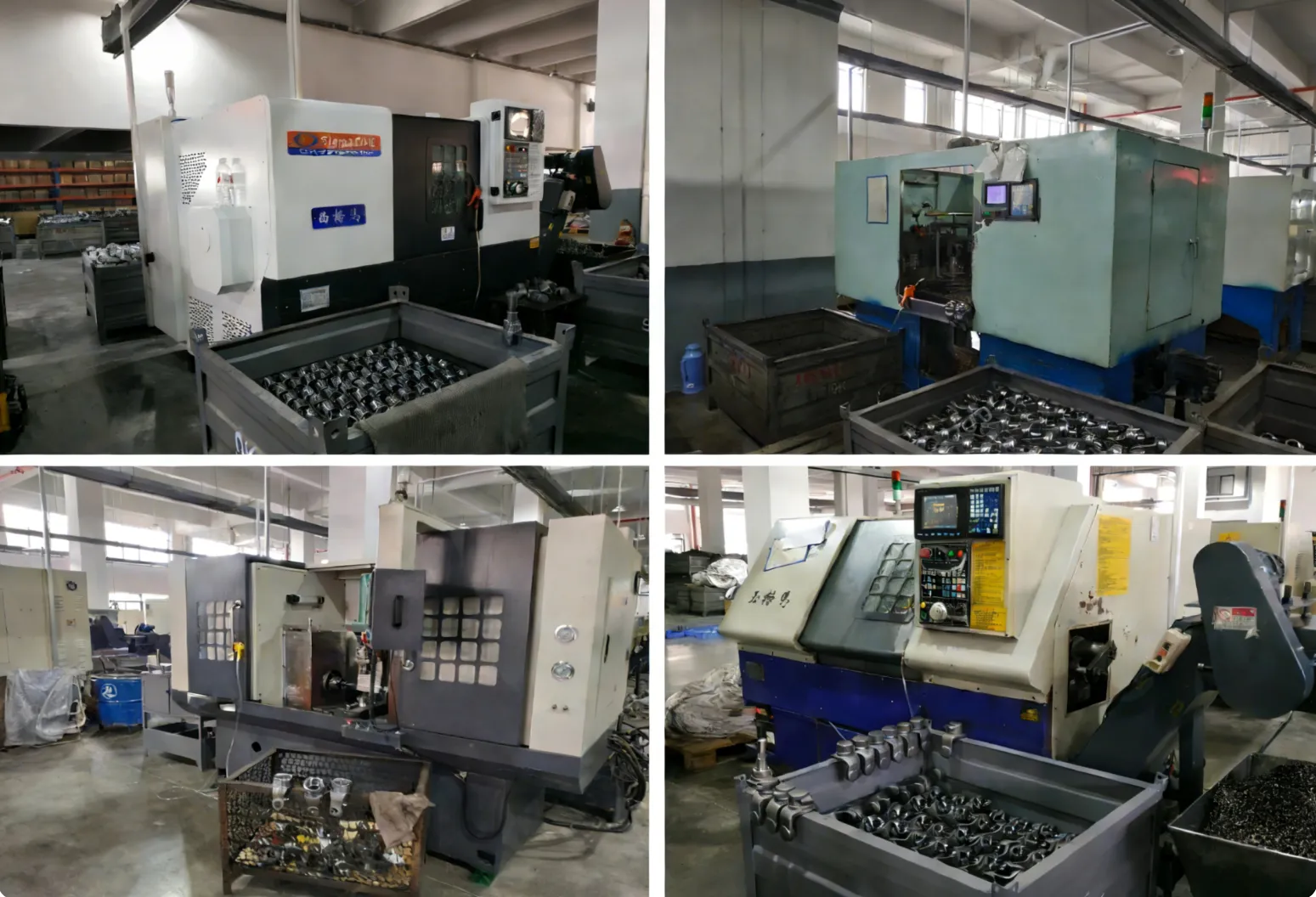
Our miniature gearbox assembly area operates under controlled cleanliness conditions, and every unit receives a final cleanliness verification before packaging in sealed bags suitable for direct integration into laboratory instrument assembly processes.
️
Instrument OEM Partnerships
We collaborate with laboratory instrument manufacturers from product concept through IVD submission, providing the design data, prototypes, and qualification support that accelerate time-to-market for new automation platforms.
Small-Batch Flexibility
From 10-unit prototype orders to 10,000+ annual production volumes, our production system scales to match the laboratory instrument market’s product mix — many platforms at moderate volumes. Contact [email protected].
Frequently Asked Questions
Automate Your Laboratory with Precision Drives
Share your instrument specifications and throughput requirements — our lab automation team will recommend the optimal gearbox for each axis.