
Agricultural Technology · Combine Harvester Drive Systems
Combine harvesters integrate cutting, threshing, separating, and grain-cleaning functions into a single self-propelled machine that must operate reliably through intense seasonal harvest windows. Planetary gearboxes drive the threshing cylinder, straw walkers, header augers, and ground-travel system — each axis demanding specific torque, speed, and shock-load capacity. This guide covers planetary gearbox engineering for combine harvester drive and threshing applications.
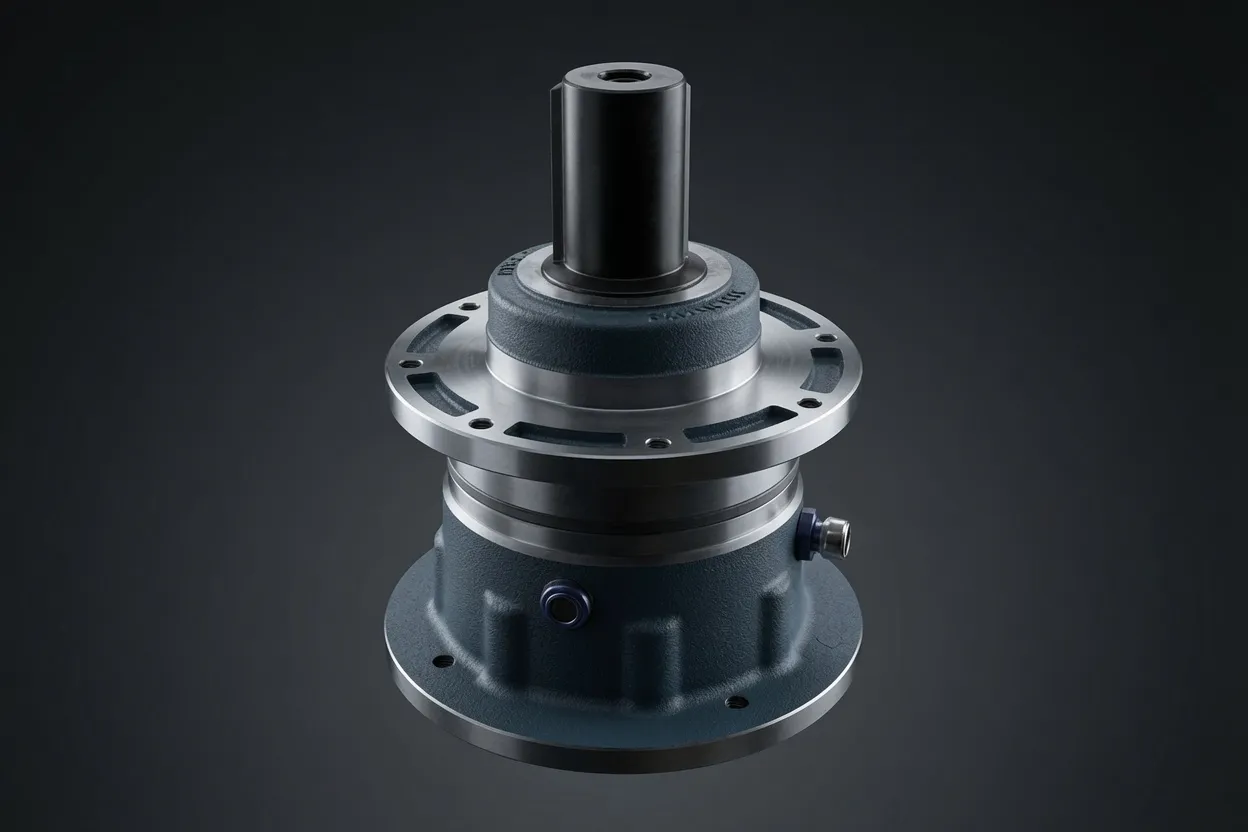
How Combine Harvesters Use Planetary Gearboxes
A modern combine harvester contains 10 to 15 individual drive points, many served by planetary gear reducer units. The threshing cylinder drive — the most demanding axis — spins the cylinder at 800 to 1,400 RPM under highly variable torque loads that spike when crop slugs enter the threshing chamber. Header drives convert engine PTO power into the slower auger and cutter-bar speeds needed for crop gathering. Ground-travel drives deliver the traction force for propelling a 15- to 25-tonne machine across soft, uneven field surfaces at harvest speeds of 4 to 8 km/h.
Harvest seasons are short — typically 3 to 8 weeks depending on crop and region — and downtime during this window directly translates to crop losses. A gearbox failure that takes the combine out of service for even 24 hours can cost thousands of dollars in unharvested grain, compounding the repair cost with lost production. This makes reliability under harsh field conditions the paramount design criterion for every agricultural machinery planetary gearbox on the combine.
Threshing and Separation Drive Requirements
Threshing Cylinder Loads
The threshing cylinder strips grain from the plant heads through high-speed impact and friction. Crop flow is inherently uneven — thick slugs alternate with thin patches as the header feeds material into the machine. Each slug generates a torque spike reaching 200–300% of the average threshing torque, lasting 0.5 to 2 seconds. The combine harvester planetary gearbox must absorb thousands of these transients per hour without cumulative gear tooth fatigue or bearing degradation. Case-carburized alloy steel gears with tough cores and pre-loaded tapered roller bearings provide the impact resistance this duty demands.
Rotor and Walker Drives
Axial-flow combines use a longitudinal rotor spinning at 400–900 RPM instead of a conventional cylinder. The rotor processes the entire crop stream, generating sustained high torque with superimposed fluctuations from crop density variations. Straw walker drives on conventional combines oscillate reciprocating racks at 200–250 strokes per minute. Both drive types require gearboxes with smooth torque delivery — helical planetary gear reducer designs minimize the vibration transmitted to the combine frame, reducing operator fatigue during long harvest shifts.
Header and Feeder House Drives
The header auger and feeder-house conveyor deliver cut crop material from the header to the threshing system. These drives operate at moderate speeds (100–400 RPM) and moderate torques, but they encounter severe shock loads when the header ingests rocks, fence wire, or other foreign objects from the field. The gearbox must survive these unpredictable events without damage. An overrunning clutch or shear-bolt coupling upstream of the gearbox provides primary protection, but the gearbox’s own overload capacity (rated at 250% of nominal torque) serves as the secondary defense against foreign-object impacts.
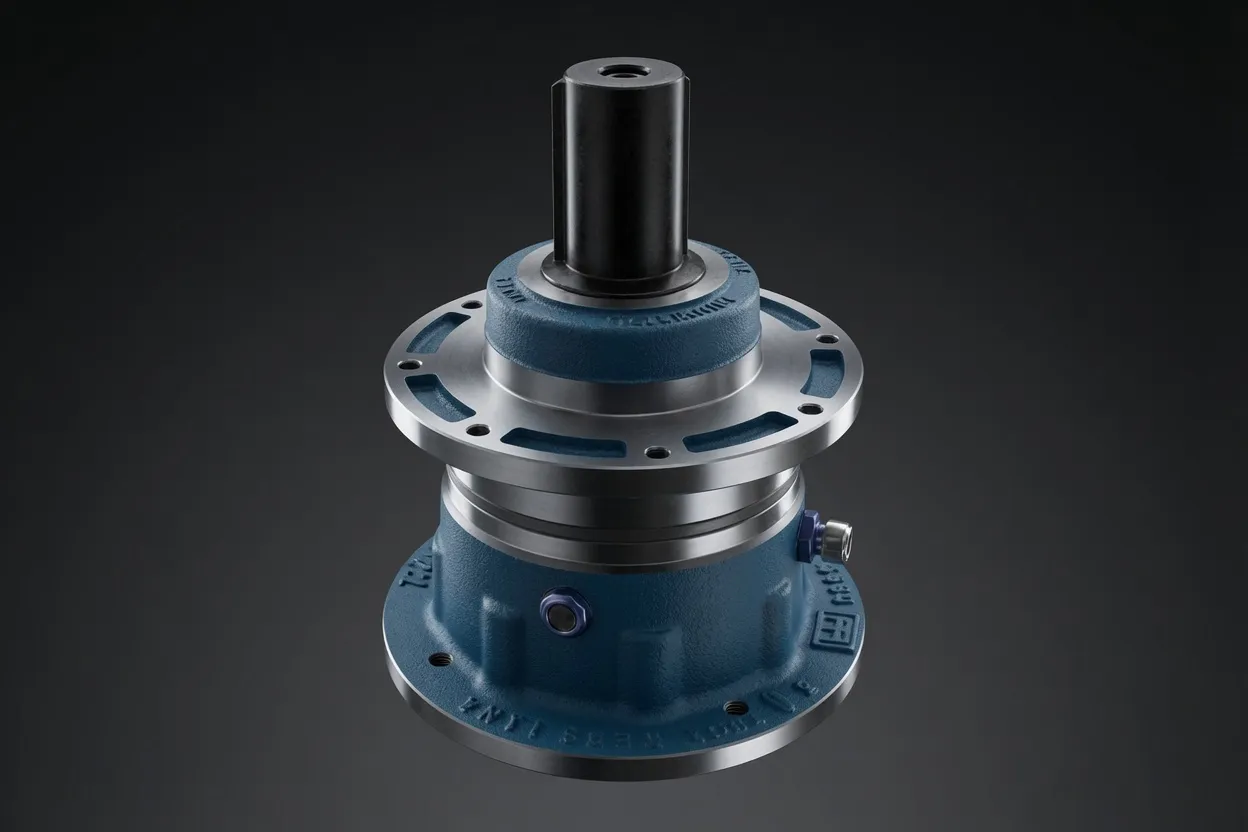
Ground Travel Drive Systems
Combine ground-travel drives use hydrostatic motor–planetary gearbox combinations at each drive wheel, providing infinitely variable ground speed from 0 to 25 km/h. The planetary gearbox ratio — typically 20:1 to 50:1 — converts the hydrostatic motor’s 2,000–3,000 RPM output to wheel speeds matched to field conditions. The drive must deliver high torque at low speed for traction in soft, wet soils and moderate torque at higher speeds for road transport between fields. Bidirectional operation enables forward harvesting and reverse maneuvering at headland turns.
Travel drive gearboxes must handle the shock loads from traversing field irregularities — furrows, drainage ditches, and terraced slopes — while supporting the combine’s full weight on the drive-wheel bearings. Duo-cone floating seals protect against mud and crop debris infiltration that is omnipresent in the harvesting environment. Oil-bath lubrication with EP-rated gear oil provides the durability needed for the 1,000–2,000 operating hours accumulated during a typical annual harvest season plus road travel between fields.
Key Design Specifications
⚙️ Seasonal Duty Rating
Combine gearboxes must deliver full performance through the harvest season without mid-season maintenance. Oil capacity and thermal design must sustain 12- to 18-hour daily operation at ambient temperatures of 30–40 °C without overheating. A sealed-for-season design with oil-level verification at the start of harvest minimizes field maintenance requirements.
Shock and FOD Resistance
Foreign Object Damage (FOD) from rocks, wire, and metal causes sudden torque spikes throughout the drive train. Gearbox service factors of 2.0–2.5 provide adequate margin for these events. Case-carburized gears with shot-peened roots resist tooth fracture under impact loads that would crack through-hardened alternatives.
️ Field-Environment Sealing
Combines operate in clouds of dust, chaff, and crop residue. IP65 sealing minimum for all gearbox types. Floating duo-cone seals for travel drives. External air filters on breather plugs prevent dust ingress during the pressure-temperature cycles that occur as the gearbox heats and cools through daily operation.
️ Wide Temperature Operation
Harvest conditions range from near-freezing early-morning starts to 40+ °C midday temperatures. Multi-grade synthetic gear oils (SAE 75W-90 or equivalent) maintain adequate viscosity across this range without requiring seasonal lubricant changes.
Installation and Pre-Season Preparation
Gearbox Inspection
Before each harvest season, inspect all gearboxes for oil leaks, check oil levels, and examine magnetic drain plugs for metallic debris from the previous season. Top up or replace oil as needed. Verify that all mounting bolts are properly torqued.
Belt and Chain Tension
Verify that the drive belts or chains connecting the gearbox to the driven components are correctly tensioned. Incorrect tension overloads the gearbox input bearing (too tight) or causes belt slip that generates heat and intermittent torque delivery (too loose).
Functional Test
Run each drive function at low speed before entering the field. Listen for abnormal noise, check for vibration, and verify that all drives engage and disengage smoothly. Address any issues in the workshop before committing the machine to the time-critical harvest window.
Spare Parts Staging
Stage critical spare parts — seal kits, bearings, and complete exchange gearboxes for the highest-risk drive points — at the farm or dealer before harvest begins. Having parts on hand reduces repair time from days to hours when field failures occur.
In-Season Maintenance and Troubleshooting
During harvest, daily gearbox maintenance consists of visual leak inspection and listening for abnormal noise during the first few minutes of operation. Weekly oil-level checks catch developing seal leaks before they progress to oil starvation. If a gearbox develops unusual noise, heat, or vibration, shut down the machine immediately and inspect — continuing to operate a failing gearbox risks secondary damage to connected components (drive shafts, bearings, belts) that multiplies the repair cost and downtime.
The most common in-season gearbox failure mode is seal breach from crop-wrap or debris accumulation around the output shaft. Remove accumulated material from around all gearbox shaft seals daily as part of the end-of-day cleandown routine. This simple preventive action eliminates the leading cause of premature gearbox failures during harvest and costs only a few minutes of labor per day — an investment that protects against failures costing thousands of dollars in repairs and lost harvesting time.
Why Choose Ever-Power for Combine Harvester Gearboxes
Agricultural OEM Product Range
Our planetary gearbox range covers combine harvester applications from header drives through threshing units to ground-travel final drives, with models compatible with major combine brands including John Deere, CLAAS, New Holland, Case IH, and AGCO.
Harvest-Season Durability Testing
Every combine gearbox model completes 2,000 hours of accelerated durability testing simulating full-season operation with programmed shock-load events. Only designs passing without measurable degradation enter production.
️
Pre-Season Support
Our agricultural team provides pre-season gearbox inspection checklists, maintenance guides, and technical support to help farm operations prepare their combine fleet for reliable performance through the harvest window.
Harvest-Season Emergency Supply
During peak harvest periods, we prioritize combine gearbox orders for emergency same-week dispatch. Dealer and fleet accounts receive dedicated expediting support. Contact [email protected].
Frequently Asked Questions
Harvest with Confidence — Reliable Combine Gearboxes
Share your combine model and fleet size — our agricultural team will deliver a pre-season supply and support proposal.