
Precision Agriculture · Seeder & Mower Drive Systems
Seeders and mowers represent two of the highest-volume implement categories in agriculture, each placing distinct demands on their drive gearboxes. Seeders require precise, low-speed metering drives for uniform seed placement, while mowers demand high-speed, high-impact-resistant drives for cutting heavy grass, hay, and brush. This guide covers planetary gearbox engineering for both seeder transmission and mower drive applications.
Seeder Drive Requirements
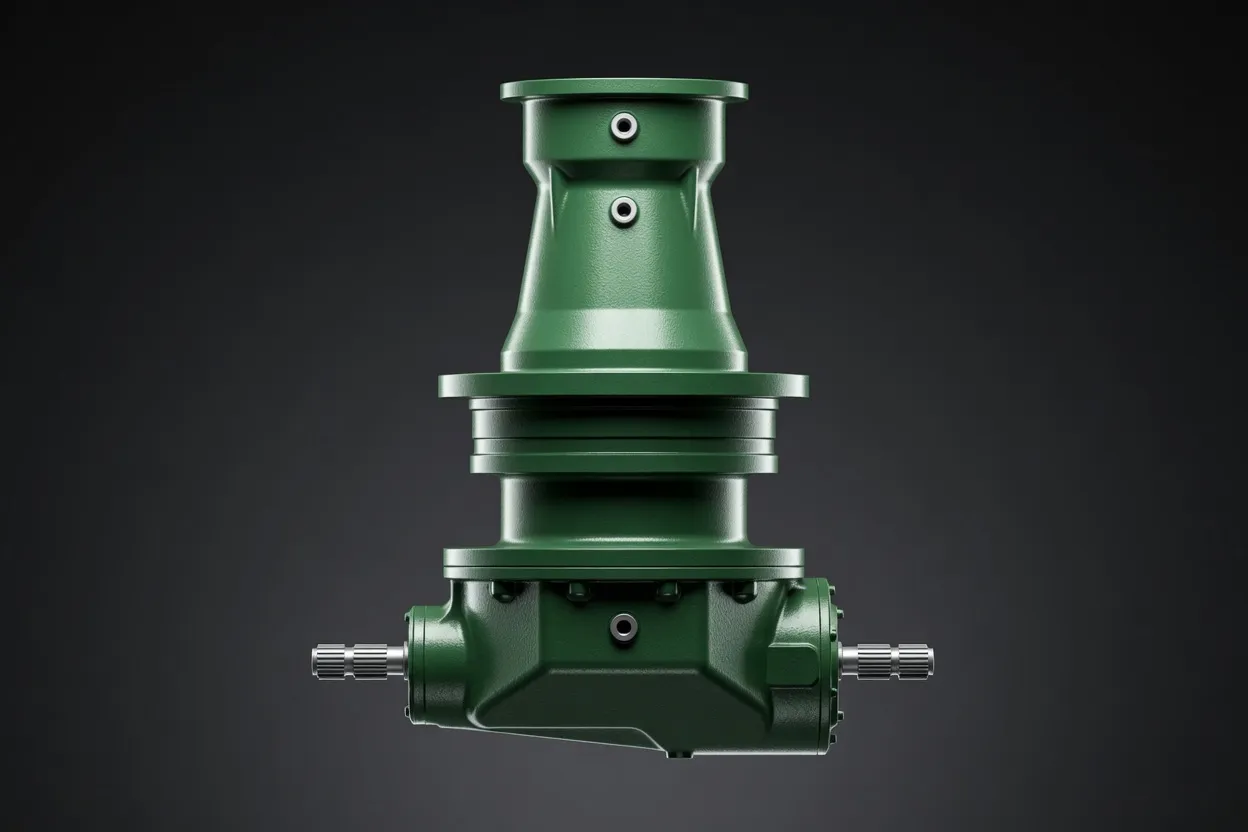
Precision seeders meter individual seeds at controlled spacing along the planting row, requiring drive systems that deliver exact rotational speed to the metering mechanism. A planetary gear reducer between the ground-drive wheel or electric motor and the seed meter converts the input speed to the precise RPM needed for the target seed spacing at the planned planting speed. Ratios of 3:1 to 20:1 cover the range of metering speeds used across crop types — from large-seeded crops like corn (3–5 seeds per meter) to small-seeded crops like canola (40–80 seeds per meter).
Modern precision planters use electric seed-meter drives with individual planetary gearbox units at each row unit, enabling the planter controller to vary seed spacing in real time based on GPS-mapped prescription data. These servo-driven gearboxes must deliver zero-backlash performance — any lost motion between the motor command and the meter disc response translates directly to seed-spacing errors that reduce crop yield. Backlash below 3 arcminutes at the meter drive ensures that the ±2% spacing accuracy demanded by precision agriculture is achievable across the full range of planting speeds from 5 to 12 km/h.
Mower Drive Requirements
Rotary Disc and Drum Mowers
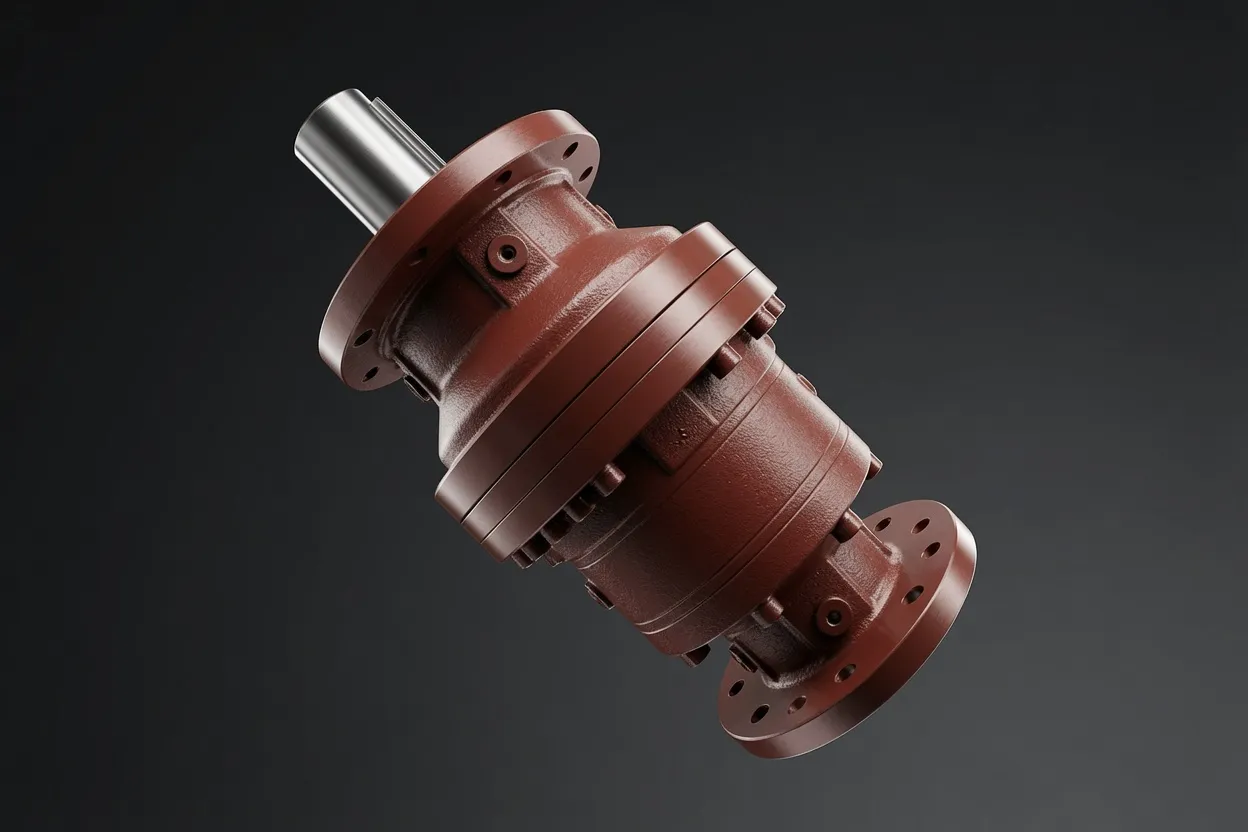
Rotary mowers use PTO-driven gearboxes to distribute power from a single input shaft to multiple cutting discs or drums spinning at 2,500–3,000 RPM. Each disc gearbox must deliver the cutting torque needed to slice through heavy grass, weeds, and small woody stems while surviving the violent impact loads that occur when a disc strikes a rock, fence post, or other immovable object in the field. A high torque planetary gearbox with case-carburized gears and shock-rated bearings handles these impacts without tooth fracture or bearing damage.
Flail Mowers and Mulchers
Flail mowers and forestry mulchers operate at lower speeds (1,500–2,500 RPM) but higher torque, processing heavier material including brush, saplings, and crop residue. The planetary gearbox driving the rotor must handle continuous heavy-duty loading with frequent shock events as the flails engage thick stems and stumps. Service factors of 2.5–3.0 are typical for these severe-duty applications. The gearbox must also resist the intense vibration generated by the cutting process, which can loosen mounting bolts and fatigue housing castings if the design does not account for this loading mode.
Sickle Bar and Disc Cutter Drives
Sickle-bar mower drives convert PTO rotation into the reciprocating motion of the cutter bar through a crankshaft mechanism. The planetary gearbox between the PTO input and the crankshaft provides the speed reduction needed to match the cutter bar’s optimal operating frequency (typically 1,000–1,200 strokes per minute for hay mowers). The planetary gear reducer must handle the oscillating torque profile inherent in crank-driven mechanisms, where torque peaks twice per revolution as the cutter bar reverses direction at each end of its stroke.
Design Specifications
Seeder Precision
Backlash below 3 arcminutes for precision planters. Low cogging torque for uniform seed spacing at low metering speeds. Sealed, lifetime-lubricated units for maintenance-free operation through the planting season.
⚙️ Mower Impact Resistance
Service factors of 2.0–3.0 depending on mower type. Case-carburized gears with shot-peened roots for impact toughness. Pre-loaded bearings to resist brinelling from repeated stone strikes.
️ Environmental Protection
IP65 minimum for field-mounted gearboxes exposed to dust, mud, and crop debris. Stainless-steel or zinc-plated fasteners to resist corrosion from fertilizer and chemical exposure common in agricultural environments.
Compact Packaging
Mower disc gearboxes must fit within the disc housing’s limited space — typically less than 150 mm diameter and 100 mm height. Planetary architecture’s coaxial design maximizes torque density within these tight envelopes.
Installation and Seasonal Preparation
Mower Disc Gearbox Mounting
Bolt the disc gearbox into the mower housing using fitted dowel pins for precise alignment. Verify that the cutter disc runs true (less than 1 mm radial runout) after installation — excessive runout causes vibration and uneven cutting.
Seeder Drive Calibration
After installing the seeder gearbox, calibrate the seed meter by manually rotating the drive input and counting seeds dispensed per revolution. Verify that the actual seeds per revolution matches the planter manufacturer’s specification for the installed gearbox ratio.
PTO Connection Alignment
Verify PTO shaft alignment and operating angle before the first field pass. Excessive angle (above 15°) overloads the gearbox input bearing and accelerates universal joint wear. Adjust implement hitch height to optimize the PTO shaft angle.
Pre-Season Oil Verification
Check gearbox oil levels on all mower and seeder drive points. Top up with the specified grade. Inspect external surfaces for damage from storage — cracked housings, corroded shafts, or hardened seals should be replaced before field use.
Maintenance for Multi-Season Reliability
Mower gearboxes accumulate 200 to 500 operating hours per season depending on farm size and mowing frequency. Oil changes at the end of each season (or every 500 hours) maintain lubricant quality. Inspect disc gearbox mounting bolts after the first 50 hours of new-season operation — vibration from stone impacts can loosen bolts during the initial use period. For flail mowers and mulchers, quarterly vibration monitoring during the active season detects bearing deterioration before it leads to in-field failure.
Seeder gearboxes operate for shorter annual durations (typically 50–200 hours per planting season) but are stored for extended periods between uses. Post-season storage preparation — cleaning external surfaces, verifying oil levels, and applying corrosion-inhibiting spray to exposed shafts — prevents deterioration during the 8–10 months between planting seasons. Proper storage extends the effective service life of seeder gearboxes to 10–15 years, far beyond the life achievable when units are stored wet and corroded between seasons.
Why Choose Ever-Power for Seeder & Mower Gearboxes
Extensive Implement Coverage
Our agricultural gearbox range covers disc mower drives, flail mower gearboxes, sickle-bar drives, seeder metering drives, and PTO speed reducers for all major implement brands and aftermarket applications.
Stone-Impact Testing
Mower gearbox models undergo 5,000-cycle stone-impact testing at 300% of rated torque, validating survival under the field conditions that destroy lesser designs within a single season.
Agricultural implement dealers receive competitive wholesale pricing, illustrated parts catalogs, and technical training materials for gearbox identification and cross-referencing across implement brands.
Seasonal Stocking Programs
We offer seasonal pre-stocking programs that deliver mower gearboxes in spring and combine gearboxes before harvest, aligning inventory with your customers’ seasonal demand patterns. Contact [email protected].
Frequently Asked Questions
Plant and Mow with Confidence
Share your implement models and seasonal volume — our agricultural team will deliver a tailored gearbox supply proposal.