
Heavy Equipment · Wheel Loader Axle Drive Technology
Wheel loaders rely on planetary hub reductions built into each wheel end to multiply the axle driveshaft torque into the massive tractive force needed to push a loaded bucket into a stockpile and propel a 15- to 30-tonne machine up haul-road grades. These planetary hub gearboxes operate in one of the harshest environments in mobile equipment — subjected to shock loads, contamination, and thermal cycling while bearing the full machine weight. This article examines the engineering behind planetary gearbox design for wheel loader drive axle applications.
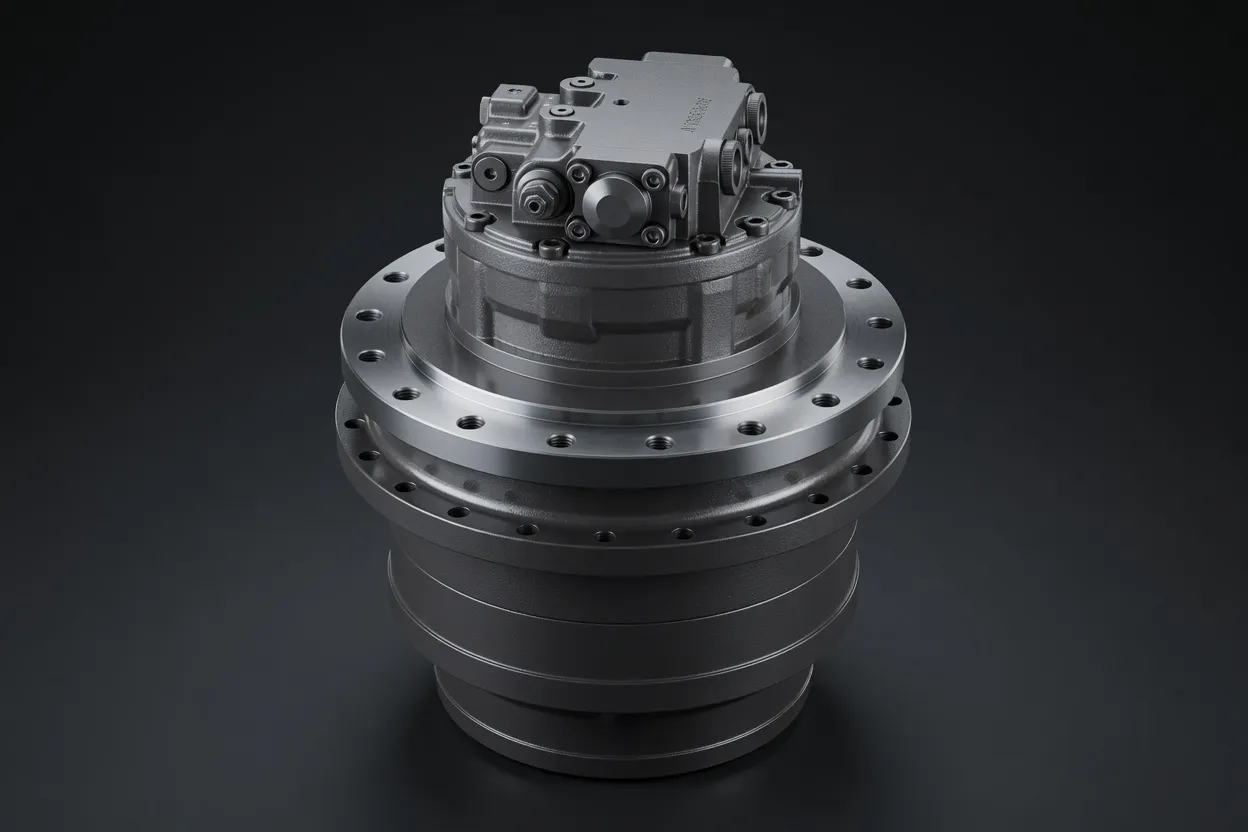
Wheel-End Planetary Reduction Architecture
Each wheel of a loader incorporates a planetary hub reduction — typically a single-stage or two-stage planetary gear set housed within the wheel hub casting. The axle driveshaft delivers torque at relatively high speed and moderate torque to the hub’s input sun gear. The planetary stages step the speed down and multiply the torque before transmitting it to the wheel rim through the planet carrier (or ring gear, depending on design). Reduction ratios of 5:1 to 15:1 per wheel end are common, with two-stage designs used when the required ratio exceeds the practical limit of a single stage.
This arrangement concentrates the highest torque — and therefore the largest gears and bearings — at the wheel end where the most space is available. The axle driveshaft upstream of the hub reduction transmits lower torque at higher speed, allowing it to be a smaller-diameter, lighter component. For a construction equipment planetary gearbox, this weight distribution keeps the machine’s center of gravity low and maximizes ground clearance under the axle housing, both important for stability and mobility on uneven terrain.
Operating Loads and Environmental Challenges
Impact and Shock Loading
Wheel loaders routinely slam their buckets into rock piles and hardpack material, transmitting shock loads through the tires and wheel hubs into the planetary gear train. These impacts can reach 300% of the steady-state driving torque for durations of 50 to 200 milliseconds. The high torque planetary gearbox must absorb these shocks without gear tooth chipping or bearing brinelling. Case-carburized gears with tough cores (35 HRC) provide the impact resistance needed to survive thousands of these events over the machine’s life.
Contamination and Sealing
Wheel-end gearboxes operate centimeters from the ground surface in an environment of mud, water, rocks, and abrasive dust. Seal failure allows these contaminants to enter the gear oil, causing rapid and destructive abrasive wear on the gear teeth and bearing surfaces. Floating face seals — the same technology used in track-type machine final drives — provide superior contamination protection compared to lip seals in these harsh conditions, with seal lives exceeding 5,000 hours in typical loader duty.
Thermal Management
Sustained hill climbing with a loaded bucket generates significant heat in the hub reduction. The gear oil must dissipate this heat through the hub housing into the tire air volume and the surrounding environment. If the oil temperature exceeds 120 °C, lubricant degradation accelerates and bearing life shortens drastically. Proper oil fill level, correct oil viscosity grade, and adequate ventilation of the hub cavity all contribute to keeping temperatures within safe limits during the most demanding operating conditions.
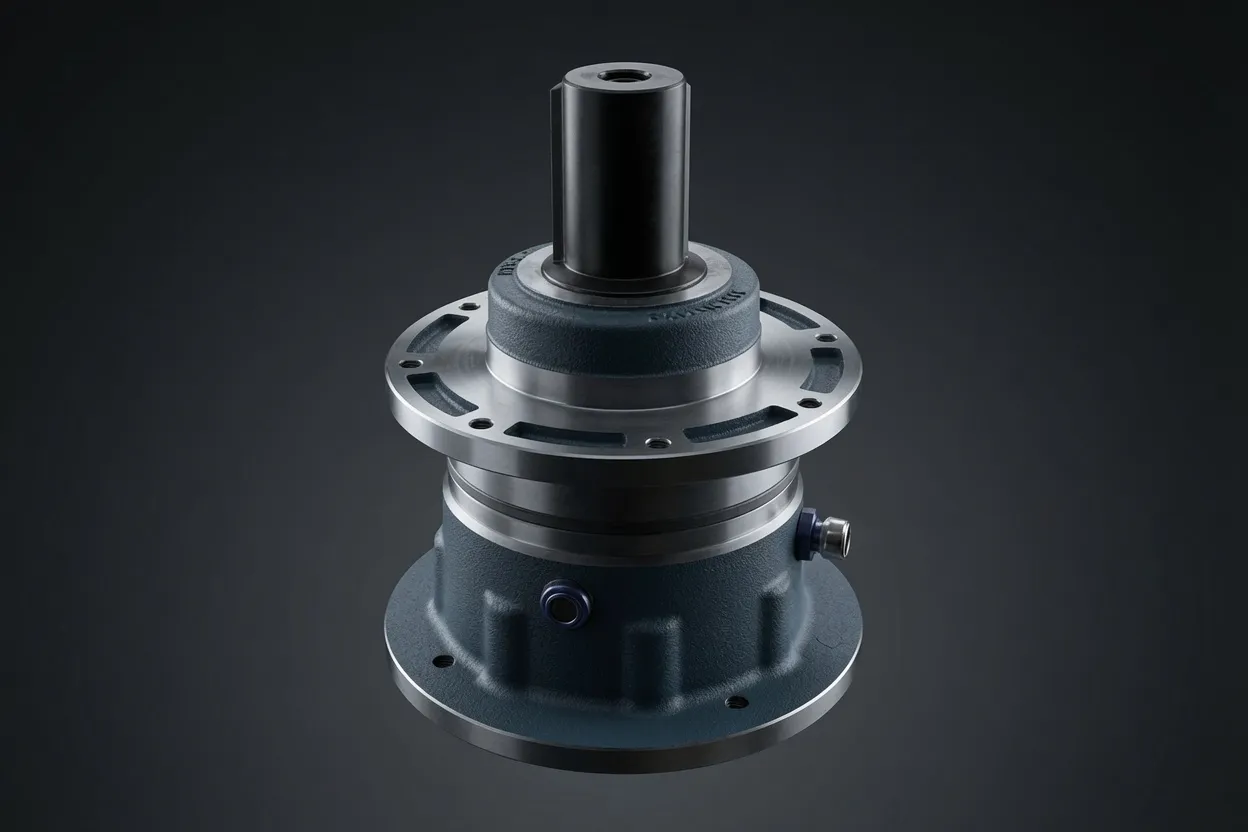
Gear and Bearing Design for Loader Hub Reductions
⚙️ Forged Alloy Steel Gears
Sun, planet, and ring gears are forged from 20CrMnTi or equivalent alloy, case-carburized to 58–62 HRC surface with a 35–40 HRC core. The forging process aligns the grain flow with the tooth geometry, improving fatigue strength by 15–20% compared to gears machined from bar stock. This matters when shock loads routinely exceed the steady-state design torque.
Tapered Roller Bearings
Planet bearings and output hub bearings use tapered rollers that handle the combined radial and thrust loads from gear meshing, vehicle weight, and cornering forces. Bearing internal clearance is set during assembly to account for thermal expansion during operation — too tight causes overheating, too loose causes gear mesh misalignment and noise.
️ Floating Face Seals
Dual metal rings with lapped sealing faces rotate against each other, maintained in contact by elastomeric O-rings. This metal-to-metal seal design is far more resistant to abrasive particle damage than rubber lip seals, and it functions in both directions (retaining oil and excluding contaminants) without a fixed seal lip that could wear through.
Hardened Ring Gear Bore
The ring gear’s internal bore, where planet gears mesh, is ground and honed after heat treatment to maintain profile accuracy under the distortion that case carburizing induces. Ring gear roundness within 30 μm ensures even load distribution across all planet gears, preventing the overloading of individual planets that leads to premature fatigue failure.
Assembly and Quality Verification
Gear Set Matching
Assemble planet gears as a matched set, selected for minimal tooth-thickness variation. Matching within ±10 μm ensures equal load sharing among planets — critical for maximizing the gear set’s fatigue life. Mark matched sets with a common identification number for service traceability.
Bearing Preload Setting
Set output bearing preload by measuring rolling torque as shims are adjusted. Target a rolling torque that provides zero axial play while maintaining temperatures below 90 °C during a 30-minute run-in test at rated load. Record the shim stack thickness for each unit in the build record.
Seal Installation
Install floating face seals using the manufacturer’s specialized tooling to ensure the seal rings are concentric and the O-rings are properly seated. Improper seal installation is the leading cause of premature contamination-related hub failures in the field — invest in proper tooling and technician training.
Break-In and Leak Test
Run each assembled hub at 50% load for one hour, monitoring oil temperature and checking for leaks at all seal locations. This break-in seats the bearings and seals while identifying infant-mortality defects before the unit reaches the customer’s machine.
Field Maintenance for Hub Planetary Reductions
Wheel loader hub reductions follow a straightforward maintenance regime: oil level check every 250 hours, oil change every 2,000 hours (or sooner if contamination is detected), and seal inspection at every tire change. Magnetic drain plugs capture ferrous wear particles — inspect the plug at each oil change and log the amount of debris collected. A sudden increase in metallic particle volume indicates accelerated internal wear that warrants further investigation, such as an oil sample for laboratory analysis or a visual inspection through the hub’s inspection port.
During tire replacement — which occurs every 3,000 to 5,000 hours on production loaders — technicians have direct access to the hub assembly. Take advantage of this access window to inspect the floating seals, measure axial play at the hub bearing, and verify that the hub retaining hardware is properly torqued. These opportunistic inspections catch developing issues at a point when the hub is already disassembled, avoiding the need for a separate dedicated teardown and reducing overall maintenance cost per operating hour.
Why Choose Ever-Power for Loader Hub Planetary Gearboxes
OEM-Compatible Hub Assemblies
Our wheel loader hub reductions are dimensionally compatible with popular loader models from Caterpillar, Komatsu, Volvo, SDLG, XCMG, and LiuGong. Drop-in fitment eliminates the need for adapter modifications during installation.
Shock-Load Tested
Every hub gearbox model is validated through dynamic shock testing at 300% of rated torque for 10,000 cycles — simulating the pile-penetration impacts that loaders experience daily. Only designs that pass this test without measurable damage enter production.
️
Complete Rebuild Kits
For customers who rebuild hubs in-house, we supply complete kits including gears, bearings, seals, shims, and fasteners — everything needed for a full hub overhaul in a single box with detailed assembly instructions.
Dealer and Fleet Support
Equipment dealers and mining fleet operators receive volume pricing, scheduled delivery programs, and dedicated technical support for hub specification and troubleshooting. Contact [email protected] to establish a supply agreement.
Frequently Asked Questions
Keep Your Loader Fleet Moving
Share your loader model and fleet size — we will deliver a hub reduction supply proposal with volume pricing and scheduled delivery.