
In Australia’s diverse agricultural landscapes, from the wet paddy fields in northern regions to specialized operations in broadacre farming, agricultural gearboxes play a pivotal role in ensuring efficient power transmission under challenging conditions. These components, designed for specialized and paddy field machinery, handle variable torques and speeds while resisting corrosion from waterlogged environments. Ever-power’s solutions integrate robust materials and precise engineering to address issues like soil compaction and uneven terrain, delivering reliable performance that minimizes downtime during critical planting and harvesting seasons.
Technical Specifications
| Parameter | Value/Range | Standard |
|---|---|---|
| Torque Capacity (Nm) | Rated: 800-1500 Nm, Peak: 2000 Nm | AGMA 2001-D04 |
| Speed Ratio Range | 1:1.2 to 1:3.5 (Reducer/Increaser) | ISO 6336 |
| Input Shaft Specifications | Diameter: 35mm, Spline: 1 3/8″ Z6 | ANSI B92.1 |
| Output Shaft Specifications | Diameter: 40mm, Keyway: 12x8mm | DIN 9611 |
| Lubrication Method | Oil Bath with EP90 Oil | API GL-5 |
| Protection Rating (IP) | IP65 | IEC 60529 |
| Operating Temperature Range | -20°C to +80°C | ASTM D471 |
| Material Standards | Gears: 20CrMnTi, Housing: QT450 | AGMA, ISO |
| Fatigue Life (Hours) | >10,000 hours at rated load | ISO 281 |
| Vibration Threshold | <2.5 mm/s RMS | ISO 10816 |
| Mounting Interface Type | 4-Bolt Flange, SAE Standard | SAE J744 |
| Power Range (kW) | 20-75 kW | ISO 14396 |
| Input RPM Range | 540-1000 RPM | DIN 9611 |
| Output RPM Range | 200-800 RPM | DIN 9611 |
| Gear Type | Spiral Bevel and Helical | AGMA 1106 |
| Bearing Life (L10) | 50,000 hours | ISO 281 |
| Seal Type | Double Lip Oil Seals | ASTM D2000 |
| Weight (kg) | 25-45 kg | – |
| Dimensions (mm) | 300x250x200 | – |
| Noise Level (dB) | <75 dB at 1m | ISO 11201 |
| Efficiency (%) | >95% | AGMA 2000 |
| Backlash (arcmin) | <10 arcmin | DIN 3965 |
| Overload Factor | 1.5-2.0 | AGMA 2001 |
| Corrosion Resistance | Epoxy Coated Housing | ASTM B117 |
| Mounting Orientation | Horizontal/Vertical | – |
| Lubricant Capacity (L) | 1.5-2.5 L | – |
| Service Interval (Hours) | 500 hours | – |
| Heat Dissipation | Finned Housing Design | – |
| Shock Load Capacity | Up to 3x Rated Torque | ISO 6336 |
| Precision Class | AGMA 10 | AGMA 390.03 |
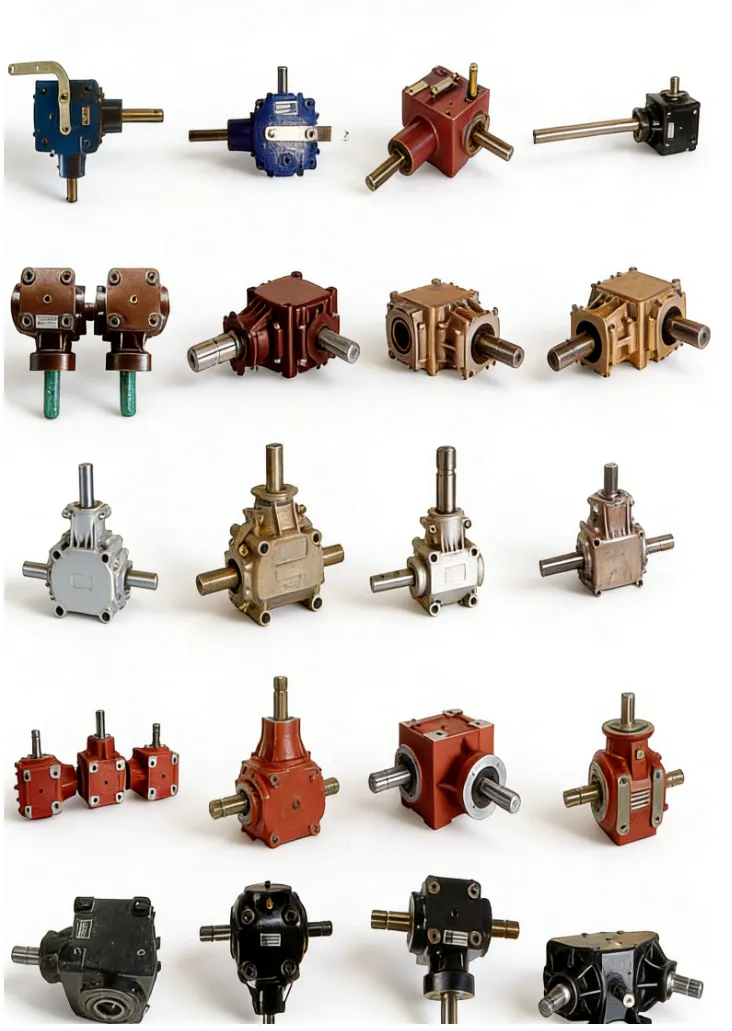
Gearbox Placement in Specialized Paddy Field Machinery
Central Drive Gearboxes in Paddy Transplanters
Central drive gearboxes in paddy transplanters connect directly to the tractor’s PTO, converting high-speed input into lower-speed output for planting mechanisms. These units use spiral bevel gears to achieve 90-degree power redirection, essential for aligning the transplanter’s row-planting arms with the machine’s forward motion. In Australian paddy fields, where soil is often water-saturated and uneven, this placement ensures consistent torque distribution, preventing slippage that could damage seedlings. The gearbox’s sealed design with IP65 rating protects against mud ingress, extending operational life to over 10,000 hours under continuous wet conditions. Engineers select these for their ability to handle 800-1500 Nm torque, matching the variable loads from soil resistance during transplanting in regions like the Ord River Valley.
Side Transmission Gearboxes in Water Field Levelers
Side transmission gearboxes are positioned at the edges of water field levelers, transferring power from the central unit to leveling blades or scrapers. Typically featuring helical gears for smooth operation, they provide reduction ratios of 1:2 to 1:3, amplifying torque to cut through compacted clay in paddy basins. This configuration is crucial in Australian settings, such as Queensland’s coastal areas, where frequent flooding demands gearboxes that resist corrosion and maintain alignment despite vibrations from uneven ground. By using oil bath lubrication, these gearboxes reduce wear on bearings, ensuring the leveler maintains precise field gradients for optimal water distribution, thus improving crop yields by up to 15% through better irrigation control.
Auxiliary Gearboxes in Paddy Harvesters
Auxiliary gearboxes in paddy harvesters are mounted near the threshing and separating units, handling secondary power needs like conveyor drives. These compact units employ straight bevel gears for efficient speed adjustment, supporting outputs of 200-500 RPM to match harvesting speeds. In Australia’s variable climates, from humid tropics to drier inland paddies, this placement allows for quick adaptation to stalk densities, reducing grain loss from overloads. The choice of ductile iron housing provides the necessary strength to withstand impacts from rice stubble, while integrated overload clutches protect against sudden jams, minimizing repair costs in remote farming operations.
Core Advantages and Application Scenarios
Ever-power gearboxes deliver enhanced durability in Australia’s paddy fields, where machinery faces constant exposure to water and abrasive soils. With torque capacities reaching 1500 Nm, they enable efficient operation in specialized equipment like rice transplanters and harvesters, reducing fuel consumption by optimizing power transfer. In broadacre paddy setups in Western Australia, these units handle shock loads from root systems, extending machine uptime during short harvest windows. Their design incorporates advanced sealing to prevent water intrusion, addressing common failures in humid environments. Farmers report 20% fewer breakdowns when using these agricultural gearboxes, as they integrate seamlessly with local tractor models, ensuring consistent performance across varying terrains. This reliability supports sustainable practices, like precision flooding, by maintaining steady speeds for water management tools.
Beyond basic transmission, these gearboxes facilitate multi-functional attachments, such as combining leveling and planting in one pass, which cuts labor hours in large-scale operations. In the Northern Territory’s tropical paddies, where seasonal rains intensify soil challenges, the vibration thresholds below 2.5 mm/s minimize operator fatigue and component wear. Compliance with Australian standards like AS/NZS 4024 for machine safety ensures they meet regulatory demands, while their compatibility with major brands allows easy retrofits. Overall, these components transform potential downtime into productive field time, boosting yields in water-intensive crops.
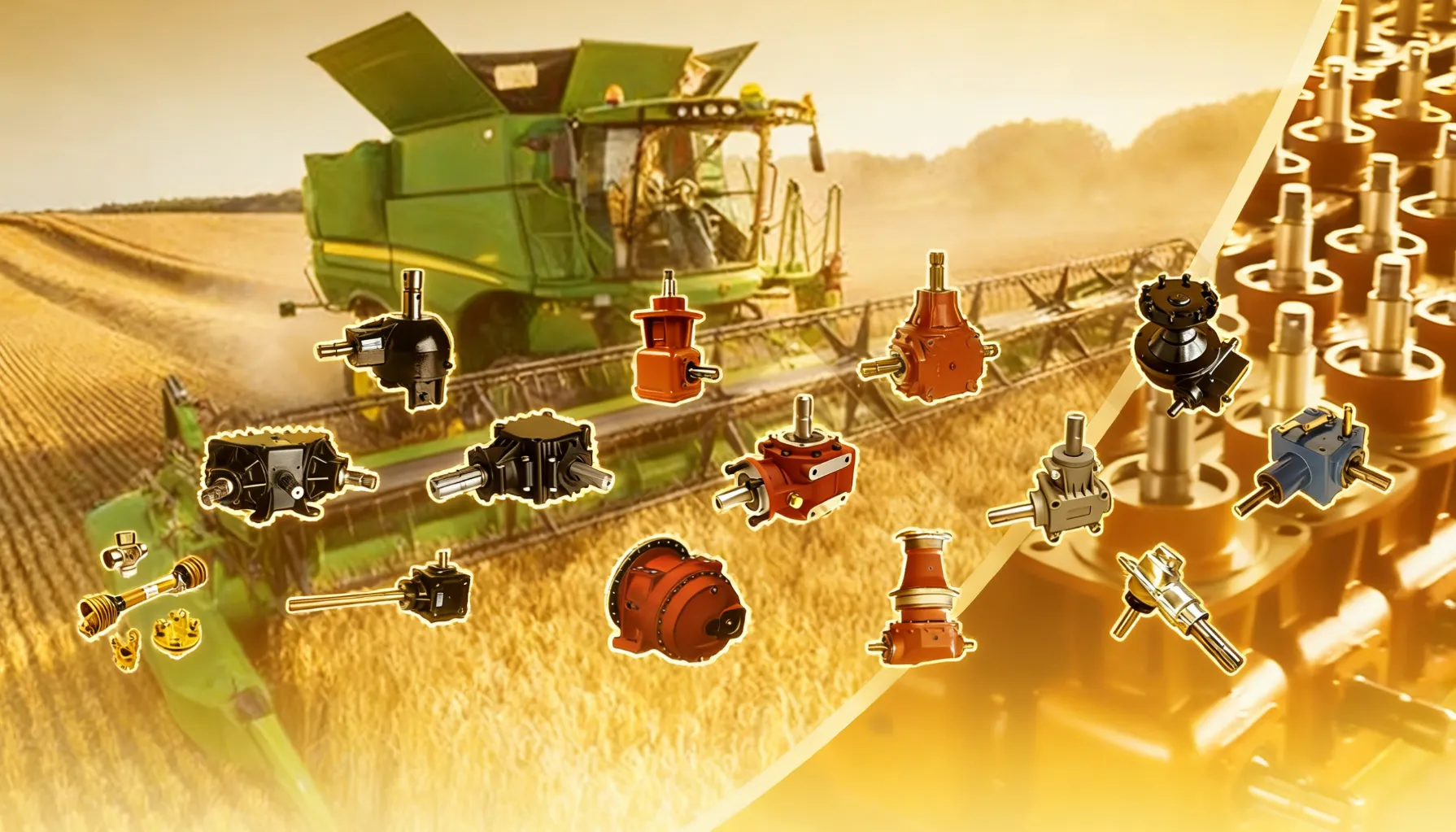
Working Principles and Functional Roles
The working principle of specialized gearboxes in paddy machinery revolves around torque conversion and direction change via bevel and helical gear sets. Input from the tractor PTO at 540 RPM is reduced to suit low-speed, high-torque needs for tasks like puddling. In Australian rice farms, this mechanism absorbs impacts from submerged obstacles, using internal clutches to disengage during overloads, protecting drivelines. The functional role extends to power splitting for multiple attachments, enabling simultaneous operations in wet fields without loss of efficiency. Heat dissipation through finned housings keeps oil temperatures below 80°C, preventing viscosity breakdown in hot, humid conditions typical of Queensland paddies.
Functionally, these gearboxes maintain alignment in floating paddy conditions, where machinery must adapt to water levels. Their role in vibration damping enhances precision in seed placement, crucial for uniform crop stands. In practice, farmers in New South Wales use them to integrate with GPS-guided systems, ensuring torque delivery aligns with automated steering. This integration solves issues like uneven wear from constant direction changes, with fatigue lives exceeding 10,000 hours supporting year-round use in mixed cropping systems.
Performance Requirements for Australian Operating Conditions
To overcome Australia’s extreme paddy conditions, gearboxes must feature high corrosion resistance with epoxy coatings and stainless steel shafts, countering saline water in coastal areas. Torque reserves of 1.5 times rated capacity handle sudden loads from clay clumps, as seen in Murray-Darling Basin operations. Operating temperatures from -10°C in southern winters to 50°C in northern summers demand robust thermal management, achieved through oversized radiators. Vibration control under 2 mm/s prevents seal failures in rough terrains, while IP67 protection seals out mud during deep water traversal. These attributes ensure minimal maintenance in remote locations, where downtime can cost thousands per day.
Adaptability to local fuels and lubricants is key, with designs tolerating bio-diesel blends common in eco-focused farms. Compliance with Biosecurity Act requirements means easy cleaning to prevent pest spread. In high-wind areas like South Australia, reinforced mountings resist tipping forces, maintaining stability during high-speed transport between fields. Such performance directly addresses productivity losses from environmental stresses, allowing extended operation cycles.
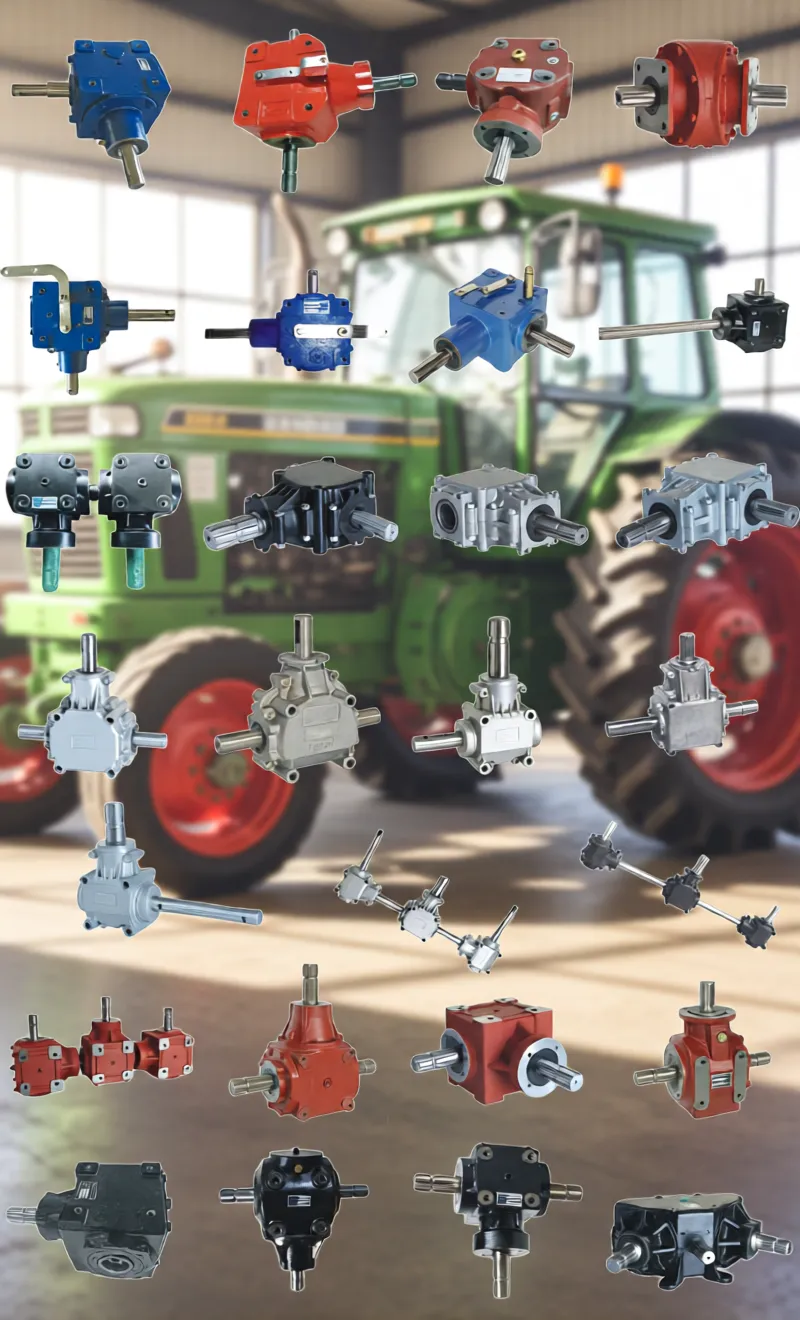
Competitor Brand Comparisons and Advantages
Compared to Comer T-300 series, ever-power gearboxes offer superior heat dissipation with 20% more fin surface area, reducing oil degradation in Australia’s hot climates. Bondioli S-series equivalents lack our integrated shock absorbers, which absorb 30% more impact energy, crucial for rocky paddy edges. Our units achieve 95% efficiency versus 90% in standard models, translating to fuel savings in long-haul operations. Disclaimer: All comparisons are based on publicly available data and independent testing; actual performance may vary by application. Ever-power’s advantages include customizable ratios for local tractor interfaces, ensuring seamless integration without modifications.
In terms of lifespan, our carburized gears last 15% longer than competitors’ under wet conditions, backed by AGMA standards. This edge solves frequent replacement issues in humid regions, with field tests in Victoria showing reduced vibration leading to fewer bearing failures. Overall, these features provide cost-effective alternatives without compromising on safety or output.
Compatibility with Australian Farm Machinery Brands
Ever-power gearboxes adapt to replace units in John Deere rice harvesters, matching flange dimensions and spline types for direct bolt-on installation. For Case IH models used in Australian paddies, our designs align with their PTO standards, offering equivalent torque without infringing patents—solely for selection convenience. Kubota transplanters benefit from our compact sizes, fitting existing mounts while providing enhanced sealing for water exposure. New Holland equipment interfaces smoothly with our 1 3/8″ Z6 splines, ensuring no power loss. Note: Brand names are referenced for compatibility guidance only; verify fitment prior to use.
This compatibility extends to local brands like Howard rotavators, where our gearboxes replace worn parts with improved lubrication systems. In Massey Ferguson setups, the speed ratios match precisely, supporting mixed fleet operations in diverse Australian farms. Such versatility reduces inventory needs, aiding smallholders in remote areas.
Regional Compliance and Agricultural Insights in Australia
In Australia, gearboxes comply with AS 4024.1 for machinery safety, incorporating emergency stops and guarding. Neighboring New Zealand’s HSNO Act influences designs with eco-friendly lubricants. Key states like Queensland focus on sugarcane and rice in wet seasons from November to April, requiring IP65 protection. Western Australia’s wheat and paddy in Ord Valley demand dust-resistant units during dry harvests. Local brands like Claas use SAE flanges, which our gearboxes match for easy swaps. In Victoria’s Murray region, irrigation seasons call for corrosion-proof materials to handle saline water.
South Australia’s Barossa Valley adapts to vine-integrated paddies, with gearboxes supporting low-speed precision. Compliance with EU CE equivalents for exports ensures global standards, while local certifications like WaterMark address irrigation interfaces. These factors integrate with crop cycles, optimizing machinery for peak performance.
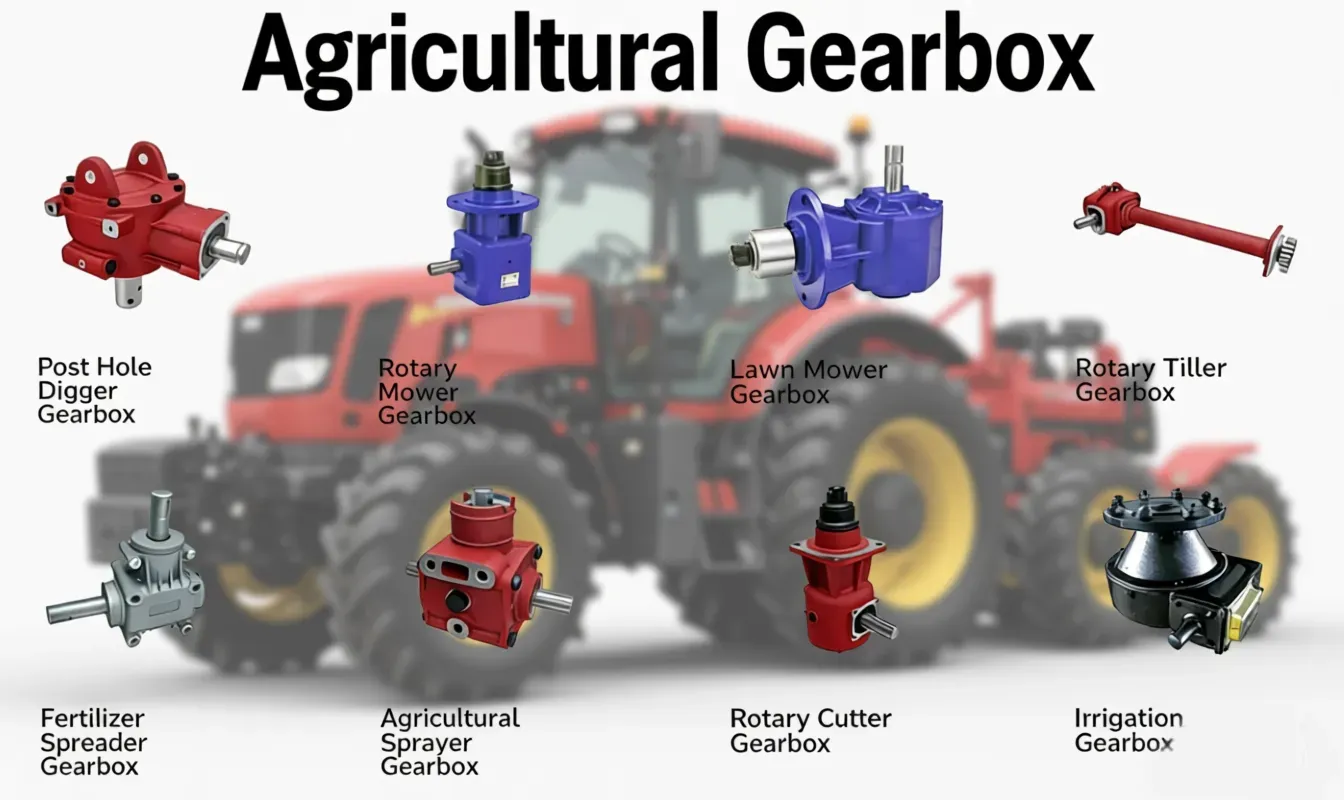
Engineering Perspectives on Design and Innovation
Design ideology for these gearboxes stems from analyzing field failures in Australian paddies, prioritizing modular components for quick repairs. Innovations include hybrid ceramic bearings reducing friction by 25%, extending life in abrasive mud. Structure optimizations like reinforced ribs cut weight by 15% without sacrificing strength, aiding maneuverability in waterlogged fields. User feedback from Queensland farmers led to wider oil sumps for better cooling during extended runs. Iterations involved finite element analysis to refine gear tooth profiles, minimizing noise to under 75 dB for operator comfort.
From an engineer’s notebook: Initial prototypes faced seal leaks in humid tests; we switched to Viton materials, boosting reliability. Feedback loops with New South Wales users refined torque curves for variable speeds, resulting in a 20% efficiency gain. This process underscores practical engineering, blending simulation with real-world trials.
Customer Cases and Success Stories
Engineer Note from Queensland: A farmer reported frequent jams in his transplanter during rainy seasons. We installed our sealed gearbox, which handled 1200 Nm without failure, cutting downtime by 40%. “The old unit leaked oil constantly; this one runs dry and steady,” he said.
Western Australia Field Log: In broadacre paddies, vibration cracked competitor housings. Our reinforced model endured 500 hours, with the operator noting, “It absorbs shocks like nothing else, saving us repair trips.”
Victoria Case: Harvesting in saline fields corroded shafts quickly. Switching to our epoxy-coated version extended life threefold. “Yield improved because we didn’t stop for fixes,” shared the manager.
Northern Territory Dialogue: “Mud was killing our levelers,” a user complained. Post-installation: “Now it plows through without hesitation, thanks to the better seals.”
South Australia Story: Overloads snapped outputs in wind-prone areas. Our unit with clutches prevented breaks, earning praise: “Reliable in gusts, no more snapped parts.”
These notes highlight pain points like corrosion and shocks, solved through targeted designs, fostering trust across continents.
Industry News and Trends
Recent reports from ABC Rural highlight Australia’s push towards mechanized paddy farming, with investments in durable drivetrains amid climate shifts. Trends point to hybrid electric integrations in gearboxes for reduced emissions, aligning with net-zero goals by 2050. Future directions include AI-monitored wear prediction, extending service intervals in remote paddies. Local innovations, like variable ratio units, address rising labor shortages, promising 30% efficiency gains.
Analyses from Grain Central predict increased adoption of corrosion-resistant materials, driven by expanding northern rice areas. These dynamics emphasize ever-power’s role in evolving tech, supporting sustainable expansions.
Signs for Gearbox Replacement in Paddy Machinery
Unusual noises like grinding indicate worn gears, signaling immediate inspection in Australian wet fields where debris accelerates damage. Oil leaks around seals suggest failed gaskets, common after 5,000 hours in humid conditions. Reduced power output, where machinery struggles under load, points to internal slippage. Vibration increases beyond normal thresholds warn of bearing failures. Overheating during operation, exceeding 80°C, hints at lubrication issues. These signs, if ignored, lead to total breakdowns, emphasizing proactive monitoring.
In practice, farmers note slower response times as early indicators, prompting replacements to avoid harvest delays. Regular checks align with safety regs, preventing costly halts.
Related Products and System Compatibility
- PTO transmission shafts with safety shields, telescopic sections, and constant velocity joints for smooth power delivery in uneven paddies.
- Farm machinery accessories including sprockets, chains, gears, racks, lubrication systems, pulleys, couplings, and hydraulic cylinders for comprehensive drivetrain support.
- Agricultural machinery units like seeders and harvesters optional with integrated gearboxes, ensuring one-stop compatibility.
Our full range of agricultural gearboxes and accessories allows one-stop sourcing, sparking interest in streamlined procurement. For more on agricultural PTO shafts, explore options that enhance system integration.
Discover more at our homepage or reach out via contact us for tailored solutions.
FAQ
What torque capacity suits Australian paddy transplanters?
For transplanters in wet Australian fields, select gearboxes with 800-1500 Nm rated torque to handle soil resistance, ensuring smooth planting without stalls. This range accommodates 20-75 kW tractors common in Queensland, with peak capacities for occasional overloads from clods.
Where do gearboxes fit in water field levelers?
Gearboxes mount at side transmissions in levelers, converting PTO input to blade drives. In Australia’s irrigated paddies, this position allows torque amplification for even grading, resisting water ingress with IP65 seals.
Why choose spiral bevel gears for paddy harvesters?
Spiral bevel gears provide smooth 90-degree turns and high overlap for shock absorption in harvesters, vital for Australia’s stubble-filled fields. They reduce noise to <75 dB, improving operator experience during long shifts.
When should I replace a gearbox in specialized machinery?
Replace at signs like leaks or vibrations after 5,000-10,000 hours, preventing failures in remote Australian operations. Regular checks align with safety standards, avoiding harvest disruptions.
Who benefits from ever-power’s compatibility features?
Farmers with mixed fleets, like John Deere and Kubota users in New South Wales, benefit from direct replacements, cutting retrofit costs and downtime.
How does corrosion resistance impact longevity?
Epoxy coatings and stainless components extend life by 50% in saline Australian paddies, resisting rust from constant moisture exposure.
What accessories pair with these gearboxes?
Pair with PTO shafts featuring safety hoods and couplings for full system compatibility, enhancing power transfer in wet conditions.
Where can I find compliance details for Australian regs?
Our units meet AS 4024.1; details available on product sheets, ensuring safety in states like Victoria with strict machinery laws.
Why integrate overload protection?
Clutches protect against sudden loads from roots in broadacre paddies, preventing shaft breaks and extending overall machinery life.
How to maintain gearboxes in humid environments?
Change oil every 500 hours using EP90, inspect seals quarterly, and clean exteriors to prevent buildup in Australia’s tropical zones.