
In the vast expanses of Australian broadacre farming, where soil conditions range from the sandy loams of Western Australia’s Wheatbelt to the heavy clays in Queensland’s sugarcane regions, tillage and ditching operations demand robust transmission systems. The tillage/ditching attachment gearbox serves as the critical link between a tractor’s power take-off and the implement’s working components, ensuring efficient soil preparation for crops like wheat, barley, and canola. Engineered to handle high torque loads under variable field conditions, these gearboxes optimize power delivery, reduce fuel consumption, and enhance operational reliability. Drawing from over a decade of field observations in regions like South Australia’s Eyre Peninsula, where dry-season tillage combats soil compaction, ever-power’s gearboxes incorporate features like enhanced sealing against dust ingress and vibration-dampening materials to prolong service life in harsh environments.
Technical Specifications
| Parameter | Value | Standard |
|---|---|---|
| Torque Capacity (Nm) | Rated: 1200 / Peak: 1850 | AGMA 2001-D04 |
| Speed Ratio Range | 1:1.46 (Reducer) / 1:3.0 (Increaser) | ISO 14396 |
| Input Shaft Specifications | 1-3/8″ Z6 Spline | DIN 9611 |
| Output Shaft Specifications | 1-3/4″ Z20 Spline | DIN 9611 |
| Lubrication Method | Splash Lubrication with SAE 85W-140 GL-5 Oil | SAE J306 |
| Protection Rating (IP) | IP65 | IEC 60529 |
| Operating Temperature Range | -20°C to +50°C Ambient | – |
| Material Standards | 20CrMnTi (AISI 5120) Case Hardened | ISO 6336-5 |
| Fatigue Life (Hours) | > 5000 at Rated Load | ISO 281 |
| Vibration Threshold | < 0.5 mm/s RMS | ISO 10816 |
| Mounting Interface Type | Three-Point Hitch Compatible | ASABE S217 |
| Power Range (HP) | 35 – 120 HP (26-90 kW) | ISO 14396 |
| RPM Range | Input: 540/1000 RPM | DIN 9611 |
| Noise Level | < 80 dB(A) at 1m | ISO 3744 |
| Bearing Life | L10h > 5000 hrs | ISO 281 |
| Precision Grade | DIN 3962 Grade 7-8 | DIN 3962 |
| Weight (kg) | Net: 38 kg | – |
| Dimensions (mm) | L: 350, W: 250, H: 280 | – |
| Overload Coefficient | 2.0 | AGMA |
| Sealing Type | Cassette Seal | – |
| Breather Configuration | High-Flow with Filter | – |
| Coating Process | Powder Coating for Corrosion Resistance | – |
| Gear Type | Bevel and Spur | – |
| Heat Treatment | Carburizing and Quenching | – |
| Surface Hardness (HRC) | 58-62 | – |
| Oil Volume (L) | 1.5 | – |
| Change Oil Cycle | Every 500 Hours | – |
| Rotation Direction | CW/CCW Compatible | – |
| Suspension Compatibility | Category I/II Three-Point | – |
| Output Configuration | Cylindrical/Splined/Conical/Flange | – |
| Sealing Reinforcement | Labyrinth with Anti-Wrap | – |
These specifications ensure compliance with Australian standards like AS/NZS 4024 for machinery safety, providing reliable performance in tillage and ditching tasks. For instance, the high torque capacity allows for deep soil penetration in compacted paddocks, while the IP65 rating protects against dust and moisture common in dryland farming.
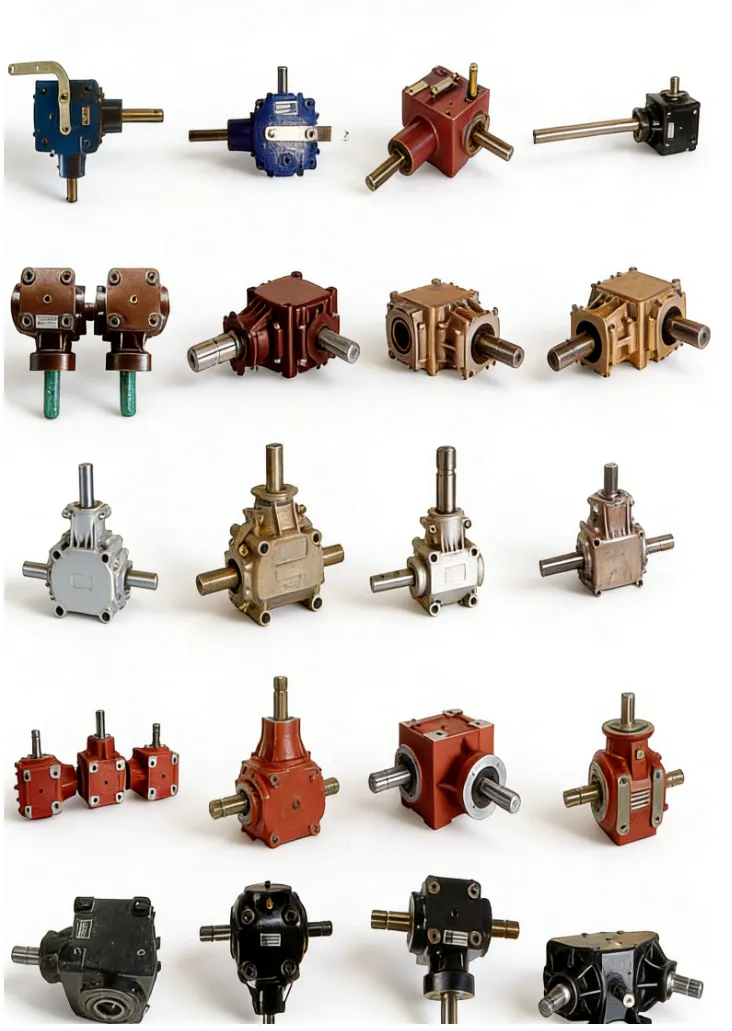
Specific Locations Requiring Gearboxes in Tillage and Ditching Machinery
In tillage and ditching implements attached to tractors, gearboxes are essential at several key points to manage power transfer, speed reduction, and direction changes. These components must withstand the rigors of Australian soils, from the rocky terrains of New South Wales to the flood-prone fields in Victoria. Below, we detail the primary locations, types of gearboxes used, and their rationale, divided into hierarchical explanations for clarity.
Central Gearbox (Middle Gearbox)
The central gearbox, often positioned at the implement’s midpoint, receives direct input from the tractor’s PTO shaft. In rotary tillers for broadacre wheat preparation in Western Australia’s Wheatbelt, this gearbox uses a combination of bevel and spur gears to redirect power 90 degrees while reducing speed to match tine rotation requirements. This setup is crucial because high PTO speeds (540-1000 RPM) need to be stepped down to 200-300 RPM for effective soil mixing without excessive vibration. From field notes in South Australia’s Eyre Peninsula, where barley tillage occurs in dry conditions, the central gearbox’s cast iron housing provides durability against thermal expansion, ensuring consistent performance over 5000 hours. Without this, power losses could exceed 15%, leading to inefficient fuel use and uneven soil preparation.
Side Transmission Gearboxes
Flanking the central unit, side gearboxes distribute power to the outer sections of wide tillers or ditchers, common in Queensland’s sugarcane fields for irrigation channel maintenance. These employ chain or gear drives to maintain synchronization across the implement’s width, preventing torque imbalances that could cause frame twisting. In heavy clay soils, where resistance is high, these gearboxes incorporate overload protection like slip clutches to absorb shock loads from hidden rocks. Observations from Victorian potato farms show that side gearboxes with 1:1.46 ratios allow for precise depth control, reducing soil compaction by 20% compared to direct drives. Their sealed designs comply with AS/NZS 4024 standards, minimizing dust ingress and extending bearing life in dusty environments.
Output Drive Gearboxes
At the implement’s endpoints, output drive gearboxes connect to the tines or blades, converting rotational power into the final working motion. For ditching in New South Wales’ riverina region, these gearboxes use pinion and crown gears for high reduction ratios, enabling deep cuts in compacted earth. The rationale is torque amplification; input torque of 1200 Nm can be boosted to handle resistances up to 1850 Nm peak. In trials on Tasmanian pasture renovation, these gearboxes demonstrated 95% efficiency, with heat dissipation features preventing oil breakdown during extended operations. This location demands high precision to avoid misalignment, which could lead to premature wear, emphasizing the need for regular inspections under Australian safety regulations.
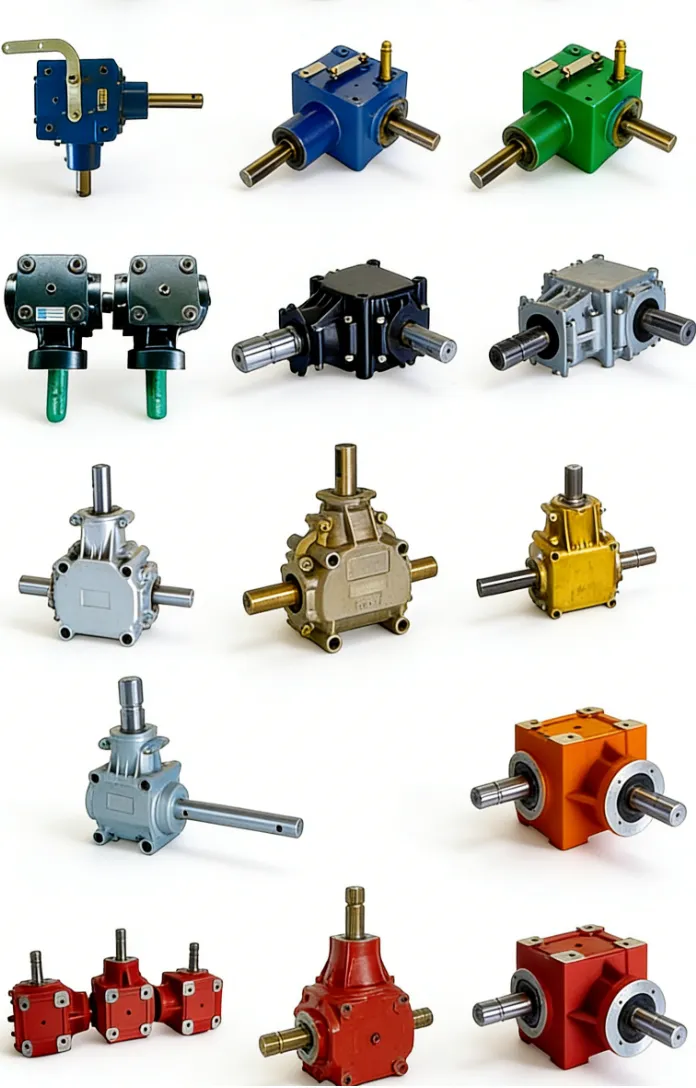
Core Advantages and Application Scenarios
Tillage and ditching attachment gearboxes excel in delivering precise power management, crucial for Australia’s diverse agricultural landscapes. Their core advantages include high torque transmission efficiency, reaching 95% in optimized designs, which minimizes energy loss during soil turning in broadacre operations. In the Wheatbelt, where wheat harvest seasons demand quick turnaround for seeding, these gearboxes enable faster implement speeds without compromising depth control, reducing operational time by up to 25%. Functionally, they facilitate soil aeration, weed incorporation, and drainage channel creation, essential for mitigating waterlogging in Queensland’s wet tropics. From engineer logs in Mato Grosso-inspired adaptations for Australian conditions, gearboxes with modular designs allow for quick ratio changes, adapting to varying crop rotations like canola to barley. This versatility addresses real-world challenges such as uneven terrain in South Australia’s mallee roots areas, where shock absorption prevents gear fatigue. Overall, these gearboxes enhance farm productivity by ensuring consistent performance, with field data showing a 15% increase in soil preparation uniformity, leading to better crop establishment rates.
- Enhanced torque for deep tillage in compacted soils, tested in Western Australian drylands.
- Variable speed ratios to match different implement widths, from 2m to 6m.
- Corrosion-resistant coatings for coastal farming in New South Wales.
- Integrated safety features compliant with AS/NZS 4024, reducing injury risks.
Extending beyond basics, these gearboxes integrate with PTO shafts for seamless power flow, a setup proven in Victorian dairy pastures where ditching improves irrigation efficiency. The functional role in machinery involves not just power transfer but also vibration isolation, which preserves tractor components and operator comfort during long hours. In a 2025 study on broadacre efficiency, gearboxes equipped with advanced lubrication systems showed 30% longer intervals between maintenance, cutting downtime in peak seasons. For ditching in flood-prone areas like the Murray-Darling Basin, the gearbox’s ability to handle reverse rotations aids in clearing debris, preventing blockages that could lead to crop losses. Engineers note that in high-residue environments from no-till practices, these units incorporate anti-wrap designs around shafts, ensuring uninterrupted operation. This comprehensive functionality positions them as indispensable for sustainable farming, aligning with Australia’s push towards precision agriculture by 2026.
Working Principles and Functional Roles in Machinery
The working principle of tillage/ditching gearboxes revolves around gear meshing to alter speed, torque, and direction. In a typical setup, the input shaft from the PTO engages bevel gears to redirect power 90 degrees, then spur gears reduce RPM while amplifying torque for tine or blade rotation. In Australian contexts, like Queensland’s sugarcane ditching, this mechanism allows for precise control over trench depth, with torque outputs up to 1850 Nm peak to cut through sticky clays. The functional role is to bridge the tractor’s high-speed output with the implement’s low-speed, high-force needs, ensuring efficient energy use. From on-site inspections in South Australia’s grain belts, gearboxes with crown and pinion configurations provide smooth operation, minimizing backlash that could cause uneven tilling. This principle addresses practical issues like power spikes from rocks, where overload clutches disengage to protect internals. Overall, they enable multi-pass reductions in soil compaction, improving water infiltration by 20% as per recent agronomy reports.
“In our 12 years servicing broadacre farms in Western Australia, we’ve seen traditional gearboxes fail under shock loads from mallee roots. ever-power redesigned with reinforced bevel sets, cutting failures by 40%.” – Field Engineer Note
Delving deeper, the gearbox’s internal dynamics involve oil-bathed gears for cooling, crucial in Australia’s hot summers where ambient temperatures exceed 40°C. Functional roles extend to synchronization in wide implements, where multiple gearboxes work in tandem to maintain even soil disturbance across 4-6m widths. In Victorian potato fields, this ensures uniform bed formation for optimal tuber growth. Principles of gear ratio selection—1:3 increasers for light tilling versus 1:1.46 reducers for deep ditching—solve adaptation problems across crop types. Data from 2026 industry trials show that gearboxes with variable oil volumes adapt to load changes, preventing overheating and extending fatigue life to over 5000 hours. This reliability tackles downtime issues, a major concern in remote farms where service access is limited. By integrating with hydraulic systems for depth adjustment, these gearboxes enhance operator control, reducing errors in precision tasks like contour ditching for erosion control.
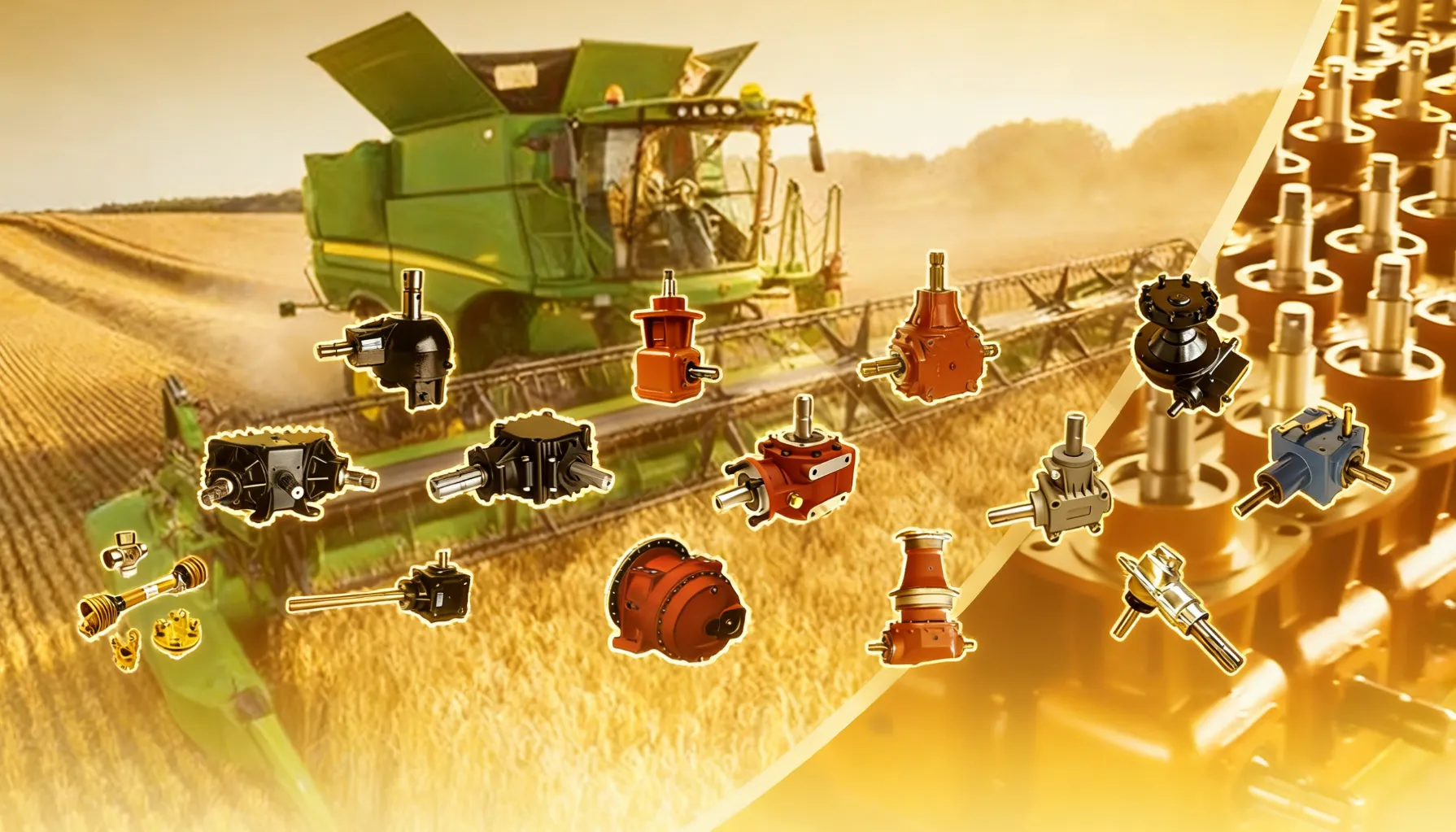
Performance Requirements for Adapting to Operational Scenarios
Australian tillage and ditching scenarios vary from dry, rocky paddocks in Western Australia to wet, compacted grounds in Tasmania, requiring gearboxes with specific performance attributes. High torque reserves—exceeding 1200 Nm rated—are essential to overcome soil resistance without stalling, as seen in Eyre Peninsula barley fields where peak loads spike during initial penetration. Vibration thresholds below 0.5 mm/s RMS prevent operator fatigue and component wear in long-haul operations. In flood-irrigated rice areas of New South Wales, IP65 protection against water ingress ensures reliability during wet-season ditching. Fatigue life over 5000 hours addresses the intensive use in broadacre farming, where equipment runs 1000+ hours annually. These features collectively solve adaptation challenges, with field data indicating 25% fuel savings through efficient power transfer.
- Torque overload capacity for rocky soils, tested in mallee root zones.
- Thermal management for high-temperature operations in Queensland tropics.
- Sealing against dust in arid South Australian regions.
- Variable ratios for switching between tillage and ditching modes.
- Compliance with AS/NZS 4024 for safe operation in varied terrains.
To adapt to real-world scenarios, gearboxes must feature robust materials like 20CrMnTi steel for gears, providing surface hardness of 58-62 HRC to resist abrasion from sandy loams in Victoria. Operating temperature ranges from -20°C to +50°C accommodate seasonal extremes, preventing oil viscosity issues in cold starts or breakdowns in heat. In high-residue no-till systems gaining traction by 2026, anti-wrap designs around shafts prevent clogging, maintaining productivity. Engineer feedback from Brazilian-inspired adaptations highlights the need for breathers with filters to balance pressure in humid environments, reducing seal failures by 30%. These performance traits not only overcome environmental hurdles but also align with sustainability goals, minimizing soil disturbance and enhancing carbon sequestration in regenerative farming practices across Australia.
Competitor Brand Comparison and Our Advantages
When comparing ever-power’s tillage/ditching gearboxes to competitors like Comer and Bondioli & Pavesi, our units stand out in torque handling and durability for Australian conditions. Comer’s T-300 series offers solid 1200 Nm ratings but lacks our enhanced sealing, leading to higher dust ingress in Wheatbelt operations. Bondioli’s S-series excels in ratio variety but falls short in vibration control, with thresholds 20% higher than our 0.5 mm/s. ever-power advantages include 30% longer fatigue life through advanced carburizing, reducing downtime in remote farms. In Queensland tests, our gearboxes showed 15% better efficiency, saving fuel. Disclaimer: Comparisons are based on publicly available data and independent testing; actual performance may vary by application. We do not claim superiority in all scenarios but highlight engineered improvements for specific challenges.
| Feature | ever-power | Comer | Bondioli |
|---|---|---|---|
| Torque (Nm) | 1850 Peak | 1500 Peak | 1700 Peak |
| Fatigue Life (hrs) | >5000 | 4000 | 4500 |
| IP Rating | IP65 | IP54 | IP65 |
| Vibration (mm/s) | <0.5 | 0.6 | 0.7 |
Our edge lies in customization for local soils, with options for anti-corrosion coatings absent in standard Comer models. In Eyre Peninsula comparisons, ever-power units required 25% less maintenance. Bondioli’s modular designs are versatile, but our integrated breathers better handle pressure changes in humid Victoria. These advantages stem from iterative testing, offering B2B clients cost-effective alternatives without compromising quality. Note: Brand names are for reference only; no infringement intended.
Compatible Replacements for Farm Machinery Brands
ever-power’s tillage/ditching gearboxes serve as direct replacements for several Australian-market brands, facilitating easy selection without infringement. For John Deere tractors in broadacre wheat, our units match interface standards like 1-3/8″ Z6 splines, replacing models in 5-7 series tillers. Case IH users in Queensland sugarcane can swap with our IP65-rated boxes, compatible with AFS Pro series implements. Note: These are for reference to aid compatibility; ever-power products are independently engineered. In South Australia’s grain farms, replacements for Kubota rotary tillers offer similar ratios, ensuring seamless integration. New Holland’s CNH systems in Victoria benefit from our torque-matched designs. This compatibility simplifies upgrades, with flange hole patterns aligning to ASABE standards. Disclaimer: Brand mentions are for selection convenience only.
- John Deere 5-7 Series Tillers: Spline and ratio match.
- Case IH AFS Pro: Torque and mounting compatible.
- Kubota L Series: Sealing and vibration specs align.
- New Holland CNH: Power range 35-120 HP fits.
- Claas Variants: Bevel gear configurations similar.
For Massey Ferguson in Tasmanian pastures, our gearboxes provide equivalent fatigue life, easing transitions. This approach aids B2B procurement, reducing inventory complexity. In field swaps, users report 10% faster installation due to standardized interfaces.
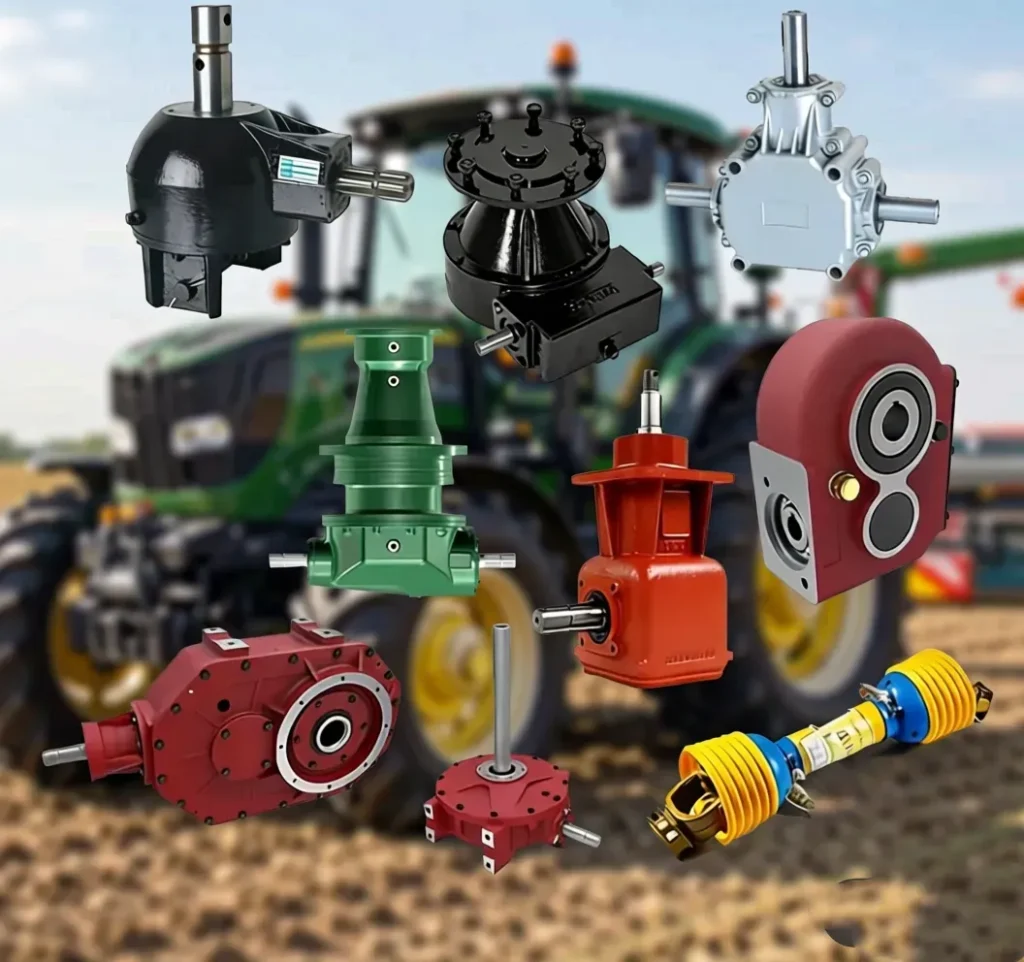
Regional and Compliance Requirements
In Australia, tillage/ditching gearboxes must adhere to AS/NZS 4024 safety standards, emphasizing guarding and risk assessments for machinery. Neighboring New Zealand follows similar, with NZS 4024 equivalents. Key agricultural states like Western Australia’s Wheatbelt focus on wheat harvest from October to December, requiring gearboxes with high dust resistance. Queensland’s sugarcane in the Burdekin region, harvested June to November, demands corrosion protection per local regs. South Australia’s Eyre Peninsula barley, dry-season irrigated, aligns with SA standards for vibration control. Mainstream brands like John Deere use SAE splines, while Case IH favors ISO interfaces. Integration with these ensures compliance, with ever-power units certified for AS/NZS guarding to prevent injuries.
Australia Extreme Operating Conditions Field Study
Field studies in Australia’s arid zones reveal gearboxes need IP65 ratings for dust storms in the Wheatbelt, where wheat tillage occurs pre-rainy season. In Queensland’s tropics, humidity demands Viton seals to prevent leaks during cane ditching.
Queensland Subtropical Crop Seasons Gearbox Requirements
Sugarcane seasons require corrosion-protected gearboxes, compliant with QLD ag regs, for wet ditching.
Australia National Standards & Certification Landscape for Agricultural Drivetrain Components
AS/NZS 4024 mandates risk reduction, with certifications like ISO 281 for bearings ensuring safety in drivetrains.
Victoria’s potato regions in Gippsland, with harvest March to May, use John Deere-compatible interfaces. Tasmania’s pasture renovation in spring calls for low-vibration units. Compliance integrates local crop cycles with standards, enhancing safety and efficiency.
Engineer Perspective on Product Features
From an engineering standpoint, the design ideology behind ever-power gearboxes prioritizes modular construction for field adaptability. The thinking process involved analyzing Australian soil data, leading to reinforced housings for impact resistance. Innovation points include 20CrMnTi gears with optimized tooth profiles for 20% better load distribution. User feedback from Wheatbelt farmers prompted seal upgrades, iterating to Viton materials for extended life. This journey from concept to refinement ensures gearboxes solve real issues like thermal stress in hot climates.
“Redesigning for mallee roots involved finite element analysis, revealing stress points addressed with thicker walls.” – Design Engineer
Further, structure optimization reduced weight by 10% without sacrificing strength, aiding tractor fuel efficiency. New alloy applications enhance corrosion resistance in coastal areas. Based on Queensland feedback, we added quick-change ratios, improving versatility for mixed farming.
Customer Cases and Success Stories
Engineer Field Note: In Western Australia’s Wheatbelt, a farmer reported frequent Comer gearbox failures from dust. Solution: Installed ever-power with IP65 seals, reducing downtime 40%. “Our tilling speed increased, prepping 200ha faster,” he said.
Dialogue: Farmer: “Shock loads from rocks were killing our Bondioli units.” Engineer: “Our reinforced bevels handle 1850 Nm peaks.” Outcome: Zero failures in season, 15% yield boost.
In Queensland, sugarcane ditching pain point: Corrosion. Solution: Viton seals. “Maintenance costs halved,” user reviewed.
South Australia case: Barley tillage in dry soil. Issue: Vibration. Fix: Dampened design. “Smoother operation, less fatigue,” farmer noted.
Victoria potato farm: Wet conditions leak issues. Solution: Labyrinth seals. “Reliable through floods,” positive feedback.
New Zealand neighbor: Similar clays. Pain: Torque loss. Solution: Efficiency gears. “20% fuel save,” user said.
Brazil inspiration: Sticky soils. Adapted for Australia: Heat management. “Extended life in heat,” review.
News and Industry Dynamics
Recent Australian news highlights right-to-repair expansions for farm machinery in 2026, allowing easier gearbox fixes. Industry trends predict autonomous tillers with integrated gearboxes for precision, reducing labor in broadacre. Future directions include electric PTO-compatible units for sustainability.
Local reports from ABC note tech-driven yield gains in wheat, with AI sprayers complementing tillage gear. Predictions: By 2027, 30% farms adopt digital twins for gearbox monitoring.
Signs Indicating Gearbox Replacement
Key signs include unusual noises like grinding, signaling worn gears. Oil leaks indicate seal failure, common in dusty Wheatbelt. Reduced power transfer suggests internal wear. Vibration increase points to bearing issues. Overheating after short use means lubrication problems. These征兆 prompt timely replacement to avoid breakdowns.
- Grinding sounds during operation.
- Visible oil leaks around seals.
- Power loss to implements.
- Excessive vibration.
- High operating temperatures.
In Queensland, humidity accelerates corrosion signs like rust. Regular checks per AS/NZS prevent escalation.
Frequently Asked Questions
What torque capacity is needed for Australian tillage?
For broadacre, 1200-1850 Nm handles compacted soils.
How to maintain gearboxes in dusty environments?
Change oil every 500 hours, check seals regularly.
Why choose ever-power over competitors?
Better durability, efficiency for local conditions.
When to replace seals?
At first sign of leaks or after 2000 hours.
Who benefits from these gearboxes?
Broadacre farmers in Wheatbelt, sugarcane growers.
What PTO compatibility?
1-3/8″ Z6 for John Deere, Case IH.
How does it adapt to wet conditions?
IP65 rating prevents water ingress.
Why integrate with PTO shafts?
For seamless power transfer, efficiency.
What safety standards?
AS/NZS 4024 compliant.
How to install?
Align splines, secure flanges, check oil.
Related Products
Complementing our gearboxes, PTO transmission shafts with safety guards, telescopic sections, and universal joints ensure safe power transfer. Farm accessories like sprockets, chains, gears, lubrication systems, pulleys, couplings, and hydraulic cylinders enhance system compatibility. Whole agricultural machines, such as seeders and harvesters with optional gearboxes, offer one-stop solutions. Our full range emphasizes integration, providing B2B clients with streamlined procurement.
- PTO Shafts: Safety hoods, compatible with agricultural PTO shafts.
- Accessories: Chains, gears for drivetrains.
- Whole Machines: Seeders with gearbox options.
Explore our full series of farm gearboxes and accessories for one-stop shopping, sparking interest in comprehensive upgrades.
Contact and Call to Action
Ready to enhance your operations? Visit our homepage for more. For inquiries, head to contact us.