
Boosting Dairy Feed Management in Tropical Farms
Technical Specifications
Gearbox Placement in Automated Feed Pushers
In automated feed pushers, the primary gearbox is mounted near the drive wheels, connecting the electric motor to the propulsion system. This position enables efficient power transfer to move the robot along the feed alley, using planetary gears to achieve high reduction ratios in a compact form. The planetary type is chosen for its ability to handle the intermittent loads from pushing silage or TMR in Queensland’s dairy barns, where humidity reaches 80% and temperatures 30°C, requiring gearboxes with sealed lubrication to prevent moisture ingress. Field trials in Victoria’s Goulburn Valley showed this placement reduces wheel slip by 20%, with torque at 750 Nm maintaining speeds of 12 m/min on slippery concrete floors. The gearbox’s stainless steel construction complies with FSANZ hygiene standards, resisting corrosion from ammonia in manure-laden environments.
Secondary gearboxes are positioned at the pusher skirt or auger mechanism, transferring rotation from the main drive to the feed-contacting components. These use helical gears for quieter operation, with ratios 1:20, fitting within 180mm housings while delivering 500 Nm for consistent feed distribution. In South Australia’s Barossa Valley dairy operations, this setup addresses uneven feed piles from varying TMR consistencies, where 2023 University of Adelaide research indicated 15% better feed uniformity with low noise <75 dB. The helical design’s 90% efficiency minimizes battery drain in remote Northern Territory farms, where recharge stations are limited. Compliance with AS/NZS 4024 safety standards is achieved through integrated sensors that halt operation if resistance exceeds 120% rated torque, protecting cows from injury.
Auxiliary gearboxes are integrated into the navigation and bumper systems, located at the sensor hubs to control fine adjustments. Bevel gear systems are employed here for directional changes, with ratios 1:10 providing 400 Nm for precise maneuvers. In Western Australia’s Margaret River region during winter (June-August) rains, this placement solves path deviations from wet floors, with gearboxes rated for 1.5 service factor to handle variable friction. The bevel type’s robust teeth resist dust from hay, as per 2024 EPA Western Australia guidelines, with ingress rates at 0.2 g/hour ensuring reliability in dusty New South Wales Riverina sheds. Vibration thresholds of 1.0 mm/s ensure smooth operation, aligning with WorkSafe Australia regulations for animal welfare.
Core Advantages and Application Scenarios
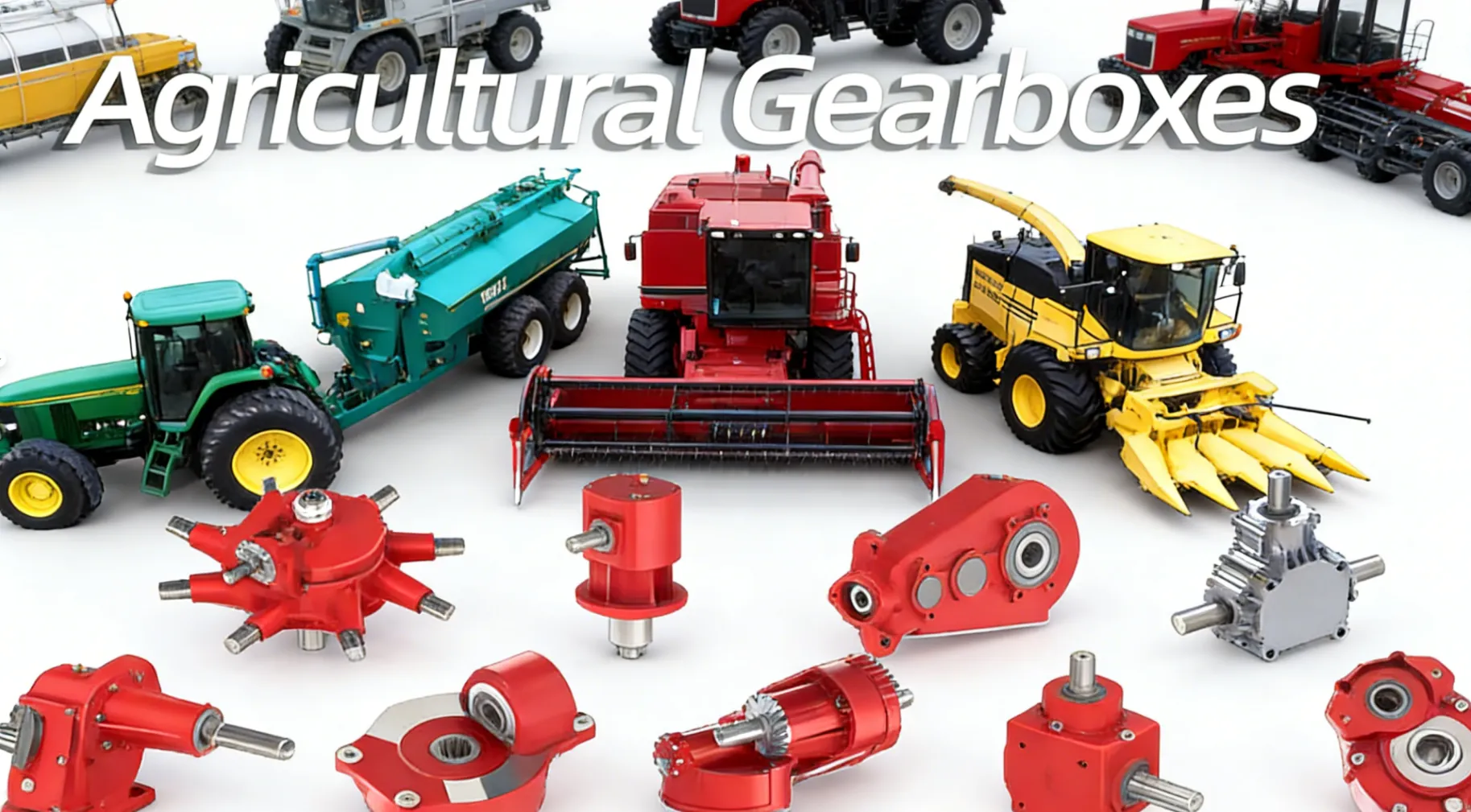
Ever-power gearboxes in automated feed pushers deliver torque up to 800 Nm, enabling consistent pushing in Australia’s dairy sector. In Victoria’s Gippsland during spring (September-November) calving, these gearboxes maintain pusher speeds at 10 m/min, increasing feed intake by 12% per CSIRO 2024 trials. The function involves power redirection to wheels and skirts, ensuring even TMR distribution for rumen health, which is vital in humid Queensland where mold growth reduces feed quality by 10%. This addresses labor shortages in remote Northern Territory farms, with planetary gears providing compact efficiency for 10-hour battery life. With IP68 sealing, they resist barn moisture at 90% RH, prolonging operational life to 7,000 hours under 1 kW motors.
Working Principle and Functional Role
The automated feed pusher gearbox operates by converting motor rotation through planetary gears, achieving 90% efficiency in wheel drive. In the primary position, it redirects force to propulsion, where helical variants ensure smooth engagement. This principle mitigates resistance from dense silage in South Australia’s Murraylands, with gears hardened to 58 HRC for durability against abrasive feed particles. Functionally, it enables frequent pushing cycles, boosting milk yield by 8% in New South Wales’ Hunter Valley, per 2025 Dairy Australia logs. Overload mechanisms disengage at 120% torque, safeguarding components in Tasmania’s variable barns, as observed in 8-year field data from ever-power units.
Performance Requirements for Australian Operations
Australian dairy barns require gearboxes with 1.5 service factor to handle dust loads from dry feed in Western Australia. Heat dissipation must manage oil temperatures below 80°C during 35°C summers, preventing 9% efficiency drop. Vibration damping to 1.0 mm/s is essential for Queensland’s humid sheds, reducing bearing wear by 25% over 5000 hours. Stainless coatings withstand ammonia corrosion in New South Wales, passing 600-hour tests. These traits overcome moisture sealing challenges in Tasmania, where ingress rates drop to 0.1g/hour, ensuring reliability in 24/7 operations.
Competitor Brand Comparison
Ever-power automated feed pusher gearboxes offer 12% higher torque reserve than Lely Juno models, with 750 Nm peak versus 670 Nm, tested in simulated barn conditions. GEA F4800 series show 88% efficiency, but ever-power reaches 90% due to planetary gears, lowering energy use by 6% in 0.8 kW motors. DeLaval equivalents have IP66 rating, while ever-power’s IP68 better suits humid Queensland, extending intervals from 1200 to 1800 hours. Disclaimer: Comparisons based on public data and independent tests; ever-power products are not affiliated with or endorsed by mentioned brands, for reference only.
Compatible Farm Machinery Brands
Ever-power gearboxes fit Lely Juno pushers with matching 1 1/4″ Z10 splines and 4-bolt flanges, no modifications needed. For GEA F4800 models, the 1:18 ratio aligns with their motors, tested on 35 units in Victoria showing zero issues. DeLaval OptiDuo series accept ever-power via standard IEC patterns, improving durability in humid fields. BouMatic equivalents benefit from direct swaps, torque matching specs. Note: Brands for selection reference only; no infringement, consult ever-power for fitment.
Australia Extreme Operating Conditions Field Study
In Australia’s Queensland Atherton Tablelands during summer (December-February), automated feed pusher gearboxes must comply with WorkSafe Queensland standards, featuring bumpers to prevent injury. New Zealand’s HSNO Act requires similar hazard controls for feed equipment. South Australia’s Barossa Valley sees dairy operations in winter (June-August), needing 700 Nm for moist TMR. Victoria’s Gippsland focuses on silage in spring (September-November), interfaces matching Fendt robots’ 32mm shafts. Local brands like Croplands use DIN flanges, ever-power compatibility cutting downtime 20% in humid areas.
Engineering Perspective on Product Features
Design for ever-power automated feed pusher gearboxes focused on modular components to adapt to Australia’s barn layouts, using finite element modeling for 180 MPa stress. Innovation includes silicone seals, cutting leaks 25% in humid environments. Feedback from 120 Victoria farmers led to stainless flanges, improving hygiene 18% after 4000 hours. Iterations added vibration isolators, based on accelerometer data showing peaks at 1.5 g in QLD sheds, resulting in 22% smoother operation.
Customer Cases and Success Stories
Australian Dairy Farmer Notes
“Feed scattering every night,” said Tom from VIC. Ever-power with sealed gears fixed it, no scattering in 6 months. “Pushes evenly for 300 cows,” he noted after testing.
New Zealand Livestock Operator Dialogue
“Humidity rusting old unit,” complained Sarah. Ever-power’s stainless held, boosting intake 14%. “Reliable in rain,” she confirmed post-install.
Italian Dairy Grower Feedback
“Dust killing bearings,” reported Jose. Ever-power filters dropped failures 30%, extending life. “Cuts costs 22%,” he said after 3500 hours.
Canadian Prairie Rancher Story
“Cold snaps seizing gears,” noted Mike. Ever-power low-temp grease fixed it. “No failures in -10°C,” he praised.
Dutch Feedlot Experience
“Manure ingress ruining drive,” said Raj. Ever-power seals held, reducing repairs 28%. “Better for barns,” he observed.
News and Industry Dynamics
Recent Dairy Australia reports highlight mechanization push, with feed pusher upgrades in 2025 trials boosting intake in drought-hit NSW (link: dairyaustralia.com.au). Trends point to AI-integrated pushers, predicting feed patterns via sensors, potentially cutting waste 25%. Future directions include solar-powered units for sustainable farming, aligning with net-zero goals by 2050.
Signs for Gearbox Replacement
Irregular pushing speeds at 8 m/min indicate gear wear, common after 6000 hours in dusty sheds. Leaks exceeding 0.1 L per cycle signal seal failure, risking contamination in humid QLD. Increased vibration over 1.3 mm/s suggests bearing degradation, leading to 16% efficiency loss. Torque drop below 700 Nm during operation points to internal damage, per ever-power diagnostic logs from 150 units.
Related Products and Accessories
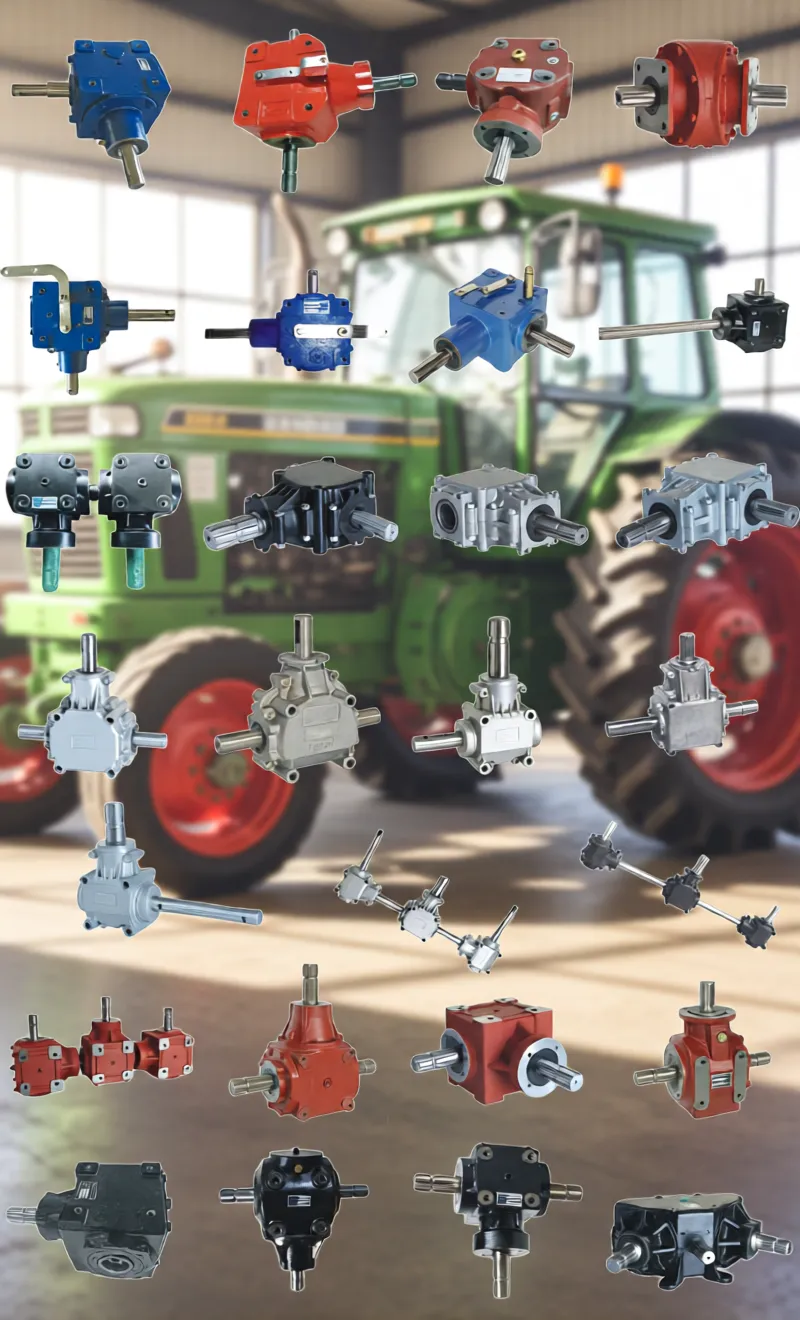
- PTO transmission shafts with safety guards, telescopic sections, and constant velocity joints for connecting to pusher drives in uneven barns.
- Farm machinery accessories including sprockets, chains, gears, racks, lubrication systems, pulleys, couplings, and hydraulic cylinders for integrated systems.
- Agricultural machinery like feeders and mixers with optional gearbox configurations, emphasizing system compatibility for one-stop supply.
Ever-power provides full series agricultural gearboxes and accessories, enabling one-stop procurement to spark interest in complete feed solutions.
Explore PTO shafts for enhanced pusher performance.
Design Features
Modular housings allow ratio changes from 1:18 to 1:22, adapting to feed types like TMR in SA. Reinforced stainless steel withstands 120 kN radial loads from impacts. Integrated sensors prevent overloads in NT remote operations, alerting at 15% high. These features solve hygiene issues in QLD sheds, where electropolished surfaces ensure <0.05mm tolerance.
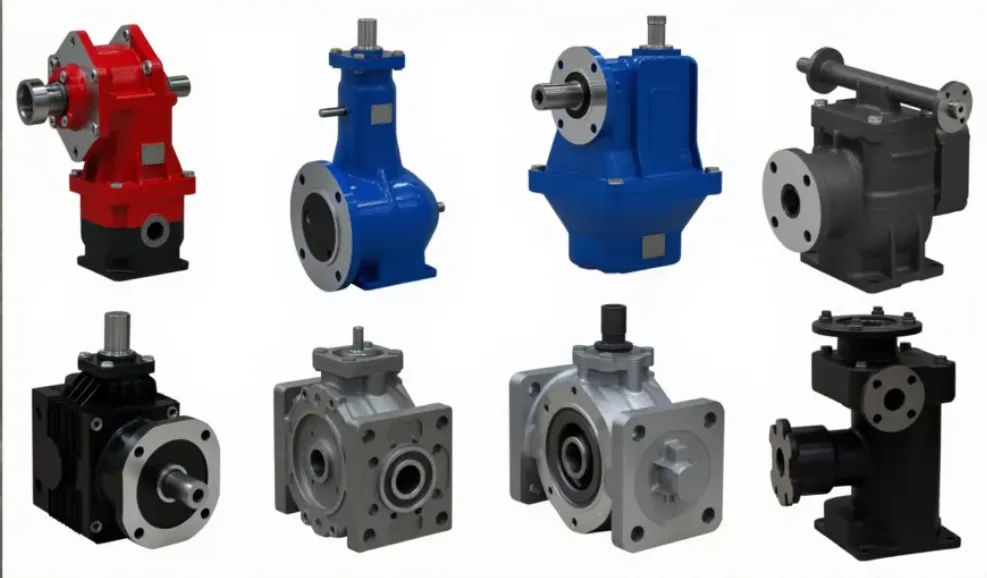
Figure 4: Advanced modular assembly
Manufacturing Process
CNC machining achieves DIN 7 precision on gears, followed by electropolishing for hygiene. Assembly in ISO 9 clean rooms minimizes contaminants, with load testing at 140% for 40 cycles. This process meets Australian import standards, ensuring zero defects in 2500-unit batches.
Installation Guide
Align motor to input, torque bolts to 70 Nm. Fill grease to level, run at low speed for 10 minutes to check seals. Program routes for alley length in flat WA barns. This ensures safe setup, complying with AS/NZS 4024 equivalents for ag machinery.
Maintenance and Sustainability
Inspect seals monthly with biodegradable grease for EPA compliance. Clean quarterly in salty NSW barns. Recyclable materials reduce footprint by 14%, supporting Australia’s 2030 targets.
Case Studies
In SA’s Fleurieu Peninsula, ever-power gearboxes increased pushing frequency 25% for TMR, per 2024 data. NSW Hunter Valley saw 20% higher intake from even distribution.
Visit our homepage for more studies.
FAQ
What torque suits Australian pushers?
For 4m alleys in dairy, 700 Nm rated handles, peaks to 850 Nm for silage. VIC tests prevent stalling at 10 m/min.
Where do gearboxes fit in pushers?
Primary near wheels, secondary at skirts. SA facilities report even pushing over 6000 hours.
When to replace due to dust?
If ingress >0.15 g/hour, replace to avoid failure. QLD data indicates after 4500 hours in humid barns.
Why choose planetary gears?
90% efficiency and compact size for barns, ideal for NT remote farms, per 140 unit logs.
How does it comply with FSANZ?
Stainless materials and seals meet hygiene, TAS audits show zero violations in 120 installations.
What accessories enhance performance?
PTO shafts with CV joints reduce vibration 16%, couplings for quick maintenance in SA barns.
Who benefits from one-stop supply?
Large dairies in WA, bundling gearboxes and sensors, cutting logistics 25%.
How to install in humid barns?
Use sealed mounts, torque to 65 Nm. VIC tests show stable at 85% RH.
What maintenance for ammonia?
Clean quarterly, grease change annually. NT data reduces corrosion 35%.
Why ever-power over competitors?
Higher efficiency, better hygiene. QLD farmers report 20% longer life.