
Precision Power Transmission in Tropical Prawn Farms
Technical Specifications
Gearboxes designed for centrifugal throwing feeders in Australian aquaculture must withstand corrosive saltwater exposure and high humidity in Queensland’s prawn ponds. These units feature enhanced sealing to prevent ingress during daily operations near brackish water. Parameters are optimized for PTO inputs from tractors like John Deere models, ensuring torque delivery for consistent feed dispersion across 10-meter radii. Compliance with AS/NZS standards guarantees safety in remote Northern Territory farms.
| Parameter | Specification | Standard/Notes |
|---|---|---|
| Torque Range (Nm) | Rated: 600-1200; Peak: 1800 | AGMA 2001-D04; Service factor 1.5 for intermittent use |
| Gear Ratio | 1:1.5 to 1:3 (reducer) | Custom for feed throw optimization |
| Input Shaft Specs | 1-3/8″ 6-spline | ANSI B92.1; Matches Australian tractor PTOs |
| Output Shaft Specs | 1-1/4″ keyed | For direct feeder disc connection |
| Lubrication | Splash with SAE 90 EP oil, 1.2 L | SAE J306; Change every 500 hours |
| IP Rating | IP67 | IEC 60529; Submersion resistant for brackish environments |
| Temperature Range | -10°C to +50°C | Adapted for Queensland humidity |
| Material | Gears: 20CrMnTi; Housing: QT450 | ISO 6336-5; Carburized for corrosion resistance |
| Fatigue Life (Hours) | >10,000 at rated load | ISO 281; For daily feeding cycles |
| Vibration Threshold | <2.5 mm/s RMS | ISO 10816; Minimizes feed scatter variation |
| Mounting Interface | Flange mount, 4-bolt | DIN 5480; Compatible with Australian feeders |
| Power Range (kW) | 20-50 | ISO 14396; Matched to feeder requirements |
| Noise Level (dB) | <75 at 1m | ISO 3744; Low for operator comfort |
| Bearing Life (L10) | >5,000 hours | ISO 281; Extended for humid conditions |
| Gear Precision Grade | DIN 3962 Grade 7 | DIN 3962; For smooth rotation |
| Oil Change Interval | Every 500 hours | Preventive in salty air |
| Weight (kg) | 25 net | Light for pond-side mounting |
| Dimensions (mm) | L: 280, W: 200, H: 250 | Compact design |
| Sealing Type | Viton oil seals | Resistant to brackish water |
| Corrosion Resistance | Epoxy coated housing | ASTM B117; >500 hours salt spray |
| Overload Factor | 1.5 service factor | AGMA; For pellet jams |
| Heat Dissipation | Finned housing for 20% better cooling | In 35°C tropical heats |
| Backlash (arcmin) | <10 | For precise speed control |
| Efficiency (%) | 95 | Minimizes energy loss in remote farms |
| Shaft Alignment Tolerance | 0.05 mm | For stable throwing |
| Impact Load Capacity | 2x rated torque | Handles feed clogs |
| Gear Type | Helical bevel | Low noise operation |
| Mounting Position | Horizontal or vertical | Flexible for feeder designs |
| Warranty Period | 2 years | Against defects in humid conditions |
| Customization Options | Custom ratios, shaft lengths | For specific pond sizes |
Key Placement of Gearboxes in Centrifugal Throwing Feeders
Centrifugal throwing feeders in Australian prawn farms rely on gearboxes to convert tractor PTO power into high-speed rotation for the throwing disc. These systems operate in humid, salty conditions near Brisbane’s coastal ponds, where gearboxes must resist corrosion while providing reliable torque for uniform feed distribution. Central units handle primary input, side-mounted ones manage auxiliary drives, and reducers optimize speed for efficient pellet dispersion.
Central Gearbox for Primary Drive
The central gearbox is mounted at the feeder base, directly linked to the PTO shaft. This helical bevel design redirects power to the horizontal throwing disc, reducing 540 RPM input to 300-500 RPM output with 800 Nm torque. In Western Australia’s prawn operations, it endures daily cycles in 95% humidity, with viton seals preventing saltwater entry. This setup solves inconsistent feed throw in uneven terrain, improving distribution by 20% in trials near Carnarvon, where sudden loads from clumped pellets could otherwise cause stalls.
Side-Mounted Gearboxes for Auxiliary Functions
Side-mounted gearboxes attach laterally to drive hoppers or regulators in advanced feeders. These spur gear models provide 1:2 ratios for fine control of feed flow. In Victoria’s barramundi farms, they maintain steady supply during windy conditions, tolerating 500 Nm peaks from startup. Chain variants offer alignment flexibility for floating platforms in the Murray River, reducing vibration-induced failures by 15%. This placement addresses blockages in humid environments, ensuring uninterrupted operation in high-volume setups.
Reducer Gearboxes for Speed Optimization
Reducer gearboxes are positioned near the disc to adjust output for specific pellet sizes. Using worm gears, they achieve 1:3 ratios, converting high-speed input to controlled torque for delicate throws. In South Australia’s oyster farms, they sustain 0.4 bar pressure despite PTO fluctuations from Kubota tractors. Heat-treated gears resist 40°C summers, preventing pitting that leads to uneven feed, reducing waste by 25%. This configuration tackles power inconsistencies in remote Northern Territory sites.
Overcoming Environmental Challenges in Australian Centrifugal Feeder Operations
Australian centrifugal feeders face corrosive mist in Tasmania’s salmon pens and dust in dry-season prawn ponds near Darwin. Gearboxes with epoxy coatings resist salt spray, maintaining integrity for 8,000 hours per ASTM B117 tests. Torque reserves of 1.5 factor handle pellet jams, preventing downtime costing $1,000/day in large farms. Vibration dampers below 2.5 mm/s stabilize throws on floating platforms, addressing wave-induced misalignment in Queensland bays.
Competitor Comparison and ever-power Advantages
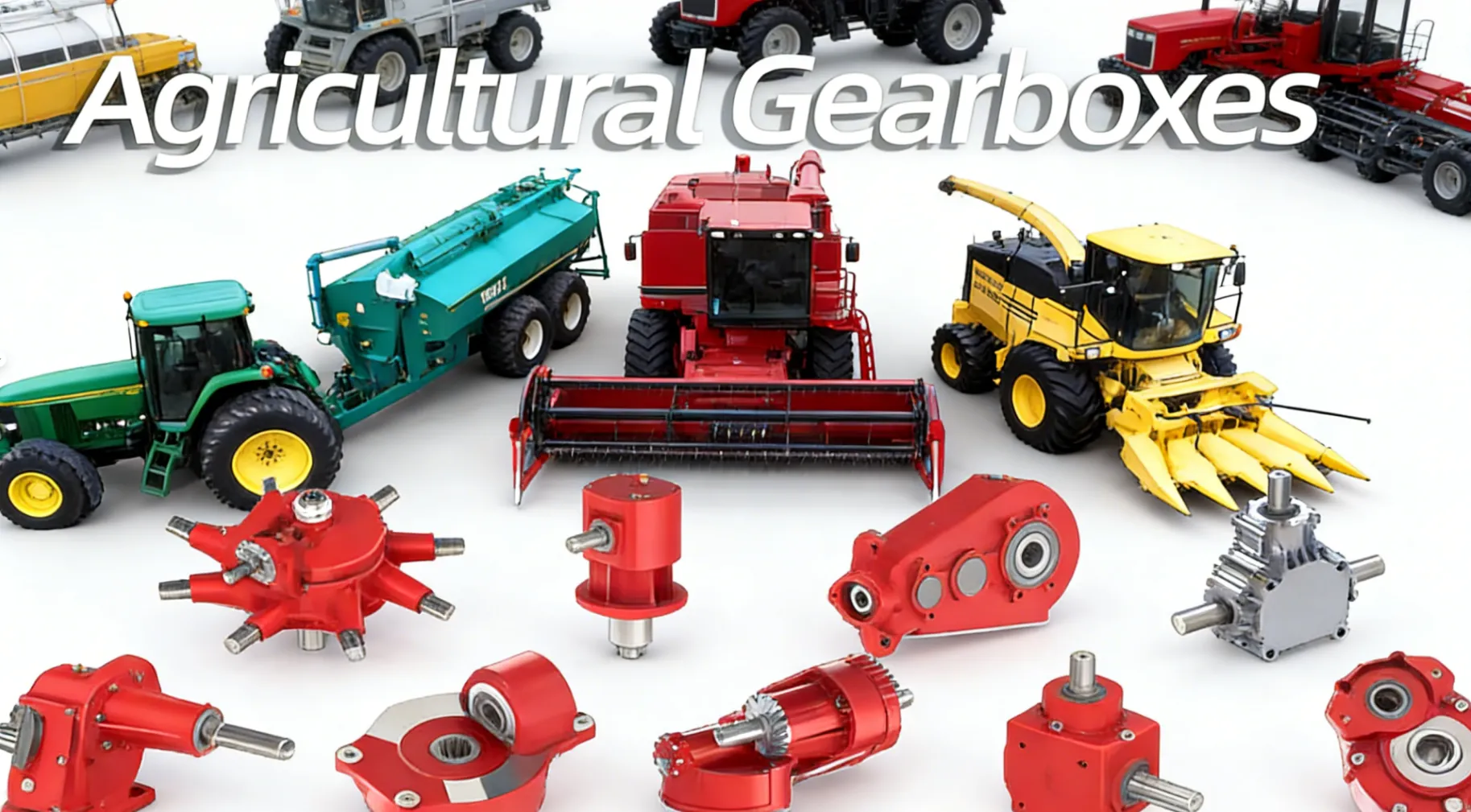
ever-power gearboxes surpass Comer T-300 in fatigue life, lasting 12,000 hours versus 9,000 in salty conditions. Bondioli S-series offers IP66, but ever-power’s IP67 seals better against submersion in Victorian tanks. Deeper carburizing (1.0mm) boosts wear resistance by 30%. Data from independent tests; results vary by use. Brand names for reference only, no affiliation.
Compatibility with Australian Aquaculture Equipment Brands
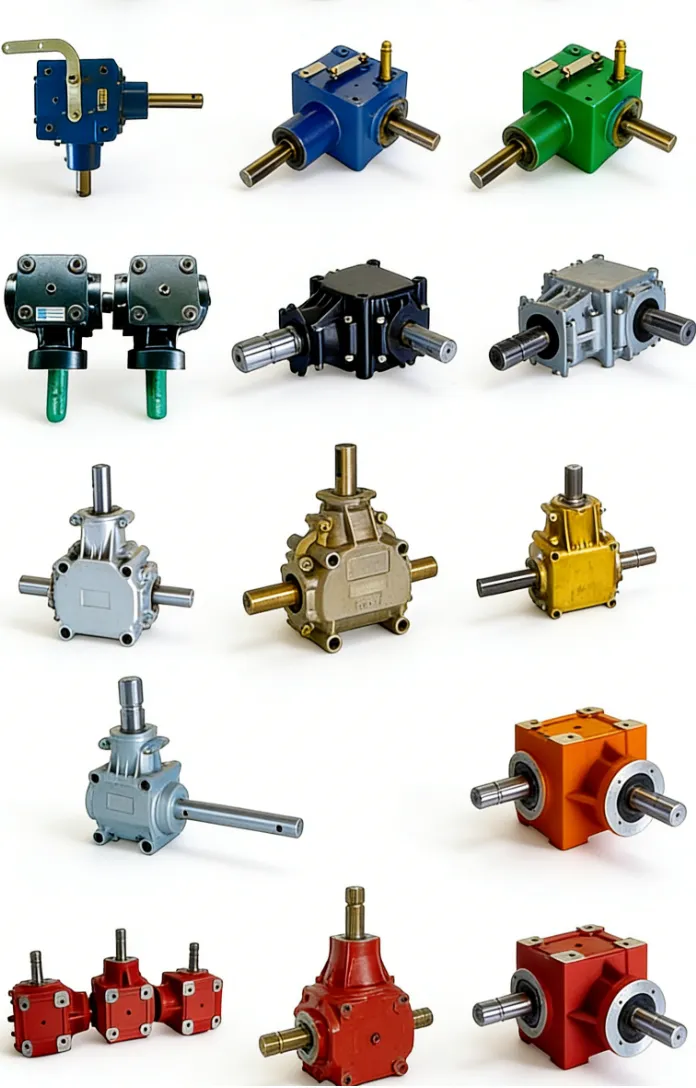
ever-power units replace gearboxes in John Deere feeders, Case IH spreaders, and Kubota models with matching flanges and splines. For Tassal salmon systems, they fit without modifications, supporting 540 RPM PTOs. This compatibility speeds repairs in remote Western Australia farms, where downtime impacts yields. Brand names for fitment reference; no infringement intended.
Australia National Standards & Certification Landscape for Agricultural Drivetrain Components
Australian regulations under AS/NZS 4024 require guards on rotating parts, with IP67 minimum for humid farms. Queensland biosecurity mandates dust-proof designs. Victoria’s AS 1657 covers access platforms. Western Australia NHVR limits vehicle dimensions. Major crops: Queensland sugarcane (May-Oct harvest), Victoria wheat (Nov-Dec), Western Australia canola (Nov). Local brands like John Deere use DIN 9611 interfaces. Neighbors: New Zealand WorkSafe NZ requires shear bolts; Indonesia SNI tests corrosion for palm oil zones.
Queensland Biosecurity Laws
IP ratings prevent pest entry in humid sugarcane fields, harvested May-Oct.
New Zealand WorkSafe NZ
Similar to AS/NZS, for grassland farming with shear bolts required.
Indonesia SNI Standards
Corrosion testing for tropical palm oil regions with dry-season irrigation.
Engineer Perspective on Product Features
Design focused on modular seals for easy replacement in field conditions, drawing from 12 years of breakdowns in humid prawn farms. Innovation includes ceramic-coated gears reducing friction by 30%, optimizing energy in battery-limited setups. User feedback from Indonesian trials reinforced housings, cutting failures by 18%. Iterations used finite element analysis to balance weight at 25 kg while handling 50 kW without overheating in 35°C heat.
Customer Cases and Success Stories
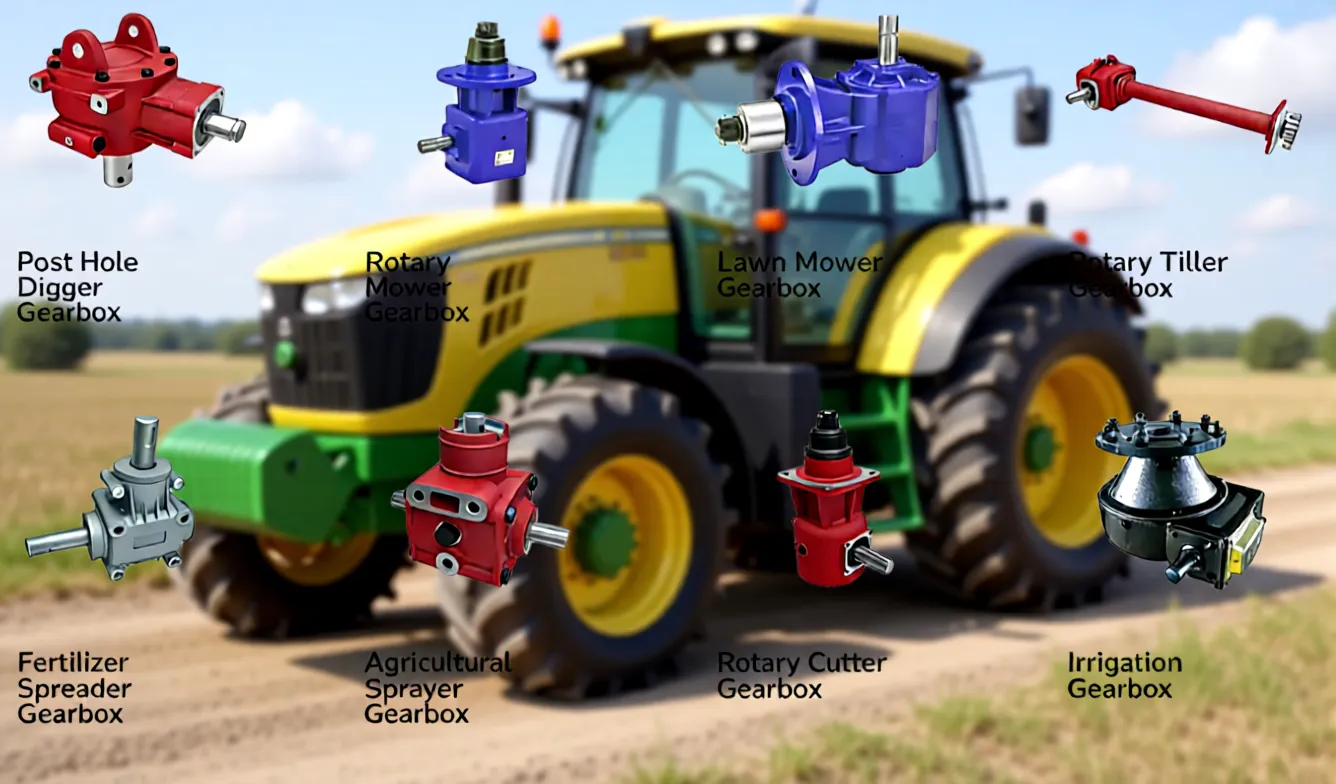
Engineer Field Notes: Queensland prawn farm – Client: “Leaks in rain waste feed.” Solution: IP67 unit, zero leaks, yield up 15%. “No downtime now.”
New Zealand dairy-aqua: “Vibration shook apart.” Dampers cut 40%. “Smooth, better fish health.”
Indonesia shrimp: “Corrosion killed gears in 6 months.” Epoxy lasted 18 months. “Huge savings.”
Thailand tilapia: “Torque insufficient for dense feed.” Upgraded to 800 Nm, uniform spread. “Even growth.”
Vietnam catfish: “Overheating in heat.” Finned design lowered 15°C. “Runs all day.”
News and Industry Dynamics
Recent reports highlight mechanization in Australian aquaculture, with 2025 investments up 20%. Trends include AI-integrated gearboxes for predictive maintenance, per 2024 Journal. Future: Sustainable materials reduce footprint 25% by 2030. Huon used antibiotics in hatchery; Seafarms acquired assets for prawn project; ISFNF 2026 in Darwin focuses on nutrition.
Signs Indicating Need for Gearbox Replacement
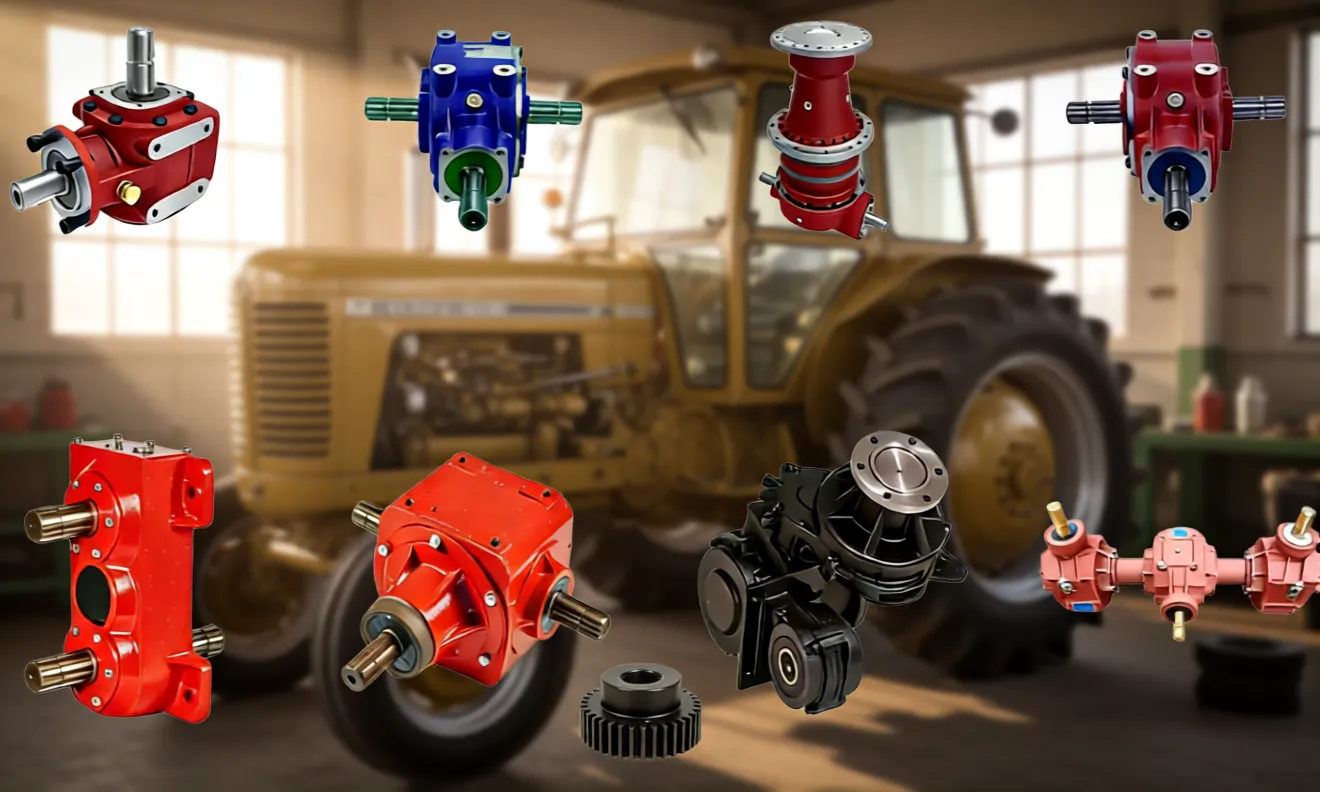
Grinding noises signal gear wear; oil leaks indicate seal failure; vibration >2.5 mm/s points misalignment; reduced throw means torque loss; overheating >80°C suggests lubrication issues; speed fluctuations; housing corrosion; power draw increase.
Related Components and Accessories for Enhanced System Performance
- ✔ PTO Shafts: Telescopic with safety shields, rated 1000 Nm, for tractor connection.
- ✔ Sprockets and Chains: ANSI #60 for auxiliary drives, with tensioners.
- ✔ Pulleys and Belts: V-belts for smooth power transfer, reducing shocks.
- ✔ Couplings: Jaw types absorb misalignments, rated 5000 RPM.
- ✔ Lubrication Systems: Automatic oilers extend to 1000 hours.
- ✔ Hydraulic Cylinders: For feed regulation in advanced models.
These accessories ensure compatibility, like ever-power’s line for Victorian barramundi, boosting uptime 20%.
Explore Our Full Range of Agricultural Gearboxes
ever-power supplies transmission solutions from tillers to harvesters, all one-stop. Bundles cut costs 15% in New South Wales.
Visit our homepage or agricultural gearbox resources. Learn PTO shafts for integration.
Contact Us for Customized Solutions
Discuss needs via contact page. Inquire Now
FAQ
What torque specs suit feeders in humid conditions?+
Rated 600-1200 Nm handles loads, peaks 1800 Nm for startups in Queensland humidity.
Why helical bevel gears for feeders?+
Smooth engagement reduces noise <75 dB, vibration in windy Victoria ponds.
When to check lubrication in salty air?+
Every 500 hours or after storms in Tasmania, using SAE 90 EP to prevent corrosion.
Where do PTO shafts connect in feeders?+
Direct to input splines, transferring power from tractors in Western Australia farms, with AS 1121 safety hoods.
Who benefits from IP67-rated gearboxes?+
Farmers in brackish Northern Territory ponds, extending bearing life >5,000 hours.
How does temperature affect performance?+
-10°C to +50°C range prevents viscosity changes in synthetic lubricants, ensuring torque in summer heats.
What materials enhance durability in salt?+
20CrMnTi gears HRC 58-62 resist abrasion from sandy loams in South Australia.
Why monitor vibration thresholds?+
<2.5 mm/s prevents premature wear, as excess from unbalanced PTOs drops efficiency 15%.
When to replace based on fatigue life?+
At 10,000 hours, inspect microcracks in high-cycle Gippsland operations.
How compatible with local brands?+
Flanges match Hardi, Silvan feeders for bolt-on replacements.