
Warehouse Automation · AS/RS Drive Technology
Automated Storage and Retrieval Systems move pallets, totes, and cartons through high-density racking structures at speeds and frequencies that demand robust, maintenance-friendly drive components. Planetary gearboxes provide the torque density and compact form factor AS/RS crane and shuttle designers need to maximize storage density while meeting throughput targets. This article examines the technical factors governing planetary gearbox selection for AS/RS hoist, travel, and shuttle drive applications.
AS/RS System Architecture and Gearbox Roles
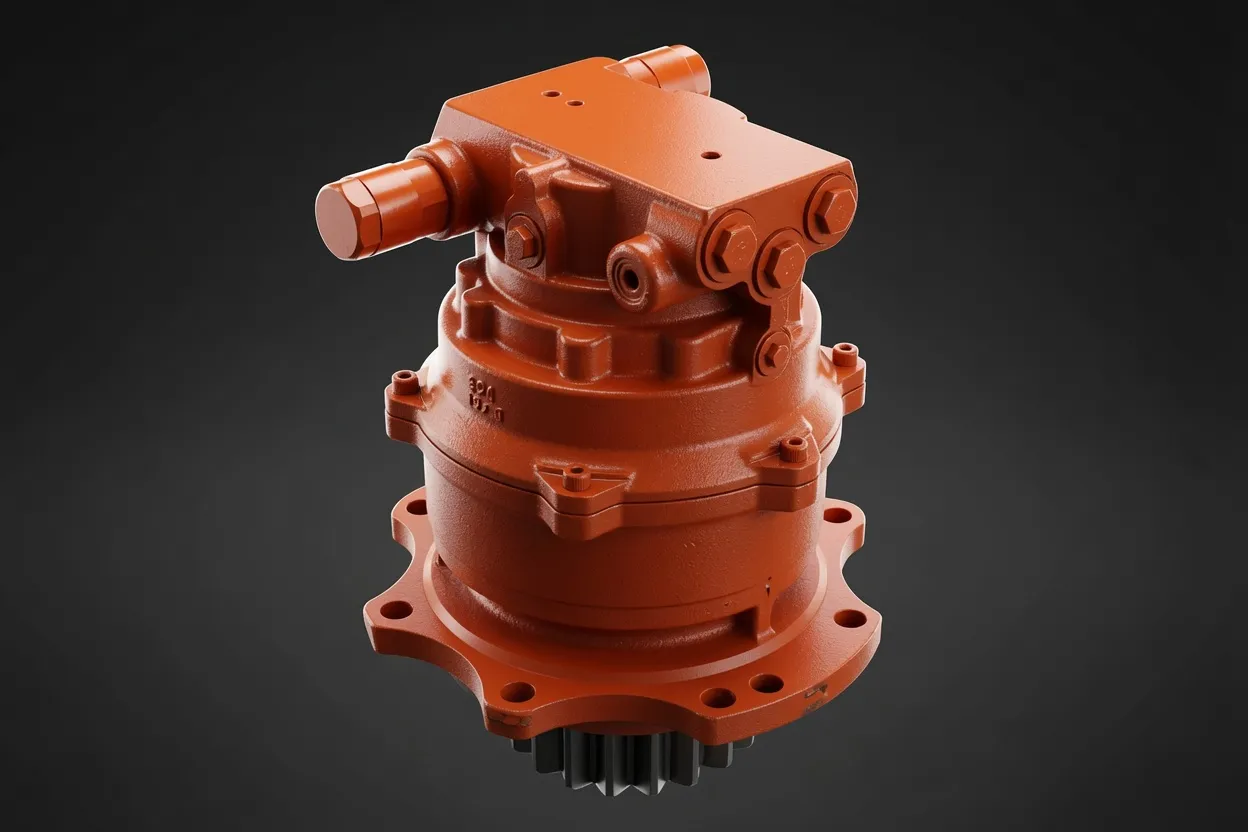
A typical unit-load AS/RS consists of a storage/retrieval (S/R) crane operating within an aisle of racking. The crane moves horizontally along the aisle (travel axis) and vertically to reach different rack levels (hoist axis), while a shuttle or extractor mechanism reaches into the rack to deposit or retrieve pallets. Each of these axes uses one or more planetary gearbox units to convert motor output into the controlled mechanical motion the system requires. Mini-load systems scale this concept down for tote and carton handling, using smaller frame sizes but similar gearbox architectures.
The gearbox selections for each axis reflect different duty profiles. The travel axis operates at high speed with moderate torque — the crane must traverse the full aisle length, sometimes exceeding 100 meters, as quickly as possible. The hoist axis operates at lower speed but higher torque, lifting pallets weighing up to 1,500 kg against gravity. The shuttle extractor requires compact packaging and moderate torque with excellent positional accuracy for reliable pallet engagement and release within the racking structure.
Hoist Drive Gearbox Requirements
Gravity Load and Safety Factors
The hoist drive must support the full pallet load against gravity at all times, including during emergency stops and power failures. A high torque planetary gearbox with a rated static torque at least 250% of the nominal gravity load provides the safety margin required by structural codes and insurance underwriters. Additionally, the gearbox must incorporate or interface with a fail-safe brake — typically a spring-applied, electrically released disc brake mounted on the motor or gearbox input shaft — that holds the load when power is removed.
Duty Cycle and Thermal Considerations
AS/RS cranes in high-throughput distribution centers perform 20 to 40 dual cycles per hour, with each cycle involving a hoist raise and lower. This near-continuous duty generates significant heat in the gearbox. Select a reducer with a thermal rating that covers the RMS torque of the full operating cycle, including acceleration, constant-speed lifting, deceleration, and dwell time between cycles. Undersizing the gearbox’s thermal capacity leads to premature lubricant degradation and shortened bearing life in the demanding 24/7 operating environment typical of large distribution centers.
Overspeed and Regenerative Braking
During lowering, gravity accelerates the load, and the motor operates in regenerative braking mode. The gearbox must handle the resulting overspeed condition — output speed may exceed the nominal rating by 20 to 30% during controlled lowering. Verify that the gearbox’s maximum permissible speed includes this overspeed margin, and that the lubricant’s centrifugal rating is adequate to prevent churning losses and seal blowout at elevated speeds.
Travel Drive Gearbox Selection
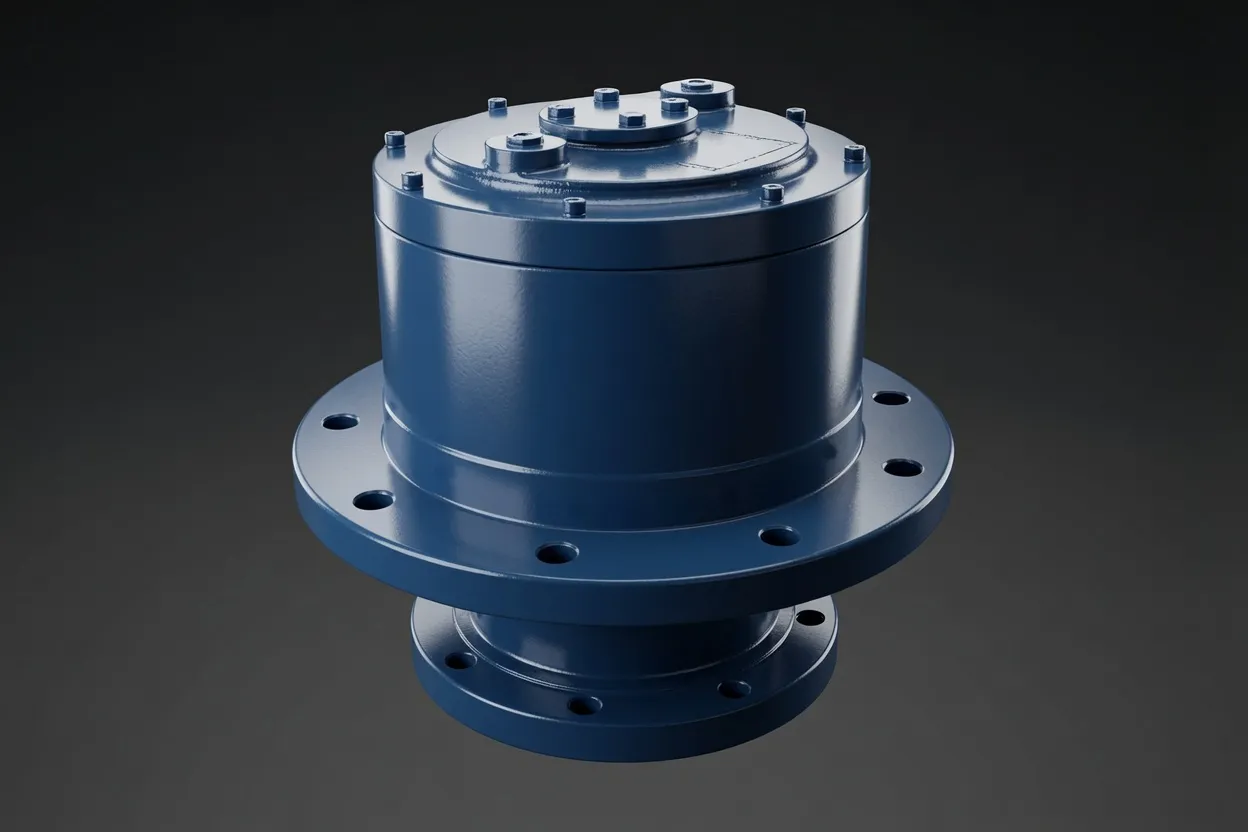
The travel axis prioritizes speed over torque — the crane must reach the target aisle position as quickly as possible to maximize throughput. Planetary gear reducer ratios between 15:1 and 40:1 are typical, with the lower end favoring faster traversal on shorter aisles and the higher end providing more acceleration torque for longer aisles where the crane reaches higher top speeds. Travel drives benefit from high-efficiency gearboxes (above 96% per stage) because energy consumed during acceleration is partially recovered during deceleration through regenerative braking, and gearbox losses reduce the net energy recovery.
Travel drive gearboxes must also handle the shock loads generated when the crane traverses expansion joints or rail irregularities at speed. Pre-loaded bearings and hardened gear teeth absorb these transient impacts without accelerated wear. Some AS/RS installations operate on outdoor rail systems exposed to temperature extremes and moisture — in these cases, specify IP65-rated gearboxes with corrosion-resistant housings and seals rated for the full environmental temperature range.
Shuttle and Extractor Drive Considerations
Compact Form Factor
Shuttle mechanisms operate within the narrow envelope between the crane mast and the racking structure. Planetary gearboxes with frame sizes of 60 to 90 mm fit within these constraints while delivering the 50 to 200 Nm of output torque required for pallet engagement and retrieval. Right-angle configurations further reduce the axial length when space is limited.
Positioning Accuracy
The shuttle must position its fork or clamp mechanism within ±2 mm of the pallet pickup point to ensure reliable engagement. This demands a gearbox with backlash below 3 arcminutes and torsional stiffness adequate to maintain position under the load’s inertia as the shuttle decelerates to the docking point.
Frequent Reversal Duty
Shuttle drives reverse direction on every cycle — extend to pick, retract to place. The gearbox must deliver consistent performance in both directions with symmetric backlash and efficiency characteristics. Asymmetric wear patterns from unidirectional-optimized designs will develop quickly under this bidirectional duty profile.
️ Contamination Resistance
Shuttle mechanisms operate inside the racking structure where cardboard dust, shrink-wrap debris, and pallet splinters are common contaminants. Sealed gearboxes with dust wiper seals prevent these materials from entering the gear train and causing accelerated wear or jamming.
System Integration and Installation
Drive Package Pre-Assembly
Assemble and test the motor-gearbox-brake package as a complete unit on the bench before installation on the crane. This verifies alignment, brake holding torque, and electrical connections in a controlled environment where adjustments are easier than when working at height on the S/R crane mast.
Rail Alignment Verification
Before commissioning the travel drive, verify rail straightness and gauge throughout the full aisle length. Rail irregularities impose dynamic loads on the travel drive gearbox that can exceed the design basis. Correct rail conditions before placing the drive system in service.
Load Test Protocol
Perform a load test at 125% of rated capacity, running the hoist through full-height travel and the crane through full-length traverse. Monitor gearbox housing temperatures, motor currents, and vibration levels during the test. All parameters must stabilize within acceptable ranges before releasing the system for production.
Safety System Commissioning
Verify the integration between the gearbox-mounted brake, the drive controller’s Safe Torque Off function, and the crane’s emergency stop circuit. Perform a simulated power-failure test with rated load at mid-height to confirm the brake engages before the load drops measurably.
Maintenance Planning for AS/RS Gearboxes
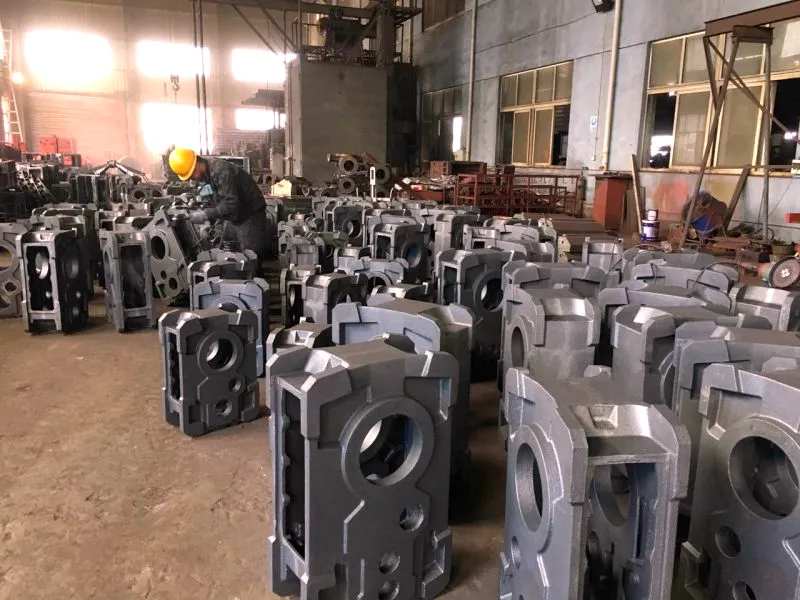
AS/RS systems run 20+ hours per day, 365 days per year in many distribution centers, accumulating over 7,000 operating hours annually. This intense duty cycle requires a structured maintenance program that combines time-based inspections with condition-based monitoring. Monthly visual inspections check for lubricant leaks, unusual noise, and housing temperature anomalies. Quarterly vibration measurements establish trending data for predictive maintenance scheduling. Semi-annual lubricant sampling detects metal particle contamination and viscosity breakdown before they progress to functional failure.
The hoist drive gearbox, bearing the highest and most variable loads, typically has the shortest maintenance interval. Plan for gearbox inspection or replacement at 15,000 to 20,000 operating hours — roughly every 2 to 3 years. Travel and shuttle gearboxes, operating under less severe loading, often reach 25,000 to 30,000 hours. Coordinate gearbox replacement with the facility’s annual maintenance shutdown to minimize impact on throughput, and keep one spare gearbox per axis type on hand to enable rapid replacement if unplanned failure occurs.
Why Choose Ever-Power for AS/RS Gearboxes
Warehouse-Proven Product Range
Our planetary gearboxes serve AS/RS installations in distribution centers across Asia, Europe, and North America, with frame sizes from 60 mm to 200 mm and ratios from 10:1 to 200:1 covering hoist, travel, and shuttle applications.
Full-Load Testing
Every gearbox undergoes a full-load efficiency and thermal test before shipment, ensuring that real-world performance matches catalog specifications. Test data ships with each unit, providing your commissioning team with verified baseline parameters.
️
Multi-Axis System Support
Our application engineers specify gearboxes for all three AS/RS axes as an integrated package, ensuring consistent quality, compatible interfaces, and coordinated spare-parts planning across the entire crane drive system.
Rapid Spare Delivery
Standard frame sizes ship within 3 business days from Hangzhou warehouse stock. Emergency orders for critical AS/RS replacements receive same-day processing and express air freight coordination to minimize crane downtime.
Frequently Asked Questions
Power Your AS/RS with Reliable Drive Systems
Share your crane specifications and throughput targets — our team will specify gearboxes for all axes with validated performance data.