
Automotive Steering · Electric Power Steering Drives
Electric power steering (EPS) systems have replaced hydraulic assistance in the vast majority of modern vehicles, reducing parasitic energy losses, enabling advanced driver-assistance features, and improving fuel economy. At the heart of column-assist and rack-assist EPS systems sits a compact planetary gearbox that converts the electric motor’s high-speed, low-torque output into the controlled assist force the driver feels at the steering wheel. This article examines how planetary gear reducers meet the exacting performance, safety, and durability requirements of EPS applications.
EPS System Architecture and the Gearbox Role
An EPS system consists of a torque sensor on the steering column, an electronic control unit (ECU) that calculates the required assist torque based on vehicle speed, steering angle, and driver input torque, and an electric motor with a precision planetary gearbox that delivers the assist force. In column-assist configurations, the motor-gearbox unit mounts on the steering column between the steering wheel and the intermediate shaft. In rack-assist designs, it mounts directly on the steering rack housing, applying assist force through a ball-screw mechanism. Both configurations use planetary reducers with ratios of 15:1 to 30:1 to match the motor’s output to the steering system’s force and speed requirements.
The EPS gearbox operates bidirectionally — applying assist torque in both left and right steering directions — and must respond to steering commands within 20 milliseconds to provide the natural steering feel that drivers expect. Any delay, dead zone, or inconsistency in the gearbox’s torque transmission manifests as vague or unpredictable steering feel, directly affecting the driver’s confidence and the vehicle’s safety perception. This makes the planetary reducer one of the most safety-critical gearbox applications in the automotive industry.
Performance Requirements for Steering Gearboxes
Ultra-Low Backlash for Steering Feel
Backlash in the steering drive train creates a dead zone at the steering wheel center, where the driver turns the wheel slightly without any corresponding steering response. In modern vehicles tuned for precise handling, this dead zone must be imperceptible — less than 0.5° at the steering wheel. Translating this through a 15:1 gear ratio, the planetary gearbox must have angular backlash below 2 arcminutes. A low backlash planetary gearbox with preloaded planet gears and precision-ground teeth meets this requirement while maintaining the low friction necessary for natural returnability — the steering wheel’s ability to self-center when the driver releases it.
Low Friction and Smooth Torque Delivery
EPS systems modulate assist torque continuously based on driving conditions — light assistance at highway speeds for stability, heavy assistance at parking speeds for ease. The gearbox must transmit these variable torque commands with minimal friction hysteresis. If the gearbox’s internal friction is high or inconsistent, the ECU must compensate by over-commanding the motor, wasting energy and potentially creating a jerky or artificial steering feel. Helical planetary gears with superfinished tooth surfaces and low-preload bearings minimize friction while maintaining the stiffness needed for responsive assist delivery.
Noise and Vibration Isolation
The EPS motor and gearbox mount directly on the steering column or rack, creating a direct structural path to the steering wheel — and the driver’s hands. Any gear noise, vibration, or cogging sensation transmits through this path and is perceived by the driver as roughness or buzzing in the steering wheel. A planetary gear reducer with helical gears, optimized mesh phasing between planet gears, and balanced rotating components produces noise and vibration levels below the driver’s perception threshold, ensuring that the assist feels smooth and transparent at all speeds and steering angles.
Safety and Reliability Standards
️ ASIL-D Functional Safety
EPS is classified as a safety-critical system under ISO 26262, typically requiring ASIL-D (the highest automotive safety integrity level). While the gearbox itself is a passive mechanical component, its failure modes — tooth fracture, bearing seizure, housing crack — must be analyzed in the system-level FMEA and shown to occur with sufficiently low probability to meet the ASIL-D target. This drives material selection, manufacturing quality controls, and testing requirements to the highest automotive standards.
Fatigue Life Requirement
EPS gearboxes must endure the vehicle’s full design life — typically 300,000 steering cycles (equivalent to 250,000+ km of driving) — without measurable degradation in backlash, friction, or noise. Accelerated fatigue testing validates this by cycling the gearbox through representative steering torque profiles at elevated frequency, targeting a test duration equivalent to 1.5× the design life.
️ Temperature Range
EPS units operate in the engine compartment (rack-assist) or under the dashboard (column-assist), experiencing temperatures from –40 °C in winter cold starts to +85 °C during sustained summer driving. The gearbox lubricant must maintain viscosity within functional limits across this entire range, and all metallic and polymer components must retain their mechanical properties without dimensional change.
⚙️ Redundancy Considerations
Emerging steer-by-wire and L3+ autonomous driving systems require redundant EPS actuators. Each actuator contains its own planetary gearbox, and both must deliver identical torque response to prevent asymmetric steering behavior during handover between primary and backup systems. Matched-pair procurement ensures this symmetry.
Compact Packaging for Steering Column Integration
Column-assist EPS units must fit within the tight space between the dashboard structure, knee bolster, and steering column tilt-and-telescoping mechanism. The planetary gearbox’s coaxial layout concentrates the reduction mechanism in a cylindrical package that wraps around the steering column shaft, consuming minimal radial space. Typical EPS planetary reducers measure 50 to 70 mm in outer diameter and 30 to 50 mm in axial length — dimensions that integrate seamlessly within the column housing without interfering with adjacent components such as the combination switch, clock spring, or airbag module.
Material choices reflect the dual priorities of light weight and high stiffness. Aluminum alloy housings reduce mass while providing adequate structural rigidity for bearing support. Polymer planet carriers offer further weight savings in lower-torque applications, though steel carriers remain the standard for higher-assist systems that generate greater reaction forces. The output connection — typically a worm-type or spur-gear interface to the steering column — must align precisely with the planetary reducer’s output to prevent binding that could increase steering effort or create irregular assist feel.
Manufacturing and Quality Assurance
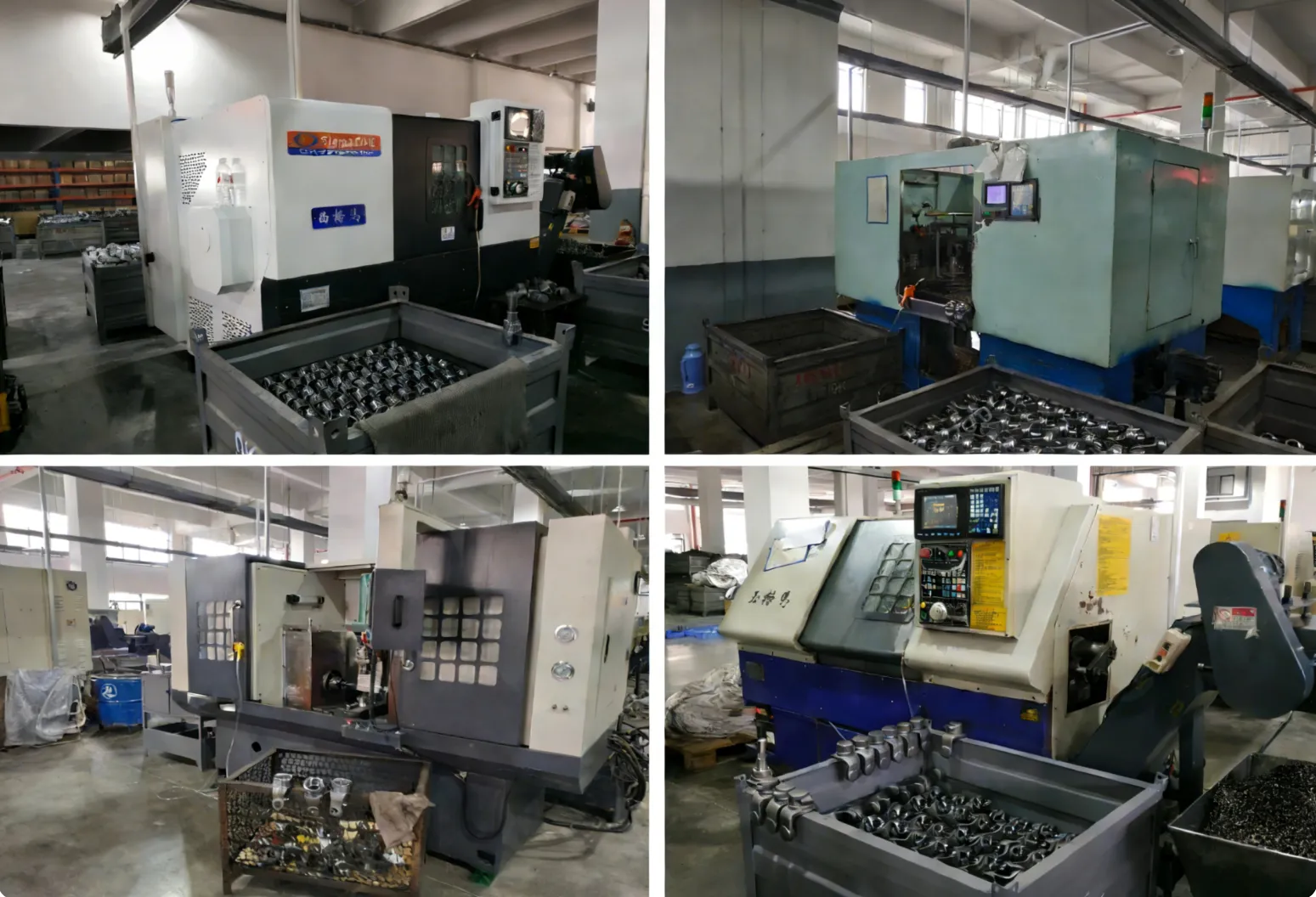
EPS planetary gearboxes are produced in volumes of hundreds of thousands to millions of units per year for global vehicle platforms, requiring manufacturing processes with exceptional consistency. Statistical process control on every critical dimension — tooth profile, lead, pitch, runout, bore diameter, and concentricity — ensures that each unit meets the backlash and friction specifications that determine steering feel. 100% end-of-line testing measures backlash under load, friction torque across the speed range, and noise level at representative operating conditions. Units exceeding any limit are automatically rejected, maintaining field quality levels below 10 parts per million defective.
Traceability systems link every gearbox to its production date, machine, operator, material heat, and test results. In the event of a field quality concern, this traceability enables rapid root-cause investigation and precise containment of potentially affected units — a capability required by automotive OEM quality standards and essential for managing the product-liability exposure inherent in safety-critical steering components.
Why Choose Ever-Power for EPS Planetary Gearboxes
Automotive Safety-Grade Production
Our steering gearbox production line operates under IATF 16949 quality principles with process controls designed for safety-critical components. 100% dimensional inspection and end-of-line functional testing ensure every unit meets the performance envelope your EPS calibration targets require.
Sub-Arcminute Backlash Capability
Our precision grinding and lapping processes produce planet gears with profile accuracy within 3 μm, enabling assembled gearbox backlash below 1 arcminute — meeting the most demanding column-assist and rack-assist EPS specifications for on-center steering precision.
️
EPS System Integration Support
Our engineers understand the complete EPS system — from torque sensor to rack — and design gearboxes that optimize not just mechanical performance but the system-level steering feel, NVH, and safety characteristics that the vehicle program demands.
High-Volume Manufacturing Capacity
Capable of producing 100,000+ EPS gearbox units monthly, our facility supports major vehicle platform launches with the ramp-up speed and supply security that Tier 1 EPS system integrators require.
Frequently Asked Questions
Precision Steering Starts with Precision Gears
Share your EPS system specifications, assist-force targets, and production volume — our team will deliver a gearbox proposal with validated performance data.