
Lifting Equipment · Crane Drive Planetary Gearboxes
Cranes — tower, crawler, mobile, and overhead types — depend on planetary gearboxes to multiply motor torque for hoisting heavy loads, slewing the boom, and luffing the jib. Each drive axis operates under strict safety requirements because a gearbox failure under load risks dropping suspended loads from height. This guide covers the design criteria, safety standards, and maintenance practices that govern planetary gearbox selection for crane hoist and slew drive applications.
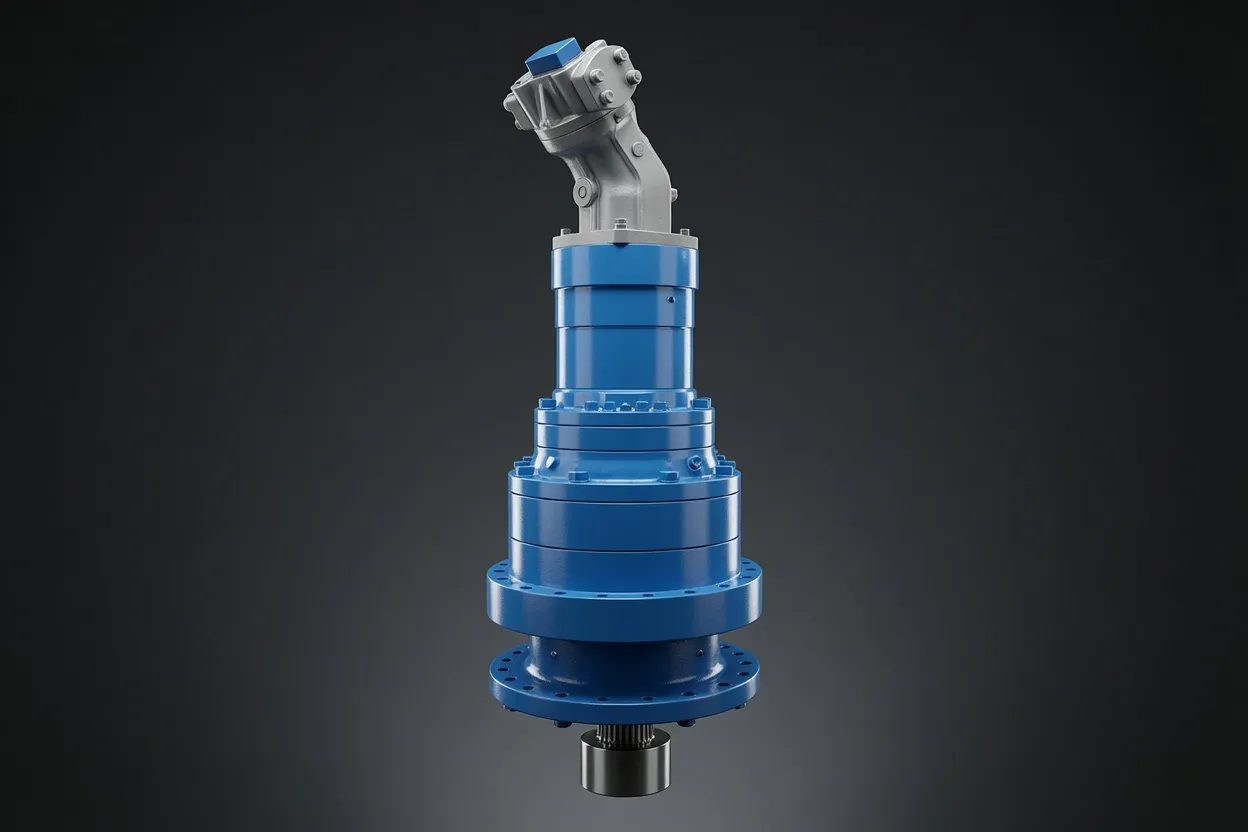
Hoist Drive Architecture and Planetary Gearbox Role
The hoist drive raises and lowers the crane’s load block, hook, and payload — the most safety-critical mechanical function on any crane. An electric or hydraulic motor drives a planetary gear reducer with a ratio of 30:1 to 120:1, and the gearbox output shaft connects to the hoist drum through a coupling or open gear mesh. The reducer converts the motor’s relatively high speed into the controlled low speed and massive torque needed to lift loads ranging from a few tonnes on small overhead cranes to 1,000+ tonnes on large crawler cranes.
During hoisting, the gearbox transmits the full suspended load torque continuously, often for extended periods during multi-floor lifts or deep-shaft operations. During lowering, the load’s gravitational energy drives the gearbox in reverse, and the motor or a separate braking system controls the descent speed. This bidirectional loading under heavy sustained torque, combined with the safety consequence of failure, makes the hoist drive gearbox subject to the most stringent design and quality requirements of any crane subsystem. A high torque planetary gearbox with documented fatigue data and traceable material certification is essential for meeting crane safety standards.
Slew Drive Function and Performance Demands
Boom Rotation Under Load
The slew drive rotates the crane’s boom and suspended load around the crane’s vertical axis — positioning the load over the intended placement point. Slew speeds are deliberately slow, typically 0.5 to 2 RPM at the turntable, to maintain load stability and prevent dangerous swinging. The planetary gearbox provides the high reduction ratio (100:1 to 500:1) needed to produce smooth, controllable rotation from a relatively fast electric or hydraulic motor while developing sufficient torque to overcome the turntable bearing friction, wind loading on the boom and load, and the inertia of the rotating mass.
Controlled Deceleration and Positioning
Crane operators must stop the slew rotation precisely to place loads within centimeters of the target. The slew drive gearbox works together with the motor controller and slew brake to deliver progressive, smooth deceleration without load sway. Backlash in the gearbox creates a dead zone at the point of direction reversal, making fine positioning more difficult. Specifying a planetary gear reducer with backlash below 6 arcminutes allows the controller to position the boom within ±0.1° of the target, significantly reducing the time the signal person needs to guide the load into its final position.
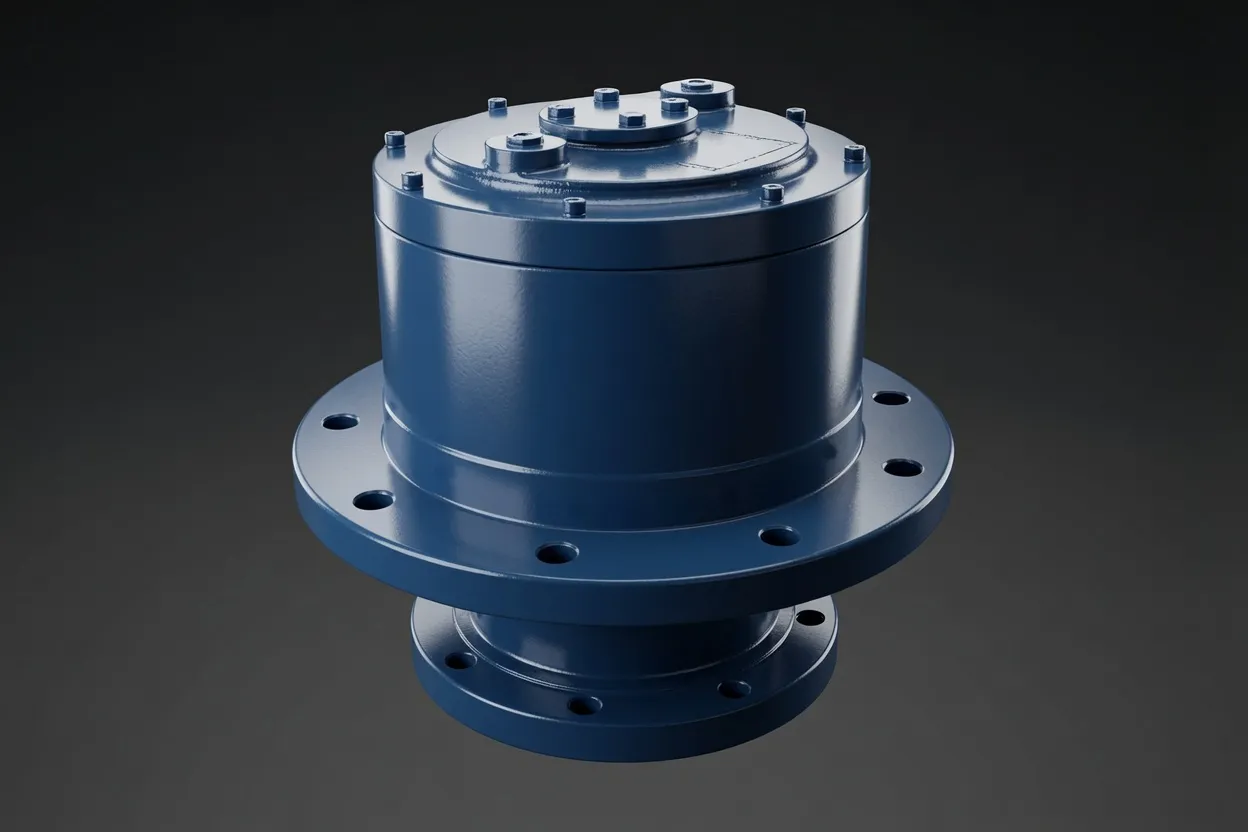
Safety Standards and Certification Requirements
️ FEM/ISO Classification
Crane gearboxes are designed to a specific duty classification under FEM (European Materials Handling Federation) or ISO 4301. The classification — from M1 (light duty) to M8 (heavy duty) — determines the required gear fatigue life, bearing life, and safety factors. A tower crane on a high-rise construction project typically requires M5 or M6 classification, while a port container crane operates at M7 or M8. The planetary gearbox manufacturer must provide documentation confirming compliance with the specified duty class.
Proof Load Testing
After assembly, hoist gearboxes undergo a proof load test at 125% of the rated capacity to verify structural integrity. This test simulates the most severe loading the gearbox will experience in service and confirms that no permanent deformation, excessive deflection, or abnormal noise occurs under peak load conditions.
⚙️ Redundant Braking
Crane safety regulations require at least two independent braking mechanisms on the hoist — typically a motor brake and a drum brake, each capable of holding the rated load independently. The gearbox housing provides the mounting interface for one or both brakes, and its torsional stiffness must maintain brake alignment under full load to ensure consistent braking performance throughout the crane’s service life.
Material Traceability
Every gear, shaft, and bearing in a crane gearbox must be traceable to its material heat and manufacturing lot. This traceability enables root-cause investigation if a field failure occurs and supports the crane manufacturer’s CE marking, ASME, or Chinese GB certification documentation for the complete crane.
Design Considerations for Crane Gearboxes
Crane hoist gearboxes experience loading patterns dominated by sustained unidirectional torque during lifting, punctuated by load reversals during lowering and frequent start-stop cycles. This duty profile concentrates wear on one tooth flank during hoisting and generates impact loads at each start due to the driveline’s rotational inertia. Case-carburized gears with shot-peened tooth roots provide the surface durability and bending fatigue resistance needed for classified crane duty. Gear tooth profiles include tip relief modifications to reduce engagement shock and helix angle corrections to compensate for shaft deflection under load, ensuring full-face contact across the tooth width at the rated capacity.
Slew drive gearboxes face a different challenge: oscillatory loading at very low output speeds with frequent reversals. The gear teeth load and unload cyclically, promoting fretting corrosion on bearing contact surfaces and accelerating lubricant degradation in the contact zone. Specify synthetic EP gear lubricants with anti-fretting additives for slew applications, and consider gearboxes with integrated oil circulation — even at low flow rates — to replenish lubricant at the gear meshes and bearing interfaces rather than relying on splash lubrication alone.
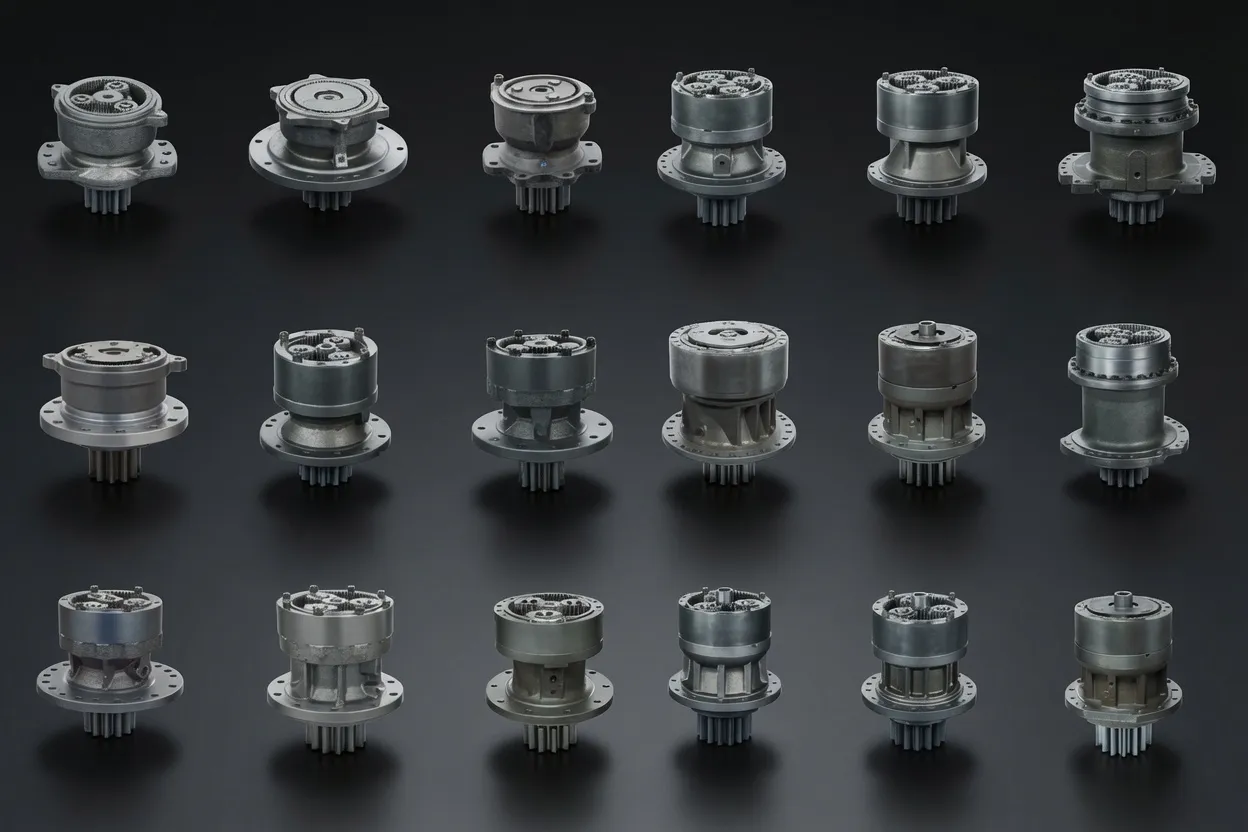
Installation and Commissioning
Gearbox-to-Motor Alignment
Align the motor flange to the gearbox input within 0.05 mm concentricity. For hydraulic motor connections, verify that the spline engagement length meets the minimum specified by the motor manufacturer to prevent spline overload under peak starting torque.
Hoist Drum Connection
Connect the gearbox output to the hoist drum through a rigid coupling with fitted bolts and dowel pins. Verify that the coupling transmits the full rated torque without slip. For open-gear connections between the gearbox output pinion and the drum ring gear, check mesh backlash and contact pattern before commissioning.
Brake Integration Testing
After installing both the motor brake and drum brake, test each independently to verify that it can hold 110% of the rated load. Test the combined braking system by lowering the rated load and verifying that the deceleration rate matches the crane manufacturer’s specification.
Load Test
Perform the crane’s statutory proof load test (typically 125% of rated capacity) after gearbox installation. Monitor gearbox housing temperature, vibration, and noise during the test. Temperatures should stabilize below the lubricant’s rated limit, and no abnormal vibration or noise should be present.
Maintenance for Safety-Critical Crane Gearboxes
Oil Analysis Program
Implement a quarterly oil sampling program for hoist and slew gearboxes. Laboratory analysis for wear metals (iron, chromium from gears; copper, tin from bearings), water content, and viscosity change provides early warning of developing issues. Trending these parameters over time reveals gradual degradation patterns that enable planned maintenance interventions before a failure occurs during a critical lift — an outcome with severe safety and financial consequences.
Annual Gear Inspection
During the crane’s annual thorough examination (required by most regulatory frameworks), open the gearbox inspection covers and visually examine the gear teeth for pitting, spalling, cracking, or abnormal wear patterns. Document findings with photographs and compare to the previous year’s inspection. Any gear showing progressive pitting covering more than 10% of the active tooth surface, or any single pit exceeding 2 mm diameter, should be evaluated by a qualified gear engineer to determine whether continued operation is acceptable or replacement is required.
Why Choose Ever-Power for Crane Planetary Gearboxes
Crane-Classified Product Range
Our planetary gearboxes are available in FEM M3 through M8 duty classifications, covering everything from light-duty workshop overhead cranes to heavy-duty port container cranes. Each model’s fatigue data is documented to the applicable classification standard.
Proof Load Test Certification
Every crane hoist gearbox receives a 125% proof load test on our in-house test stand. The test certificate, including load, duration, temperature, and deflection data, ships with each unit for inclusion in the crane’s certification dossier.
️
Retrofit and Upgrade Supply
Crane owners seeking to upgrade hoist or slew drives on aging equipment receive reverse-engineering support and drop-in-compatible replacement gearboxes that meet or exceed the original OEM specifications, often with improved bearing life and sealing performance.
Worldwide Crane Industry Delivery
We supply crane gearboxes to OEMs and end users across six continents, with logistics experience handling oversized shipments to port facilities, construction sites, and crane manufacturing plants worldwide.
Frequently Asked Questions
Equip Your Crane with Safety-Certified Gearboxes
Share your crane model, duty classification, and required capacity — our team will deliver a certified gearbox proposal.