
Livestock Nutrition · Feed Mixer Drive Technology
TMR (Total Mixed Ration) feed mixers blend hay, silage, grains, supplements, and liquids into a homogeneous feed that optimizes livestock nutrition and milk production. The mixer’s auger or reel drive must deliver high sustained torque at low speed to turn heavy, fibrous material without stalling or overheating. Planetary gearboxes provide the torque density and durability these demanding agricultural mixing applications require.
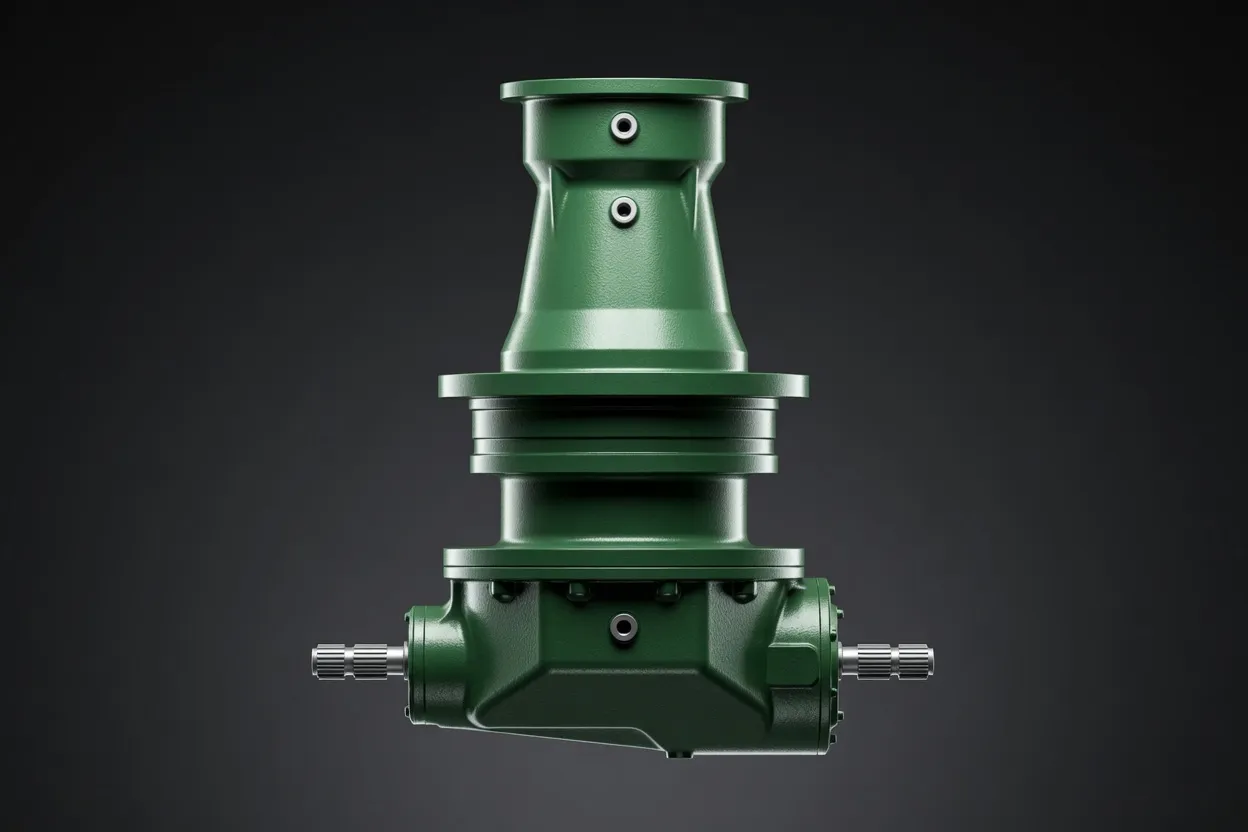
Feed Mixer Drive Architecture
Vertical and horizontal TMR mixers use one to four augers (vertical) or reels (horizontal) to blend feed ingredients. Each auger is driven by the tractor’s PTO through a main gearbox and a planetary gear reducer at the auger input, converting the 540 or 1,000 RPM PTO speed to the 15–40 RPM auger rotation needed for effective mixing without excessive material degradation. Output torques range from 5,000 to 30,000 Nm depending on mixer capacity (5 to 30 cubic meters) and the density of the feed ration being blended.
The mixing process generates a torque profile that varies significantly with feed composition. Dry, fibrous rations (hay-heavy) produce higher torque than wet, silage-based mixes. Loading sequence matters — adding dry hay on top of a silage base creates momentary torque peaks as the auger pulls the dry material down into the wet mix. The high torque planetary gearbox must handle these variable loads continuously during mixing cycles lasting 5 to 15 minutes per batch, with multiple batches processed per day during peak feeding periods.
Auger Drive Gearbox Requirements
High Starting Torque
When the mixer restarts after loading, the augers must break through a stationary mass of heavy, compressed feed — a condition that generates starting torques 200–300% of the steady-state mixing torque. The planetary gear reducer must handle these high starting loads without gear-tooth yielding, bearing slip, or shaft damage. Specifying a gearbox with rated peak torque at least 250% of the average mixing torque provides adequate margin for reliable restarts under all feed conditions, including the worst case of restarting a full mixer loaded with dense, high-moisture silage and mineral supplements.
Sustained Low-Speed Torque
Augers rotate at 15 to 40 RPM continuously during the mixing cycle, generating sustained torque that must be transmitted without the gearbox overheating. At these very low output speeds, gear mesh efficiency determines how much of the motor’s input power reaches the auger versus how much is converted to heat inside the gearbox. Helical planetary gears with precision-ground tooth surfaces achieve efficiencies above 94% even at these low speeds, minimizing heat generation and enabling continuous operation without thermal derating in the warm barn environments where many feed mixers operate year-round.
Bidirectional Operation for Discharge
After mixing, the auger reverses direction (or a separate conveyor engages) to discharge the blended feed into bunks or delivery wagons. The gearbox must perform identically in both rotation directions, with symmetric backlash and efficiency characteristics. Asymmetric designs that perform well in one direction but exhibit higher friction or noise in reverse degrade the discharge process and accelerate wear on the under-optimized tooth flanks.
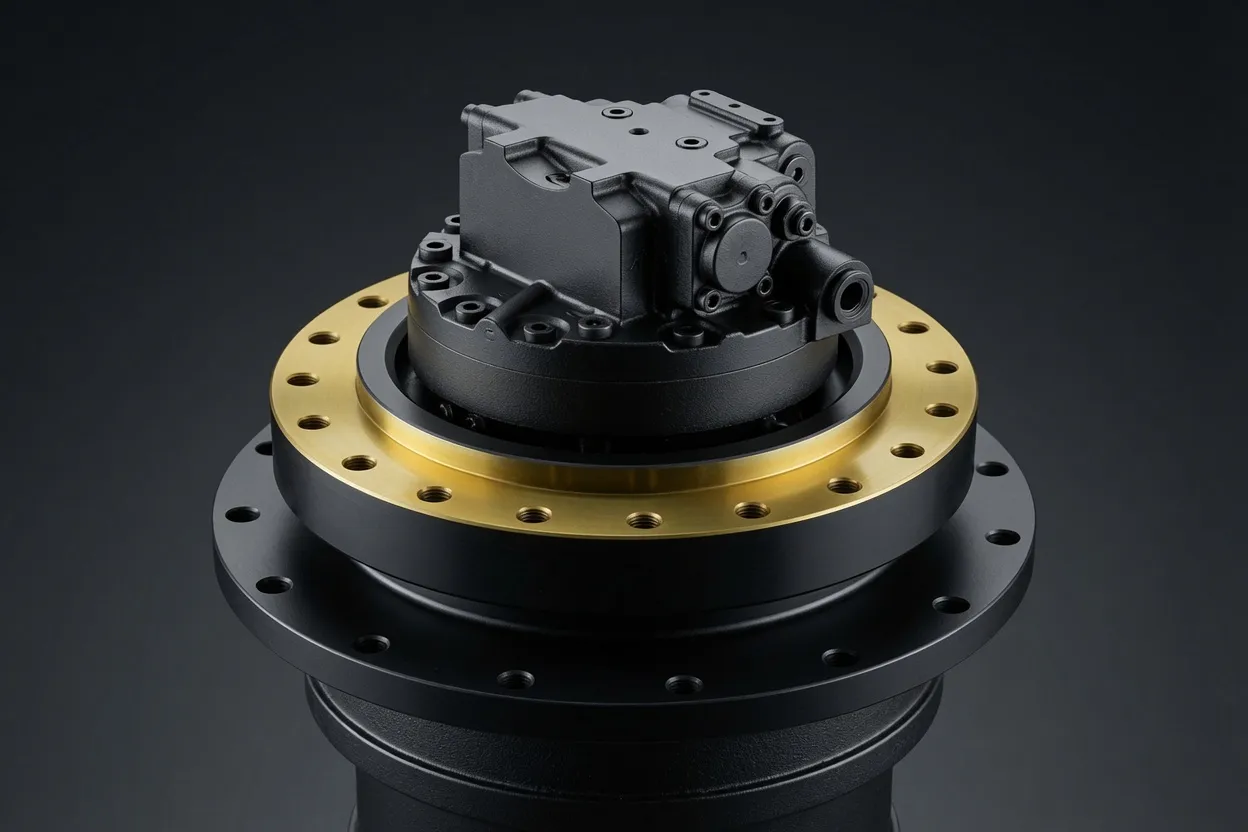
Design Specifications
⚙️ Gear Ratio Range
Ratios of 15:1 to 40:1 for direct PTO-to-auger drives. Higher ratios (40:1 to 80:1) when a hydraulic motor replaces the PTO as the power source, providing variable-speed mixing capability. Two-stage planetary units cover the full ratio range in compact packages that fit within the mixer’s limited drive-bay space.
Overload Capacity
Rated peak torque at least 250% of continuous rating for starting-torque events. Emergency overload survival at 300% for 10 seconds covers the scenario where the auger encounters a large frozen block or metallic foreign object in the feed load.
️ Feed-Environment Protection
Feed mixer gearboxes operate in barn environments with feed dust, moisture, and acidic silage liquids. IP65 sealing with corrosion-resistant housing coatings and stainless-steel output shafts prevents premature deterioration. Output shaft seals must resist the acidic silage juices that can splash onto the gearbox during loading and mixing.
Low-Maintenance Design
Feed mixers operate daily on most dairy and feedlot operations. Sealed, oil-bath-lubricated gearboxes with oil-change intervals of 2,000+ hours minimize maintenance labor, requiring attention only during scheduled implement service intervals rather than daily or weekly interventions.
Installation and Operation
PTO Speed Matching
Verify the correct PTO speed (540 or 1,000 RPM) before connecting the mixer. Operating at the wrong PTO speed underloads or overloads the gearbox, causing either insufficient mixing action or thermal damage from excessive torque at reduced speed.
Auger Shaft Connection
Connect the gearbox output to the auger shaft using the manufacturer’s specified coupling (typically a splined or keyed connection with a retaining nut). Verify coupling engagement and torque the retaining hardware to specification. Inadequate coupling engagement under the high starting torques of feed mixing can result in shaft separation — a dangerous failure mode.
Load Sequence Training
Train operators on correct feed-loading sequence to minimize starting torque: add liquids first, then wet ingredients (silage), and dry ingredients (hay, grain) last. This loading order reduces the peak starting torque by allowing the auger to begin turning in the lighter wet material before engaging the heavier dry layer.
Oil Level Check Schedule
Check gearbox oil level weekly during active feeding periods. Post a visual reminder at the operator station. Low oil level from a slow leak will destroy the gearbox within days of sustained mixing operation — weekly checks catch developing leaks before critical damage occurs.
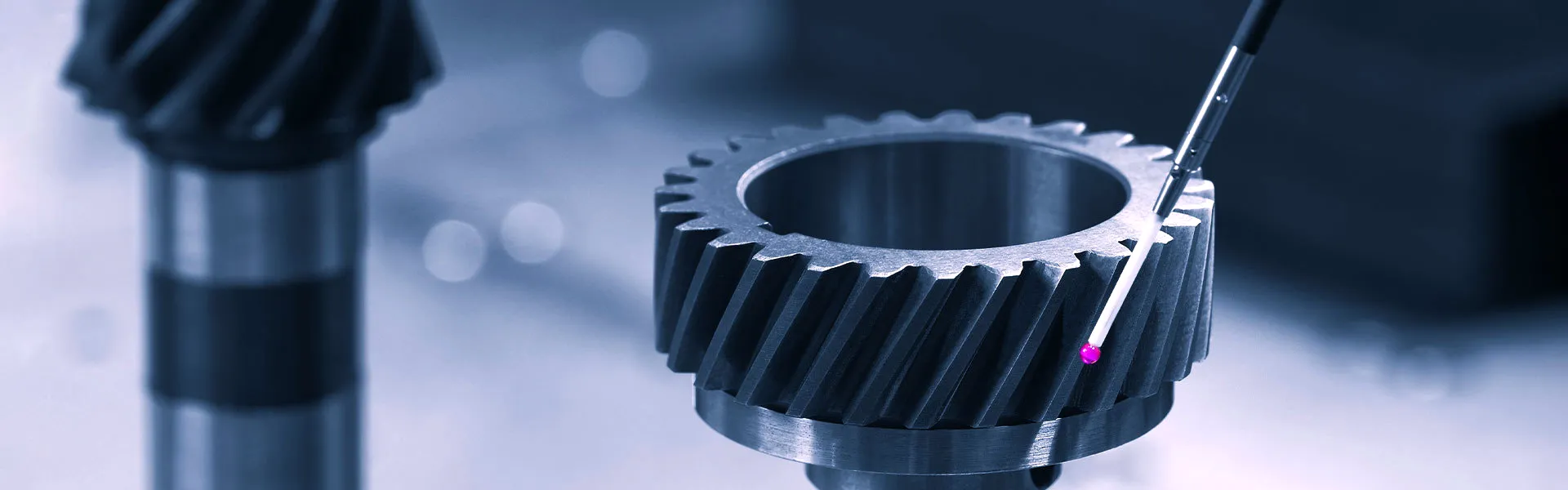
Maintenance for Year-Round Reliability
Feed mixers used on dairy operations run 365 days per year, accumulating 1,000 to 2,000 operating hours annually. Oil changes every 1,000 hours (approximately annually) maintain lubricant quality. The annual oil change is also the appropriate time for a thorough gearbox inspection: check the magnetic drain plug for metallic debris quantity and particle size, inspect external surfaces for corrosion damage, verify output shaft seal condition, and confirm that all mounting bolts are properly torqued. Document findings to establish a trending record that supports condition-based replacement planning.
Silage-acid exposure is the most aggressive environmental factor for feed mixer gearboxes. The acids in fermented silage (pH 3.5–4.5) attack carbon steel and standard paint coatings within months, causing pitting corrosion that weakens housing walls and roughens seal surfaces. Epoxy-coated or powder-coated housings with stainless-steel output shafts resist this corrosion, extending housing and seal life by 3–5× compared to standard painted carbon-steel designs. The upfront cost premium for corrosion-resistant construction is recovered within 2–3 years through avoided seal replacements and extended gearbox service life.
Why Choose Ever-Power for Feed Mixer Gearboxes
Mixer-Specific Product Range
Our feed mixer gearbox line covers vertical TMR mixers from 5 to 30 m³ capacity, with models for PTO-driven and hydraulic-motor-driven configurations compatible with major mixer brands including Kuhn, Trioliet, JAYLOR, Supreme, and NDE.
Starting-Torque Validated
Every model is tested at 300% of rated torque for 1,000 start-stop cycles — simulating two years of daily mixer operation — verifying reliable performance under the high starting loads characteristic of feed mixing duty.
️
Corrosion-Resistant Options
Epoxy-coated housings, stainless-steel output shafts, and silage-acid-resistant seal materials are available as standard options for dairy and silage operations where acidic feed exposure is a daily reality.
Livestock Industry Supply
We supply feed mixer gearboxes to implement dealers and mixer manufacturers worldwide. Seasonal pre-stocking programs ensure inventory is available when dairy and feedlot customers need replacements. Contact [email protected].
Frequently Asked Questions
Mix Better Feed with Reliable Gearbox Performance
Share your mixer model and feeding operation details — our livestock equipment team will recommend the optimal gearbox solution.