
Medical Robotics · Surgical Robot Joint Drive Technology
Surgical robots translate a surgeon’s hand movements into scaled, tremor-filtered motions at the instrument tip, enabling minimally invasive procedures with sub-millimeter accuracy. Each robotic joint — six to eight per instrument arm — houses a miniature planetary gearbox that converts the motor’s high-speed rotation into the precise, low-backlash angular motion needed to manipulate tissue safely inside the human body. This guide covers how planetary gearbox engineering meets the exacting precision, safety, and biocompatibility demands of surgical robot joint applications.
The Role of Planetary Gearboxes in Surgical Robot Joints
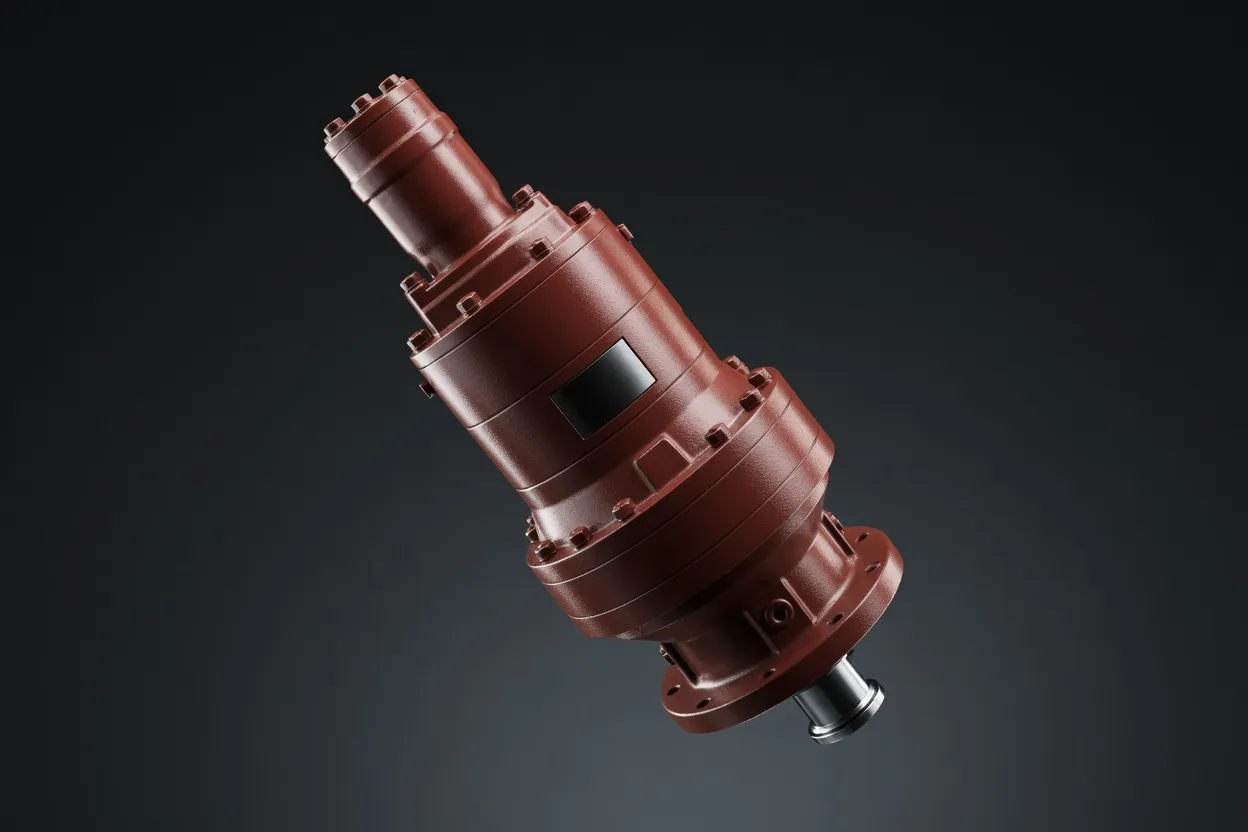
Each joint of a surgical robot arm pairs a compact servo or stepper motor with a precision planetary gearbox providing ratios of 30:1 to 150:1. The gearbox multiplies the motor’s torque from millinewton-meters to the newton-meter range needed to manipulate surgical instruments through trocar ports while maintaining positional accuracy within ±0.1 mm at the instrument tip. Because the robot’s kinematic chain amplifies any backlash in each joint to the end effector, gearbox angular play must be held below 1 arcminute — and below 30 arcseconds for microsurgical platforms — to ensure the instrument tip follows the surgeon’s intended trajectory without dead-zone artifacts at direction reversals.
Surgical robot gearboxes face uniquely stringent design constraints beyond precision: they must be compact enough to fit within an arm link less than 25 mm in diameter, light enough to keep arm inertia low for responsive force feedback, quiet enough for the operating-room environment (below 40 dB(A)), and capable of being cleaned and sterilized between procedures. The low backlash planetary gearbox architecture addresses these constraints through its coaxial, high-torque-density configuration, which packages the necessary reduction into the smallest possible cylindrical envelope while distributing load across multiple planet gears for smooth, whisper-quiet torque delivery.
Precision and Safety Requirements
Sub-Arcminute Backlash for Surgical Accuracy
During suturing, tissue manipulation, and dissection, the surgeon controls the instrument through master-slave teleoperation with motion scaling — 3:1 or higher — that amplifies any mechanical dead zone at the instrument side. A gearbox with 3 arcminutes of backlash produces a perceptible “dead spot” in the force-feedback loop that disrupts the surgeon’s tactile perception and degrades fine-motor coordination. Specifying a precision planetary gearbox with backlash below 1 arcminute eliminates this dead spot, enabling fluid bidirectional motion control that preserves the natural hand-feel surgeons rely on for delicate tissue handling.
Force Limiting and Backdrivability
Surgical safety requires that the robot cannot apply excessive force to patient tissue, even during control-system faults. The gearbox’s backdrivability — the ability of external forces to drive the output back through the gear train — determines how effectively the force-feedback sensors detect and respond to tissue contact. Moderate gear ratios (30:1 to 80:1) with high-efficiency meshes (above 90% backdrive efficiency) allow contact forces as low as 0.5 N to propagate through the gearbox to the motor-side torque sensor, enabling rapid force-limiting response within the 10-millisecond reaction time required by IEC 62304 surgical-robot safety standards.
Sterilization Compatibility
Surgical instruments, including the integrated gearboxes in reusable robot arms, must withstand repeated sterilization cycles — typically 1,000 or more autoclave cycles at 134 °C saturated steam for reusable designs, or be packaged as single-use sterile components. Gearbox materials and lubricants must retain their mechanical properties after this thermal exposure. Stainless-steel gears, PEEK polymer carriers, PFPE lubricants rated for 250 °C, and medical-grade EPDM seals provide the autoclave resistance needed for reusable surgical robot joint gearboxes without degradation in backlash or friction characteristics.
Miniaturization and Material Selection
⚙️ Micro-Module Gearing
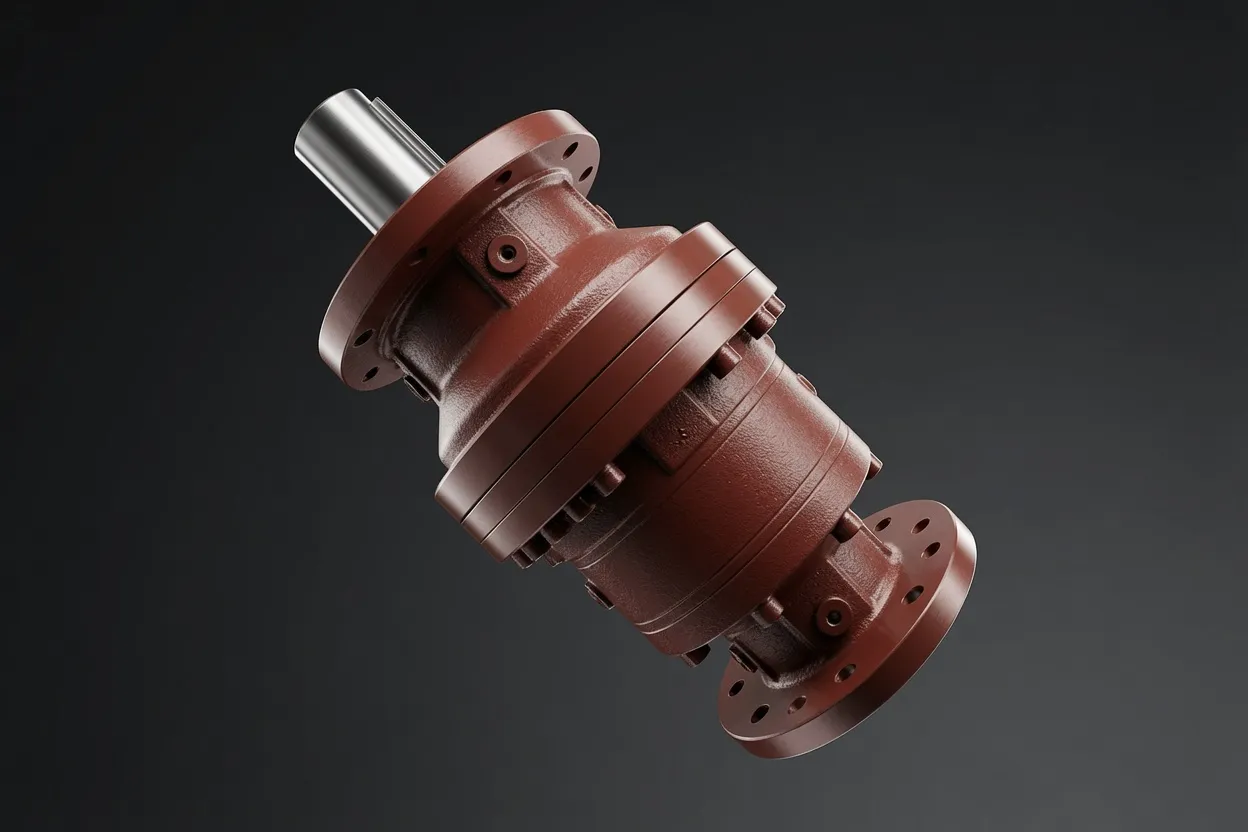
Surgical robot gearboxes use gear modules of 0.2 to 0.5 mm — tooth sizes requiring wire-EDM or precision grinding manufacturing processes. At these micro scales, surface finish quality (below Ra 0.2 μm) dominates friction and wear behavior, and tooth-profile accuracy within ±5 μm determines backlash and transmission error.
Biocompatible Materials
Gears and housings in contact with the sterile field must be manufactured from biocompatible materials — typically 17-4 PH stainless steel, titanium alloy (Ti-6Al-4V), or medical-grade PEEK. These materials resist corrosion from sterilization chemicals and body fluids while maintaining the hardness and fatigue strength needed for reliable gear operation over the gearbox’s rated cycle life.
️ Medical-Grade Lubricants
PFPE (perfluoropolyether) greases with NSF H1 or USP Class VI certification provide lubrication that is both autoclave-stable and biocompatible. These lubricants maintain film strength from –40 °C to +250 °C and do not outgas toxic compounds under the vacuum conditions present during low-temperature plasma sterilization processes used for heat-sensitive instrument components.
Hollow-Shaft Configurations
Many surgical robot joints route electrical cables and irrigation tubes through the center of the joint. Hollow-shaft planetary gearboxes with bore diameters of 3 to 8 mm accommodate these through-joint cable paths without compromising torque capacity, enabling the clean, snag-free arm geometry that surgical robots require for safe operation near patient tissue.
Integration into Surgical Robot Arms
Motor-Gearbox Pre-Assembly
Assemble the motor and gearbox as a tested subunit before integration into the arm link. Verify backlash, friction torque, and noise level at the subunit stage — correcting issues at this point is far simpler and less costly than after the complete arm is built.
Cable Routing Through Hollow Shaft
Thread signal and power cables through the hollow-shaft bore before mating the gearbox to the arm link. Verify that cables have adequate clearance throughout the full joint rotation range — cable pinching causes intermittent signal failures that are extremely difficult to diagnose in a multi-joint robot arm.
Force Sensor Calibration
Calibrate the joint force/torque sensor with the gearbox installed, including the gearbox’s friction in the sensor’s baseline. Post-gearbox calibration ensures that the force-feedback loop accurately reflects external contact forces without confusing internal gearbox friction with patient tissue interaction.
Sterilization Cycle Validation
After final assembly, subject the arm to the planned sterilization protocol for 100 cycles and re-measure backlash, friction, and noise. Any degradation beyond specification limits requires material or lubricant substitution before releasing the design for clinical use.
Lifecycle and Maintenance in Clinical Settings
Reusable surgical robot arms undergo sterilization after every procedure — 500 to 1,500 cycles per year depending on caseload. The gearbox must maintain its precision specifications throughout this sterilization exposure without scheduled maintenance. Sealed, lifetime-lubricated units with autoclave-rated materials achieve this by eliminating the need for re-lubrication or bearing adjustment between procedures. Clinical engineering teams monitor gearbox performance through the robot’s built-in diagnostics: backlash measurement routines, friction-torque trending, and automated noise-level checks run during pre-procedure system verification.
When a gearbox reaches end-of-life — indicated by backlash exceeding the safety controller’s compensation range or friction increasing beyond the force-sensor’s baseline tolerance — the joint module is replaced as a complete unit. Replacement takes 15 to 30 minutes using the robot manufacturer’s exchange procedure, and the removed module returns to the factory for rebuild and recertification. For single-use instrument designs, the gearbox is part of the disposable instrument cartridge and is discarded after one procedure, eliminating sterilization-induced degradation as a lifecycle concern entirely.
Why Choose Ever-Power for Surgical Robot Gearboxes
Medical-Grade Micro-Manufacturing
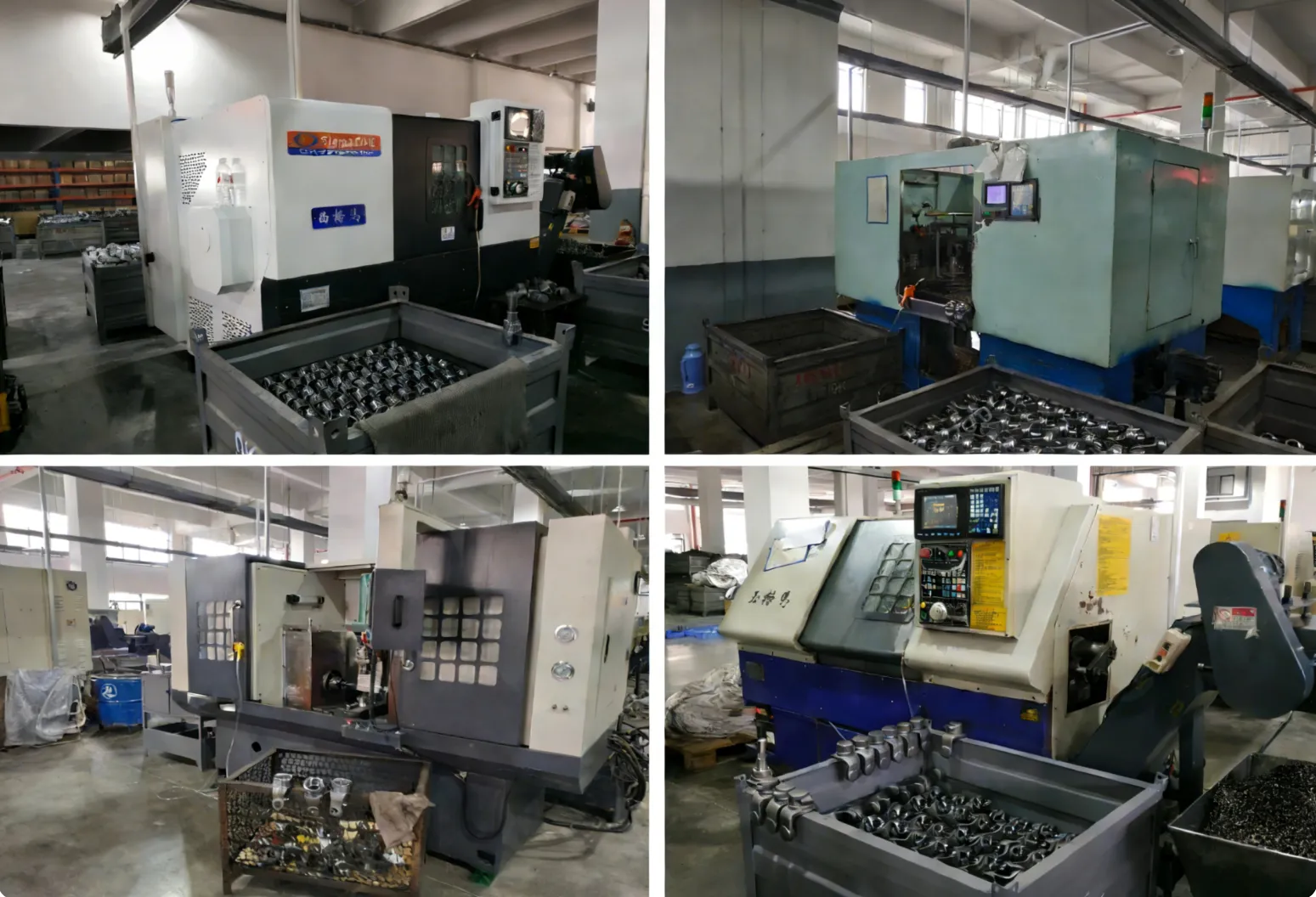
Our cleanroom gear production facility manufactures surgical-grade planetary gearboxes with module values down to 0.2 mm, using biocompatible stainless steel, titanium, and PEEK materials with full traceability to raw-material certifications meeting ISO 13485 quality management requirements.
Autoclave Life Validation
We validate every surgical gearbox design through 2,000 autoclave cycles at 134 °C, measuring backlash, friction, and noise after each 100-cycle interval. The resulting degradation curves enable robot manufacturers to set evidence-based replacement intervals for clinical use.
️
Co-Development with Robot OEMs
Our medical device engineering team collaborates with surgical robot developers from concept through regulatory submission, providing design-for-manufacturability input, prototype gearboxes, and the documentation needed for FDA 510(k) or CE MDR device submissions.
Controlled-Environment Supply
Surgical gearboxes ship in cleanroom-compatible packaging with certificates of conformance, material traceability, and dimensional inspection reports — ready for direct integration into medical device assembly processes without incoming inspection delays.
Frequently Asked Questions
Enable the Next Generation of Surgical Precision
Share your surgical robot joint specifications — our medical device team will deliver a gearbox proposal with biocompatibility and sterilization data.