
Metrology & Testing · Precision Instrument Drive Systems
Precision test instruments — coordinate measuring machines (CMMs), surface profilometers, optical test benches, torque calibrators, and material-testing systems — demand drive components that contribute negligible error to the measurement process. Planetary gearboxes in these instruments must deliver positioning accuracy measured in micrometers and angular precision measured in arcseconds, operating with friction so low and predictable that the instrument’s measurement uncertainty budget allocates only a small fraction to the mechanical drive. This guide covers planetary gearbox engineering for precision test instrument applications.
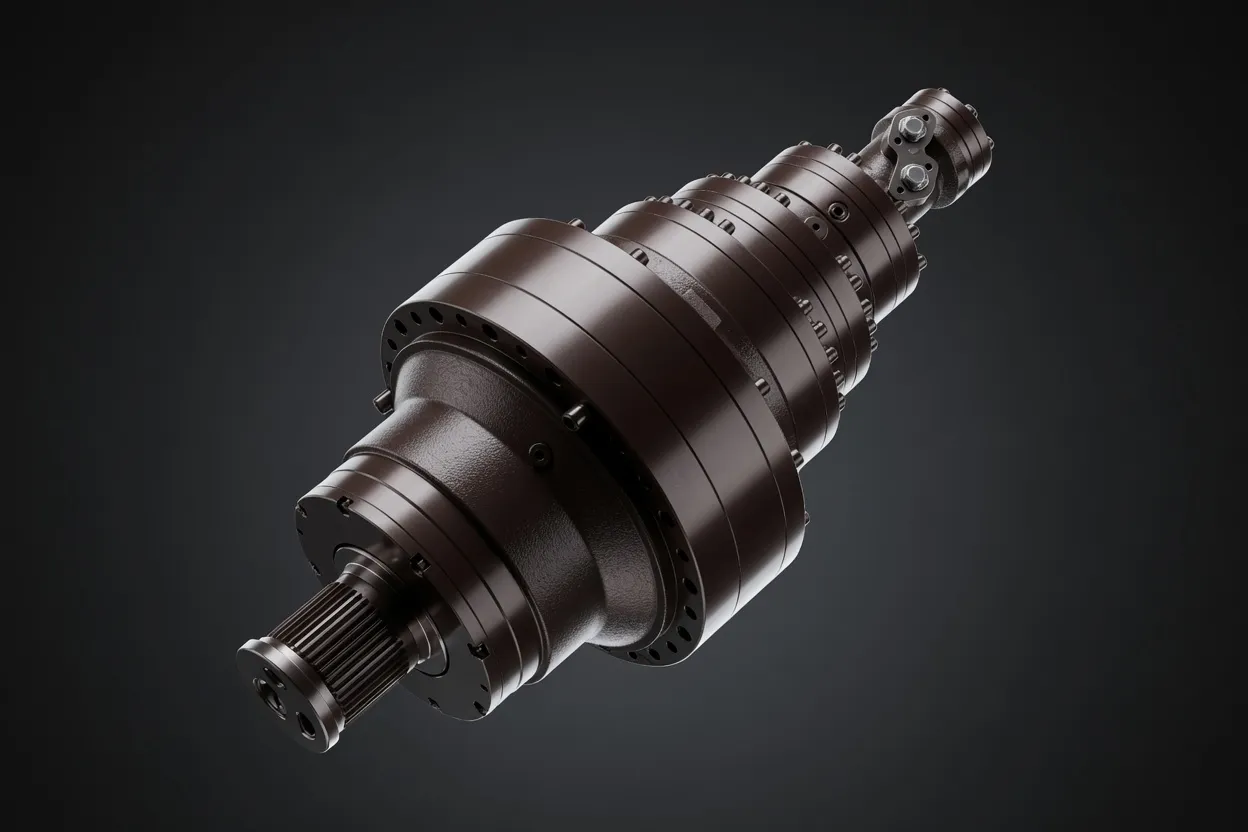
The Role of Gearboxes in Precision Instruments
Precision instruments use servo or stepper motor-driven axes to position probes, optics, or test fixtures relative to the specimen under measurement. A precision planetary gearbox between the motor and the feed mechanism (ball screw, linear stage, or rotary table) provides the torque needed to move heavy optical assemblies or high-force loading frames while enhancing positioning resolution through the gear ratio. At a 10:1 ratio, each motor encoder count moves the output 1/10th as far, effectively multiplying the position-measurement resolution by the same factor — a significant advantage for instruments where resolution directly determines measurement capability.
The gearbox’s contribution to measurement uncertainty includes backlash (dead zone at direction reversal), transmission error (periodic position deviation), friction hysteresis (position offset between approach directions), and thermal expansion (dimensional change from operating temperature rise). Each of these must be quantified, minimized by design, and included in the instrument’s uncertainty budget per ISO/IEC 17025 and GUM (Guide to the expression of Uncertainty in Measurement) requirements. A low backlash planetary gearbox with documented performance data for each of these parameters enables the instrument designer to make informed allocation decisions in the uncertainty budget.
Accuracy Parameters for Instrument Gearboxes
Backlash and Hysteresis
Backlash creates a position dead zone at direction reversal that appears as a hysteresis band in the instrument’s bidirectional measurement data. For CMMs, this hysteresis must be below 0.5 μm at the probe tip, which — through the kinematic chain — requires gearbox backlash below 30 arcseconds at the gearbox output. Achieving this demands lapped gear tooth surfaces, preloaded output bearings with zero axial and radial play, and tight manufacturing control on all dimensional tolerances in the gear train. Our premium instrument-grade planetary gear reducer achieves these specifications through 100% individual unit testing and selection.
Transmission Error
Transmission error — the deviation between the actual output angle and the theoretical output angle calculated from the input angle and ratio — creates periodic positioning errors at the gear mesh frequency. For rotary measurement tables and angular positioning systems, transmission error below 10 arcseconds peak-to-peak is required to achieve measurement uncertainties below ±1 arcsecond. This specification demands gear tooth profiles ground to better than 2 μm accuracy with lead and profile errors held within the narrowest tolerance bands achievable by current gear grinding technology.
Friction Consistency
Instruments that measure force or torque during a positioning traverse — such as material-testing machines and friction testers — require gearbox friction that is constant and predictable across the speed range. Friction variations appear as artifacts in the force measurement, potentially masking the material property being measured. Specifying a gearbox with characterized, documented friction-versus-speed data enables the instrument controller to compensate for gearbox friction in real time, subtracting it from the measured force to reveal the true specimen response.
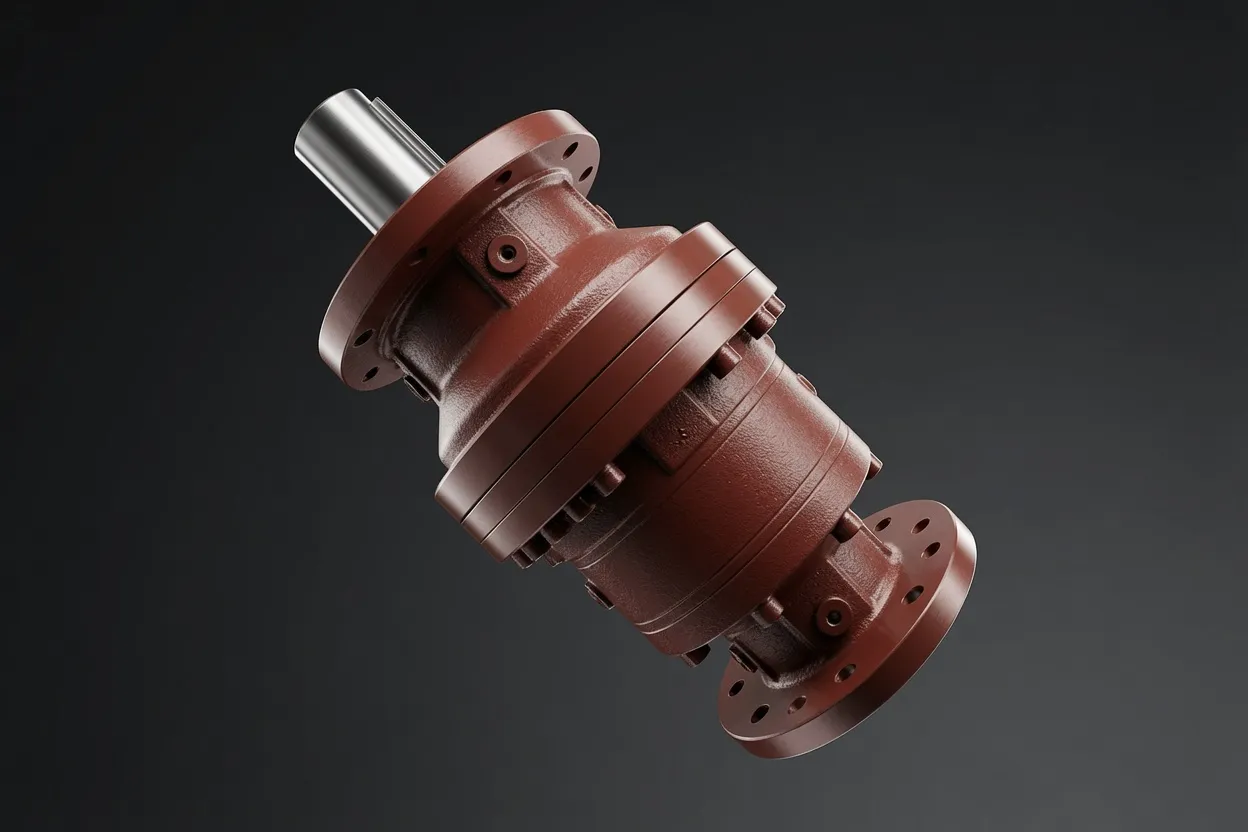
Design Specifications for Instrument Gearboxes
Sub-Arcsecond Transmission Error
Premium instrument gearboxes achieve transmission error below 10 arcseconds through individually lapped gear meshes and temperature-stable housing materials. Each unit is individually measured and certified — not sample-tested — because instrument applications demand guaranteed individual-unit performance.
⚙️ Zero-Play Output Bearings
Cross-roller or angular-contact bearing pairs with controlled preload eliminate all output play (radial, axial, and tilt). The bearing preload is set during final assembly and verified by measuring the output shaft’s total indicator reading (TIR) — below 1 μm for instrument-grade units.
️ Thermal Stability
Housing material with low thermal expansion coefficient (Invar or thermally stabilized steel) minimizes dimensional change from operating-temperature variation. For the most demanding applications, gearbox housing temperature is actively controlled by the instrument’s thermal management system to maintain constant dimensions throughout the measurement sequence.
Vibration Below Detection Threshold
Instrument gearbox vibration must be below the sensing threshold of the measurement transducer it positions. For nanometer-resolution profilometers, this means gearbox vibration below 0.01 μm RMS at the output — achievable only with precision-balanced, acoustically damped gearbox assemblies.
Integration and Calibration
Axis Calibration with Gearbox Installed
Calibrate the instrument axis with the gearbox in place, using a laser interferometer or calibrated artifact. The calibration captures the combined errors of the motor, gearbox, coupling, and feed mechanism as a single axis-error map, which the instrument controller uses for real-time correction during measurement.
Bidirectional Error Mapping
Measure the axis position at calibration points in both travel directions to quantify the bidirectional hysteresis contributed by gearbox backlash and friction. Record this data as part of the instrument’s calibration certificate — regulatory standards require bidirectional accuracy statements for accredited measurements.
Thermal Stabilization Protocol
Allow the instrument to reach thermal equilibrium (typically 2–4 hours in a temperature-controlled metrology room) before performing final calibration. Gearbox heating from the break-in and calibration process can shift positions by several micrometers until equilibrium is reached.
Periodic Reverification Schedule
Establish a reverification interval (typically 6 to 12 months) to confirm that gearbox wear has not degraded axis accuracy beyond the instrument’s specified limits. Reverification data trended over time predicts gearbox end-of-life and enables planned replacement before measurement quality is affected.
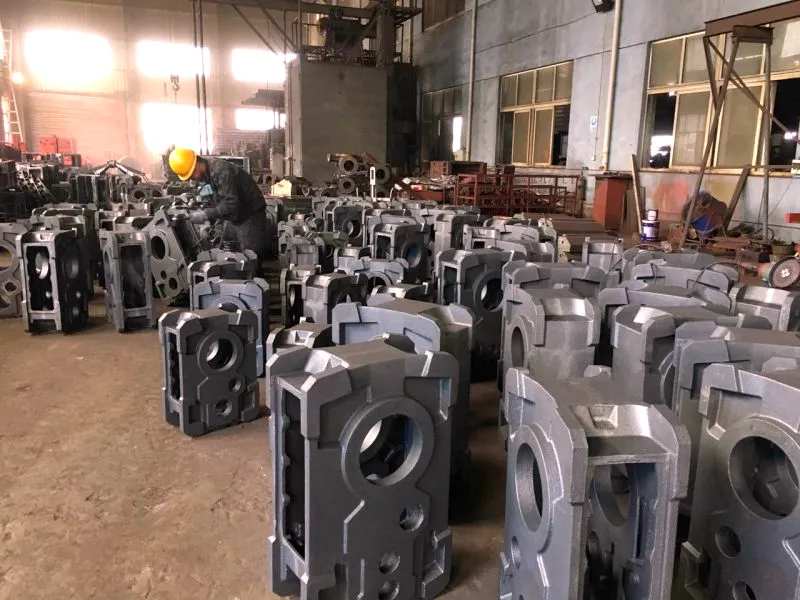
Maintenance and Traceability
Instrument gearboxes require no scheduled maintenance — they are sealed, lifetime-lubricated units designed for the clean, temperature-controlled environments of metrology laboratories. The primary lifecycle concern is gradual backlash increase from gear-tooth wear that erodes the axis’s bidirectional accuracy over years of operation. Annual reverification detects this progression, and the gearbox is replaced when the bidirectional error contribution exceeds the allocation in the instrument’s uncertainty budget — typically after 30,000 to 50,000 operating hours of normal instrument use.
For instruments operating under ISO/IEC 17025 accreditation, gearbox replacement is a calibration-impacting event that must be documented, followed by a full axis recalibration, and verified before the instrument returns to accredited measurement service. The replacement gearbox must be supplied with individual unit test data (backlash, transmission error, friction) that the laboratory’s quality manager can review and include in the instrument’s calibration records. Providing this documentation as a standard deliverable with every instrument-grade gearbox eliminates a common pain point for accredited laboratories managing their measurement equipment fleet.
Why Choose Ever-Power for Precision Instrument Gearboxes
Individual Unit Certification
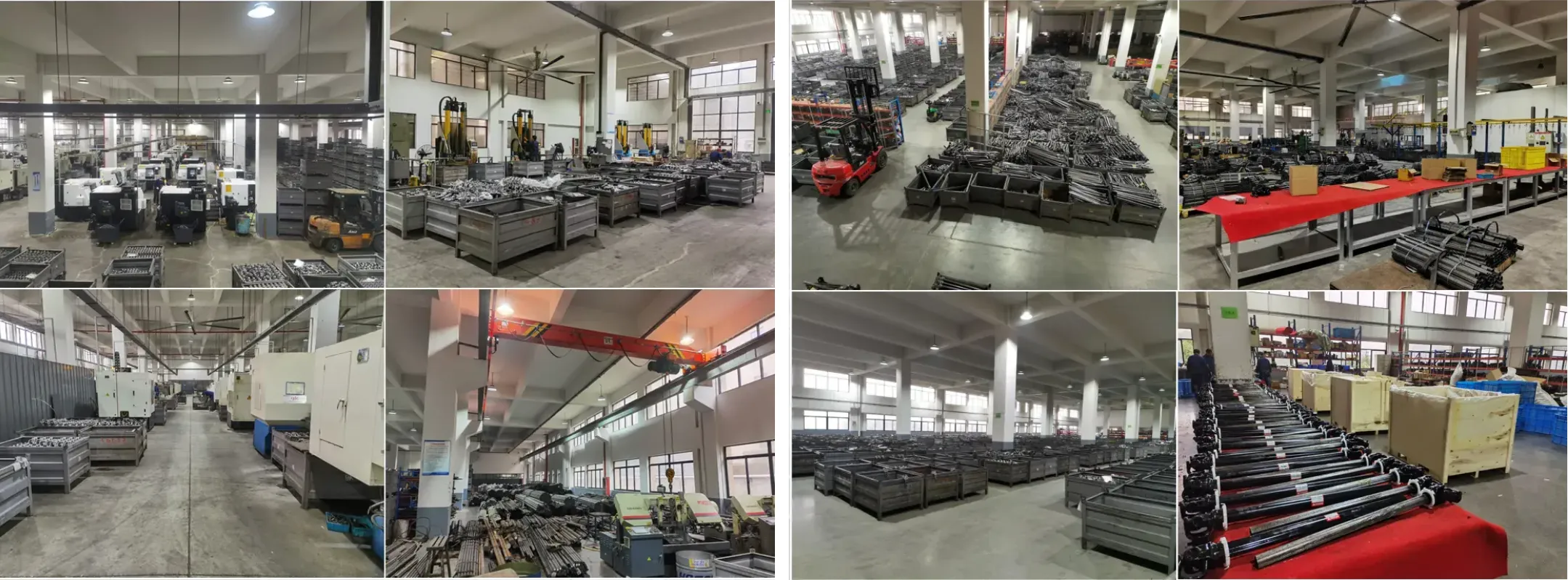
Every instrument-grade gearbox ships with individually measured backlash, transmission error, and friction data — not lot-sample values — providing the documented, guaranteed performance that precision instrument manufacturers and accredited laboratories require.
Sub-10-Arcsecond Transmission Error
Our premium lapped-gear planetary gearboxes achieve transmission error below 10 arcseconds peak-to-peak, supporting angular positioning instruments with measurement uncertainties below ±1 arcsecond.
️
Metrology OEM Collaboration
We work with CMM, profilometer, and material-testing-machine manufacturers from specification through production, optimizing gearbox parameters for each instrument’s specific uncertainty budget allocation.
Controlled Traceability
Full dimensional and performance traceability from raw-material heat through final test, packaged in documentation formats compatible with ISO/IEC 17025 and ISO 9001 quality systems.
Frequently Asked Questions
Measure with Confidence — Precision Gearboxes for Every Instrument
Share your instrument’s accuracy requirements and uncertainty budget — our metrology team will recommend the optimal gearbox.