
Electric Mobility · EV Drivetrain Gear Technology
Electric vehicle powertrains pair high-speed electric motors with single-speed or multi-speed reduction gearboxes that convert motor output into wheel torque. The planetary gearbox, with its coaxial layout, exceptional torque density, and high efficiency, has become the preferred reduction architecture for EV traction drives — from compact city cars to heavy-duty electric trucks. This article covers the engineering principles, material requirements, and performance factors that govern planetary gearbox design for electric vehicle powertrains.
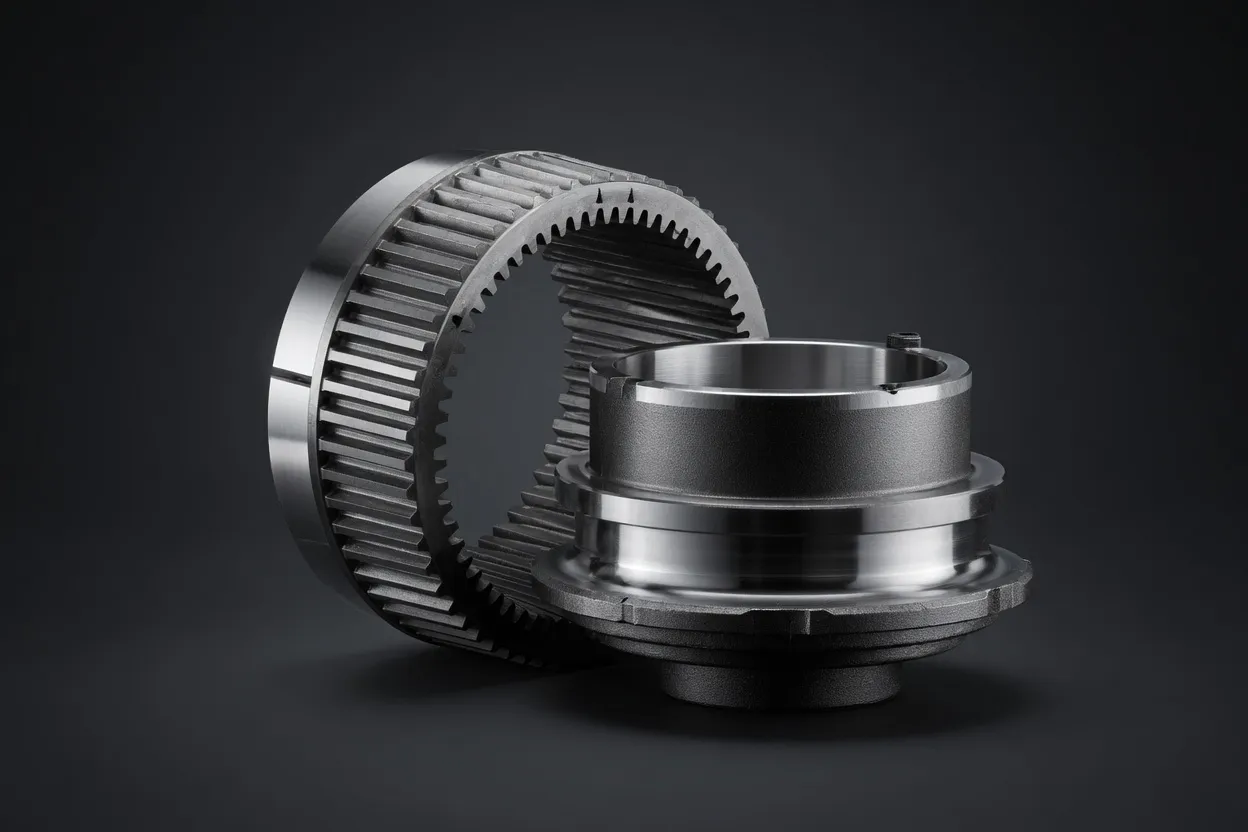
The EV Powertrain Architecture and the Role of Reduction Gearing
Electric motors for traction applications spin at 10,000 to 20,000 RPM — and next-generation designs target 25,000 RPM or higher. Vehicle wheels, by contrast, rotate at 500 to 1,500 RPM at typical highway speeds. A planetary gear reducer bridges this speed gap while multiplying the motor’s torque by the inverse of the ratio. In a single-speed EV drivetrain, a fixed-ratio planetary reduction of 8:1 to 12:1 converts the motor’s high-speed, moderate-torque output into the low-speed, high-torque profile that the wheels need for acceleration, gradeability, and low-speed maneuvering.
The coaxial nature of the planetary arrangement aligns the motor shaft and the output shaft on the same centerline, simplifying the drivetrain packaging and eliminating the offset parallel-shaft layout that would otherwise require a larger transmission housing. This space saving is critical in battery electric vehicles, where every cubic centimeter of freed volume can potentially be allocated to battery cells, directly increasing driving range — the single most important purchase consideration for EV consumers today.
Single-Speed vs. Multi-Speed EV Transmissions
Single-Speed Reduction — The Current Standard
The overwhelming majority of production EVs use a single-speed planetary reducer with a fixed ratio between 8:1 and 12:1. This simplicity offers packaging, weight, cost, and reliability advantages — fewer moving parts mean fewer potential failure points and no shift events to calibrate. The electric motor’s wide constant-power band (from roughly 3,000 RPM to its maximum speed) provides adequate performance across the full vehicle speed range without requiring multiple gear ratios. A high efficiency planetary gearbox with per-stage efficiency above 98% ensures that minimal energy is lost in the reduction step, preserving the battery range advantage that consumers expect.
Multi-Speed Concepts — Emerging Trend
As EV top speeds increase and motor designers push toward higher RPM operation for power-density gains, multi-speed transmissions are gaining renewed interest. A two-speed planetary transmission uses a clutch to switch between a low ratio (for acceleration and gradeability) and a high ratio (for efficient high-speed cruising). This allows the motor to operate closer to its efficiency sweet spot across a wider vehicle speed range, potentially improving highway energy consumption by 5–8%. The challenge lies in achieving shifts smooth enough to match the seamless acceleration feel that EV drivers expect, requiring ultra-fast clutch actuation and precise planetary gear-set coordination.
Multi-Motor Architectures
Performance EVs and electric trucks increasingly use two or three motors — one per axle or one per wheel. Each motor pairs with its own planetary reducer, and the vehicle controller distributes torque among motors for traction, stability, and efficiency optimization. These multi-motor configurations demand gearboxes with precisely matched ratio and efficiency characteristics across all units to prevent torque imbalances that could affect vehicle handling. Ordering matched sets from a single planetary gearbox manufacturer ensures consistency that mixing suppliers cannot reliably guarantee.
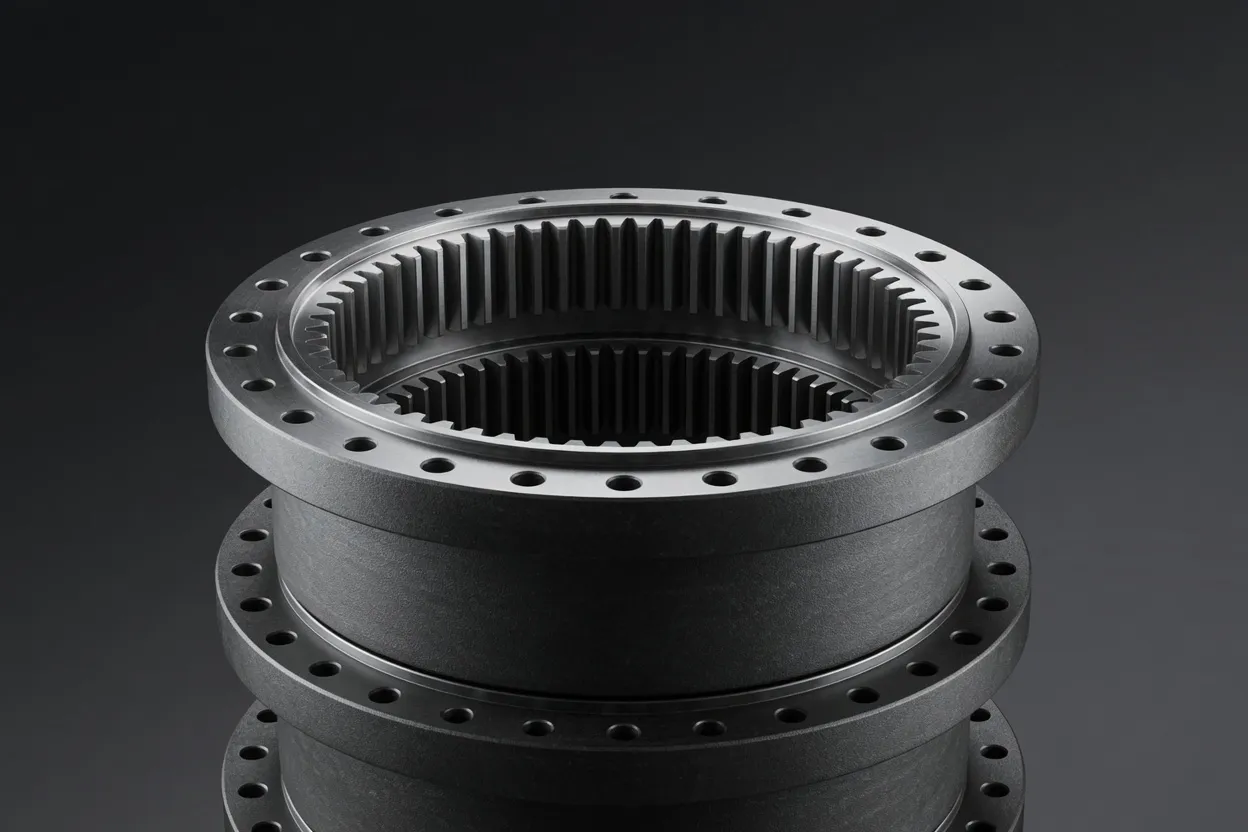
Design Challenges Unique to EV Planetary Gearboxes
⚡ High Input Speed
EV motors operate at far higher speeds than ICE engines. Planetary gears must withstand input speeds of 15,000–20,000+ RPM, requiring precision-balanced components, optimized lubrication to control churning losses, and bearing designs rated for the resulting centrifugal loads on planet pins. At these speeds, even minor imbalances generate vibration and noise that transmit into the cabin.
NVH Requirements
Without engine noise to mask gear whine, EV transmissions must be nearly silent. Gear noise targets below 70 dB(A) at the transmission housing — roughly 20 dB lower than acceptable in an ICE vehicle — demand AGMA Class 12+ tooth quality, optimized profile modifications, and helical gear meshes with contact ratios above 2.5 to distribute load across multiple tooth pairs simultaneously.
️ Thermal Management
Continuous high-power operation during highway cruising or repeated acceleration generates substantial heat in the gear meshes and bearings. EV planetary gearboxes typically use oil-jet lubrication that also cools the gear teeth, with the oil circulated through an external cooler integrated into the vehicle’s thermal management system. Lubricant selection balances low viscosity for reduced churning losses against adequate film strength at operating temperature.
⚖️ Weight Optimization
Every kilogram of drivetrain weight reduces battery range. EV planetary gearboxes use thin-wall aluminum housings, hollow planet pins, lightweight needle-roller planet bearings, and optimized gear tooth geometries that maximize strength-to-weight ratio. Advanced materials — including powder metallurgy gears and carbon-fiber-reinforced polymer carrier plates — are under development for next-generation applications.
Efficiency Optimization Strategies
In an EV, gearbox efficiency directly affects driving range — a 1% improvement in gearbox efficiency translates to approximately 1% more range from the same battery pack. This relationship makes efficiency optimization a primary design objective for EV planetary reducers, more so than in ICE vehicles where engine efficiency dominates the overall powertrain equation. Key efficiency drivers include gear mesh losses (minimized through precision tooth profiles and low-friction coatings), bearing losses (reduced through optimized bearing selection and preload), seal drag (minimized through low-contact-force seal designs), and oil churning losses (controlled through targeted lubrication that delivers oil only where needed rather than flooding the entire gear chamber).
Some EV gearbox designs achieve overall efficiencies exceeding 97% at the operating point corresponding to highway cruising — the condition where the vehicle spends most of its energy. At lower speeds and partial loads, efficiency may drop to 94–95% due to fixed parasitic losses (seals, bearings) representing a larger fraction of the total power flow. Mapping gearbox efficiency across the entire motor speed-torque envelope enables the vehicle controller to select motor operating points that minimize combined motor-plus-gearbox losses, squeezing additional range from the battery.

Testing and Validation for EV Applications
High-Speed Durability Testing
EV planetary gearboxes undergo accelerated durability testing at sustained input speeds of 15,000+ RPM for thousands of hours, simulating the lifetime mileage of the vehicle in a compressed timeframe. Vibration, temperature, and oil analysis are monitored continuously to detect wear progression. End-of-test inspections include gear-tooth surface analysis (looking for micropitting and scoring), bearing examination, and seal condition assessment to verify that all components meet the target life with adequate safety margin.
NVH Benchmarking
Completed gearbox units are tested in an anechoic chamber across their full speed and torque range to map noise emissions. Results are compared against vehicle-level NVH targets derived from competitive benchmarking. If gear whine exceeds the target at specific operating points, the gear designer adjusts tooth-profile modifications and re-tests until compliance is achieved. This iterative process typically requires two to three gear-tooth design iterations before the noise target is met across all conditions, underscoring the importance of precision manufacturing that reproduces the designed profile faithfully in production volumes.
Why Choose Ever-Power for EV Powertrain Gearboxes
High-Speed Rated Manufacturing
Our gear grinding and honing processes achieve the AGMA Class 12 tooth quality and sub-Ra 0.2 μm surface finish required for EV gear sets operating at 15,000+ RPM input speeds, meeting the NVH and durability standards of premium electric vehicle programs.
Efficiency Mapping Service
We provide measured efficiency maps across the full speed-torque operating envelope for every gearbox model, enabling EV powertrain engineers to optimize motor-gearbox system efficiency during vehicle calibration.
EV-Specific Engineering Support
Our drivetrain engineers understand the unique challenges of EV applications — high speed, NVH sensitivity, thermal constraints, and weight targets. Share your motor specifications and vehicle requirements for a dedicated technical proposal.
Prototype-to-Production Scaling
From 50-unit development batches through 10,000+ monthly production volumes, our capacity and quality systems scale seamlessly to support your EV program from prototype validation through full-rate production.
Frequently Asked Questions
Accelerate Your EV Powertrain Development
Share your motor specs, vehicle parameters, and NVH targets — our team will propose an optimized planetary reducer within 5 business days.