
Industrial Robotics · Planetary Gearbox Technology
Robotic arm joint actuators rely on compact, high-torque transmission systems that can deliver repeatable positioning across millions of duty cycles. The planetary gearbox sits at the core of that transmission chain — converting high-speed, low-torque motor output into the controlled, powerful rotational force each joint requires. This guide covers engineering selection criteria, configuration types, integration practices, and maintenance protocols that keep industrial robotic arms running at peak efficiency.
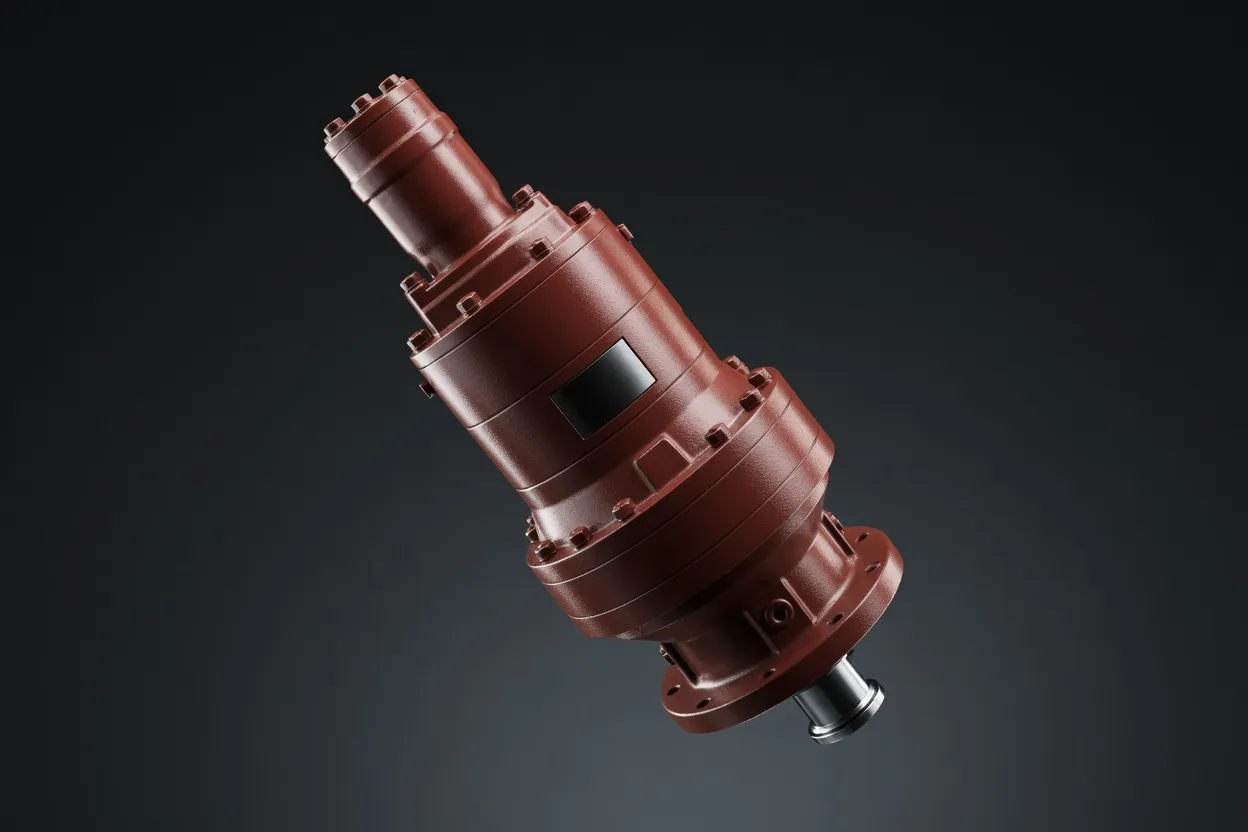
The Role of Planetary Gearboxes in Modern Robotic Arms
Every industrial robotic arm — from a 6-axis welding cell to a compact palletizing unit — depends on reliable speed reduction at each joint. Electric servo motors generate rotational speeds far higher than what the arm link can safely or usefully accept. A precision planetary gearbox bridges that mismatch, stepping down motor RPM while multiplying torque by the same ratio. In a typical articulated robot, three to six of these reducers operate simultaneously, each one tuned to the load profile of its specific joint.
The planetary arrangement — a central sun gear meshing with multiple planet gears inside a ring gear — distributes load across several contact points rather than concentrating it on a single gear pair. This load-sharing geometry yields a torque density that competing architectures struggle to match at equivalent package sizes. For joint actuators that must fit inside a compact housing yet deliver several hundred newton-meters of peak torque, this density advantage becomes decisive.
Why Robotic Arm Joints Demand Precision Planetary Gearboxes
Positional Accuracy and Repeatability
Arc-welding, electronic assembly, and machine tending all demand joint-level repeatability tighter than ±0.02 mm. A low backlash planetary gearbox with angular play below 3 arcminutes allows the servo controller to position the arm tip within that window cycle after cycle. Even small amounts of lost motion at the reducer propagate through the kinematic chain and multiply at the tool center point, so reducing backlash at each joint yields disproportionate improvements in overall path accuracy.
High Torque Within a Compact Envelope
Joint actuator housings are tightly constrained by arm geometry. Shoulder and elbow joints, which bear the highest gravitational and inertial loads, may need 800 Nm or more of continuous torque from a housing diameter under 200 mm. Planetary stages stack efficiently — a two-stage unit can achieve ratios from 20:1 to 100:1 without the diameter bloat that characterizes equivalent worm or cycloidal setups. This compactness preserves the arm’s working envelope and keeps rotating inertia low, both critical for fast cycle times.
Duty-Cycle Endurance
Production robots typically operate 16 to 24 hours per day, accumulating tens of thousands of start-stop cycles weekly. The load sharing inherent in a planetary gear train keeps individual tooth stresses well below fatigue limits, extending rated life beyond 20,000 hours of continuous operation. Hardened alloy steel gears, pre-loaded tapered roller bearings, and synthetic lubricants rated for wide temperature swings combine to ensure that the reducer outlasts several servo motor service intervals without requiring its own overhaul.
Key Technical Specifications for Robotic Arm Gearbox Selection
⚙️ Gear Ratio Range
Shoulder/elbow joints generally operate between 80:1 and 160:1. Wrist axes, handling lighter loads at higher speeds, function well at 30:1 to 50:1. Selecting the lowest ratio that still meets torque requirements maximizes output speed and minimizes reflected inertia.
Backlash Rating
For precision assembly tasks, specify less than 3 arcminutes. General handling allows up to 6 arcminutes. Ultra-precision semiconductor work may call for less than 1 arcminute, typically achievable only with specially ground or lapped gear sets.
Torsional Stiffness
Higher torsional stiffness improves the servo loop’s bandwidth, enabling faster settling times and sharper directional reversals. Values above 100 Nm/arcmin are typical for medium-duty robotic arms; heavy-payload units may require 200+ Nm/arcmin to suppress structural resonance.
️ Thermal Management
Continuous-duty applications generate significant heat inside the reducer. Efficiency ratings above 95% per stage reduce thermal buildup, but ambient temperature, housing material, and lubrication viscosity all influence equilibrium operating temperature.
When specifying a robotic arm planetary reducer, engineers should also account for moment and radial load capacities at the output flange. Articulated robots impose complex multi-axis loads at each joint, not just pure torque. A reducer rated for the required torque but undersized for the bending moment will experience premature bearing failure, potentially halting an entire production line.
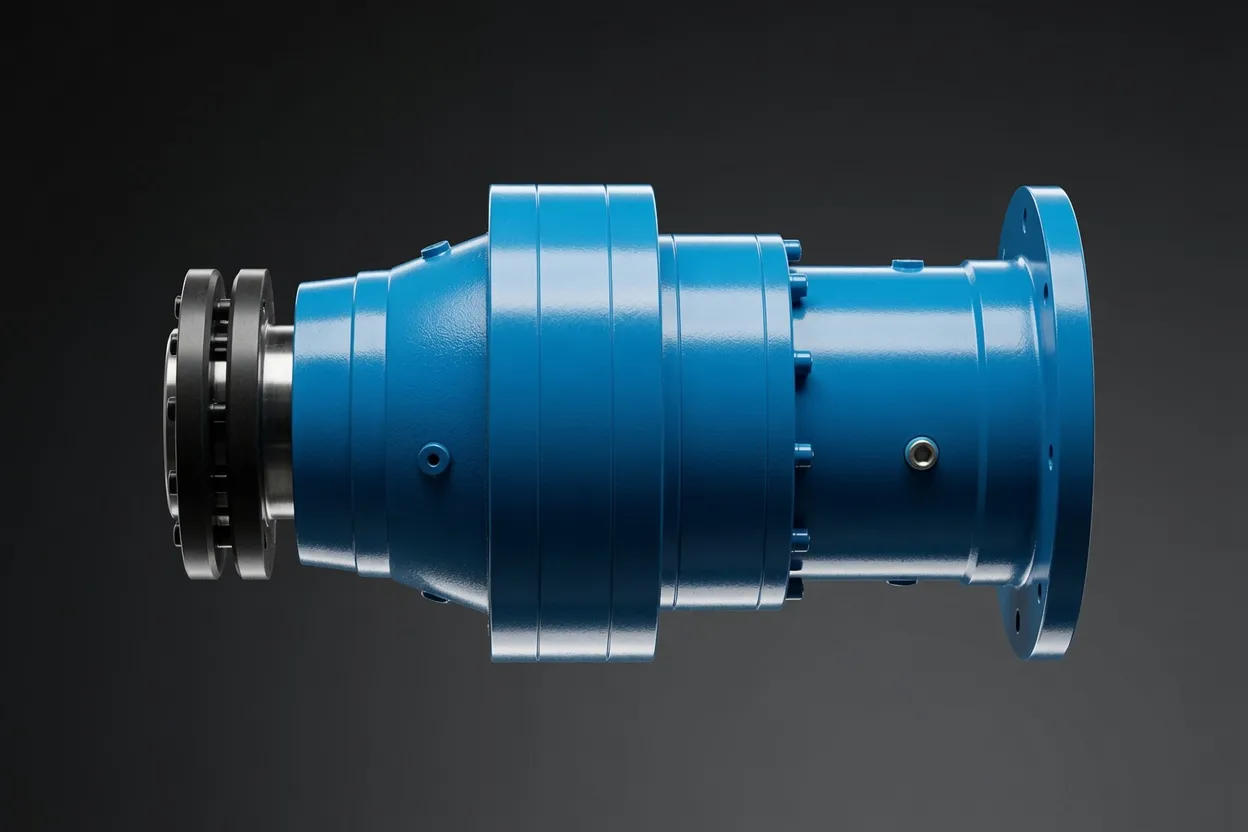
Common Planetary Gearbox Configurations for Robotic Applications
Single-Stage Inline Units
Single-stage inline reducers, offering ratios from 3:1 to roughly 10:1, suit wrist-roll and wrist-pitch axes where speed requirements are moderate and torque demand stays relatively low. Their short axial length keeps joint assemblies compact, and fewer gear meshes mean marginally higher efficiency and lower heat generation per stage. These units pair well with high-pole-count servo motor planetary gearbox combinations that already provide a portion of the needed torque multiplication electromagnetically.
Two-Stage and Three-Stage Units
For shoulder and elbow joints that must deliver high torque at low output speeds, two-stage or three-stage planetary trains achieve ratios up to 512:1. Each additional stage multiplies the ratio of the preceding stages, so a 10:1 first stage cascaded with a 10:1 second stage yields 100:1 overall. The trade-off is cumulative backlash and slightly reduced efficiency — factors that careful design with preloaded bearings and precision tooth profiles can mitigate. Multi-stage configurations remain the standard choice for payload capacities above 20 kg.
Right-Angle Configurations
Where packaging constraints prevent inline motor mounting — common on J2 shoulder axes of vertically articulated robots — a right-angle planetary gearbox redirects the motor axis 90 degrees relative to the joint axis. A bevel or hypoid input stage feeds into the planetary reduction stage. Although this adds a gear mesh and slightly reduces peak efficiency, it enables motor placement along the arm link rather than projecting outward, preserving a slimmer arm profile and reducing the swept volume during operation.
Integration and Installation Best Practices
Motor-to-Reducer Alignment
Maintain concentricity within 0.02 mm and angular misalignment below 0.1°. Use a bell housing or adapter flange that registers on both the motor pilot and the reducer input bore. Even minor misalignment introduces radial loads on the input shaft bearing, accelerating wear and creating vibration signatures that degrade joint positioning accuracy over time.
Output Flange Mounting
Bolt the output flange directly to the arm link casting using precision-reamed holes and fitted dowel pins. Torque all fasteners to the gearbox manufacturer’s specification using a calibrated wrench, then re-torque after the first 100 hours of operation. The connection must transfer the full rated moment load without slippage or micro-fretting at the interface.
Lubrication Verification
Confirm the reducer ships with the correct lubricant grade and fill level. Factory-filled units typically contain synthetic PAO or PAG grease rated for –20 °C to +90 °C continuous duty. If the application involves temperature extremes, cleanroom environments, or food-contact zones, the lubricant may need to be replaced with a specialty grade before commissioning.
Servo Tuning After Installation
Retune the servo drive’s PID gains after coupling the reducer. The added inertia and compliance of the gearbox changes the plant model the controller was originally tuned against. Run frequency-response tests to identify the new mechanical resonance, set notch filters as needed, and verify that the overall bandwidth supports the required path-tracking accuracy.
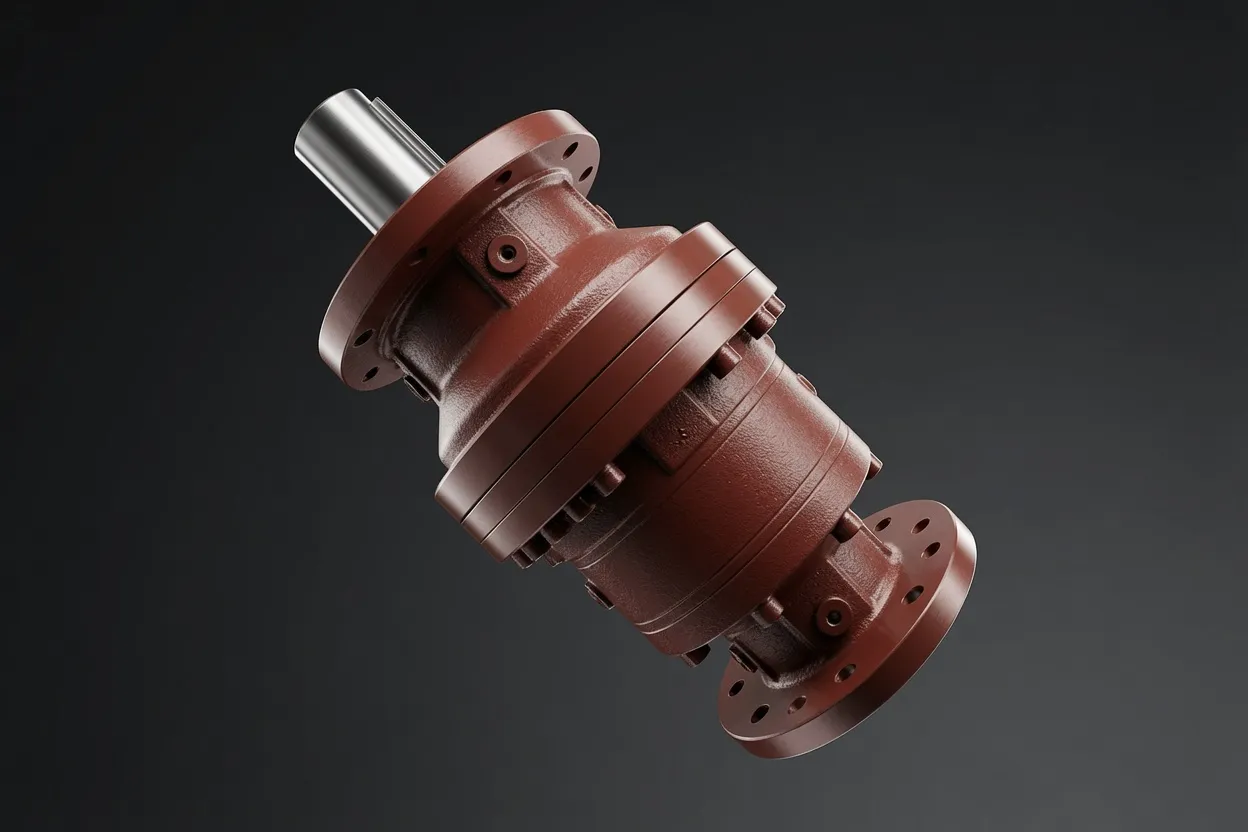
Maintenance Strategies for Long-Term Reliability
Proactive maintenance separates production lines that achieve five-year reducer life from those forced into unplanned downtime every 18 months. Vibration monitoring is the single most cost-effective technique: mount a triaxial accelerometer on the reducer housing and trend the spectral signature weekly. An increase in gear-mesh frequency harmonics signals early tooth wear, giving maintenance teams weeks of lead time to plan a scheduled replacement.
Lubrication Schedule
Most sealed planetary reducers for robotic arms are factory-filled for life under standard duty conditions. However, “lifetime lubrication” assumes ambient temperatures below 40 °C and duty cycles that do not exceed the catalog thermal rating. In high-ambient or continuous heavy-load scenarios, schedule a grease replenishment every 10,000 operating hours. Use only the lubricant grade specified by the gearbox manufacturer — mixing chemistries risks additive incompatibility and accelerated seal degradation.
Backlash Drift Monitoring
Over millions of cycles, gear tooth surfaces wear and backlash gradually increases. Incorporate a periodic backlash check into the robot’s preventive-maintenance routine by commanding the joint forward and reverse through a small angle at low speed while recording encoder positions. When measured backlash exceeds the process tolerance, schedule a reducer exchange. Tracking this metric per joint over time also reveals load distribution imbalances that may warrant adjusting the robot’s programmed payload parameters.
Why Choose Ever-Power for Your Robotic Arm Gearbox Needs
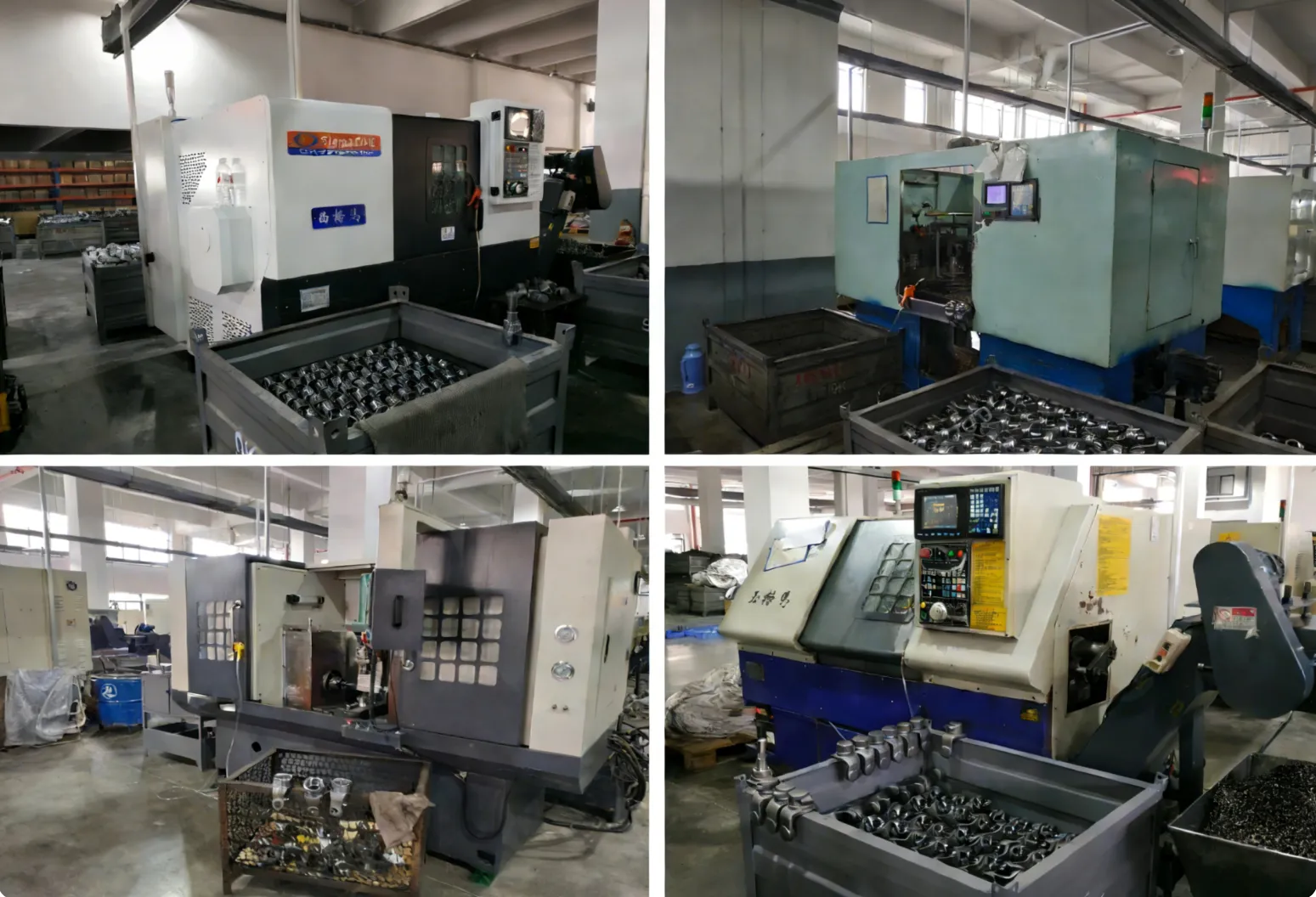
In-House Gear Grinding
Our Hangzhou facility operates CNC gear grinding machines that achieve AGMA Class 12 tooth quality, ensuring each low backlash planetary gearbox meets sub-3-arcminute specifications straight off the production line.
Full Testing Protocol
Every unit undergoes a run-in test, backlash measurement, noise-level check, and efficiency verification before shipment. Test reports are provided with each batch, giving your QA team full traceability from raw material to finished reducer.
️
Custom Flange Adaptation
Need a non-standard mounting pattern to retrofit an existing robot? Our engineering team designs custom adapter flanges and modified output interfaces, with prototype delivery within 15 business days.
Global Logistics Support
Warehoused inventory of standard frame sizes ships within 3 business days. For bulk OEM orders, we support DDP and CIF shipping terms to over 50 countries, with dedicated freight coordination from our Hangzhou export office.
Frequently Asked Questions
Ready to Specify Your Robotic Arm Gearbox?
Share your joint load data and mounting requirements — our engineers will recommend the optimal configuration within 24 hours.