
Collaborative Robotics · Safe & Precise Actuation
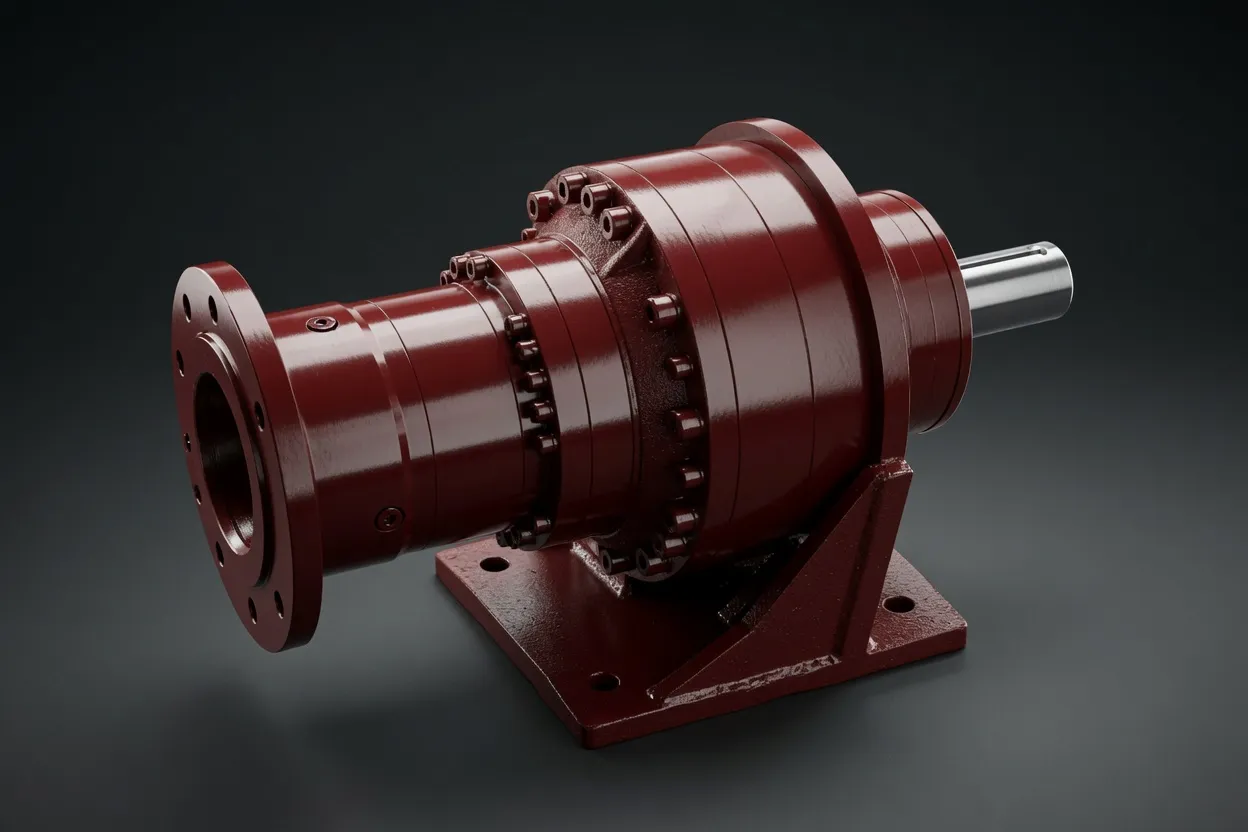
Collaborative robots work alongside human operators without safety fencing, placing unique demands on every component in the drive train. The planetary gearbox at each cobot joint must deliver smooth, low-backlash motion while contributing to the overall force-limiting and power-limiting safety architecture that allows safe human contact. This guide examines how planetary gearbox design choices affect cobot performance, safety compliance, and long-term joint reliability.
The Cobot Drive Train and Its Safety Context
Cobots achieve safe human interaction through a combination of force sensing, speed limiting, and compliant mechanical design. The planetary gearbox sits between the joint motor and the arm link, transmitting torque while influencing the arm’s effective impedance — how “stiff” or “soft” the joint feels when an external force (like a human hand) pushes against it. A low backlash planetary gearbox ensures precise force control, allowing the cobot’s safety controller to detect and react to contact forces within milliseconds, well within the ISO/TS 15066 transient contact limits.
Unlike industrial robots that operate at full speed inside guarded cells, cobots modulate their speed and force continuously based on proximity sensor inputs and joint torque feedback. The gearbox must perform predictably across this entire operating envelope — from slow, force-limited collaborative mode to faster autonomous mode when no humans are present in the workspace. Nonlinear friction characteristics, such as stick-slip behavior at low speeds, degrade the torque sensor’s ability to distinguish external contact from internal friction, potentially causing nuisance safety stops or, worse, delayed contact detection.
Key Gearbox Requirements for Cobot Safety Compliance
Backdrivability and Force Transparency
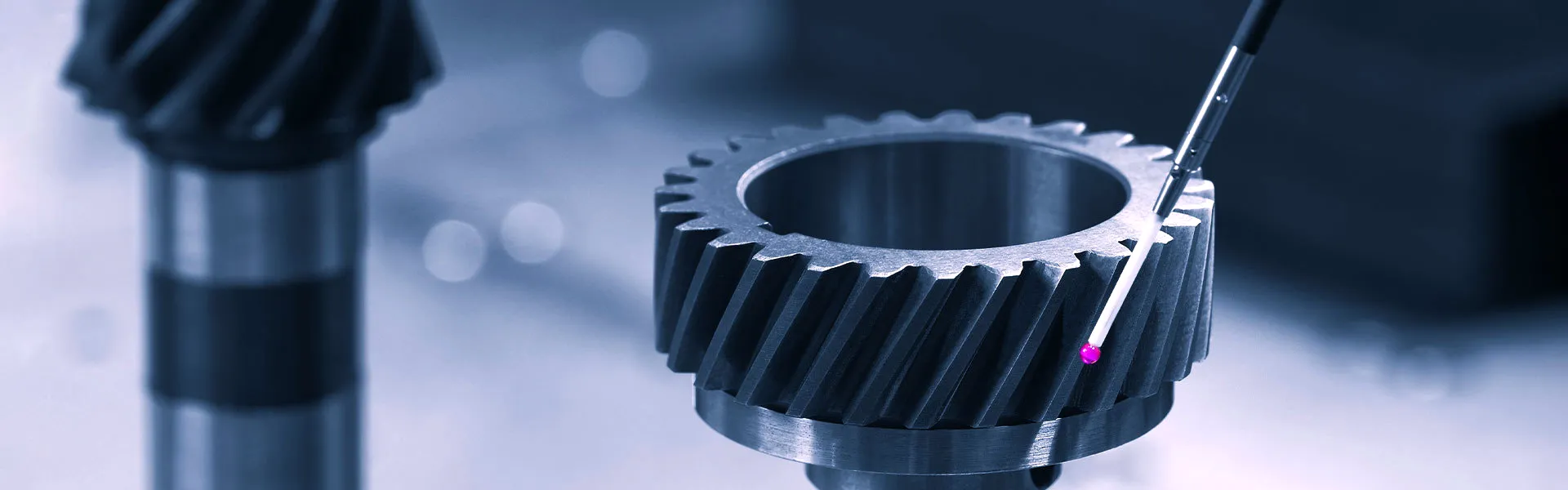
When a human pushes against a cobot arm, the joint motor must “feel” that force through the gearbox and respond appropriately. High-ratio gearboxes with poor backdrivability mask external forces, making the safety system less responsive. Cobot applications favor moderate gear ratios — typically 50:1 to 100:1 — combined with high-efficiency gear meshes (above 90% backdrive efficiency) that allow external forces to propagate through the reducer to the motor-side torque sensor. A precision planetary gearbox with helical gearing and low-friction seals maximizes force transparency for safety-critical applications.
Low and Predictable Friction
Cobot joint torque sensors measure the difference between expected and actual motor torque to detect collisions. If gearbox friction varies unpredictably with speed, temperature, or position, the safety controller cannot reliably distinguish a friction variation from a human contact event. Specify planetary gearboxes with consistent friction characteristics across the operating speed range — typically achieved through precision-ground gear teeth, preloaded bearings with controlled drag, and synthetic lubricants with stable viscosity-temperature curves.
Noise Emissions in Shared Workspaces
Cobots operate centimeters from human operators for entire work shifts. Gearbox noise above 65 dB(A) creates operator fatigue and communication interference. Helical planetary gear sets produce significantly lower noise than spur-tooth designs at equivalent speeds, and precision grinding reduces tooth-surface roughness to below Ra 0.6 μm, further dampening mesh-frequency noise. For the quietest operation, specify a planetary gear reducer with helical gearing rated below 58 dB(A) at the joint’s typical operating speed.
Gear Ratio and Torque Sizing for Cobot Joints
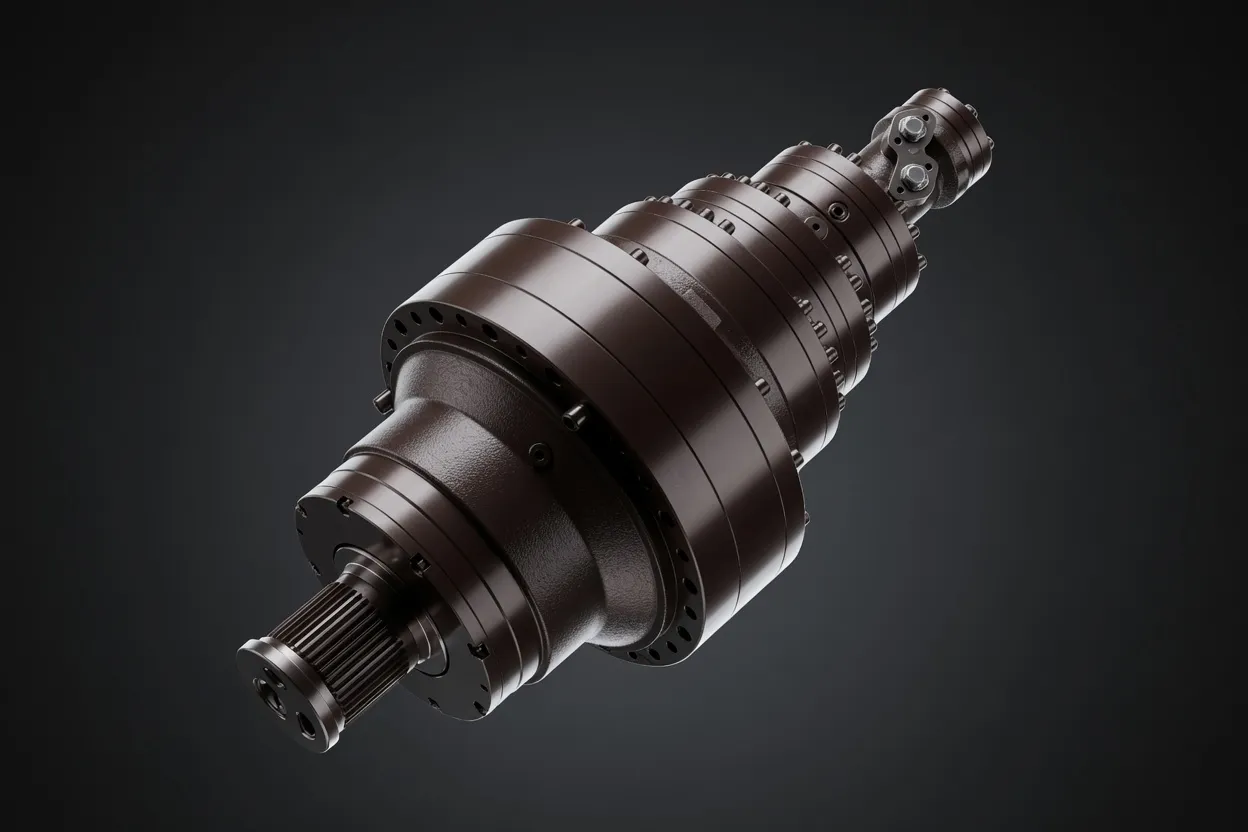
Cobot payloads range from 3 kg for tabletop models to 25 kg for heavy-duty collaborative palletizers. Shoulder and elbow joints on larger cobots require continuous output torques of 200 to 400 Nm, while wrist joints on lighter models operate below 50 Nm. Gear ratios between 50:1 and 100:1 provide a practical balance between torque multiplication and backdrivability. Lower ratios improve force transparency but demand larger, heavier motors to deliver the required output torque. Higher ratios multiply torque efficiently but reduce backdrive efficiency, potentially compromising collision detection sensitivity.
When sizing the gearbox, include a 30% torque margin above the calculated continuous load to accommodate the safety controller’s torque-limiting interventions. During a detected collision, the controller commands the motor to generate a braking torque that opposes the arm’s momentum. The gearbox must handle these transient reversal loads — which can reach 200% of rated torque — without damage to the gear teeth or output bearing. Undersizing the gearbox for the steady-state load alone overlooks this critical safety-related dynamic loading case.
Structural Design Features for Cobot Integration
Hollow Output Shaft
Most cobots route power and signal cables through the center of each joint to maintain a clean external surface free of snag hazards. Specify a planetary gearbox with a hollow output shaft bore of 15 to 30 mm diameter to accommodate the internal cable harness while maintaining full torque capacity at the output flange.
️ Integrated Torque Sensor Interface
Some cobot OEMs mount the joint torque sensor between the gearbox output flange and the arm link. The gearbox output face must be precision-machined flat within 5 μm to ensure accurate torque measurement. Request a flatness certification with your gearbox order if your design uses this sensing architecture.
⚡ Low-Voltage Motor Compatibility
Cobots frequently use 48V DC motors for safety reasons — lower voltage reduces electrical shock risk during maintenance. Verify that the gearbox input shaft and coupling are compatible with the smaller motor shaft diameters common in low-voltage servo motor platforms, typically 8 to 14 mm.
️ Sealed Thermal Path
Cobot joints are fully enclosed with no external cooling provisions. The gearbox must dissipate all internally generated heat through the housing wall into the arm casting. Select a frame size that provides adequate thermal mass for the expected duty cycle, and verify that the housing material — typically aluminum alloy — offers sufficient thermal conductivity to prevent hotspot formation above the lubricant’s rated temperature limit.
Assembly and Commissioning Best Practices
Cable Harness Routing
Thread the internal cable harness through the gearbox hollow shaft before bolting the reducer into the joint housing. Verify that the cable bundle has adequate clearance — at least 2 mm radial gap — throughout the full joint rotation range to prevent pinching or chafing that could cause intermittent signal failures during production operation.
Torque Sensor Calibration
After installing the gearbox, calibrate the joint torque sensor with the reducer in place. The gearbox’s internal friction becomes part of the sensor’s zero-offset baseline. Calibrating before gearbox installation, then installing the reducer afterward, shifts the baseline and reduces collision detection accuracy.
Safety Function Validation
Perform the cobot’s safety validation test suite — including force-limit, speed-limit, and momentum-limit checks per ISO/TS 15066 — after every gearbox replacement. The new gearbox’s friction characteristics may differ slightly from the previous unit, affecting the safety controller’s collision detection thresholds.
Break-In at Reduced Speed
Run the joint through 500 full-range motion cycles at 30% of maximum speed before enabling full-speed operation. This distributes lubricant across all gear contact surfaces and seats the output bearing, reducing the risk of early-life friction spikes that could trigger false collision alarms during the first hours of production.
Maintenance Considerations for Cobot Gearboxes
Cobots accumulate operating hours at a moderate pace compared to dedicated industrial robots — typically 2,000 to 4,000 hours annually in single-shift collaborative applications. Sealed-for-life planetary gearboxes meet this duty profile without scheduled lubricant changes under normal conditions. However, the critical maintenance item for cobot gearboxes is friction consistency monitoring: as the gearbox wears, internal friction changes, which can affect the torque sensor’s collision detection baseline.
Schedule a friction characterization test every 6,000 operating hours by running the joint at constant low speed with no external load and recording the motor current. Compare the current profile to the commissioning baseline. An increase exceeding 15% indicates internal wear progression and warrants recalibration of the collision detection thresholds. If friction increases beyond 25% of baseline, plan a gearbox replacement to maintain safety compliance and prevent further degradation of the cobot’s force-control accuracy during collaborative operations.
Why Choose Ever-Power for Cobot Gearbox Applications
Backdrivability-Optimized Designs
Our cobot-targeted planetary reducers achieve backdrive efficiencies above 85% at ratios up to 80:1, ensuring that external contact forces transmit reliably to the motor-side torque sensor for responsive collision detection per ISO/TS 15066 safety requirements.
Friction Consistency Certification
Each unit ships with a friction profile test report documenting torque-versus-speed characteristics across the full operating range. This data enables your safety engineering team to set accurate collision detection thresholds from day one.
️
Hollow-Shaft and Custom Interface Options
Hollow output shafts from 15 to 40 mm bore diameter accommodate internal cable routing, and custom output flanges match your cobot’s specific joint mounting geometry. Prototypes delivered within 15 business days.
Small-Batch Flexibility
We support cobot OEM programs from 10-unit prototype batches through 1,000+ unit annual volumes with consistent quality and delivery schedules tailored to your production ramp timeline.
Frequently Asked Questions
Design Safer Cobot Joints with the Right Gearbox
Share your cobot joint specs, safety requirements, and production timeline — our team will deliver a technical proposal within 48 hours.