
Precision Indexing · Rotary Table Drive Technology
Rotary indexing tables position workpieces at precise angular stations for machining, assembly, inspection, and packaging operations. The planetary gearbox driving the table must deliver arc-second-level positioning accuracy under heavy platter loads while maintaining zero-backlash repeatability across millions of index cycles. This guide details the engineering considerations for selecting and integrating planetary reducers in rotary indexing table applications.
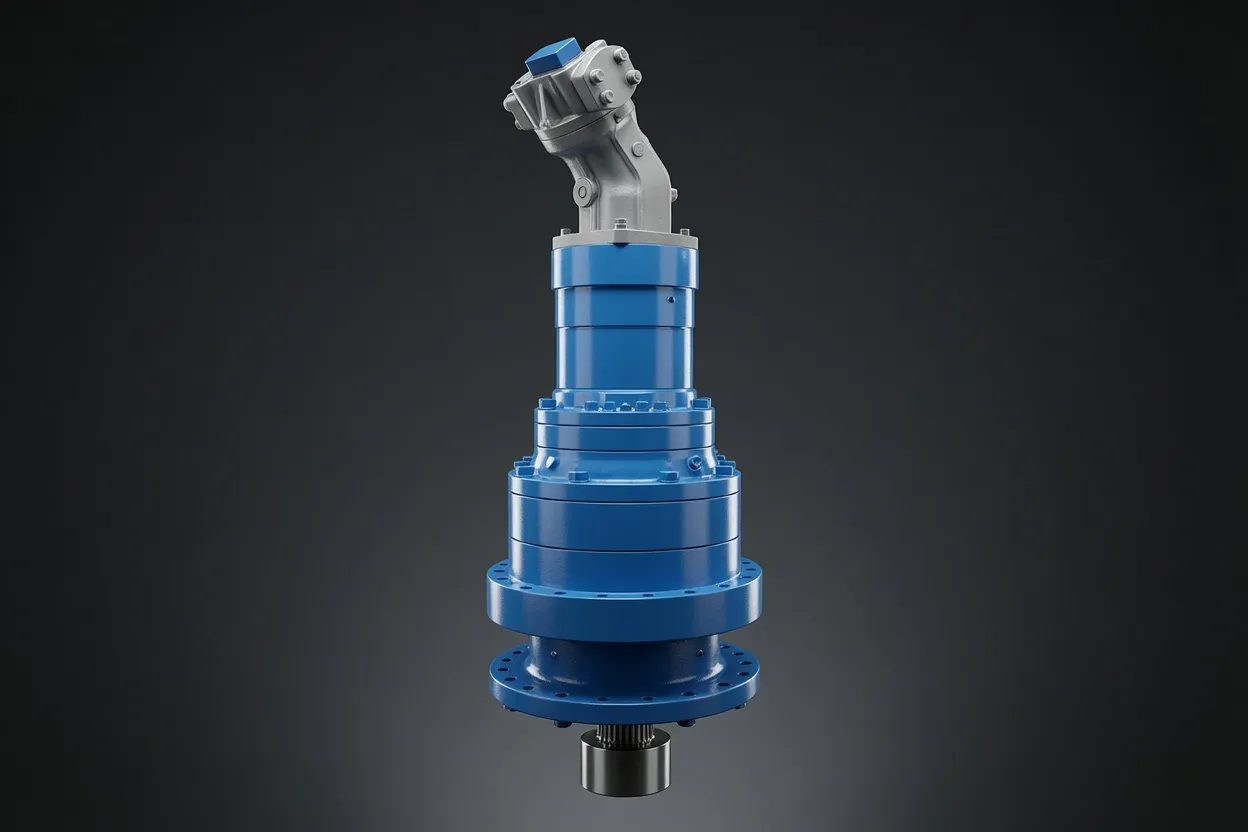
How Rotary Indexing Tables Use Planetary Gearboxes
A rotary indexing table steps a circular platter through fixed angular increments — typically dividing 360° into 4, 6, 8, 12, or more equal stations. At each station, an operation is performed on the workpieces mounted to the platter: drilling, milling, pressing, inspection, or part transfer. The planetary gear reducer between the servo motor and the table’s drive input converts the motor’s continuous rotation into the precise, high-torque angular steps the table requires. Each index move must start smoothly, accelerate rapidly, decelerate without overshoot, and stop within the positioning tolerance — all within a fraction of a second.
The table platter, loaded with fixtures and workpieces, represents a substantial rotational inertia — often 10 to 100 times the motor’s rotor inertia. The planetary gearbox’s ratio transforms this load inertia back through the gear train, reducing the reflected inertia at the motor shaft to a manageable level. Without the gearbox, the motor would need to be impractically large to achieve the required acceleration rates, and its control loop would be sluggish due to the massive inertia mismatch.
Positioning Accuracy and Repeatability Requirements
Angular Accuracy Targets
Multi-station machining indexers demand positioning accuracy within ±5 arcseconds to maintain bore concentricity and feature-to-feature tolerances across operations performed at different stations. This requires a low backlash planetary gearbox with transmission error below 30 arcseconds peak-to-peak and backlash below 1 arcminute. Achieving these specifications necessitates precision-ground or lapped gear teeth, preloaded output bearings, and a rigid housing that resists deflection under the table’s weight and cutting forces.
Repeatability Over Millions of Cycles
An indexing table running 10-second cycles over two shifts accumulates more than 2 million index operations per year. The gearbox must maintain its backlash specification over this entire period without requiring adjustment. Premium planetary reducers achieve this through surface-hardened gear teeth with superfinished flanks that resist micro-pitting, the wear mechanism most responsible for progressive backlash growth in high-cycle applications. Specify a gearbox with documented backlash retention data showing less than 30% increase after 10,000 hours of rated-load operation.
Clamping vs. Servo-Lock Holding
At each station, the table must hold its angular position rigidly against machining forces. Some systems use a mechanical clamp that engages after each index move, removing holding load from the gearbox. Others rely on the servo motor’s holding torque transmitted through the gearbox. In servo-held applications, the gearbox must have sufficient torsional stiffness — 200+ Nm/arcmin — to resist deflection under cutting forces without allowing the table to shift out of tolerance during the machining cycle.
Gear Ratio Selection for Indexing Applications
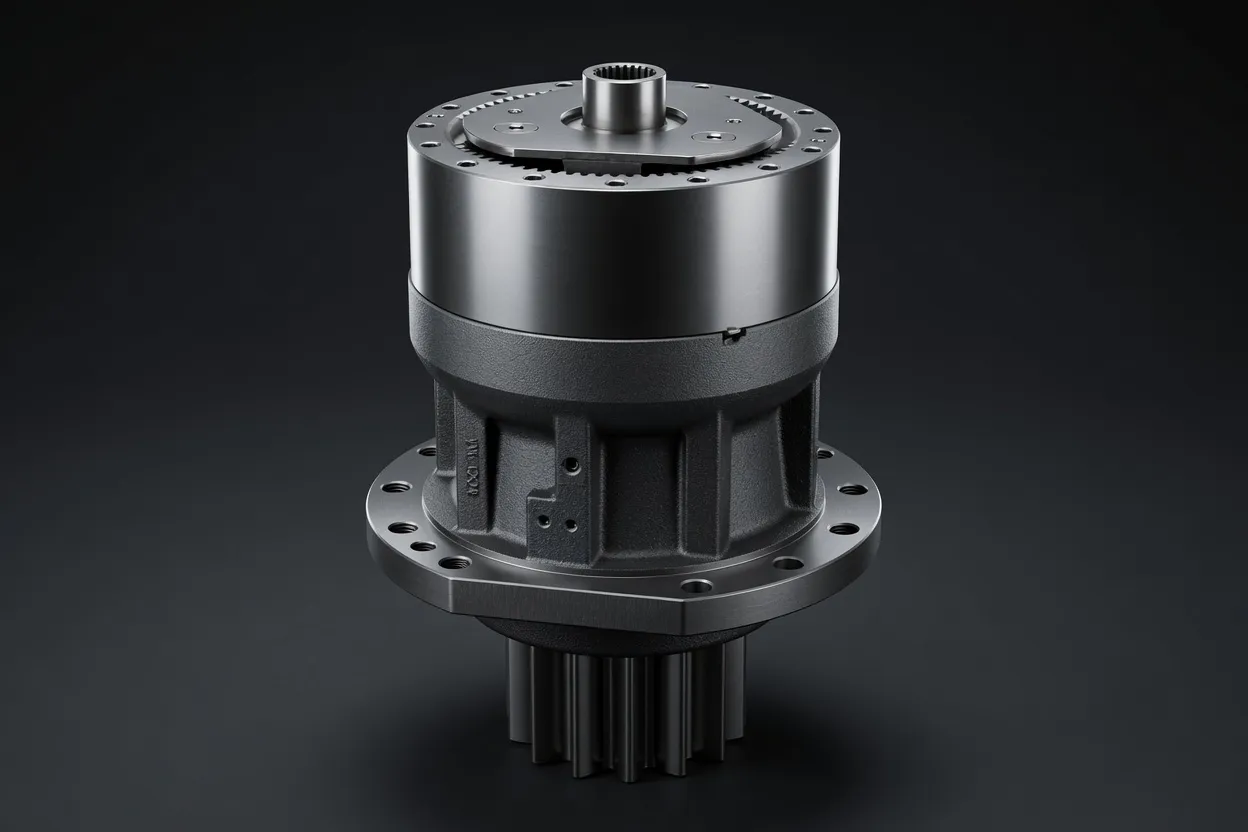
Index tables require ratios that balance acceleration capability against holding torque. Common ratios range from 40:1 to 160:1. Lower ratios enable faster index moves — important for lines where index time directly limits throughput — but require larger motors to generate adequate holding torque at the table. Higher ratios multiply motor torque and improve positional resolution (each motor encoder count corresponds to a smaller table angle) but limit maximum table angular velocity.
For tables with mechanical clamps, the gearbox’s holding torque requirement is minimal, so engineers can optimize the ratio purely for index speed. For servo-held tables, the ratio must provide enough output torque to resist the maximum anticipated machining force without exceeding the motor’s continuous torque rating. A high torque planetary gearbox with two-stage reduction at 80:1 to 120:1 covers most medium-duty indexing applications, providing a practical compromise between index speed and holding capability.
Structural and Mounting Considerations
Output Flange Flatness
The gearbox output flange connects directly to the table platter or an intermediate coupling plate. Specify flange flatness within 5 μm and perpendicularity to the output axis within 3 μm. Any deviation at this interface propagates as a wobble in the table platter, degrading positioning accuracy at every station.
Axial and Radial Load Capacity
The table platter imposes both axial load (platter weight plus workpiece and fixture weight) and radial load (from offset centers of gravity). Verify that the gearbox output bearing is rated for these loads — many standard industrial reducers are sized for pure torque and may be inadequately rated for the heavy moment loads an indexing table imposes.
️ Backlash-Free Output Coupling
Use a rigid flange connection with fitted dowel pins — not a flexible coupling — between the gearbox output and the table. Any compliance in this connection adds to the system-level backlash, negating the benefit of specifying a low-backlash reducer. Torque the mounting bolts to the manufacturer’s specification and verify with a torque audit after 500 hours.
️ Duty Cycle Thermal Rating
Indexing tables with short index times and brief dwell periods impose near-continuous thermal loading on the gearbox. Verify that the selected reducer’s thermal rating covers the RMS torque of the complete index cycle — including acceleration, deceleration, and dwell — not just the peak torque during acceleration.
Installation and Alignment Procedures
Base Surface Preparation
Machine the mounting surface flat within 10 μm over the gearbox footprint. Use a surface plate and indicator to verify. Mounting a precision gearbox on an improperly prepared surface introduces internal stresses that distort the gear housing and degrade mesh accuracy.
Gearbox-to-Table Alignment
Align the gearbox output axis to the table’s rotational axis within 0.01 mm radial and 0.005° angular tolerance. Use a precision dial indicator on the table’s pilot bore while slowly rotating the gearbox output to measure runout. Adjust shimming as needed before final bolt torque.
Motor Installation
Mount the servo motor using the manufacturer’s specified adapter and coupling. Verify input shaft alignment to the same standards as the output. The motor’s encoder resolution, multiplied by the gear ratio, determines the table’s effective positioning resolution — confirm this meets the application’s accuracy requirement.
Acceptance Testing
After installation, perform a 100-cycle index test at full load and full speed. Measure actual table position at each station using an external reference (laser tracker or precision encoder) and compare to the commanded position. All stations must fall within the specified positioning tolerance before releasing the machine for production.
Maintenance for Long-Term Indexing Accuracy
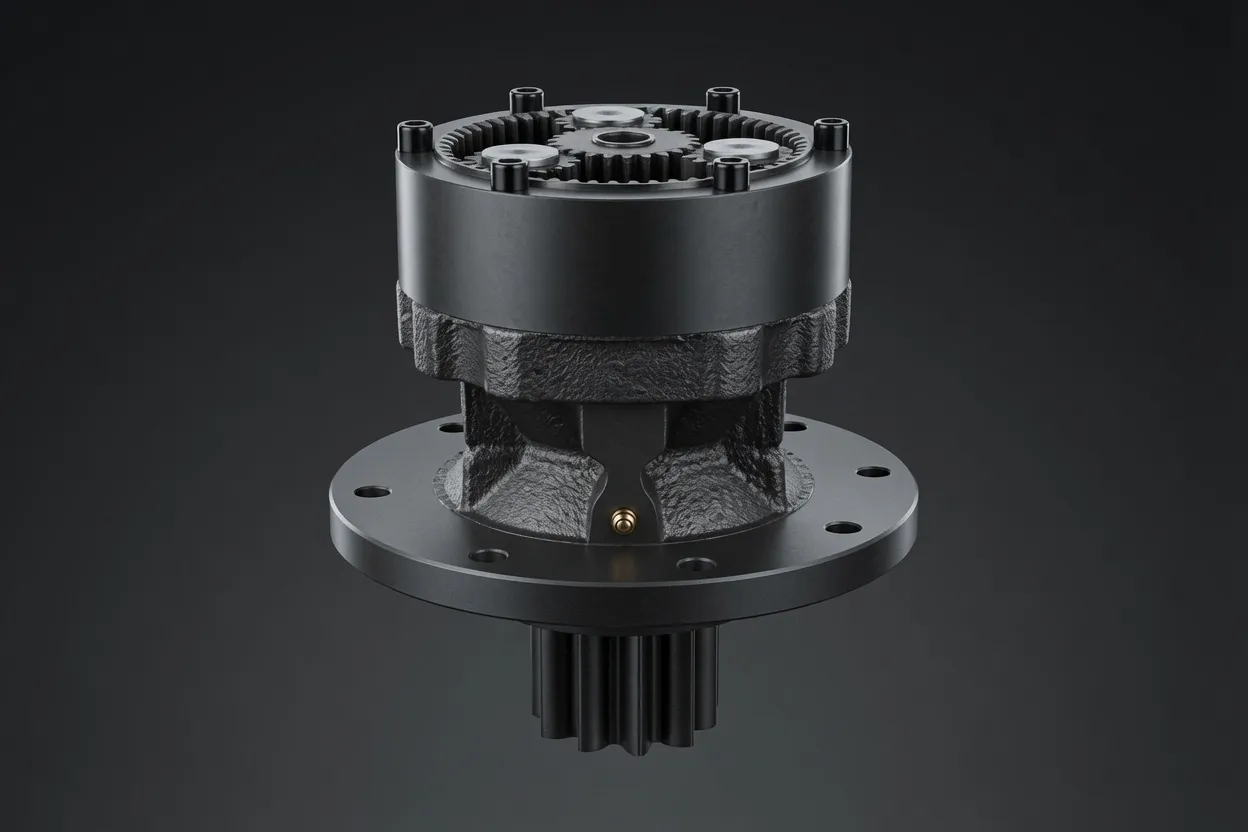
The most critical maintenance metric for indexing table gearboxes is backlash trend. Schedule a quarterly measurement by clamping the table at a station, applying a known torque in both directions at the motor shaft, and recording the angular displacement. Plot this value over time. A consistent upward trend indicates tooth wear; a sudden jump suggests a bearing issue or internal component failure. Replace the gearbox when backlash reaches 50% above the original commissioning value to maintain machining tolerances at all stations.
Lubrication maintenance for sealed indexing table reducers follows the same principles as other precision applications: factory fill lasts the rated life under standard conditions, but quarterly housing temperature checks verify that thermal stress is not accelerating lubricant degradation. If the gearbox consistently operates above 65 °C housing temperature, consider upgrading to a high-temperature synthetic grease or increasing the frame size for better thermal dissipation capacity to preserve long-term accuracy and extend the interval between gearbox replacements.
Why Choose Ever-Power for Rotary Indexing Table Gearboxes
Arc-Second Precision Products
Our premium planetary reducer line delivers transmission error below 30 arcseconds and backlash below 1 arcminute, meeting the stringent requirements of CNC indexing tables and multi-station machining centers used in automotive and aerospace manufacturing.
Comprehensive Test Documentation
Every unit ships with measured backlash, transmission error, torsional stiffness, and efficiency data. This documentation enables your machine builder to predict system-level accuracy and confirm compliance with end-user specifications before delivery.
️
Custom Output Configurations
Flanged, hollow-bore, and shaft output options accommodate various table coupling architectures. Our engineering team provides 3D CAD models of custom configurations within 5 business days for immediate integration into your machine design.
Priority OEM Supply
Machine tool OEMs receive priority production scheduling and dedicated account management. Contact [email protected] to establish an OEM supply agreement with guaranteed lead times and volume pricing.
Frequently Asked Questions
Achieve Arc-Second Indexing Precision
Share your table specifications, station count, and accuracy requirements — our team will recommend the ideal gearbox configuration.