
Delta Robotics · High-Speed Packaging Solutions
Delta robots dominate high-speed packaging, sorting, and pick-and-place operations where cycle rates exceed 150 picks per minute. Each of the three or four upper arms is driven by a motor-gearbox pair mounted on the fixed overhead frame, making the gearbox’s inertia, backlash, and speed capability direct determinants of the robot’s achievable throughput. This guide explores how planetary gearbox selection shapes Delta robot performance from concept through production.
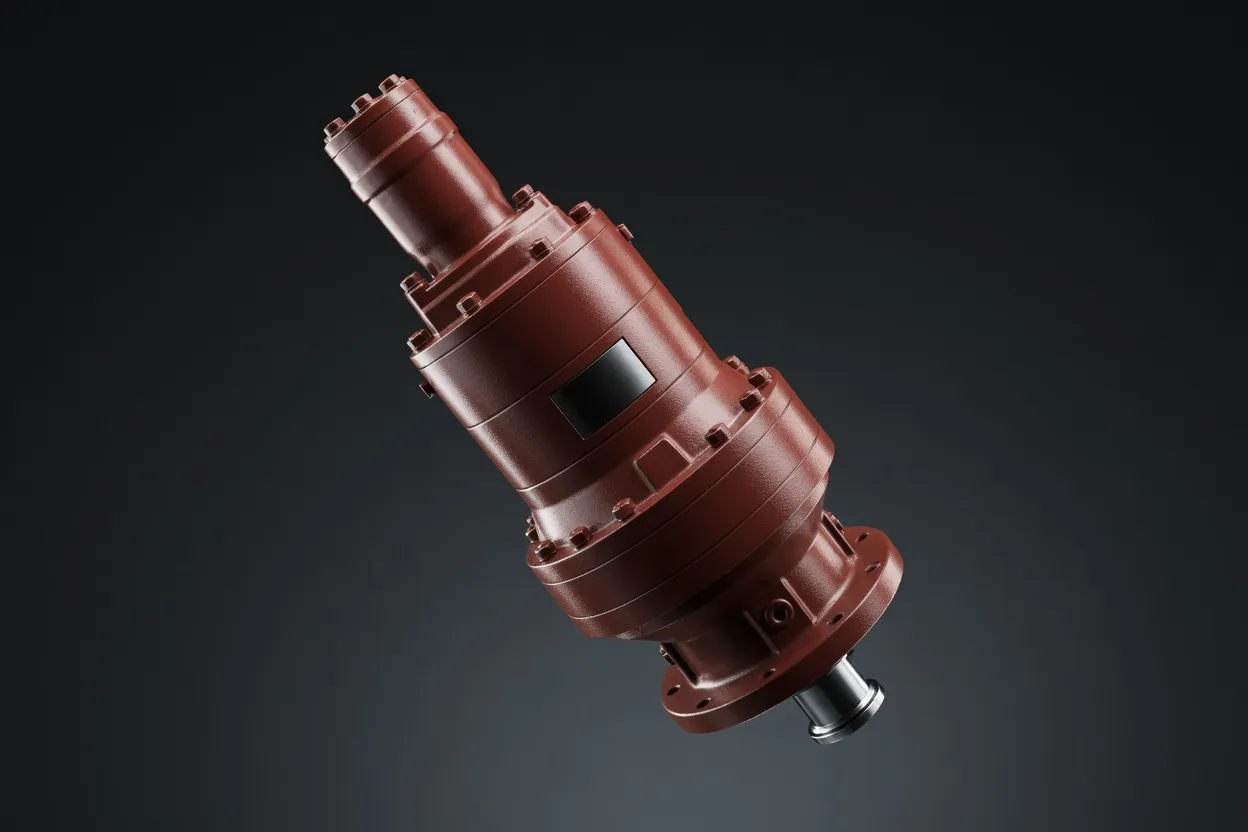
Delta Robot Architecture and Gearbox Function
A Delta robot uses three or four parallel kinematic chains connecting an overhead fixed platform to a mobile end-effector platform. Each chain is actuated by a rotary motor mounted on the fixed frame, and the motor’s output passes through a speed reducer before reaching the upper arm link. Because the heavy motor and gearbox remain stationary on the frame, the moving parts of the robot are extremely lightweight, enabling the rapid accelerations — often exceeding 100 m/s² — that define Delta robot performance in packaging and sorting applications.
The precision planetary gearbox at each actuator station performs two essential functions: reducing the motor’s high rotational speed to match the arm’s angular velocity requirements, and multiplying the motor’s torque to handle the inertial loads generated during aggressive acceleration and braking profiles. Because all three actuators must move in precise coordination to trace the desired end-effector path, any inconsistency in gear backlash or torsional stiffness between the three gearboxes introduces trajectory errors that compound at the tool center point.
Speed and Acceleration Requirements for Delta Drives
Input Speed Capability
Delta robot motors commonly run at 4,000 to 6,000 RPM during high-speed traverse segments. The planetary reducer must sustain these input speeds continuously without excessive noise, vibration, or thermal rise. Helical-tooth planet gears with precision-ground profiles maintain smooth meshing at elevated speeds, while spur-tooth designs — adequate for lower-speed industrial applications — generate unacceptable noise and vibration above 3,000 RPM input. Specify a high precision planetary gearbox with a rated maximum input speed that includes a 20% margin above the motor’s peak operating speed.
Low Reflected Inertia
Every gram of inertia in the gearbox’s rotating components reduces the motor’s ability to accelerate the arm quickly. Lightweight aluminum planet carriers, thin-section bearings, and compact gear geometries minimize the reducer’s contribution to the total reflected inertia seen by the motor. For Delta robots targeting cycle times below 0.4 seconds per pick, the gearbox reflected inertia should be less than twice the motor’s rotor inertia to maintain servo bandwidth above 50 Hz.
Torsional Rigidity Under Dynamic Loading
During the rapid direction reversals characteristic of Delta motion profiles, torsional compliance in the gearbox allows the output to lag behind the motor’s commanded position, introducing tracking errors. High torsional stiffness — 50 Nm/arcmin or higher for medium-frame reducers — ensures that the arm follows the commanded trajectory closely even during aggressive acceleration ramps. This stiffness also raises the system’s mechanical resonance frequency, allowing higher servo gains and faster settling times at the end of each move.
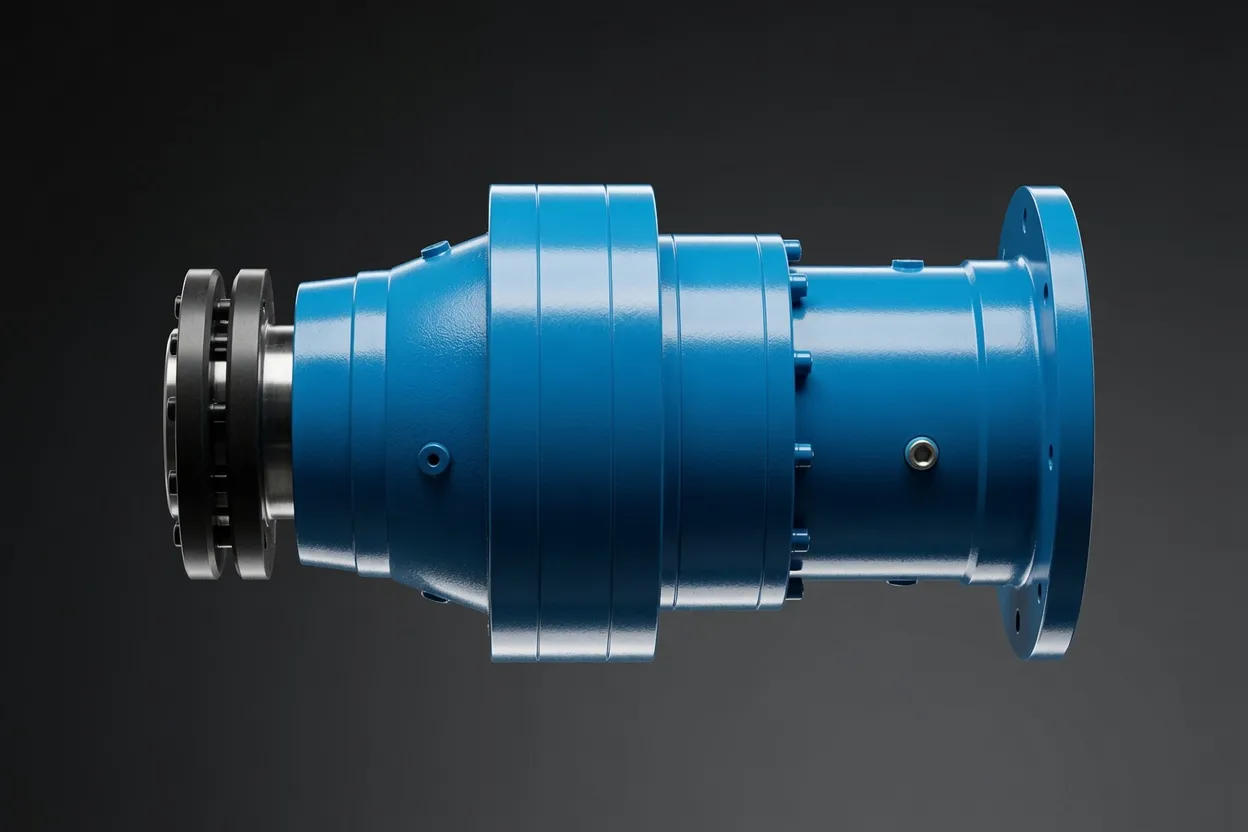
Gear Ratio Optimization for Delta Applications
Delta robot arm links typically sweep through ±30° to ±45° of angular travel per pick cycle. The optimal gear ratio places the motor at the peak of its torque-speed curve during the acceleration phase while delivering adequate output torque to overcome arm inertia and payload gravity. Ratios between 8:1 and 25:1 cover the majority of Delta platforms, with single-stage units at the lower end and two-stage units at the higher end. Higher ratios trade output speed for torque and are appropriate for Delta robots handling heavier payloads, such as filled beverage containers or packaged food trays weighing 2 kg or more per pick.
When selecting the ratio, calculate the motor’s required peak torque at the maximum acceleration point of the motion profile and verify that it falls within the motor’s intermittent torque rating. If the calculated motor torque exceeds the rating, increase the gear ratio to reduce the reflected inertia demand on the motor. However, excessively high ratios lower the output speed ceiling and may prevent the robot from reaching its target cycle rate during the high-speed transfer portion of the trajectory.
Matched Set Procurement for Consistent Performance
Backlash Matching
Order all three (or four) gearboxes for a single Delta robot as a matched set, specified to the same backlash tolerance band. Mismatched backlash between actuators causes uneven trajectory tracking, producing elliptical rather than linear tool-center-point paths during high-speed moves.
Torsional Stiffness Matching
Request stiffness values within ±5% across the set. Unequal stiffness generates asymmetric dynamic response, causing the end effector to deviate from the programmed path, particularly at direction-reversal points where one axis’s compliance delays its response relative to the others.
️ Serial-Number Traceability
Each matched set should carry linked serial numbers in the manufacturer’s quality records. If one unit fails prematurely, traceability enables root-cause analysis — was it a material lot issue affecting all three, or an installation error unique to that station?
Test Report Bundling
Request a combined test report showing backlash, stiffness, efficiency, and noise measurements for all units in the set. This document streamlines your incoming quality inspection and establishes baseline reference values for future condition monitoring during production.
Installation and Commissioning for Delta Platforms
Frame Rigidity Verification
Before mounting the motor-gearbox assemblies, verify that the overhead Delta frame is stiff enough to resist the reaction torques generated during high-speed operation. Frame deflection under load introduces tool-center-point errors that no amount of servo tuning can correct — the mechanical structure must be right first.
Concentric Motor Mounting
Align the motor shaft to the reducer input within 0.015 mm concentricity using a precision indicator fixture. At Delta input speeds of 4,000+ RPM, even minor misalignment generates bearing-damaging radial loads and vibration that escalate rapidly with speed.
Thermal Break-In Cycle
Run each actuator through 1,000 cycles at 50% speed and 50% payload before production use. This distributes factory lubricant evenly and identifies any infant-mortality failures before they cause mid-production downtime. Monitor housing temperature during break-in to establish the thermal baseline.
Matched-Set Servo Tuning
Tune all three (or four) actuators to identical PID gain sets. Use the gearbox with the lowest measured torsional stiffness as the limiting case — all axes tuned to this common denominator will track uniformly. Over-tuning a stiffer axis while under-tuning a softer one creates asymmetric path-tracking behavior.
Maintenance Protocols for Delta Robot Gearboxes
High-Cycle Wear Monitoring
A Delta robot running 150 cycles per minute in single-shift operation accumulates over 25 million cycles per year. Even with hardened steel gears, tooth-surface micro-pitting progresses under these conditions. Schedule vibration spectral analysis quarterly and compare gear-mesh frequency amplitudes to the break-in baseline. A 10 dB increase from baseline warrants ordering a replacement set; a 15 dB increase indicates replacement should occur within the next planned shutdown to avoid an unplanned stoppage.
Lubricant Thermal Degradation
High-speed operation raises gearbox internal temperatures, accelerating lubricant oxidation. For Delta gearboxes operating above 60 °C housing temperature, reduce the standard lubricant service interval by 30%. If housing temperatures consistently exceed 70 °C, consider upgrading to a PFPE-based lubricant or increasing the reducer frame size to improve thermal dissipation. Document housing temperatures at commissioning and track them monthly to detect gradual thermal creep indicating lubricant degradation or bearing wear.
Why Choose Ever-Power for Delta Robot Gearboxes
Matched-Set Manufacturing
We produce and test Delta gearbox sets on a single production run, guaranteeing backlash and stiffness matching within ±3% across all units in each set. Matched serial numbers and combined test certificates ship with every order.
High-Speed Rated Product Line
Our inline planetary servo motor planetary gearbox range is rated for continuous input speeds up to 6,000 RPM, with intermittent capability to 8,000 RPM — exceeding the demands of the fastest Delta platforms on the market.
️
Rapid Prototyping for OEMs
Delta robot OEMs receive engineering samples within 12 business days, including a CAD model package compatible with SolidWorks, STEP, and IGES formats for immediate integration into your robot’s 3D assembly.
Batch and Blanket Ordering
Annual blanket purchase agreements with scheduled quarterly shipments reduce your procurement overhead and lock in pricing stability for high-volume Delta production programs.
Frequently Asked Questions
Optimize Your Delta Robot’s Speed and Precision
Send your motion profile, payload data, and cycle-time target — our drive-train engineers will specify the ideal matched gearbox set.