
Material Handling · Conveyor Drive Solutions
Belt, chain, and roller conveyors form the backbone of every manufacturing plant, warehouse, and distribution center. The planetary gearbox driving each conveyor section must deliver reliable torque hour after hour, often in dusty, wet, or temperature-extreme environments. This guide covers how planetary gear reducers meet the continuous-duty, high-reliability demands of conveyor drive applications across industries.
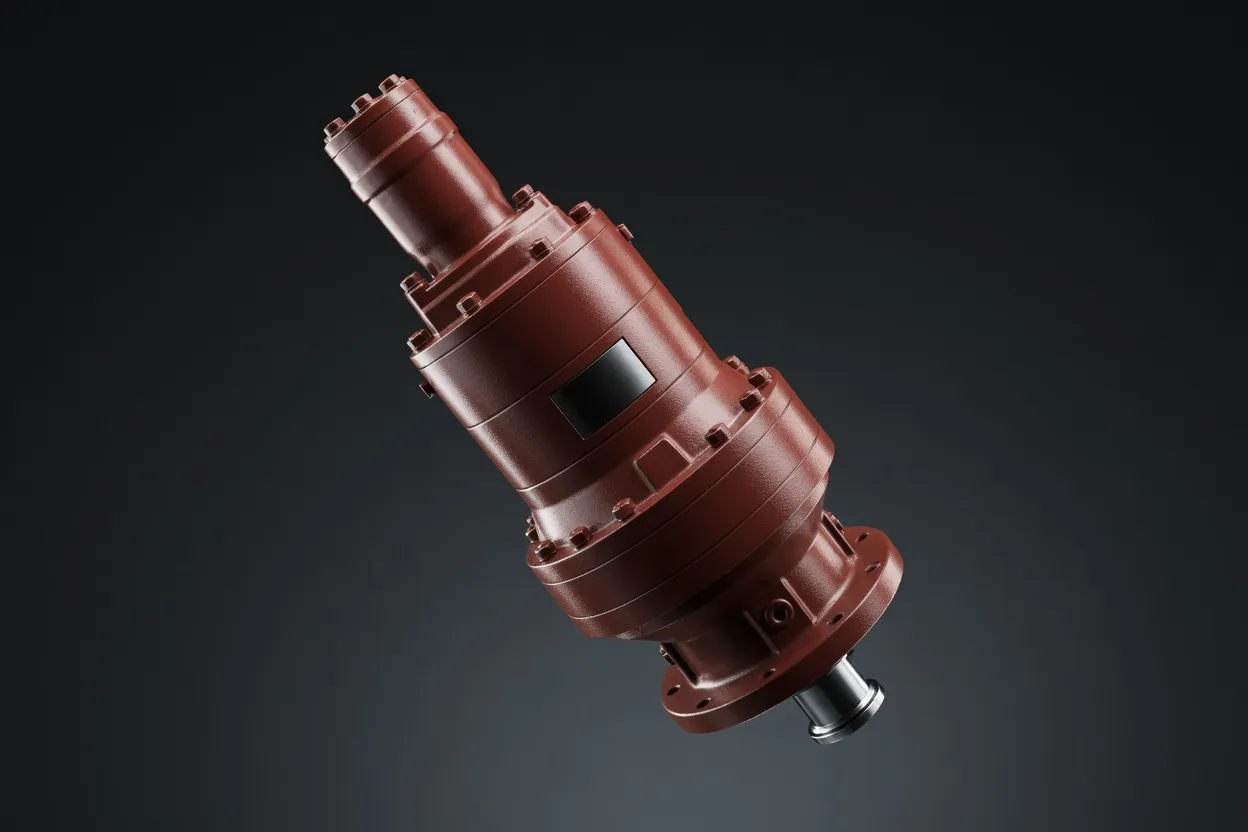
How Conveyors Utilize Planetary Gearboxes
A conveyor drive typically pairs an electric motor with a planetary gear reducer that steps the motor’s 1,400–1,800 RPM output down to the 20–200 RPM belt or chain speed required by the material flow rate. The gearbox mounts directly to the conveyor head shaft through a hollow-bore or keyed-shaft connection, transmitting torque to the drive pulley or sprocket. Ratios of 5:1 to 50:1 cover the full range of conveyor speeds, with single-stage units handling lower ratios and two-stage units providing the higher ratios needed for slow-speed, heavy-load conveyors in mining and aggregate processing.
Conveyor drives run 16 to 24 hours per day in many facilities, accumulating 6,000+ operating hours annually. The planetary gearbox must sustain its rated torque at thermal equilibrium under these continuous-duty conditions without scheduled lubricant changes for 10,000+ hours. Sealed-for-life grease-packed units or oil-bath designs with synthetic lubricants meet this requirement while minimizing maintenance labor — a significant cost driver when a facility operates hundreds of individual conveyor drives across its material-handling network.
Application-Specific Conveyor Requirements
Mining and Aggregate Conveyors
Overland conveyors transporting ore or crushed stone cover distances up to several kilometers and require drive powers of 200 to 2,000 kW. The planetary gearbox must handle the massive starting torque needed to accelerate a fully loaded belt from standstill — often 200% of running torque — while withstanding the vibration and contamination inherent in open-air mineral processing environments. High torque planetary gearbox units with IP65 sealing and synthetic EP lubricants rated for –30 to +60 °C ambient temperatures serve these demanding installations.
Food and Beverage Conveyors
Sanitary conveyor applications demand gearboxes with smooth, crevice-free housings that can be washed down without trapping bacteria. Stainless-steel output shafts, food-grade (NSF H1) lubricants, and IP69K sealing allow the gearbox to survive daily high-pressure washdown cycles. Compact planetary reducers mounted inside the conveyor frame minimize exposed surfaces and simplify the cleaning process, reducing sanitation labor compared to external gearmotor installations.
Parcel and E-Commerce Sorting
High-speed sortation conveyors in e-commerce fulfillment centers operate at belt speeds up to 3 m/s with frequent start-stop cycles — thousands per shift during peak periods. The gearbox must deliver consistent acceleration performance across millions of cycles without backlash increase that would degrade the sorter’s divert timing accuracy. Low-backlash helical planetary gear reducer models with servo-rated bearings handle this high-cycle duty while maintaining the quiet operation required in worker-occupied facilities.
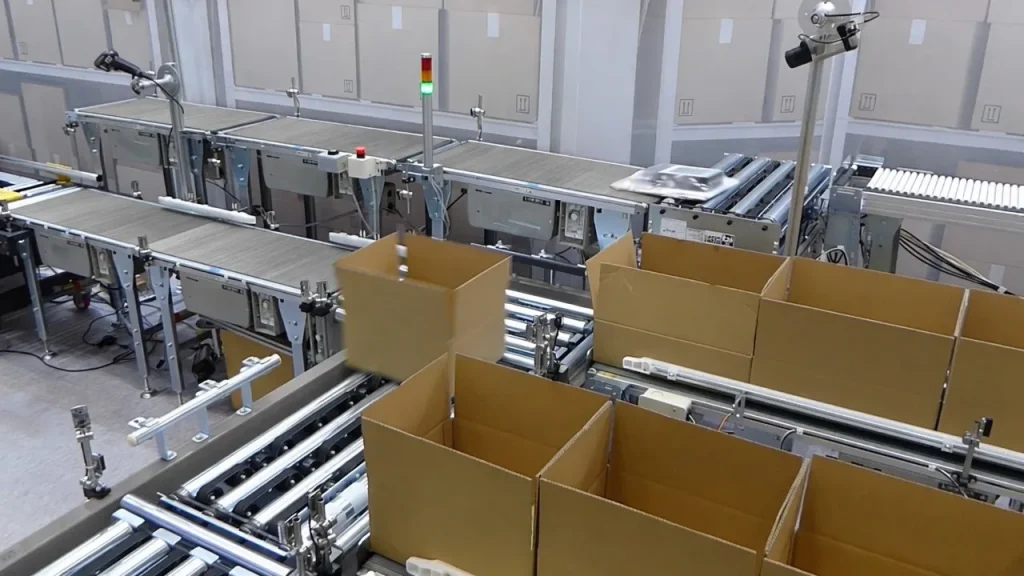
Gear Ratio Selection for Conveyor Applications
️ Heavy-Duty Mining
Ratios of 30:1 to 50:1 convert motor speed to the 20–50 RPM range typical of overland mining conveyors. Two-stage planetary units deliver these ratios with efficiencies above 95%, minimizing energy waste across conveyors that consume megawatts of power continuously.
Warehouse Distribution
Ratios of 10:1 to 25:1 match motors to the moderate belt speeds (0.5–1.5 m/s) used in distribution center conveyor networks. Single-stage or compact two-stage units fit within the tight frames of modular conveyor sections.
Food Processing
Ratios of 15:1 to 40:1 cover the slow-to-moderate speeds used in food processing lines. Stainless-steel or epoxy-coated housings with FDA-compliant lubricants address sanitary requirements while maintaining the torque density advantage of planetary architecture.
⚡ High-Speed Sorting
Ratios of 5:1 to 15:1 preserve the high belt speeds needed for sortation accuracy. Low-inertia planetary gearboxes enable rapid acceleration and deceleration without overshooting the belt’s target speed during divert cycles.
Installation Best Practices
Shaft Alignment
Align the gearbox to the conveyor head shaft within 0.1 mm concentricity using a dial indicator. Misalignment causes uneven belt tracking and accelerates gearbox bearing wear. For hollow-bore mounting, verify that the head shaft’s diameter and keyway match the gearbox bore specifications within tolerance.
Torque Arm Restraint
When using a shaft-mounted gearbox, install a torque arm between the gearbox housing and the conveyor frame. The arm must be rigid enough to resist the full rated reaction torque without deflecting more than 1 mm, preventing housing rotation that would stress the motor coupling.
Belt Tension Verification
After gearbox installation, verify that belt tension on the drive pulley falls within the conveyor manufacturer’s specification. Excessive tension overloads the gearbox output bearing; insufficient tension causes belt slip that generates heat and accelerates pulley lagging wear.
Commissioning Run
Operate the conveyor at full speed under no-load conditions for one hour. Monitor gearbox housing temperature and listen for abnormal noise. Temperature should stabilize below 70 °C in ambient conditions under 30 °C. Any grinding, clicking, or whining sounds warrant investigation before loading the conveyor.
Maintenance and Reliability
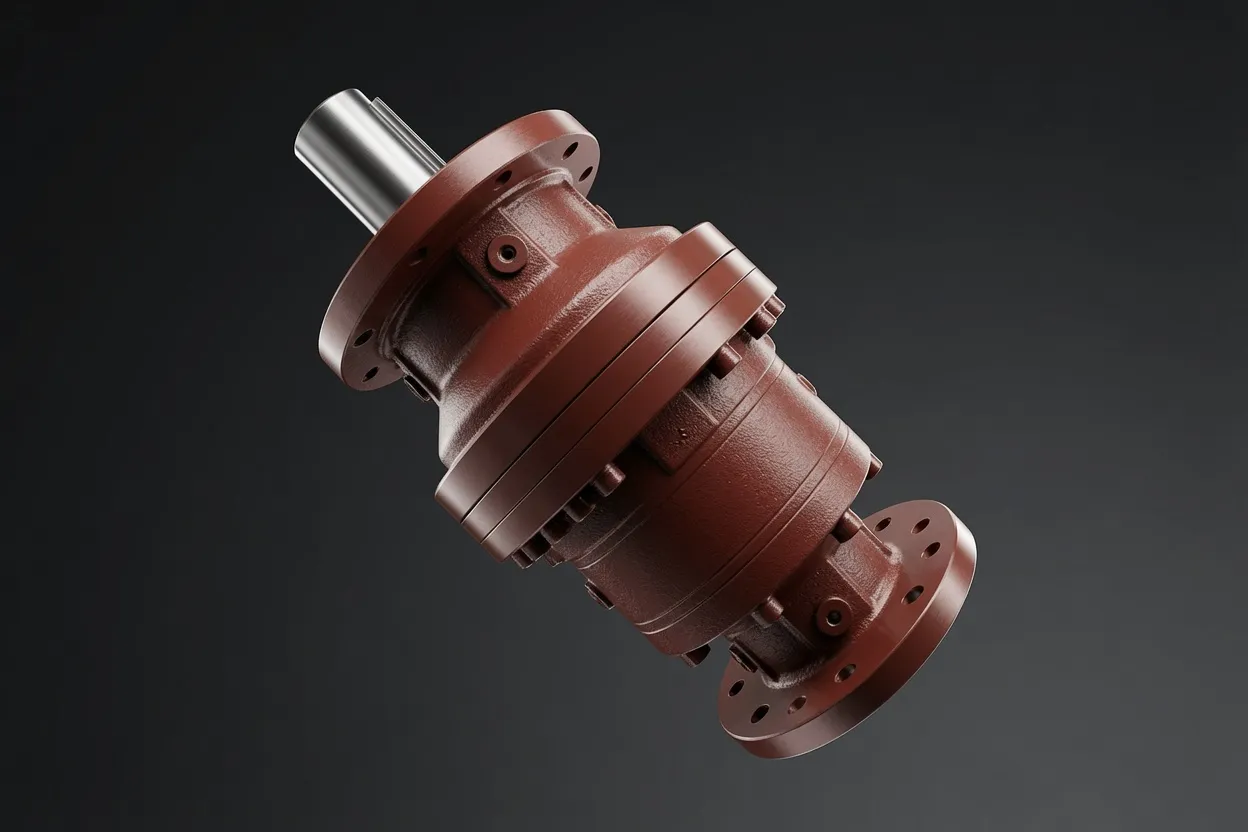
Conveyor gearbox maintenance follows a condition-based approach: monthly temperature checks, quarterly vibration measurements, and annual oil analysis (for oil-lubricated units) or visual grease inspections (for grease-packed units). Trending these parameters identifies gearboxes developing issues before they fail in service. For facilities with hundreds of conveyor drives, integrating temperature and vibration sensors into the plant’s SCADA system automates data collection and alerting, directing maintenance attention to specific units that show anomalous behavior rather than blanket inspection of all drives.
Sealed grease-packed planetary reducers are designed for maintenance-free operation over their rated life — typically 20,000 to 40,000 hours depending on duty severity. Oil-lubricated units in heavy-duty mining and aggregate service require oil changes every 5,000 to 10,000 hours. In both cases, the gearbox’s rated life should align with the conveyor’s major overhaul interval to avoid mid-campaign replacements that disrupt material flow and increase maintenance costs.
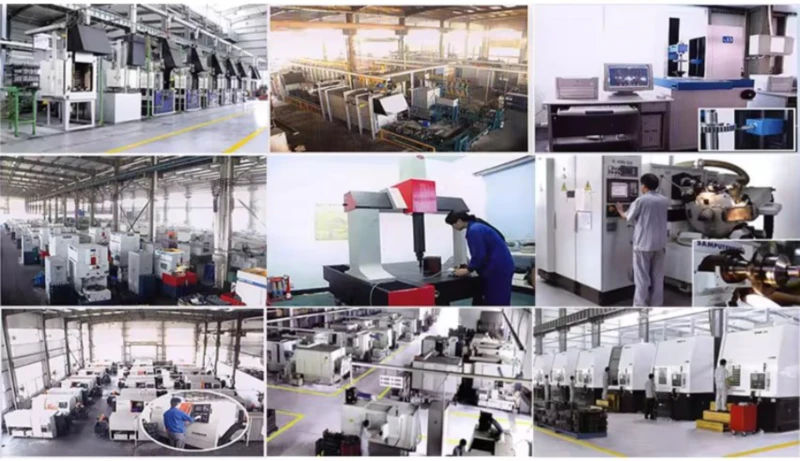
Why Choose Ever-Power for Conveyor Gearboxes
Comprehensive Size Range
Frame sizes from 40 mm to 280 mm with ratios from 3:1 to 512:1 cover every conveyor type — from small parcel sorters to multi-megawatt mining overland systems — in a single unified product platform.
Continuous-Duty Thermal Rating
Every model is thermally rated for continuous operation at full torque, not intermittent duty. Published thermal ratings include ambient-temperature-dependent derating curves so you can verify performance at your site conditions.
️
Washdown and Sanitary Options
Stainless-steel output shafts, IP69K sealing, and NSF H1 food-grade lubricant fills are available as factory options for food, beverage, and pharmaceutical conveyor applications.
Volume Supply Programs
Annual blanket orders with monthly call-offs ensure uninterrupted gearbox supply for conveyor OEMs and system integrators. Contact [email protected] for volume pricing.
Frequently Asked Questions
Equip Your Conveyor System with Reliable Drives
Share your conveyor layout, speed, and load requirements — we will recommend the optimal gearbox for each drive point.